
Tackling food loss: policy perspectives from the Netherlands
From isolated issue to systemic challenge
The Netherlands is often seen as a frontrunner in creating more efficient and sustainable food systems. But even in a highly organized agricultural economy, significant amounts of food are still lost before they reach the supermarket. In this interview, Floor de Bont and Ingrid Flink of the Dutch Ministry of Agriculture, Fisheries, Food Security and Nature (LVVN) explain why food loss is not just a technical or logistical issue, but a systemic challenge linked to climate, food security, economic value, and international cooperation. They reflect on Dutch and European policy, the importance of better data and shared definitions, and the need to connect food loss more firmly to broader sustainability goals on the road to 2030.

Floor de Bont 
Ingrid Flink
Floor de Bont is part of the Sustainable Food Team within the Directorate for Plant-Based Agro Chains and Food Quality at the Dutch Ministry of LVVN. ‘Our team focuses in part on the consumption side of the food system,’ she explains, ‘but we are increasingly looking at earlier stages in the chain. I work on food loss and food waste at both the national and EU levels. The key question is what the Netherlands can do nationally and what we can do to help advance the topics within the EU.’
Ingrid Flink works in the International Team of the Food Security and Climate cluster within the Directorate for European, International and Agro-economic Policy (EIA) of the same Ministry. Since 2024, she has also served as regional coordinator for South Africa and Ethiopia. ‘The Food Security and Climate cluster covers a broad range of themes,’ she explains, ‘including food loss and waste. I have been responsible for this policy domain since May last year.’
Food loss as a systematic failure
What do we know about food loss? According to FAO’s Definitional Framework of Food Loss (2014), developed under the Global Initiative on Food Loss and Waste Reduction, losses tend to be lower (around 8–10% ) in developed countries and much higher (around 26 % or more) in regions with infrastructure constraints such as Sub-Saharan Africa.
Food loss is about more than food that never gets used, Flink explains. ‘It points to a broader systemic failure in the way the food system is organized. When food disappears from the chain, all the resources behind it disappear too, including land, water, energy, labor, and financial investment. Producing food always comes with an environmental footprint, but if it never reaches its purpose, that footprint is unnecessary. The result is avoidable greenhouse gas emissions, extra pressure on land and water, and greater risks for biodiversity.
At the same time, it destroys economic value throughout the supply chain, De Bont adds. ‘These effects are particularly severe for farmers, who often carry the production costs but are not compensated when surpluses, rejected products, or crop failures make volumes unsellable. Food loss therefore affects not only environmental sustainability, but also food security, livelihoods, and the fairness of the food system.’
Lack of primary data
Unfortunately, international primary data on food loss are limited. Flink: ‘This makes it difficult to fully understand and quantify its hidden costs, including substantial economic losses and the unnecessary pressure placed on land, water, and other natural resources. As a result, the true scale and impact of food loss are not clearly visible.’
Also, in the Netherlands, measurement methodologies are not yet sufficiently robust, particularly in the primary sector,’ adds De Bont. ‘We rely mostly on secondary data, such as waste statistics. But together with Wageningen University and Research (WUR), we are developing an instrument to better determine where losses occur and how significant they are.’
‘Through combating food loss multiple policy objectives can be advanced simultaneously’
Definitions of food loss and waste
Another challenge is the lack of clear and shared definitions. As a result, it becomes difficult to measure scale accurately, compare data, and build a compelling case for stronger policy attention. In practice, ‘food loss’ and ‘food waste’ are often used interchangeably, but they refer to different stages of the supply chain. Flink: ‘FAO defines food loss as the decrease in quantity or quality of food from harvest to before retail, including wasted or spoiled food, but excluding by-products used for feed, industry, or composting.’
De Bont: ‘For food waste, the Netherlands follows the EU definition, which covers waste occurring from processing through retail and the consumer level. For food loss – particularly in the primary sector – a fully harmonized definition has not yet been established at EU level. Work on this is ongoing.’
De Bont gives an example: ‘I recently visited a company that purchases beer by-products from Heineken. They convert them into protein-rich products for animal feed, or even cookies for human consumption. It shows how the destination of a product matters: if it returns to the human or animal food chain, it’s not considered food loss. But if it the same product ends up outside the human or animal food chain, it is.’
Climate, contracts, and value chain incentives
In Europe, food losses often arise because agricultural products do not meet strict retail quality standards and suffer deviations in shape, size, or minor cosmetic damage or because of overproduction,’ says De Bont. ‘Climate variability can further increase supply imbalances, leaving edible crops in the field or without a market.’
In developing countries, the drivers of food losses are often different, Flink adds. ‘In many contexts, losses are linked not only to limited infrastructure, particularly cold chains, but also to poor agricultural practices, pests, and diseases. Limited use of precision agriculture further contributes to losses at the production level, meaning products spoil before they even reach the store.’
SDG Food loss and food waste
Dutch goals and national implementation
The Ministry of LVVN links food waste reduction to the national implementation of SDG 12.3. The ambition is to halve food waste across the entire supply chain by 2030 compared to 2015 levels. Food loss reduction in primary production is addressed through complementary policy measures, innovation, and collaboration with sector partners.
De Bont: ‘Since 2018, practical implementation aimed at achieving the national food waste reduction targets has largely been entrusted to the Dutch public-private foundation Food Waste Free United (‘Samen Tegen Voedselverspilling’ with the Dutch abbreviation STV). From its start in 2018, LVVN provides financial and policy support, contributes to strategic direction, and ensures alignment with broader agricultural, climate, and food security objectives.’
‘STV operates along four action lines: monitoring, supply chain innovation, consumer activation, and identifying bottlenecks in laws and regulations. It also facilitates coalition-based collaboration with supermarkets, municipalities, and actors from the primary sector – including farmers, processors, and logistics providers – aimed at identifying food loss points and developing shared solutions.
The Dutch approach has been successful. De Bont: ‘Food waste and loss have already declined with 20% since 2015 among the whole chain, with the reduction accelerating notably since 2020.’
International cooperation
Internationally, LVVN works through both multilateral and bilateral cooperation. As Flink explains: ‘Through FAO, the Netherlands contributes to global measurement methods such as the Food Loss Index: FAO’s benchmark for measuring food loss from harvest to wholesale and comparing results across countries. This also includes support for putting food loss into national food strategies and providing technical help on storage, cold chains, and post-harvest management.’
‘The Netherlands also supports the work of Champions 12.3, which brings together governments, companies, and international organizations to help speed up progress towards halving food waste and reducing food losses by 2030. This work is also useful for Dutch policy, because it offers frameworks, research, and practical examples that can be used nationally.’
At the European level, the Netherlands takes an active and content-driven role in discussions on food loss and reduction targets. De Bont: ‘Through the EU Platform on Food Losses and Food Waste, we share experiences with monitoring, public-private cooperation, and involving the primary sector. LVVN does this together with Wageningen University and Food Waste Free United. In these discussions, LVVN stresses the importance of a value chain approach, clear measurement methods, realistic but ambitious targets, and a level playing field within the EU.
Flink also points to the Netherlands Agricultural Network (LAN) as an important part of bilateral and multilateral cooperation on reducing food losses. They represent Dutch interests at the multilateral level, and link global challenges to Dutch knowledge and innovations in the fields of sustainable agriculture, fisheries, food security, and biodiversity. The LAN follows policy developments, strategies, and new legislation in the countries where it works, and collects examples of what works in practice. It also links local needs to Dutch knowledge and expertise.
According to Flink, success depends on solutions that fit local circumstances, such as the Ketchup Project in Kenya, which turns surplus tomatoes into value-added products, or onion storage initiatives in Senegal supported by Dutch expertise. ‘The approach is reciprocal: we continuously look in two directions – what can the Netherlands contribute, and what can we learn from other countries?’
Innovative solutions
Dutch innovation helps reduce food loss and waste through a combination of data-driven tools, public–private collaboration, and practical technology. WUR supports evidence-based policies with national monitoring systems, and government funding supports applied research and implementation, while businesses deploy innovations such as AI-based harvest forecasting, data-driven decision tools, and technologies that support soil health monitoring and storage management.
However, technology alone is not sufficient. ‘There is no silver bullet,’ Flink notes. ‘Innovation must be supported by clear market incentives, workable contractual arrangements, regulatory clarity, and knowledge sharing. Without institutional integration and alignment across the value chain, technological solutions often fail to scale.’
‘Strong cold chains, fast distribution, and digital tracking help food move quickly and safely from producers to markets.’
How the Netherlands can make a difference
The Netherlands is often seen as a frontrunner in reducing food losses in the agricultural chain. Losses in primary production are relatively low compared to many other countries. This is especially clear in greenhouse horticulture, where climate control, monitoring, and planning help keep losses low from an early stage. Flink: ‘Another strength is the country’s efficient agrologistics system. Strong cold chains, fast distribution, and digital tracking help food move quickly and safely from producers to markets. The Port of Rotterdam also plays an important role in reducing losses during transport and storage. In addition, close cooperation across the supply chain helps companies coordinate better and prevent unnecessary losses.’
De Bont: ‘The Netherlands is also strong in finding value in food surpluses and residual streams. Companies and innovators increasingly use technology and smart processing methods to turn these flows into new ingredients or products, so food that might otherwise be lost stays within the system.’
System vulnerabilities
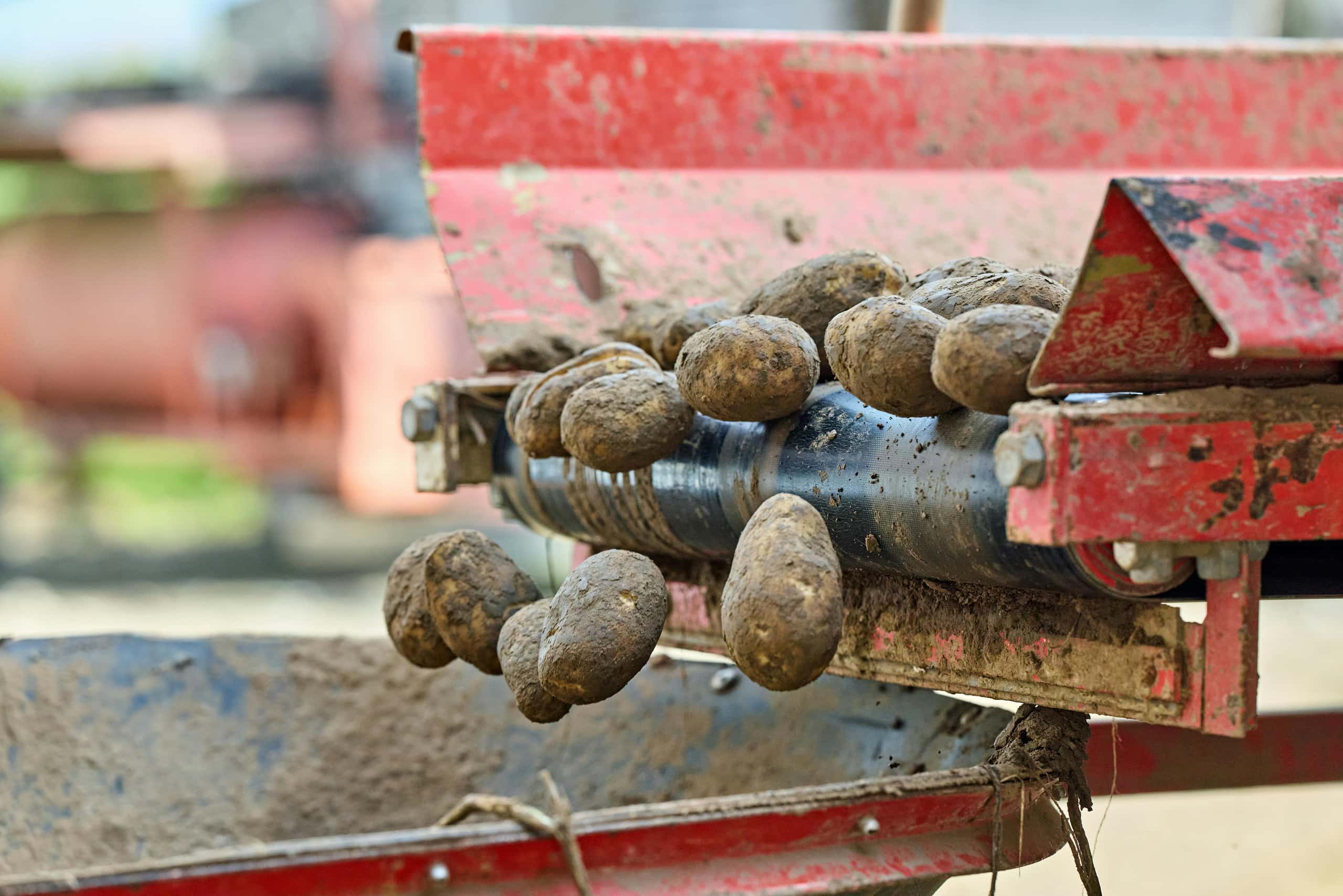
At the same time, there are vulnerabilities. The Netherlands depends heavily on international supply chains and imports large amounts of raw materials. This means that food losses in producing countries are also indirectly part of the Dutch food system. De Bont: ‘Some sectors, including potatoes, vegetables, and fruit, are also facing growing surpluses. In August 2025, for example, the sector warned that more than 100 million kilograms of potatoes could go to waste due to a combination of harvest timing and fewer export opportunities.’
However, new initiatives are trying to turn these surpluses into opportunities. Dutch organizations such as No Waste Army process surplus produce into products with a longer shelf life, helping to reduce waste while creating new value.
Lessons from other countries
Of course, there are lessons to be learned as well. Spain, for example, is linking food loss reduction more directly to legislation, including mandatory donation and processing of surplus food. Flink: ‘Low- and middle-income countries such as Kenya also offer useful examples of low-cost, scalable post-harvest solutions. Finland, meanwhile, shows how food loss can be linked more clearly to climate and sustainability policy.’
There are other good examples too, where the LAN also plays a role. ‘Like Ethiopia, where the LAN supports initiatives like Cool Port Addis and improvements in agrologistics to help reduce losses, maintain product quality, and encourage cooperation. China is another example where the combined expertise of Dutch and Chinese partners helps improve cold-chain logistics, post-harvest handling, and the overall efficiency and resilience of food systems.’
Towards an integrated approach to food loss in 2030
In the Netherlands, food loss is already included in strategies such as the National Biodiversity & Strategy Action Plan Netherlands 2025-2030 and international climate policies. ‘But it could be more firmly embedded in national policy goals,’ says De Bont. ‘Better coordination between ministries and stronger links with climate policy could help make food loss a more central part of sustainability and circular economy discussions.’
What needs to change fundamentally towards 2030, Flink says, is that food loss and food waste are no longer seen as separate issues, but as part of the food system. ‘This requires a combination of better data, innovation, organization, collaboration, and behavior change across the entire chain. Combating food loss has the most impact when it is linked to broader goals such as climate, food security, and the economy.’