
Cutting food loss is a triple win for climate, farmers, and food security
Interview with Heike Axmann from Wageningen University & Research
Reducing food loss can lower greenhouse gas emissions, strengthen farmer livelihoods, and make more food available without increasing production area. But achieving that requires more than isolated technical solutions. ‘Key priorities include better global data, tackling early supply chain losses in low- and middle-income countries, aligning climate and food loss policies, investing in low-emission interventions, and scaling proven solutions,’ says Heike Axmann of Wageningen University & Research.
Heike Axmann holds several roles at Wageningen University & Research. She is expertise leader of the Supply Chain Development Group and also serves as a senior researcher and project leader at Wageningen Food & Biobased Research (WFBR), WUR’s contract research institute. Her work focuses on food loss and waste, sustainable value chain development, and agrologistics.
She became involved in food loss through her research in international sustainable supply chains. In many projects, she observed that losses were not only caused by technical issues, but were often linked to limited knowledge, poor chain organization, reduced market access, or insufficient investment in chain interventions like storage and cooling infrastructure. Since then, she has focused explicitly on reducing food loss as part of building sustainable food systems, particularly in low- and middle-income countries (LMICs).
Heike Axmann
How large is the problem of food loss globally?
‘On average, about one-third of all food produced globally is lost or wasted. Of this, around 13–14% is lost along the supply chain before retail, while 17–19% is wasted at the retail, food service and household level. The climate implications of this are substantial. If food loss and waste were a country, it would rank as the third-largest greenhouse gas emitter in the world. According to estimates by the Food and Agriculture Organization (FAO), it accounts for around 4.4 gigatons of CO₂-equivalent emissions each year. Research by the Consultative Group on International Agricultural Research (CGIAR) shows that halving food loss and waste could cut global emissions by 0.7 to 2 gigatons annually.’
‘For that reason, reducing food loss and waste is widely recognized as an important climate mitigation option, contributing to lower greenhouse gas emissions and reduced pressure on land and ecosystems.’
‘On average, about one-third of produced food is lost or wasted’
What does large-scale food loss say about how our food system functions?
‘It reveals a structural mismatch between production and demand, inefficient use of resources, and limited transparency in supply chains. Reliable data are often missing, which makes losses invisible. In rice value chains, for example, farmers were often convinced that they had hardly any losses. However, measurements showed that food losses were in fact substantial, particularly during harvesting, drying and threshing, leading to direct income loss for famers.’
How is WFBR contributing to understanding food loss?
‘Applied research institutes like WFBR play a critical role in developing reliable measurement and evaluation tools. Without good data, you can’t design effective policies or interventions. We also analyze the climate and sustainability impacts of food loss. When food is produced but never consumed, all the resources used to produce it are wasted as well, including seeds, irrigation water, fertilizers, pesticides, transport, and so on. As a result, food loss leads to unnecessary greenhouse gas emissions, land use, and water use, which has significant impact on the climate and the environment.’
‘We make this visible on our website Food Loss Solutions for organisations, which includes the Food Loss and Waste (FLW) Toolbox. The toolbox is a collection of instruments we developed together with the Ministry of Agriculture, Fisheries, Food Security, and Nature (LVVN) to help businesses, governments, and supply chain partners identify, measure, analyze, and reduce food loss and waste. It includes tools such as measurement protocols, hotspot analyses, intervention design methods, and practical fact sheets. What makes it especially valuable is that it brings together the knowledge accumulated by many researchers across Wageningen University & Research.’
‘The idea is that organizations should not have to develop their own methodologies from scratch or work with unreliable data. Instead, they can build solid, research-based tools that help them take effective action. In the short period since the website went live, it has already attracted visitors from 28 countries, ranging from Colombia and Nigeria to Korea and Norway, demonstrating broad international engagement.’
Homepage of Wageningen University & Research’s Food Loss Solutions website
How does that translate into concrete action in practice?
‘In Nigeria, for example, we examined the shift from manual rice harvesting and threshing to mechanized systems. This transition led to a clear reduction in food loss per hectare. When only mechanical harvesting was introduced, losses decreased by approximately 300 kilograms per hectare per year. When only mechanical threshing was introduced, the reduction was about 180 kilograms. In the combined intervention, the reduction increased to approximately 480 kilograms per hectare per year. Furthermore, in the combined scenario, we observed a yield increase of about 14 percent, corresponding to roughly 480 additional kilograms of rice per hectare per year, and an increase in net income of approximately USD 200 per hectare per year.’
‘We also observed climate benefits. Depending on the intervention, between 720 and 1,700 kilograms of CO2-equivalent per hectare per year were avoided. The combined mechanized harvesting and threshing scenario showed the largest impact.’
What did these interventions mean for the farmers involved?
‘At the time of our project, the focus was on measuring losses and building the business case for possible interventions. Based on these measurements, we could already see that there was a positive business case for certain interventions. I am happy to see that this has since been taken forward by industry partners in pilot investments in mechanization in the rice sector in Nigeria.’
‘But reducing losses also requires reorganizing the supply chain. If you reduce losses, but the market can’t absorb the additional volume, you may need to adjust production. However, if the additional volume can withstand longer shelf life, then it can open new market opportunities.’
‘The problem is that projects on FLW reduction often stop after the measurement phase and the identification of promising interventions. Even piloting remains limited, and the step towards larger-scale implementation and scaling remains even more difficult. The next phase, which involves getting companies and investors fully involved and moving towards scale, sits in a gray zone. Investors consider it too early, and companies consider it too risky or not fully aligned with their role.
Beeld: © Heike Axmann
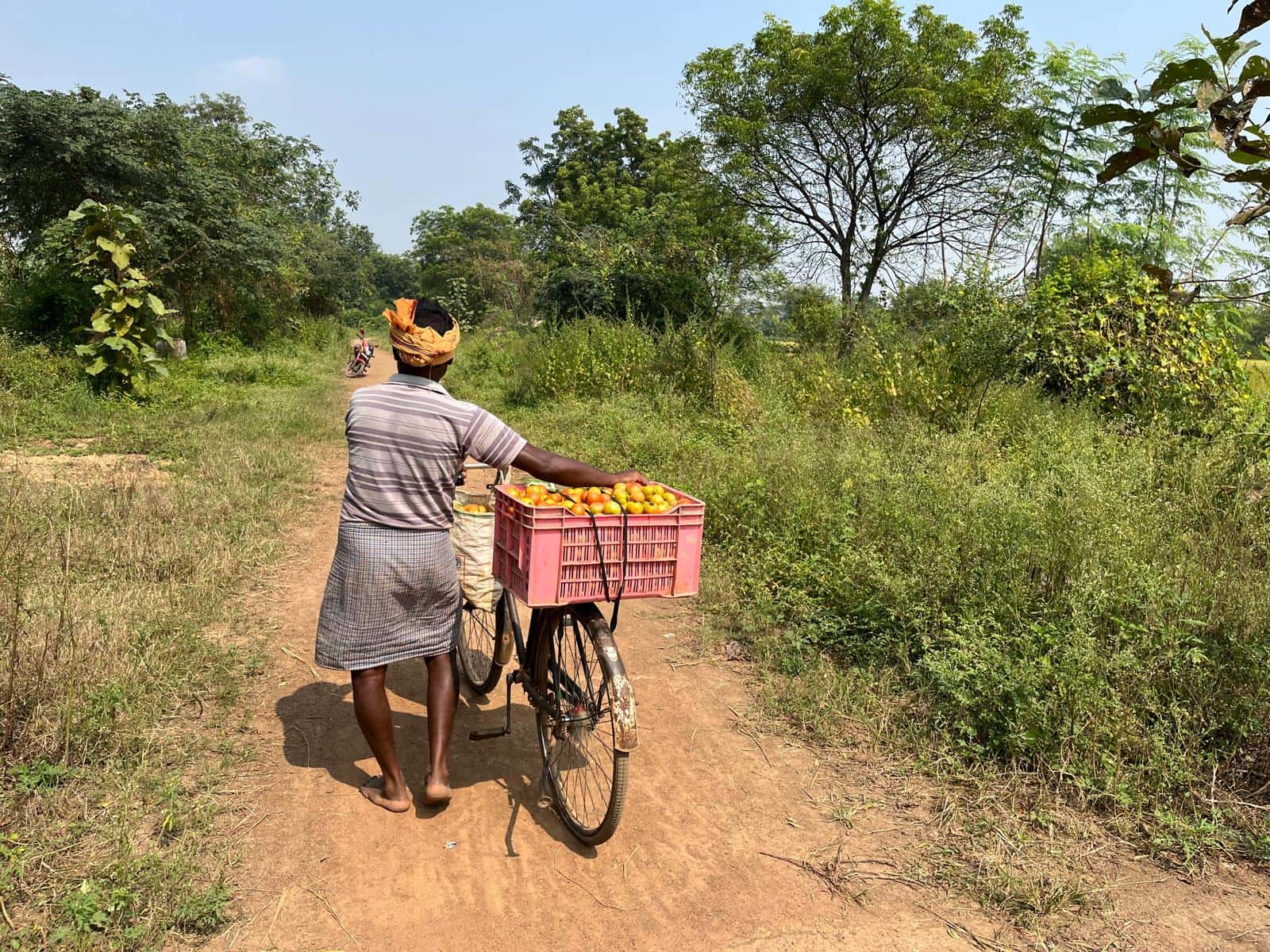
Food loss and waste of tomatoes in Mexico
Why is scaling up and funding often difficult?
‘It depends very much on the context. In some settings, including the Netherlands, we see growing interest from supermarkets and other supply chain actors to work on food loss and waste reduction. This is also supported by broader initiatives and agreements. But in many international value chains, food loss still receives limited attention as a concrete strategic issue.’
‘What is needed is greater awareness among governments, philanthropic organizations, and companies about the multiple benefits of food loss reduction. Reducing food loss can lower greenhouse gas emissions and pressure on water and land, improve farmer incomes and strengthen food security, and create sound business cases. WUR can help by making those opportunities visible through measurement, business case development, and evidence on where interventions can deliver both economic and sustainability benefits.’
‘At present, funding for these kinds of systemic efforts still comes mainly from public or philanthropic sources rather than private capital. At the same time, overall funding is under pressure, as many other topics compete for attention and resources. What is often not sufficiently recognized is that food loss reduction can also contribute directly to those same priorities, including climate mitigation, food security, and farmer livelihoods. Making these connections more explicit could help unlock additional funding and investment for FLW reduction.’
The WUR is also involved in the PPS Cool Move R&D Accelerator. Can you tell us more about that?
‘The PPS Cool Move R&D Accelerator is a public–private research project led by WUR that aims to strengthen food cold chains, especially in low- and middle-income countries. It is designed to build a stronger knowledge base and practical decision-support tools for viable, climate-smart cold chain development.’
Why are well-functioning cold chains so important?
‘Insufficient or improper cooling is a major cause of food loss worldwide, especially for vegetables, fruit, fish, and dairy. A well-functioning cold chain extends shelf life, preserves quality and improves food safety.’
‘But to make a cold chain work, technology alone is not sufficient. Besides hardware, “software” (knowledge and training) and “orgware” (organization and agreements) are needed. Essential elements include knowledge of product characteristics and cultivation, good initial quality at harvest, training and maintenance, reliable energy supply, financing models, logistics planning, market certainty and willingness to pay for quality, and long-term commitment within the supply chain.’
When is it economically viable for companies to invest in reducing food loss?
‘Investments range from low-cost training in postharvest management to capital-intensive high-tech cold chain infrastructure. At the lower end of that spectrum, training and improved market information often generate quick returns. Larger investments, however, depend heavily on the specific product-market combination. For example, switching from air freight to sea freight requires longer shelf life, which in turn may require investments in crop varieties, packaging, and logistics.’
‘Investments become attractive when they are linked to value chain development and access to markets willing to pay for higher quality. Without consistent product quality and reliable market access, returns remain uncertain.’
‘Structural food loss reduction is much more feasible in value chains where long-term partnerships are in place. When producers and buyers collaborate over a longer period, there is more incentive and security to invest in improvements such as storage, cooling, or logistics. These types of relationships help to align incentives, share risks, and ensure that investments can be recovered over time.’
‘In contrast, in spot markets, where products are traded for immediate delivery at the prevailing market price, transactions are typically short-term and prices fluctuate depending on supply and demand. In such settings, it is much harder to implement longer-term investments in loss reduction, as there is limited certainty about future returns.’
‘The key difference is therefore the nature of the relationships: value chains based on long-term collaboration are more likely to support structural investments, while spot markets are mainly driven by short-term transactions.’
‘Structural food loss reduction is much more feasible in value chains where long-term partnerships are in place.’
How does WUR collaborate with the LVVN, international partners and the Netherlands Agricultural Network?
‘We work with LVVN both directly and indirectly. Directly, we address policy-driven research questions, particularly on monitoring and reducing FLW in the Netherlands. This includes providing FLW data, as well as developing tools and strategies to support policy implementation. Indirectly, we collaborate through public-private partnerships.’
‘We also regularly exchange insights with policymakers, both on domestic issues and international challenges related to food security and agrologistics. This collaboration is important because it ensures that research is closely aligned with policy needs, supports evidence-based decision-making, and enables us to achieve impact both in the Netherlands and internationally.’
‘Internationally, our collaborations are project-based. We worked for many years with CGIAR's program on Climate Change, Agriculture and Food Security (CCAFS), studying the link between food loss and greenhouse gas emissions. Across value chains – from vegetables to staple crops – my team analyzed how interventions affect food loss, farmers’ incomes, and emissions.’
The Netherlands Agricultural Network (LAN) plays an important role in increasing transparency, particularly in countries of origin where production and first processing take place. Many Dutch companies operate internationally, both through imports of agricultural products and exports of products, technologies and logistics solutions. Agricultural counselors can help connect Dutch expertise with local needs and policy developments. For example, in Ethiopia we collaborate with the LAN team at the Dutch embassy on food loss reduction data collection activities.’
‘By selecting one or several strategic product chains per country or region, targeted and measurable reductions in food loss could be achieved. In this way, agricultural counselors could further strengthen their role as a bridge between policy, knowledge and practice on food loss reduction.’
Looking to the future, what are the most urgent next steps?
‘Key priorities for the coming years include improving monitoring and data quality worldwide. Without reliable data, it is difficult to determine where the greatest losses occur, and which interventions are likely to be most effective. At the same time, priorities differ across contexts. In low- and middle-income countries, the greatest challenges often arise in the early stages of the supply chain, whereas in high-income countries, substantial progress can often be made at the retail and consumer levels.’
‘Another important priority is the stronger integration of climate policy and food loss policy, since the two are closely interconnected. In addition, interventions that have already proven effective need to be scaled up, and long-term international funding is essential to support both monitoring and implementation. Without such financing and international cooperation, achieving the targets of Sustainable Development Goal 12.3 will remain difficult. Ultimately, a lasting reduction in food loss requires not only technical optimization, but broader systemic change.’
‘Real progress requires systemic change across the food system’
More information
For more information about WUR's initiatives to reduce food loss, you can contact:
-
Heike Axmann
Email: heike.axmann@wur.nl
LinkedIn: Wageningen University and Research