
Reducing food loss requires strong partnerships
Interview with Marcel Vernooij (IDH) and Ibrahim Palaz (NFP)
While hundreds of millions of people around the world still face hunger, a significant share of the food that is produced never reaches consumers. According to Marcel Vernooij, Director Public Sector Engagement at IDH (the Sustainable Trade Initiative), and Ibrahim Palaz, Partnership Builder at the Netherlands Food Partnership (NFP), reducing food loss requires cooperation across the entire food system. In the Netherlands this type of collaboration is often referred to as the Dutch Diamond, which offers an important model for tackling inefficiencies in global food supply chains.
Marcel Vernooij works at IDH, a global organization focused on making agricultural markets more sustainable and inclusive. After a long career in the Dutch government, he now collaborates with public and private sector partners in the Netherlands and abroad. Vernooij: ‘IDH addresses environmental themes like climate, adaptation, and biodiversity, alongside social issues such as living wages and decent jobs. Through partnerships with companies, NGOs, governments, and researchers, it runs programs in sectors such as coffee, cocoa, and palm oil.’
Ibrahim Palaz has worked at the Netherlands Food Partnership (NFP) since 2018. ‘NFP focuses on improving food systems in low- and middle-income countries,’ he says. ‘We bring together businesses, governments, knowledge institutions and civil society organizations to work on shared food-related challenges. Rather than implementing projects on its own, NFP mainly helps partners connect, develop joint agendas, and build collaborations.’
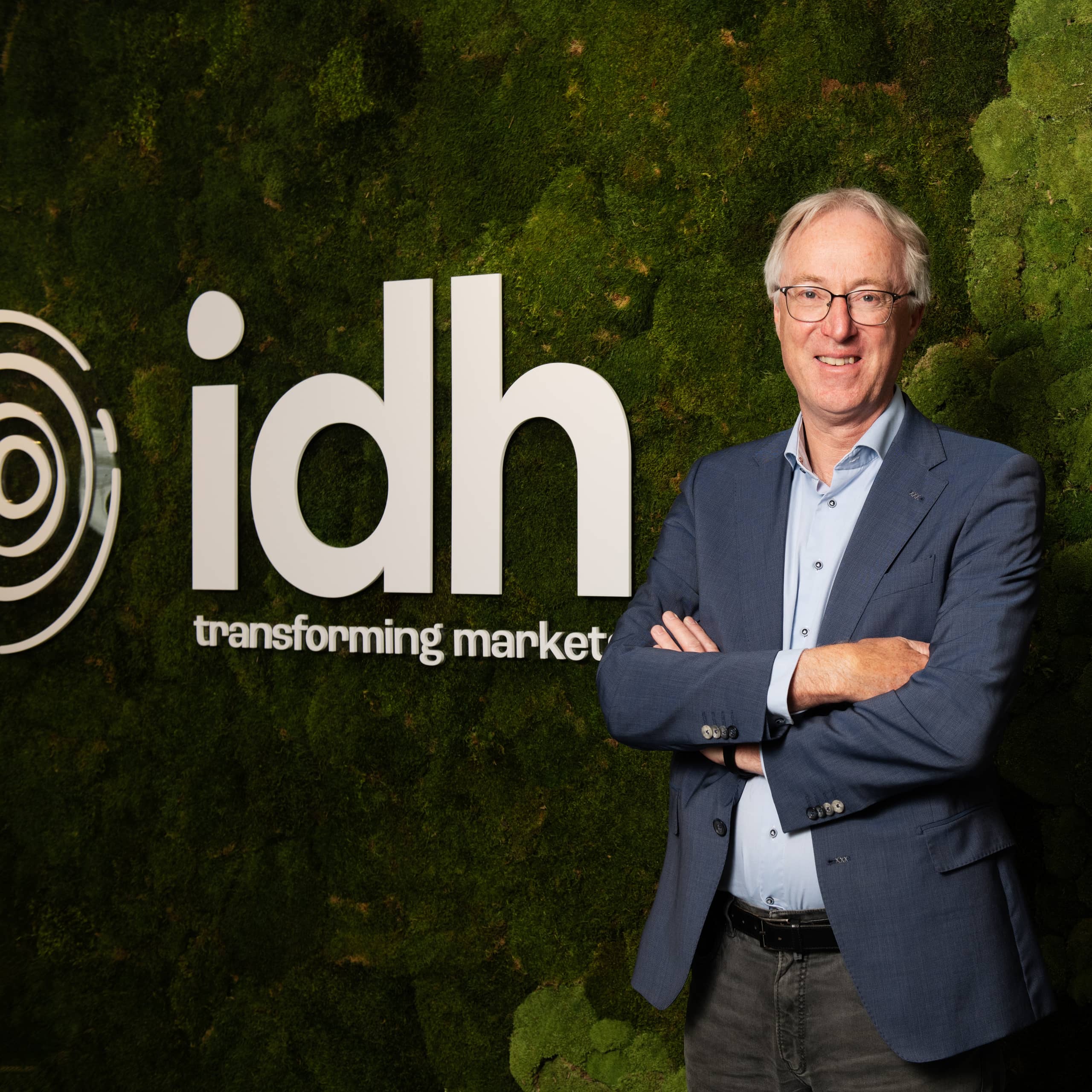
Marcel Vernooij 
Ibrahim Palaz
Lack of food security persists
According to Vernooij, food loss is closely connected to food security and is an ethical issue. ‘Many of us are deeply motivated to solve a very old and continuing problem: hunger and the lack of food security in the world. The development agenda has achieved a great deal: better education and greater prosperity. But the number of people facing hunger is stuck at around 800 million.’
Palaz points to a persistent reflex: as soon as food shortages are discussed, the focus quickly shifts to producing more. ‘While at the same time roughly 25% to 33% of the food produced is lost. You wouldn’t accept that in any other sector. If an oil company said that one-third of its oil leaked out of the pipeline, no one would respond by saying: let’s just pump more oil. Yet, for a long time, that was accepted in the food system.’
‘We have made great progress, but the number of people facing hunger is stuck at around 800 million’
Beeld: © Ibrahim Palaz
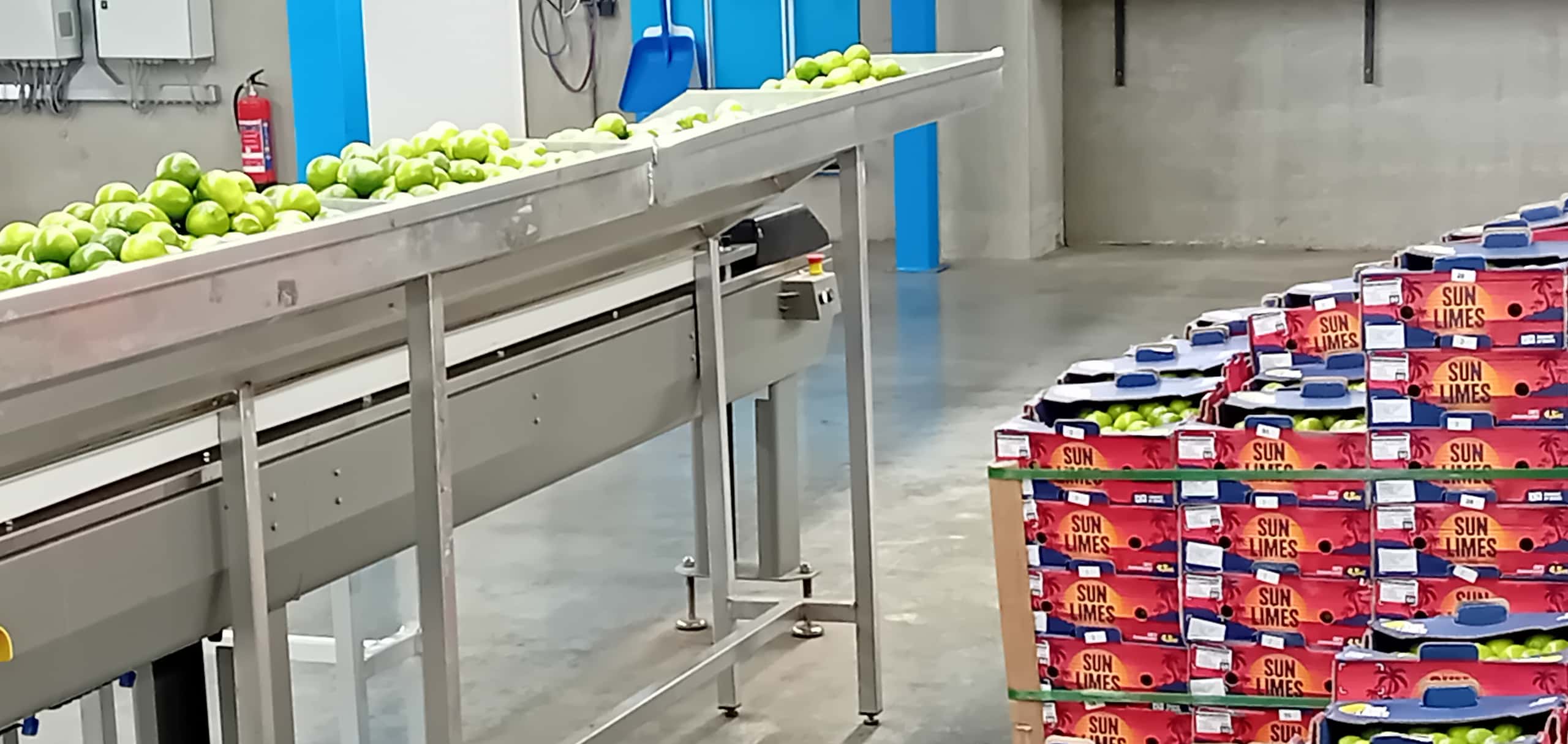
Packaged products ready for transport
Food loss is financial loss
Both agree that the issue of food loss is more than ethics alone. Vernooij: ‘The moral argument is obvious: food is being lost while people are hungry. But there is also a clear economic case. Food loss is simply a financial loss. And food production has a major impact on land, water, and ecosystems. From an environmental perspective, reducing food loss therefore makes perfect sense.’
Palaz agrees that the economic logic is compelling. ‘In many cases you can clearly demonstrate the financial benefits of better logistics or improved storage.’ Precisely because the business case is so clear, he says, reducing food loss can be an effective way to drive broader improvements in food systems. Palaz adds: ‘It not only increases food availability, but can also lower emissions, reduce pressure on land and water resources, and raise incomes for farmers and other actors in the supply chain.’
Adaptability to local circumstances is crucial
Yet, Vernooij notes that a convincing business case does not automatically lead to change. He recalls a visit to a tomato transfer point in India that had been built with Japanese support: ‘Technically, it was perfect: a covered market hall with cold storage facilities. But it simply wasn’t used. Trucks were unloaded along the roadside, tomatoes were transferred into crates, and those crates were left in the sun while people went to lunch. There was enormous food loss at that point in the chain.’
The reason, he explains, lays in the incentives. Vernooij says: ‘For example, workers were paid per crate they handled, not per tomato that arrived intact at the next stage of the chain. If the process became more efficient, fewer trucks and fewer workers would be needed. Those are exactly the kinds of incentives that can keep inefficiency in place.’
Palaz agrees that adaptability is essential: ‘You can never design a system perfectly. What matters is recognizing when something does not work and adjusting your approach. That means paying close attention to the local context and to incentives in the system.’
He adds that successful interventions require investment in people. ‘Training, skills development, and operational knowledge are crucial in logistics chains. Even relatively small mistakes – such as incorrect storage temperatures during transport – can have major consequences for product quality and losses further down the chain.’
‘With a clear business case, reducing food loss can be an effective way to drive broader improvements in food system’
Beeld: © Marcel Vernooij
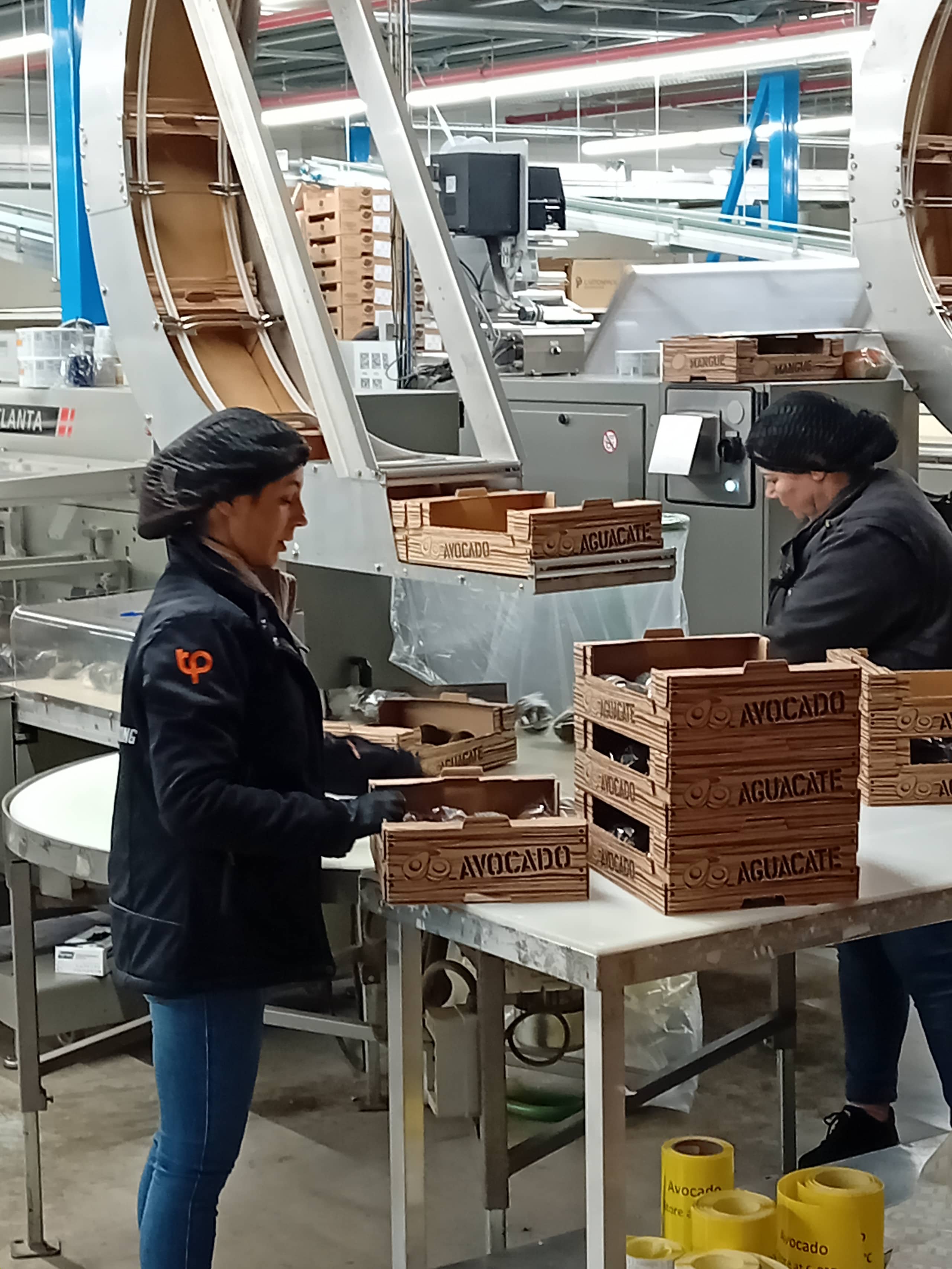
Food production factory
A Dutch strategy for stronger agrologistics
Within the broader discussion about incentives and the functioning of supply chains, the Agricultural Trade Action Plan has emerged as an important initiative. The plan brings together the Ministry of Foreign Affairs, the Ministry of Agriculture, Fisheries, Food Security and Nature, VNO-NCW, IDH, and many actors from the Dutch agrifood sector. According to Vernooij, the plan is driven by two main concerns. ‘First, there is a need to strengthen the sustainability agenda in international trade. Second, recent global developments have made clear how vulnerable supply chains are, making security of supply a much more urgent issue. The plan brings those two objectives together.’
A central idea behind the plan is that these challenges can only be addressed through strong public-private cooperation, together with the Dutch Diamond approach: collaboration between government, business, knowledge institutions, and civil society. ‘Within that broader framework, agrologistics is one of the key action lines. Logistics is not just a technical matter but a strategic one: if logistics chains do not function properly, food loss increases, supply chains become more fragile, and both economic efficiency and sustainability suffer.’
He adds: ‘In practical terms, the plan has a three-year horizon and is now moving into an implementation phase in which partners are being asked to commit to specific action lines and define their contribution. The intention is not to duplicate existing initiatives, but to strengthen areas where public-private cooperation can really unlock change.’
Beeld: © Marcel Vernooij
Products boxed ready for transport
Cold chains as a key solution
One example of the kind of collaboration the action plan seeks to encourage is the exploration into an emerging Cold Chain Partnership. Supported by NFP, it brings together trade and sector organizations, IDH, Wageningen University & Research (WUR), the Ministry of Agriculture, Fisheries, Food Security and Nature, the Ministry of Foreign Affairs, and Dutch embassies. Palaz: ‘Cold chains are an important pathway to reduce post-harvest losses in perishable products such as fruit, vegetables, dairy, and fish, for which we see momentum among our network. At the same time, developing cooling infrastructure also raises questions: is it sustainable, does it fit with the local context and capacities, and how much energy does it require. Many Dutch and international companies are therefore exploring appropriate refrigeration technologies, as well as possibilities to integrate renewable energy.’
The partnership focuses on improving refrigeration and storage solutions along food supply chains. ‘With the help of the Netherlands Agricultural Network (LAN), and together with TRAIDE foundation, Enviu, Rabobank and WUR, we already took some steps in that area. Such as the publication of a cold chain bidbook highlighting 24 East African companies active in the sector. The idea was to connect entrepreneurs with potential investors. When we presented it at a finance event in Nairobi, the response from investors was even stronger than we expected.’
As the partnership is still in an exploratory phase, no specific framework has yet been agreed to measure its impact on food loss reduction. Palaz: ‘Once its scope and focus have been defined more clearly, partners intend to assess how and to what extent cold chain interventions contribute to reducing food losses. More generally, there is already broader evidence that cold chain solutions can help reduce food loss, including recent research “Assessment Framework for Scalable Cold Chain Business Cases to reduce Food Loss and Waste” by Wageningen University & Research.
Starting from business demand
A notable feature of the current initiative is that the exploration started in the Netherlands. Instead of beginning with a specific country program, NFP first mapped the international ambitions of Dutch companies. Palaz says: ‘We looked at where interest exists among Dutch companies to operate internationally. Once you know that, you can then identify which countries have the greatest demand.’
According to Vernooij, this approach reflects how companies themselves assess new markets. ‘If you approach companies with a specific country program, they may say they had other markets in mind. But if you start by identifying markets that companies already find interesting, you can combine initiatives and make investment more likely.’
In many countries, meanwhile, the demand for improved logistics is already clear. ‘In Kenya or Ethiopia, for example, the question is not whether there is demand for better logistics,’ Palaz says. ‘The real questions are which solutions fit the system, and where Dutch skills, expertise and technologies can be connected to local organizations in equal partnerships.’
Beeld: © Avant Communications
Mission to Kenya in March 2025
How the Netherlands Agricultural Network contributes
In that process, agricultural counselors and their teams play an important role. Vernooij: ‘Because they closely follow local agricultural systems, they can help translate ideas into practical cooperation.’ Palaz adds: ‘They often play an important role in connecting Dutch actors with local governments, companies and knowledge institutions. Preparing the ground for collaboration.’
‘Successful partnerships depend on committed actors who are willing to move initiatives from exploration to large-scale implementation’
From coordination to investment
At the same time, stronger coordination is needed within the Netherlands itself. Vernooij says: ‘Agrologistics cuts across several policy areas – including agriculture, trade, logistics and international cooperation – and therefore requires closer alignment between the different actors involved.’
In his view, that makes it important to create platforms where government, business, knowledge institutions and other stakeholders can meet, exchange ideas, and work towards shared priorities.
Palaz adds that such coordination is important but is only one part of the picture. ‘Addressing these challenges also requires investment from the private sector. In the end, however, the return on investment must be clear. Public support and partnerships can help bring actors together, but companies must ultimately see a viable business case if solutions are to be implemented and scaled.’
Both Palaz and Vernooij agree that successful partnerships ultimately depend on ownership and commitment from the actors involved. They must be willing to invest and take responsibility if initiatives are to move from exploration to large-scale implementation. The real test will be whether this combination of coordination, cooperation, and investment leads to concrete initiatives in the years ahead: partnerships that strengthen supply chains while helping to reduce food loss.
More information
For more information about initiatives to reduce food loss and strengthen partnerships in agrologistics and food systems, you can contact:
-
Ibrahim Palaz (NFP)
E-mail: ipalaz@foodpartnership.com -
LinkedIn: Netherlands Food Partnership
-
Marcel Vernooij (IDH)
E-mail: vernooij@idhtrade.org - LinkedIn: IDH – the Sustainable Trade Initiative