
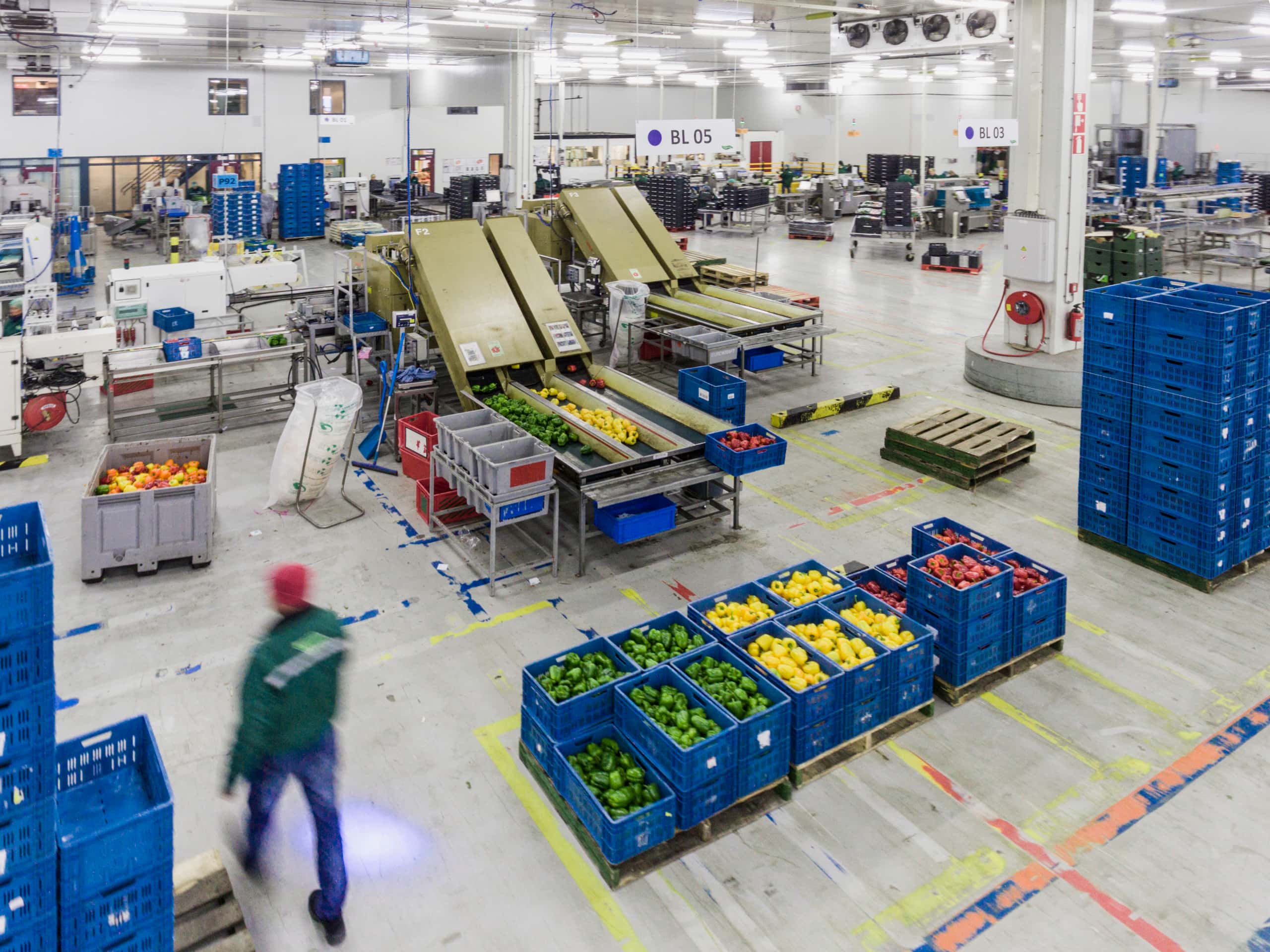
Reducing food loss requires action across the entire system
The Dutch approach links action in the food chain to wider policy goals and international cooperation
Food loss has become a growing priority in the transition to more sustainable and resilient food systems. The Dutch approach recognizes that reducing these losses is not only a matter of efficiency, but also of climate action, biodiversity, food security and international cooperation.
Food loss is one of the most urgent yet under-addressed challenges facing global food systems. Each year, 13.2% of all food is lost between harvest and retail, before it ever reaches consumers. This represents not only lost nutritious food and income, but also a major waste of natural resources. Food that is never consumed accounts for nearly a quarter of global agricultural freshwater use, is produced on an area of farmland larger than China, contributes to ecosystem degradation and biodiversity loss, and generates an estimated 8–10% of global greenhouse gas emissions. Therefore, reducing food loss is one of the most effective ways to strengthen food security, improve the efficiency of food supply chains, and ease pressure on the planet’s natural resources.
Effectively reducing food loss requires action across the entire system. That means looking at the full supply chain, from better data and monitoring to improved infrastructure and logistics. While reducing food loss often makes economic sense, solutions can fall short when incentives are misaligned or when they do not reflect local realities. Results with long-term impact not only consider technical solutions, but also takes into account knowledge, coordination, and the social and economic conditions needed for successful implementation.
‘Reducing food loss is one of the most effective ways to strengthen food security, improve food supply chains, and reduce pressure on our planet’
Expanding policy focus to primary production
In recent years, the Netherlands has expanded its focus from food waste alone to including food losses in primary production. This shift reflects growing concern about global food security, resilience, and the need for more sustainable agricultural practices. As climate change and resource scarcity place increasing pressure on food systems, addressing losses in the earliest stages of production has become even more urgent.
In sectors such as potatoes, fruit, and vegetables, losses are becoming increasingly visible in the Netherlands. At the same time, interest is growing in the valorization of residual streams: surpluses and by-products from food production that are often discarded. Dutch initiatives such as No Waste Army are helping turn these flows into longer-lasting products, preventing food loss while creating new opportunities for food use.
For the first time, food waste has been explicitly addressed in EU legislation through the revised Waste Framework Directive of 2025, although current targets focus mainly on processing, retail, and consumers. The Netherlands is advocating for a broader approach that also includes the primary sector, addressing food loss at the very start of the food chain.
Monitoring food loss is essential to tracking progress and designing effective strategies. Yet, reliable, scalable, and comparable measurement methods are still in an early stage of development. Wageningen University & Research (WUR) is working to develop an improved monitoring framework to better quantify food loss in the Netherlands’ primary sector. Through field measurements and methodological research, this effort aims to lay out the groundwork for more consistent monitoring at both the national and EU levels. Progress remains gradual, however, as farmer participation is limited due to constraints in time and capacity, as well as their concerns about sharing data with the government.
‘Bringing together insights from partners across the Dutch Diamond and the LAN, we build a more resilient agri-food systems worldwide’
An integrated approach as part of a wider sustainability challenge
The Netherlands’ approach to reducing food loss goes beyond addressing inefficiencies in the food system. It is about embedding food loss reduction within the broader agenda of biodiversity and climate action, sustainable food systems, and food security. This perspective is essential because it recognizes food loss as part of a wider sustainability challenge that requires both national action and international cooperation rather than a standalone issue.
Reducing food loss is an important part of our commitment in international food systems and one of the themes in the Knowledge and Innovation Agenda on Agriculture, Water, and Food 2024–2027. The Netherlands has made international commitments to reduce its biodiversity footprint, both at home and abroad. As part of its commitments under the Convention on Biological Diversity, the Netherlands has developed a National Biodiversity Strategy and Action Plan 2025-2030. In that plan, food loss and waste are identified as policy areas that can help reduce multiple environmental footprints, including carbon emissions. The consumption patterns of the Dutch population and production within the Netherlands affect not only the country’s domestic footprint, but also its footprint abroad. Food losses in key sourcing countries are therefore also part of the Dutch food system. In addition, the most recent parliamentary letter on the Netherlands’ International Climate Strategy, highlights the importance of combating food loss and waste.
Working together to reduce food loss worldwide
The Dutch approach to reducing food loss is rooted in collaboration, both within the Netherlands and internationally. The Netherlands is a committed partner in the Champions 12.3 coalition, working toward Sustainable Development Goal Target 12.3 halving per-capita global food waste and reducing food losses by 2030. This year, and in collaboration with the Ministry of Foreign Affairs, IDH, the Netherlands Food Partnership, and WUR, the Ministry of Agriculture, Fisheries, Food Security and Nature is exploring a public-private partnership focused on cold-chain solutions in East Africa and Asia to reduce food losses in those regions.
The Netherlands has also supported WUR in identifying food loss hotspots through research. This collaboration led to the 2024 launch of the open-source Food Loss and Waste Toolbox, which provides real-time data and practical solutions for addressing food loss in four countries.
Through its embassies around the world, the Netherlands Agricultural Network (LAN) plays an important role in connecting local governments, businesses, research institutions and non-profit organizations. By tailoring solutions to regional needs, the LAN helps advance more efficient logistics, improved storage, and innovative food processing technologies that can reduce food loss.
This edition of the Agrospecial focuses specifically on food losses in the early stages of the supply chain, where inefficiencies, spoilage, and logistical constraints remain especially acute. Bringing together insights from partners across the Dutch Diamond and the LAN, in several countries, this e-magazine explores how knowledge, innovation, and international collaboration can help address these challenges and build more resilient agrifood systems worldwide.
I hope this edition will inspire new partnerships, encourage knowledge exchange, and support collective efforts to create more resilient and sustainable agrifood systems. Above all, I hope it encourages you to connect with others and engage with LAN to move this work forward together.
Enjoy your reading.
Marten van den Berg,
Director General for Agriculture,
Ministry of Agriculture, Fisheries, Food Security and Nature
Director General for Agriculture Marten van den Berg