
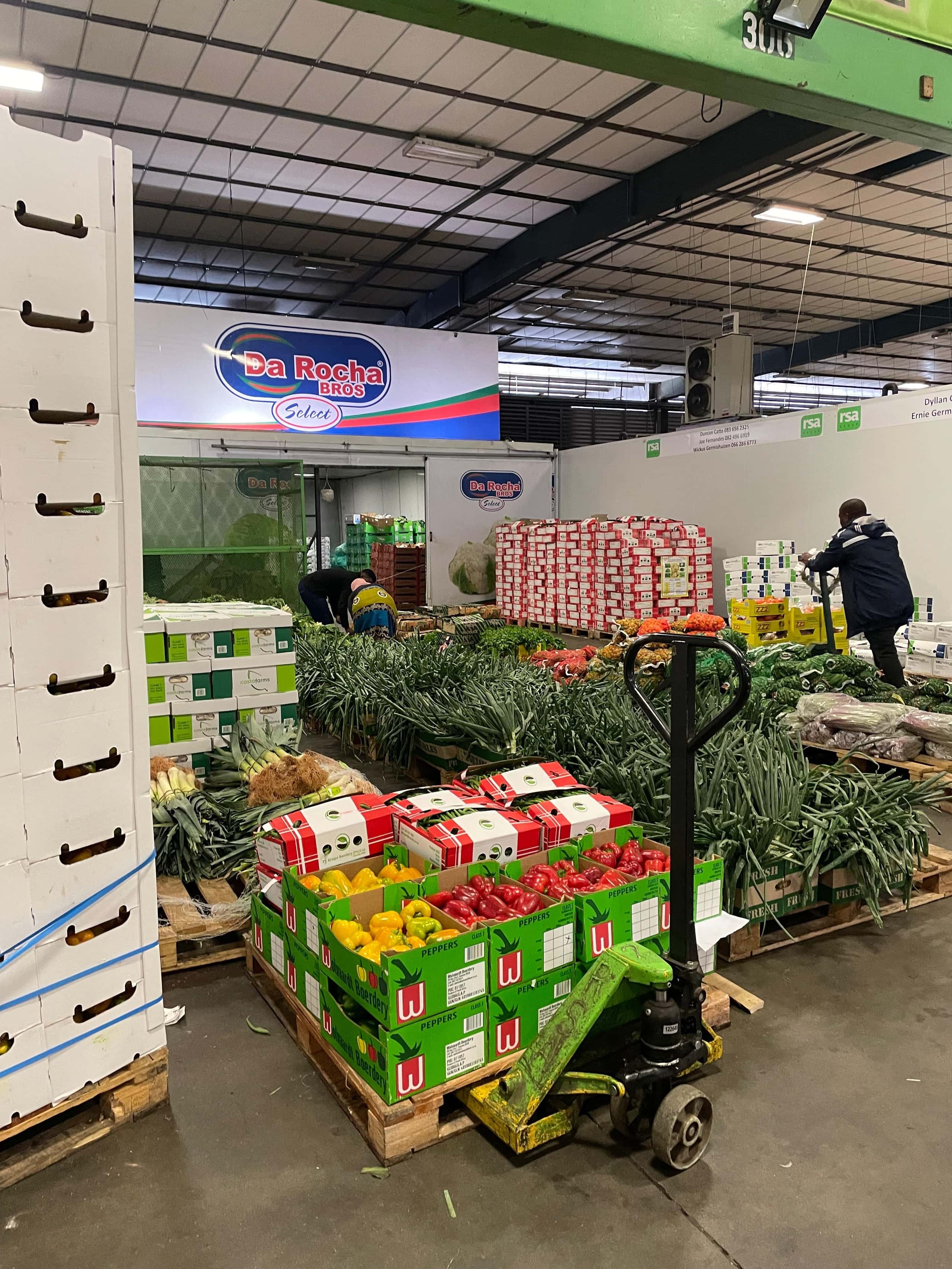
South Africa’s cold-chain challenge
Why stronger logistics matter for trade with the Netherlands
Food loss in South Africa affects both the country itself and its trade with other countries. South Africa exports a lot of fresh fruit to Europe, so delays in storage, transport and ports can reduce quality, shorten shelf life and make supply less reliable. For the Netherlands, this brings both challenges and opportunities. Reducing food loss is therefore not only a South African issue, but also an area where both countries can work together.
According to the World Wide Fund for Nature, South Africa loses an estimated 10 million metric tons of edible food each year, equivalent to roughly one-third of the country’s total food production. This has implications not only for domestic food systems, but also for international trade. As a major exporter of high-value fruit such as citrus, grapes and avocados, South Africa plays an important role in supplying the European Union. The Netherlands is worldwide the largest importer of South African fruit, with an annual import of almost one million tons which is 25% of South Africa’s annual exports. Visa versa, the Netherlands depends on South Africa for 40% of its orange imports and more than 30% of its table grape imports. South Africa mainly supplies during the EU off-season.
Weaknesses in South Africa’s cold chain and logistics increase costs for Dutch importers by causing fruit quality downgrades and losses during transport, which can raise retail prices for consumers in the Netherlands. For Dutch importers and consumers, this can affect both the reliability and the quality of supply. At the same time, it highlights a clear opportunity: Dutch expertise in logistics, cold-chain solutions and port logistics could help reinforce these trade routes and extend the shelf life of fresh produce.
'Problems with infrastructure and logistics weaken South Africa’s reputation as a reliable supplier'
Food loss as a trade issue
In 2025, South Africa’s agricultural exports reached a record high with EUR 16,6 billion, an increase of 10% compared with 2024. Much of this growth was driven by high-value horticultural products, making South Africa one of the world’s major exporters of fresh fruit. Citrus, fresh grapes, and avocados remain among the country's leading export products.
Yet, substantial volumes of fruit never reach either domestic consumers or European supermarket shelves. This undermines growers’ incomes, weakens South Africa’s reputation as a reliable supplier, and creates uncertainty for Dutch and wider European markets that depend on timely, high-quality deliveries.
Also, persistent delays at the ports of Durban and Cape Town continue to threaten fruit exports, with direct losses exceeding USD 18 million and more than USD 50 million in fruit inventory at risk due to handling problems, operational failures, and capacity constraints.
Port of Cape Town
Public-private partnership to build networks and infrastructure
The South African government has announced investments in core infrastructure, including roads and rail, which could strengthen the supply chain over time. Transnet, the state-owned ports and rail operator, has tried to assess private sector interest in freight rail and port logistics, particularly in relation to container traffic through the Port of Durban, the country’s main freight gateway and busiest port. These developments suggest that South Africa is increasingly using public-private partnership models to build networks and infrastructure capable of moving products more efficiently to port and reducing reliance on road freight.
One example is a project at the Cape Town Container Terminal in which private partners deployed additional generators during the peak fruit-export season to power reefer containers. Such partnerships gained momentum in 2024 and 2025 and have contributed to a landmark 25-year concession for Durban Container Terminal Pier 2 to be operated by International Container Terminal Services Inc. (ICTSI), a development that has been welcomed by parts of the agricultural sector.
The Durban Container Terminal Pier 2 concession is expected to:
-
increase capacity from 2 million to 2.8 million Twenty-foot Equivalent Units;
-
improve crane productivity from 18 to 28 moves per hour, and;
-
double ship working hours from 60 to 120.
For agricultural exporters, this is important because fresh produce has a limited shelf life. Faster vessel turnaround and fewer delays mean fruit is less likely to spoil before reaching European markets.
Export bottlenecks and infrastructure pressure
A strong cold chain is crucial to preventing food loss. In South Africa, however, access to reliable cold-chain infrastructure remains uneven along the chain. Pre-cooling capacity is limited, especially for smaller growers, while high-quality refrigeration infrastructure is often concentrated among commercial farmers, premium supermarket chains, or facilities located far from ports. In previous years, load-shedding also disrupted cooling at critical moments in the supply chain.
Weak links remain visible during transport and at port terminals, where delays can leave containers standing too long without adequate electric power. When temperatures rise, spoilage accelerates and quality defects become more likely, increasing the risk of rejection further down the chain. Also, South Africa is a large country with different landscapes and conditions, so transport often depends on roads, which is expensive, especially for smaller growers and retailers.
More reliable cooling from farm to ship would extend the shelf life of citrus, grapes and avocados, reduce quality losses during transit to the Netherlands, and improve the consistency of arrivals in European distribution centers. In turn, this could support better returns for South African producers and reduce overall food loss in a system where every extra day of product life is critical for a successful sale and to prevent waste.
Sahabne Ullah (l.), Market Access Liaison Manager at Fruit SA and Sello Makhubela (r.), CEO of Johannesburg Fresh Produce market during their current global gateway logistics mission to the Netherlands and Belgium.
‘Every extra day of product life is critical for a successful sale and to prevent waste’
Working on cold-chain challenges with the Dutch
Dutch businesses are already active and present along parts of this cold-chain corridor, ranging from port service providers and logistics firms to suppliers of cooling technology and storage solutions in both countries. In the Netherlands, the Port of Rotterdam has opened its Food Hub, a 60-hectare site designed to ensure that refrigerated and frozen cargo can be handled quickly and reliably. This underlines the Dutch commitment to a well-functioning cold chain from farm to fork.
Nature’s Pride, a Dutch importer of fresh produce active in the South African market, identifies produce that does not meet European standards as one of the main challenges in the chain. In some cases, produce rejected in the Netherlands can still be sold in local African markets. Better communication and coordination with farmers and suppliers earlier in the chain is therefore essential: it helps ensure that the right produce is shipped and prevents products unlikely to meet European standards from making the journey unnecessarily. Nature’s Pride traces rejected produce back to the farm of origin, enabling more targeted communication with suppliers and helping to reduce food loss across the supply chain.
Another Dutch company working on these challenges through smart technology is Adagin, which has developed a system that can track crops down to the individual tree from which they are harvested (see image below). To reduce produce rejections on arrival in Rotterdam, the company works with Rotterdam port authorities and applies quality-control checks earlier in the supply chain in South Africa. By using the same checks in South Africa as those applied in Rotterdam, problems can be identified before export, encouraging earlier intervention and greater accountability among producers. According to the company, this approach has reduced food loss and waste by more than 7,000 metric tons.
Beeld: © Adagin technology
Adagin has developed tracking technology that allows farmers, buyers and logistics companies to track a product when it arives in the port back to the tree. Using this technology they are also adopting more stringent quality control checks in packhouses to reduce food loss and rejections at ports. Here a packhouse worker is scanning the QR codes of palets which facilitates the tracking process. Source: Adagin Technology
More Dutch opportunities and the LAN team as facilitator
Building on these existing ties, there is clear scope for more Dutch actors, including engineering firms, technology providers, logistics platforms and financiers, to co-develop projects with South African partners. South Africa already has examples of reliable cold-chain practice, including retailers such as Woolworths. Strengthening links between Dutch technology and South African needs could help reduce losses, improve supply-chain resilience and support more sustainable trade between the two countries.
The Netherlands Agricultural Network (LAN) team at the Dutch Embassy in Pretoria has taken an active role in tackling food losses in South Africa’s fruit value chain through a combination of digital solutions, partnerships, and stakeholder engagement. A key step has been the promotion of e-Cert, which helps digitalize export certification and reduce paperwork-related delays that can disrupt the cold chain and lead to spoilage. In parallel, the team has worked closely with Invest International under the Global Gateway framework to explore opportunities for investment in cold storage, logistics, and other infrastructure that can strengthen supply-chain resilience.
Through its extensive network with stakeholders such as the Citrus Growers’ Association, Fruit South Africa, ESKOM, Transnet, and government counterparts, the LAN team has also helped bring together the right partners to address bottlenecks in the sector and identify where Dutch expertise and solutions – from cooling technology and smart logistics to sustainable storage systems – can contribute to reducing food loss and improving the efficiency of fruit exports.
Toward a more resilient supply chain
Food loss in South Africa is not only a domestic challenge; it is also a trade and logistics issue with direct relevance for the Netherlands. If bottlenecks in storage, transport and port handling continue, producers risk losing value, exporters face uncertainty, and importers receive less consistent supply.
For that reason, reducing food loss should be seen as a practical area for South African-Dutch cooperation. Investment in cold-chain infrastructure, better coordination on quality standards, and stronger public-private partnerships can all help preserve produce, reduce waste, and improve reliability across the corridor from farm to European market. For Dutch companies and knowledge institutions, this is not only a commercial opportunity, but also a chance to contribute to a more efficient and sustainable food system.
More information
If you would like to know more about the cold-chain infrastructure and (agro)logistics in South Africa, you can go to the country page of South Africa on this website. You can also send an e-mail to the LAN team at the Dutch Embassy in Pretoria: pre-lvvn@minbuza.nl.