
Dutch storage and processing solutions in Senegal
Two case studies on post-harvest losses in the horticultural sector
Each year, Senegal loses large volumes of onions, potatoes, and other vegetables due to poor storage, high temperatures, and seasonal oversupply. Farmers often have little choice but to sell quickly at low prices or lose part of their harvest. Cutting these post-harvest losses can improve food security, increase incomes, and strengthen the resilience of the agrifood sector. Two case studies illustrate Dutch practical responses in improving storage and processing in partnership with Senegalese partners.
Addressing post-harvest losses in Senegal is particularly important as the country works to increase agricultural production and strengthen food sovereignty. Under its Food Sovereignty Strategy, Senegal aims to expand cultivated land, boost agricultural and horticultural output, and reduce dependence on imports. You can read more about Senegal’s National Food Sovereignty Strategy here.
Post-harvest losses are especially severe in the onion sector. Field research estimates average losses for onions around 40%, rising to as much as 60% in some regions. According to a value chain study commissioned by the Netherlands Enterprise Agency (RVO), Senegal's onion production has grown rapidly in recent years, reaching approximately 400,000-450,000 tons annually. That is broadly in line with national demand since as much as 180,000 tons of produce may be lost each year due to poor storage conditions.
The graph on the left shows the import and production of onions in Senegal. The table on the right shows the location where onions are imported from. Production of onions in Senegal has risen sharply this past decade and imports of onions have risen moderately during this same period. This indicates a steep rise in total demand for onions in Senegal. The Netherlands was by far the biggest exporter of onions to Senegal in 2019 when measured in tons of export volume. Source: RVO report on ‘Senegal Value Chain Study – Onions'
The main issue is not only how much Senegal produces, but also when and how that production reaches the market. Onion harvests are highly seasonal, with most output concentrated between March and May. During that period, markets are often oversupplied and prices fall sharply. Farmers without access to proper storage facilities are forced to sell immediately, often at very low prices, because holding produce is too risky.
Annual price fluctuations in onion prices in Senegal. Source: Féro
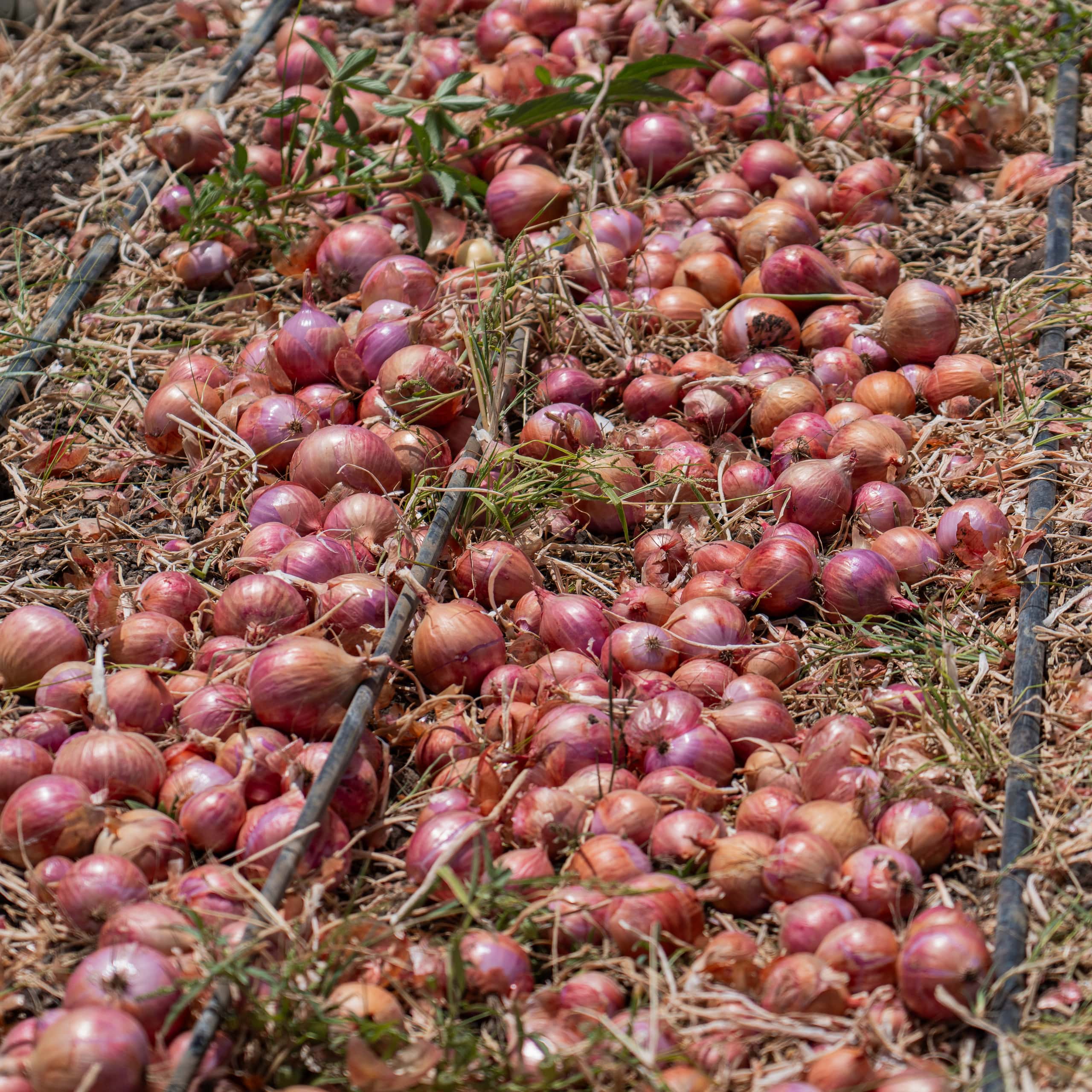
Measuring storage losses per month helps explain why the seasonal cycle is so difficult to break. The value chain study estimates that onions stored through open air methods (see image below) can lose around 50% of their volume within four months. In other words, even when production is relatively strong, weak storage makes it difficult to spread supply over time. Seasonal abundance can therefore quickly turn into scarcity later in the year, contributing to renewed import demand.
High temperatures make this problem worse. Climate projections indicate that average temperatures in Senegal could increase by more than 1°C by mid-century, further reducing the effectiveness of traditional open-air storage systems and increasing the need for alternative storage solutions. Improving post-harvest storage has emerged as one of the clearest ways to reduce losses, stabilize markets, and strengthen the competitiveness of Senegalese agriculture.
Traditional open-air storage systems with high food loss rates. Source: Féro
Why better storage has become a strategic priority
The Senegalese government recognizes the importance of addressing these constraints. Under the national strategic framework Vision Senegal 2050, agriculture remains a key pillar of economic development and food security. Public investment priorities under this plan include the expansion of storage and cold-chain infrastructure, reflecting a broader shift toward strengthening value chains rather than focusing on production alone.
This policy direction follows directly from the storage problem outlined above. Better storage can help reduce food loss, smooth out seasonal supply swings, stabilize prices, and improve farmer incomes across key value chains such as onions, potatoes, and other horticultural crops. This creates opportunities for Dutch stakeholders to collaborate in storage and cold chain development, post-harvest management and climate smart agriculture.
‘Improving post-harvest storage is one of the clearest ways to reduce losses, stabilize markets, and strengthen Senegalese agriculture’
Dutch storage and processing solutions in Senegal
The two case studies below show how Dutch companies active in Senegal are responding to precisely these bottlenecks through storage and processing solutions for the horticultural sector. The Netherlands Agricultural Network (LAN) team at the Dutch Embassy in Dakar has helped by providing advice on how to adapt to the local Senegalese value chain contexts and by connecting the Dutch businesses with relevant stakeholders in Senegal.
Case Study 1: Féro's Solar-Powered Storage Model
One example of Dutch innovation in this area is the development of modular cold-storage units by the Dutch company Féro. The company has developed a solar-powered cold chamber specifically designed for small- and medium-scale farmers and cooperatives in Senegal. The system was studied as part of an innovation program supported by RVO.
The Féro cold-storage prototype addresses this challenge through a decentralized, affordable design that uses circular materials such as clay, earth, rice, and recycled plastic. Each modular unit provides approximately 55 tons of storage capacity and can be expanded by adding modules. The system can also be powered by solar energy, making it suitable for rural areas where electricity costs are high, or grid access is limited.Research during the feasibility phase indicates that the system could reduce post-harvest losses to around 5% over five months of storage and to about 20% over a full year, substantially improving current loss rates in the country.
Improved storage also allows farmers to sell at more favorable moments in the season. Onion prices in Senegal can vary widely, from around 140-200 CFA per kilogram during harvest to as high as 700 CFA later in the year, when supply tightens and imports dominate the market. Once the main storage period for local onions ends, the chambers can also be used for imported onions or other vegetables, improving the overall economics for farmers and cooperatives. The project also emphasizes inclusivity. Women play a central role in vegetable production and trade in Senegal, and women-led cooperatives have been identified as an important target group for this type of storage technology.
The ability to store produce enables farmers to sell when prices recover, increasing revenues, and reducing exposure to market volatility. Combined with the relatively low upfront investment and operating costs of the Féro chambers, this suggests a potentially strong business case for small- and medium-scale farmers and cooperatives in West Africa.
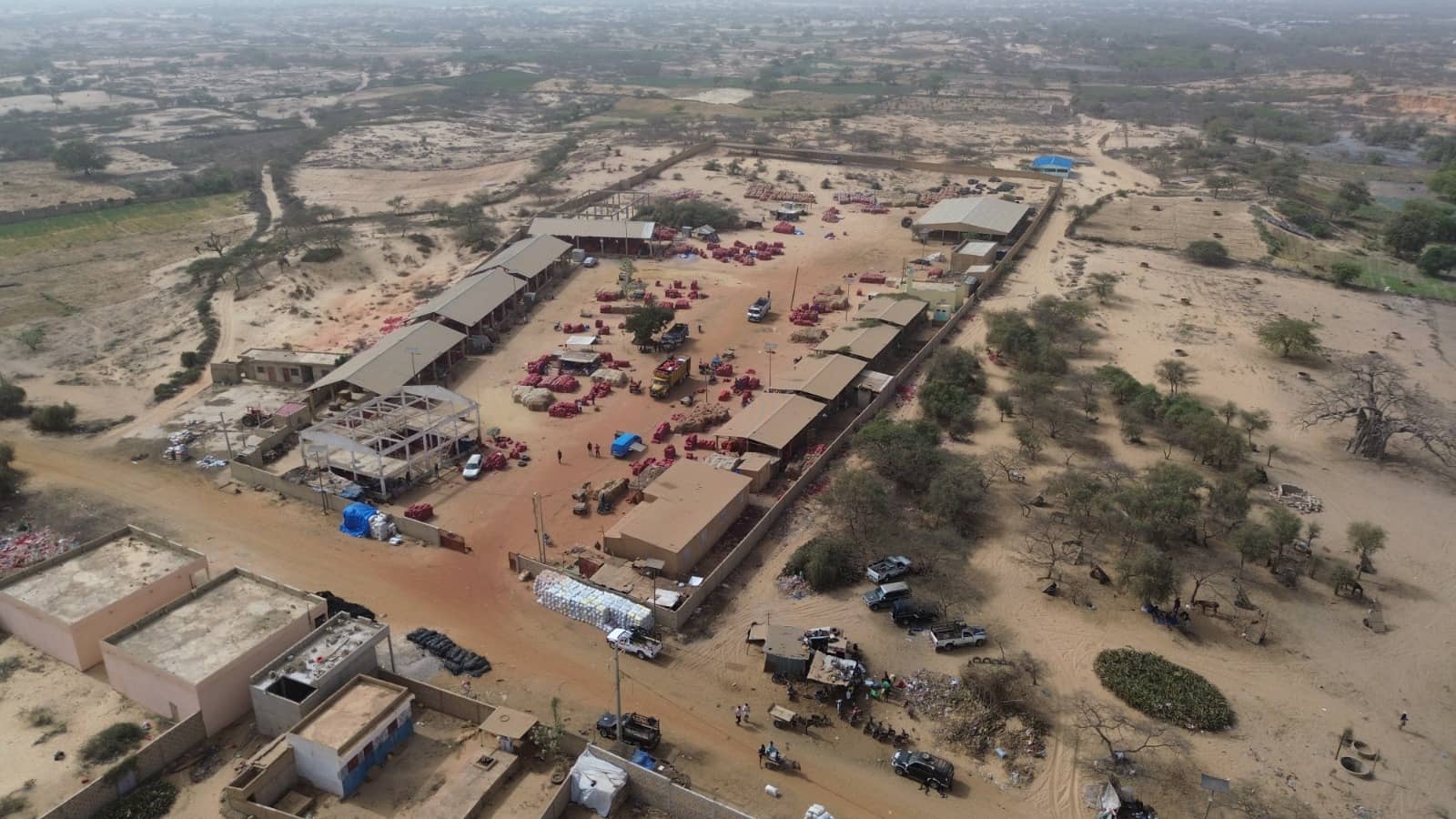
An example of a Senegalese storage center for the horticultural sector
‘The ability to store produce enables farmers to sell when prices recover, reducing exposure to market volatility’
Case Study 2: Agro Expedition Senegal hub
A second example of Dutch involvement is the Agro Expedition Senegal hub, developed through cooperation between Hanse AgroStore and Silas Export Senegal, a subsidiary of the Dutch company Silas Export Holding.
Located in new urban development Diamniadio, near the capital Dakar, the project was initially conceived as a storage facility for onions and potatoes, but it has since developed into a multifunctional agricultural center.
The development took place in three phases. The first phase included two storage chambers with a combined capacity of around 1,100 tons, along with office facilities. The second phase added two additional chambers, increasing capacity by 1,680 tons. In the third phase, a second floor was constructed to house a potato chip processing line, allowing the facility to move beyond storage into value-added processing. This shift toward processing also aligns with the Senegalese government's broader goals for agricultural development.
Now, the center provides 2,780 tons of climate-controlled storage capacity equipped with advanced cooling and ventilation systems. By combining storage, logistics, and processing in one location, the facility is intended to help stabilize supply chains and maintain product quality throughout the year.
Building a more resilient food system
Reducing food loss is not only about preserving food; it is also about strengthening the resilience of agricultural systems and improving farmers' livelihoods.
The Netherlands works with Senegalese and Dutch partners, research institutions and companies to support innovations that improve storage, logistics, and processing. Innovations such as solar-powered cold storage and integrated storage-processing hubs show how targeted investments can significantly reduce spoilage while improving market stability, farmer incomes, and environmental outcomes.
By combining local knowledge and experience with Dutch expertise in agriculture, logistics, and post-harvest technology, both countries can contribute to building a more sustainable and resilient food system.
More information
If you would like to know more about reducing post-harvest losses in Senegal or about Dutch storage and processing solutions, you can visit the country page of Senegal on this website. You can also send an e-mail to the LAN team at the Dutch Embassy in Dakar: dak-lvvn@minbuza.nl.