
From food loss to food security in the Gulf Cooperation Council
Opportunities for Dutch-GCC collaboration
In the Gulf Cooperation Council (GCC) countries, food loss is receiving growing attention as part of the wider food security challenge. Heavy dependence on imports, combined with extreme heat, limited water resources and long supply chains, make the region especially vulnerable to disruption. Reducing food loss can help save valuable resources, improve efficiency, and strengthen the food system. It also opens the door to closer cooperation with the Netherlands in areas such as cold-chain systems, post-harvest technology and agrologistics.
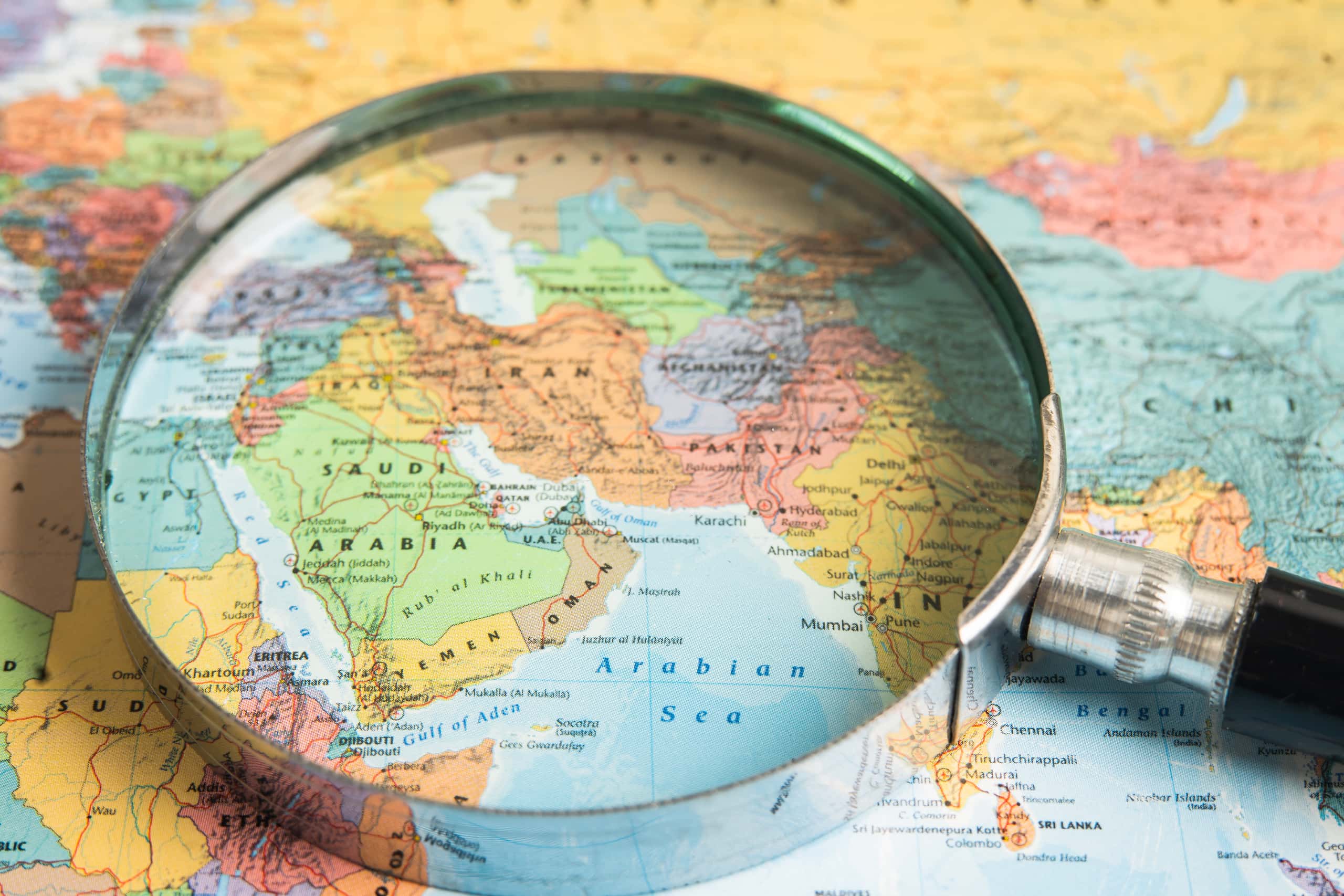
The Gulf Cooperation Council (GCC) - Bahrain, Kuwait, Oman, Qatar, Saudi Arabia and the United Arab Emirates - is one of the world’s most import-dependent food regions. Over 80% of food consumed in the GCC is imported, and much of it is transported through major maritime routes such as the Strait of Hormuz and the Red Sea. Extreme climate conditions, limited freshwater resources, and reliance on global trade routes make food security in the Gulf especially vulnerable to disruption.
Beeld: © LAN-RIY
Fruit and Vegetable Market, Dubai- UAE
Persistent vulnerabilities in the GCC’s food systems
After the Covid-19 pandemic, governments invested heavily in strategic food reserves and diversified supply chains, both by building buffer stocks, sourcing from a wider range of countries and investing upstream in global agrifood systems. For example, Saudi Arabia maintains large national grain reserves and has expanded global sourcing and overseas investments through the Saudi Agricultural and Livestock Investment Company (SALIC) while the United Arab Emirates’ food security strategy focuses on boosting domestic production, strengthening local food manufacturing, attracting innovation and private investment into AgTech and securing international acquisitions and partnerships to diversify supply sources.
Despite these efforts, recent shocks have exposed persistent vulnerabilities: the Russian invasion in Ukraine constrained supplies of key grains from the Black Sea region and disruptions to Red Sea shipping routes. In addition, the ongoing tensions involving Iran have increased rerouting, freight costs and transit times. These developments underscore a simple reality: resilience depends not only on access to food, but on how efficiently and from where it can be sourced and moved through the system.
Food losses are more than economic inefficiency
According to organizations such as FAO, up to 30% to 40% of food in the GCC is lost before it reaches the consumer. In a region where food production and processing require major investments in energy, water and infrastructure, those losses represent more than economic inefficiency: the water, energy, and inputs used to produce it are lost as well.
All six GCC countries have committed to the United Nations Sustainable Development Goals, including the target to halve global food loss and waste by 2030. In that context, reducing food loss is increasingly seen not only as a sustainability objective, but as a practical way to strengthen food security and supply-chain resilience.
Beeld: © LAN-RIY
Fresh veggies and fruits at a retailer in Saudi Arabia
Controlled-environment agriculture in extreme conditions
Food supply chains in the GCC operate under very different conditions than those in temperate climates. Fresh produce, dairy and poultry must move through environments where outdoor temperatures can exceed 45°C, placing constant pressure on cooling systems, storage facilities, and transport networks. This makes it a ‘living lab’ for Dutch tech and research.
At the same time, governments across the region are investing heavily in domestic production. High-tech greenhouses, modern dairy farms, poultry facilities and aquaculture operations are expanding rapidly, particularly in Saudi Arabia and the United Arab Emirates. These projects are closely tied to broader economic diversification strategies and national food-security agendas.
Controlled-environment agriculture is becoming an important part of this shift. Advanced greenhouse systems, vertical farming technologies, and water-efficient cultivation methods are making local production possible despite extreme climatic conditions. In the UAE, companies such as Pure Harvest Smart Farms, Silal and Armela Farms have developed high-tech greenhouse operations that integrate climate control systems, hydroponic growing methods and precision irrigation. Similarly, in Saudi Arabia, Dava Agricultural, National Agricultural Development Company (NADEC) and others are advancing large-scale controlled-environment production.
These projects are supported by international technology providers, including Dutch expertise, across the full value chain, from high-performance seeds and greenhouse design to climate control systems, substrates, water treatment and sensor-based monitoring. Together, these technologies enable year-round production of fresh produce, while significantly improving water-use efficiency and resource productivity in desert environments.
However, increasing production alone does not automatically improve food availability. Ensuring that food moves efficiently from farm or production facility to consumer is equally important. This is where food loss becomes a systemic challenge.
Beeld: © LAN-RIY
Fresh produce
Understanding where losses occur with support from LAN
To better understand the drivers of food loss across the region, the Netherlands Agricultural Network (LAN) team at the Dutch Embassy in Riyadh, Saudi Arabia commissioned a desk study in 2024–2025, with the objective of mapping the regional food logistics system, assessing the state of post-harvest and cold chain solutions, and identifying opportunities for Dutch expertise and technology. This was followed by a fact-finding mission to Saudi Arabia and the United Arab Emirates involving meetings and site visits with government stakeholders, producers, logistics operators and retailers. The findings showed that food loss is not concentrated at a single stage but occurs throughout the supply chain.
Temperature fluctuations remain one of the most consistent causes of spoilage. Maintaining stable cold chain conditions across harvesting, storage, transport, and retail is technically demanding in the GCC climate. For example, fresh produce such as leafy greens or berries may be precooled after harvest but then exposed to high ambient temperatures during loading or transport, causing condensation and accelerated microbial growth, which can reduce shelf life by several days.
Similarly, repeated breaks in temperature control during last-mile distribution to retail outlets can lead to cumulative quality deterioration that is not always immediately visible but results in higher rejection rates at the store level. In many cases, limited digital monitoring and real-time data visibility make it difficult to detect such deviations early or enforce consistent standards across the chain.
Infrastructure constraints also play a role. Some production sites are in remote desert areas with limited road access. Dirt roads and long transport distances can damage fresh produce before it reaches packing facilities. Also, insufficient cooling immediately after harvest can sharply reduce shelf life before products even entering formal cold-chain systems.
‘Food loss is not concentrated at a single stage, but occurs throughout the supply chain’
Differences in food distribution
Food distribution in the GCC also differs from typical European supply chains in ways that affect food-loss patterns. In Europe, retail systems are highly centralized, with products typically moving through integrated distribution centers where storage conditions, quality control and inventory management are tightly coordinated. In contrast, in many GCC markets, large producers and importers often operate their own logistics fleets and deliver directly to multiple retail outlets instead of having centralized hubs. While this model can increase speed to market, it also leads to fragmented handling, inconsistent cold chain management, and limited consolidation of volumes, particularly for perishable products.
To manage uncertainty in supply and demand, companies often hold higher safety stocks. That extends storage time and increases the risk of spoilage. Quality control is also frequently decentralized, with store-level staff responsible for product assessment and inventory decisions.
The LAN desk study from 2024-2025 also showed that technology alone will not solve these challenges. Reliable cold-chain performance depends just as much on operational discipline and workforce skills. Training, standardized handling procedures, and better coordination between producers, logistics providers and retailers are therefore as important as physical infrastructure. Taken together, these factors show that food loss in the GCC stems from the interaction of climate, logistics structures, operational practices, and infrastructure.
Beeld: © LAN-RIY
Meeting with government stakeholders
A growing opportunity for cooperation with the Netherlands
The desk study and fact-finding mission also highlighted strong alignment between GCC priorities and Dutch expertise. Across the region, governments and businesses are investing in logistics infrastructure, smart agriculture, and food-innovation ecosystems. Improving cold-chain performance, extending shelf life, and strengthening supply-chain coordination are increasingly seen as essential to getting more value from those investments.
Dutch companies and knowledge institutions have developed extensive expertise in precisely these areas, including post-harvest management, cold chain optimization, digital monitoring technologies, packaging innovation, and integrated agrologistics planning. Wageningen University & Research plays a leading role through applied research and international partnerships on food system efficiency. Its Food Loss Solutions platform provides a structured Target–Measure–Act approach, offering practical tools and data-driven methodologies to identify loss, hotspots, quantify inefficiencies, and design effective interventions across supply chains.
For the Netherlands, cooperation in this field offers an opportunity to contribute actionable knowledge that directly supports the GCC’s food security ambitions, while also creating pathways for long-term innovation partnerships and systemic improvements in agrologistics.
‘A desk study and fact-finding mission highlight strong alignment between GCC priorities and Dutch expertise’
Innovation mission on cold-chain and post-harvest solutions
Building on the desk study and fact-finding mission, the LAN team in the GCC is organizing an innovation mission on cold-chain and post-harvest solutions to Saudi Arabia and the United Arab Emirates. Originally planned for May 2026, the mission has been postponed considering the current regional situation. Once conditions allow, new dates are expected to be announced for the second half of 2026.
The mission aims to bring together Dutch companies, technology providers, and knowledge institutions with regional stakeholders across production, processing, logistics, and retail. Its objective is to identify practical cooperation opportunities that can reduce food loss while improving the efficiency and sustainability of agrologistics systems.
Potential areas of cooperation include advanced cooling technologies adapted to extreme climates, digital systems for real-time cold-chain visibility, packaging innovations that extend shelf life under high temperatures, and improved inventory management supported by data and forecasting tools.
Beyond individual projects, the mission will also explore the development of a Public-Private Partners for International Business (PIB) cluster focused on cold-chain and post-harvest innovation in the GCC. By bringing together complementary Dutch expertise in a coordinated framework, such a cluster could support pilot projects, strengthen knowledge exchange, and develop scalable solutions for the region and other comparable markets.
Beeld: © LAN-RIY
Adressing the delegation's questions during tour in NADEC facility
Building resilience through cooperation
Saudi Arabia and the United Arab Emirates are a logical starting point for this collaboration. Both are major regional logistics and trade hubs, host rapidly expanding food-production sectors and are investing heavily in agri-food innovation. In highly import-dependent regions, food security is often discussed in terms of production capacity and strategic reserves.
Yet, reducing food loss offers an equally powerful pathway to strengthening resilience. Every percentage point of food saved across the supply chain represents more efficient use of water, energy and agricultural inputs. It also improves the reliability of food availability in markets that remain closely connected to global trade networks.
As the GCC continues to expand domestic production and modernize its agrologistics systems, addressing food loss will become an increasingly important part of building resilient and sustainable food systems. Through research, partnerships, and targeted initiatives such as the upcoming innovation mission, the LAN team in the GCC aims to support this transition, helping turn one of the region's most pressing operational challenges into an opportunity for innovation and international cooperation.
More information
If you would like to know more about the innovation mission or cold-chain opportunities in the Gulf, you can visit the country page of the GCC on this website. You can also send an e-mail to the LAN team in the GCC: riy-lvvn@minbuza.nl.