
Dutch solutions for food loss and water efficiency in Iraq
Saving water means saving food
Improving the efficiency of Iraq’s agricultural value chains is becoming increasingly important as the country faces both food security challenges and growing water scarcity. Reducing food losses along the supply chain offers a practical opportunity to make better use of existing production, strengthen rural livelihoods, and increase the productivity of the water already used in agriculture.
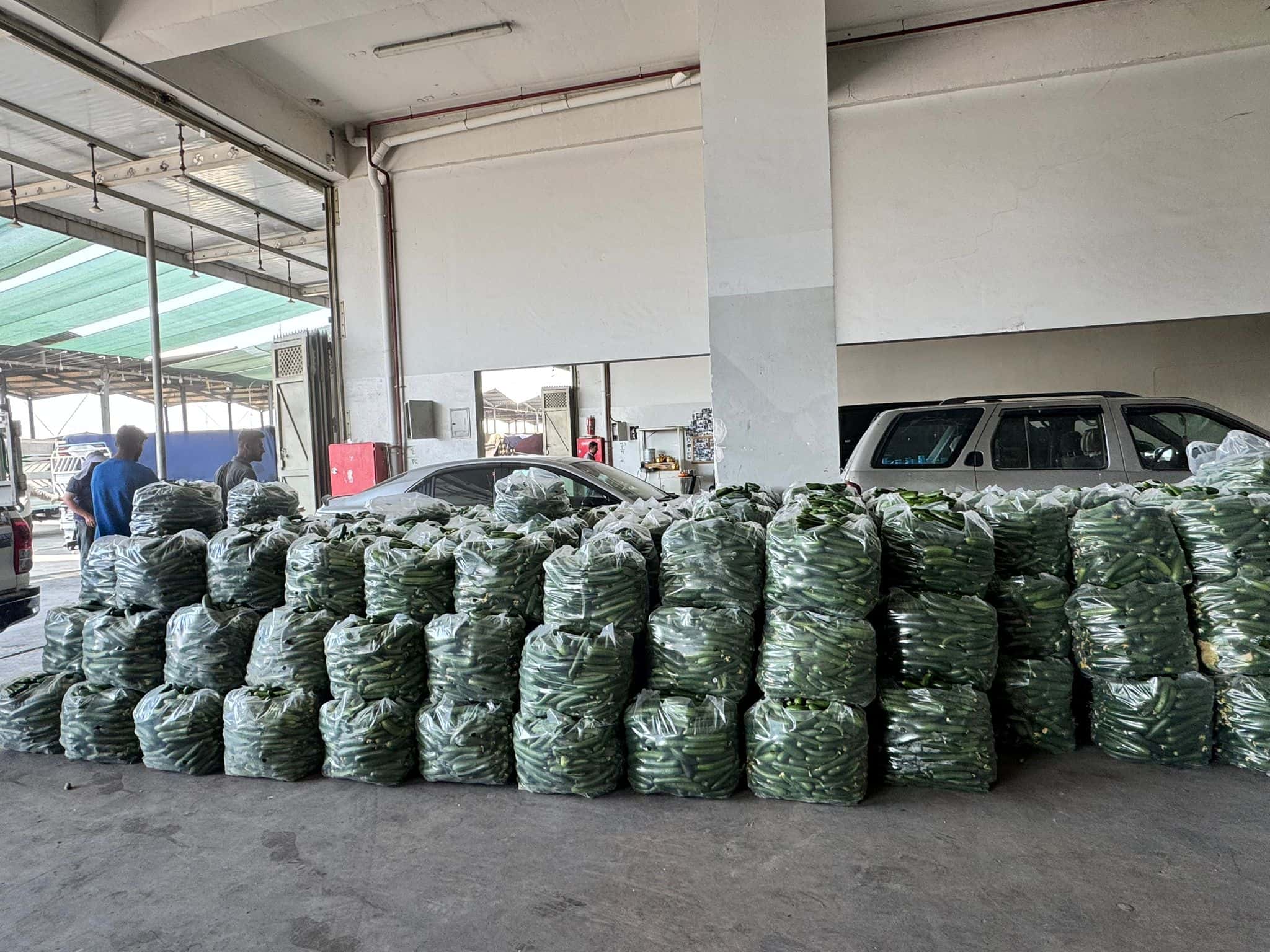
In Iraq and the Kurdistan Region, much of the food that farmers grow never reaches consumers. It is estimated that 30% to 40% of fresh food is lost. At the national level, estimates put Iraq’s total food loss and waste at around 6 million tons per year. At the local level, data from Erbil alone shows that about 600 tons of edible food are thrown away every day: 31.5% of the city’s total municipal waste. For individual crops, FAO's value chain study for Iraq documents losses across wheat, tomatoes, dates, and grapes.
A truck loaded with tomatoes at the Sulaymaniyah wholesale market, ready for transport to other cities.
Post-harvest losses in handling and transport
The reason why Iraq is facing food loss is because harvesting is largely done manually, with limited sorting or grading. Crops are often packed in bulk containers without protective packaging. Under the country’s high summer temperatures, the quality of highly perishable fruits and vegetables, such as tomatoes, cucumbers, grapes, figs, and apricots, can decline within hours.
A typical example is the movement of tomatoes and other fresh produce between the Kurdistan Region and central or southern Iraq, or in the opposite direction during the off-season. These long-distance journeys, often made in unrefrigerated trucks, are a daily reality rather than an exception. As a result, produce may arrive at wholesale markets bruised, wilted, or spoiled. FAO and WFP value-chain analysis for Iraq confirms that the lack of cold-chain infrastructure and poor transport handling are among the main causes of post-harvest losses for tomatoes and other perishable products.
Local pomegranates are displayed in a market in Halabja Province, a city known for its pomegranate cultivation.
The water–food nexus
Food loss has important implications for Iraq’s water crisis. The Tigris and Euphrates rivers provide most of the country’s freshwater supply, yet their flow has declined significantly due to upstream dam construction, drought, and climate change. Irrigation practices are also often inefficient, particularly in southern regions where soil salinity reduces crop quality and contributes to further losses.
Agriculture accounts for more than 80% of Iraq’s water consumption. Much of this water is used for irrigated field crops such as wheat, barley, maize, and potatoes, as well as for tomatoes, cucumbers, eggplants, and watermelons. When these crops are lost, the water used to grow them produces no economic or nutritional value. Reducing post-harvest losses therefore improves the efficiency of water use without requiring additional water resources.
This means that reducing post-harvest losses is not only a food security priority but also an important strategy for conserving water. By saving food, the productivity of water already used increases without requiring additional land, input, or irrigation. The integrated perspective of the water-food nexus is an area where Dutch knowledge and experience can offer practical and long-term solutions for Iraqi farmers and policymakers.
‘Reducing post-harvest losses is not only a food security priority but also an important strategy for conserving water’
Challenges and opportunities in reducing food loss
Cold-chain infrastructure remains underdeveloped across Iraq due to electricity shortages, underinvestment, and the limited development of the private sector. As a result, cold storage facilities have often been established in an ad hoc way, with major differences between production areas and markets.
There are also clear differences between the Kurdistan Region and the rest of Iraq. The Kurdistan Region has benefited from relatively more stable security conditions, more private sector investment, and a stronger presence of internationally supported projects. Large-scale cold storage and related infrastructure are therefore more common there than in other parts of the country.
Refrigerated transport does exist in Iraq, but it is not widely organized for fresh horticultural produce. Meat and poultry are more likely to be transported in refrigerated trucks, while fruits, vegetables, leafy greens, and strawberries are still commonly moved in non-refrigerated vehicles. As a result, fresh produce often loses quality during long-distance transport and at wholesale markets, particularly on routes between the Kurdistan Region and central and southern Iraq. Wholesale markets themselves frequently lack effective quality control, cold storage, and efficient logistical management.
Another challenge is the fragmented nature of Iraq’s supply chains. Limited coordination among farmers, traders, and transporters reduces incentives to invest in improved post-harvest practices and makes it harder to improve handling, storage, and marketing across the value chain.
At the same time, these challenges present opportunities for improvement. Even relatively modest investments – such as improved packaging boxes, shaded collection points, better transport routing, and cooling infrastructure – could significantly extend shelf life and reduce losses. Expanding packhouses, modernizing wholesale markets, and strengthening producer organizations could further improve coordination throughout the value chain.
A photo from a wholesale market shows rotted fruit being thrown away before reaching buyers.
Growing momentum for tackling losses
So far, relatively few initiatives specifically targeting post-harvest losses have been led by the Iraqi government itself. Much of the momentum has come from international organizations, private sector actors, and local authorities. The Ministry of Agriculture does support the sector through measures such as subsidized seeds, agricultural inputs, and efforts to modernize irrigation systems, which can indirectly strengthen supply chains.
In addition, organizations such as the International Trade Centre have supported Iraqi authorities in developing sector strategies for products such as poultry, tomatoes, and potatoes, including measures that improve post-harvest management. In the past four years, both the federal government and the Kurdistan Regional Government have also given higher priority to agriculture, with investment in the sector rising significantly in the Kurdistan Region.
Initiatives include the development of cold-chain infrastructure, improved packaging systems, and digital monitoring tools. Investments in protected agriculture, such as greenhouses and hydroponics, are also gradually expanding, particularly in the Kurdistan Region.
These initiatives come from a mix of international NGOs, private companies, and local government actors. In parallel, Iraq is developing the Development Road project, a multi-billion-dollar infrastructure corridor linking the Gulf to Europe through Türkiye, which could also improve broader logistics and trade connectivity, including for agriculture.
Dutch solutions for gaps in the Iraqi value-chain
This is where Dutch cooperation can add real value. The Netherlands has built an international reputation for transforming agricultural challenges into opportunities for innovation. Dutch expertise directly addresses the specific gaps identified in Iraq’s agricultural value chain, from harvesting, processing to wholesale and market management as well as agri-logistics. Concretely, this includes energy-efficient cold-chain systems, quality monitoring, smart agri-logistics, and water-efficient greenhouses.
Dutch expertise in packhouse, grading, and sorting which are practically absent in Iraq today, could significantly reduce the food losses documented across vegetables and fruits. Water efficient greenhouses and protected agriculture is already gaining traction in the Kurdistan Region and could be scaled further.
Working with local authorities
The Dutch Embassy in Baghdad, the Consulate General of the Netherlands in Erbil, the Netherlands Agricultural Network (LAN) team in Iraq, and the Netherlands Enterprise Agency (RVO) work closely with local authorities and private partners to support initiatives that strengthen agricultural value chains and promote private sector development in Iraq. They do so by connecting Dutch companies, knowledge institutions, and Iraqi stakeholders through networking events, matchmaking, capacity-building activities, technical training, and knowledge exchange. These efforts help farmers, extension officers, companies, and public institutions adopt improved post-harvest practices and strengthen cooperation across the value chain.
At policy level, the LAN team in Iraq also works with the Iraqi Ministry of Agriculture and the Kurdistan Regional Government to improve coordination, support agricultural development, and encourage long-term partnerships. This is done via bringing together partners-connecting Dutch companies, knowledge institutions, and Iraqi stakeholders through networking events and matchmaking that create a hub for long-term partnerships.
This is complemented by providing capacity building trainings, knowledge exchange and technical support to farmers, extensions officers and other stakeholders across the value chain. This is helping them adopt better post-harvest practices.
‘Dutch expertise in agrologistics, post-harvest technology, water-efficient agriculture and circular practices support long-term partnerships’
Examples of Dutch-supported initiatives
In the potato value chain, the CABI-led project ‘Strengthening the Potato Value Chain in the Kurdistan Region of Iraq’ is a concrete example of how Dutch-supported initiatives are making a real difference on the ground. Funded by RVO and implemented through a public-private partnership with Kurdistan Holland (KH), the University of Duhok, and the Directorate of Agriculture, and HZPC, the project has been running since 2021 in Duhok Province with the goal of meeting demand for locally produced and processed potato products.
The results so far are tangible: a large-scale potato cold storage unit has been built and operating since 2023, storing thousands of tons of not only harvested potatoes but also Dutch seed potatoes before distribution to farmers. A potato processing factory is under construction and will employ hundreds of people. Additionally, the capacity building side – technical trainings on IPM and agricultural practices – has been provided for hundreds of project stakeholders including extensions staff, partner staff, retailers, and government employees.
In addition to potatoes, Dutch-supported programs also contribute to the development of the horticulture sector. One of the most tangible examples is the hydroponic greenhouse in Sharazur district. The facility produces leafy greens using Dutch designed hydroponic systems, operates year-round and is considered as one with the most advanced technologies in the country. Current initiatives in the vegetable value chain aim to strengthen cooperation between farmers and buyers, improve coordination across the value chain, and encourage private investment in the sector.
Furthermore, a pilot project is currently underway in Sulaymaniyah province, Kurdistan region of Iraq, focusing on the cucumber and tomato value chains. It is being implemented by HollandDoor in partnership with Green Solutions. The project works across several areas:
- Fostering cooperation between value-chain actors through field workshops;
- Piloting improved packaging solutions to reduce post-harvest losses and present local produce more attractively;
- Promoting food safety;
- Testing market-demanded crop varieties to better align production with consumer needs.
These interventions are intended to reduce food losses along the supply chain, extend shelf life, and improve market access for Iraqi producers. For Dutch companies, these developments create opportunities to contribute technology and expertise in areas such as cold-chain development, greenhouse systems, post-harvest technologies, and agrologistics.
Hydroponic greenhouse in the Kurdistan Region of Iraq, supported by the Netherlands
More information
For more information about cooperation between Iraq and the Netherlands on reducing water scarcity, food loss and strengthening agricultural value chains, you can visit the country page of Iraq on this website. You can also send an e-mail to the LAN team at the Dutch Consulate-General in Erbil: erb-lvvn@minbuza.nl