
Reducing food loss in India through a decade of India–Netherlands cooperation
The search for a stronger agricultural value chain
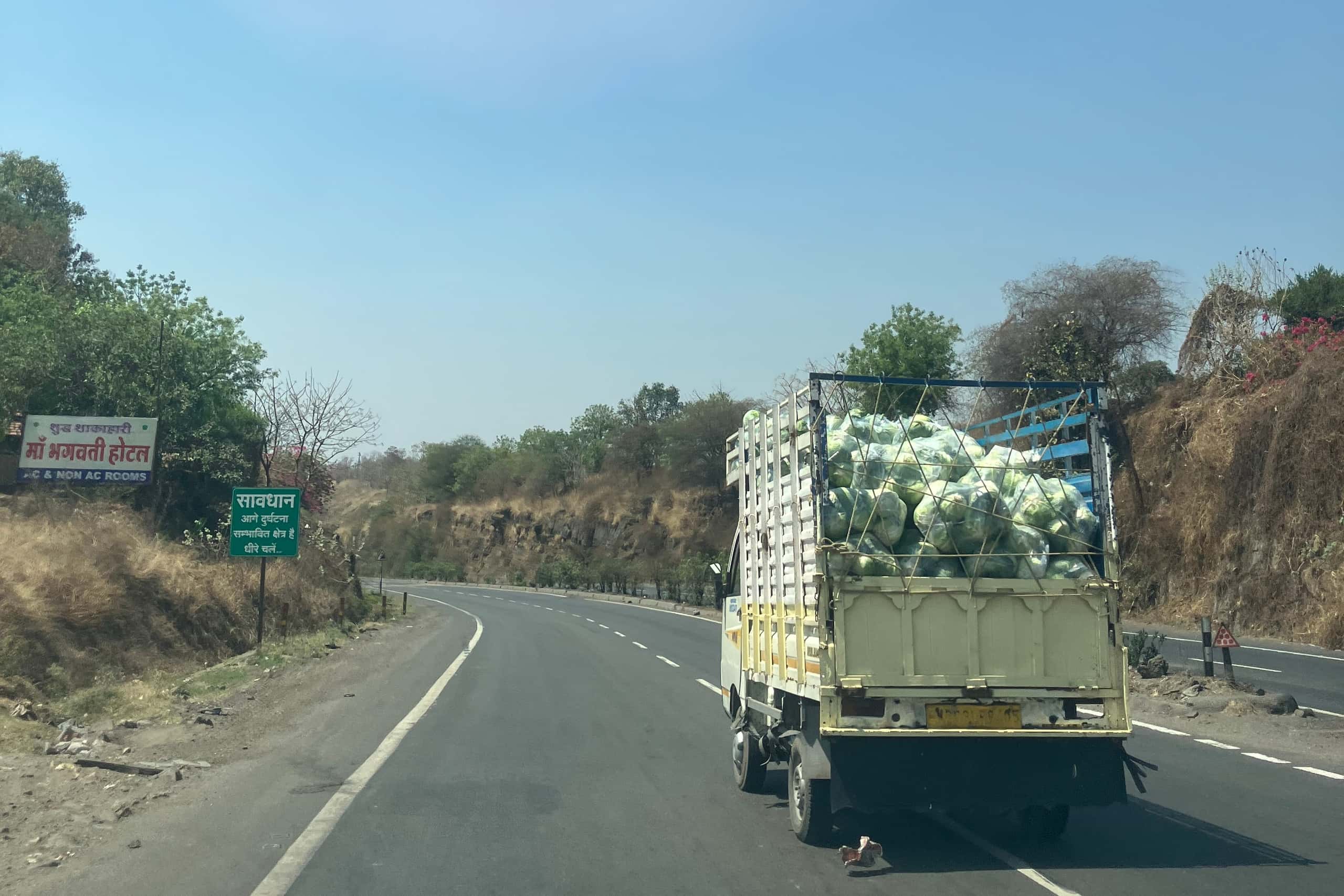
India is one of the world’s largest producers of horticultural crops but continues to lose significant quantities of food between harvest and retail. Over the past decade, India and the Netherlands have worked together to address this challenge through investments in cold-chain infrastructure, value-chain development, and knowledge exchange. This cooperation illustrates how combining technological innovation, private-sector engagement, and systemic approaches can help reduce food loss and strengthen agricultural supply chains.
At the Global AI Impact Summit, held in Delhi between 16-20 February 2026, Debjani Ghosh, chief architect of the Government of India’s principal policy advisory body NITI Aayog’s Tech Hub, posed a critical question to technology experts: ‘If the world is producing enough food, why are so many people still hungry?’ Her message was clear: rather than focusing solely on developing new digital applications providing advisory services to farmers, AI should direct its efforts toward solving one of the most pressing challenges in global food systems: reducing food loss.
That challenge remains highly relevant in India. Even though the country is one of the world’s largest producers of horticulture commodities, 40 million metric tons of horticulture are still lost before they reach consumers. Reducing food loss is therefore not only a matter of preserving produce. It is also about strengthening agricultural value chains, improving food security, increasing farmers’ incomes, and making better use of available resources. This broader objective has increasingly shaped cooperation between India and the Netherlands over the past decade.
First conference in Mumbai on co-operation in cold chain
PIB’s for the potato sector
To better understand the scale and nature of food losses, the Netherlands Agricultural Network (LAN) team at the Dutch Embassy in New Delhi commissioned a study in 2014 in collaboration with Yes Bank, an Indian bank specializing in agriculture and food systems. One of the early initiatives focused on the potato sector, where a PIB-program was launched around 2013. India’s potato production was expanding rapidly. At the same time, local companies were investing in processing facilities to supply the growing food processing sector and fast-food chains. Dutch companies such as Omnivent and Tolsma, specializing in cold storage technology, had already implemented projects in India with food processing companies such as PepsiCo and McCain. They saw opportunities to expand their activities through collaboration with other partners. According to representatives of Dutch cold storage companies, this cooperation enabled Indian companies not only to access the latest storage technologies but also to explore new approaches to supply chain development.
In one example, a company began strengthening the supply chain for smallholder potato farmers by providing suitable seed varieties, improved crop management practices, and reliable market access. As a result, farmers were able to obtain fairer prices, while food losses in the potato value chain were reduced.
Potato storage facility for processing varities
Dutch support for value chain development in India
A similar dynamic emerged when there was a rise in import of apples around 2014 and 2015. Indian importers approached Dutch companies to establish cold storage facilities for apples. The Dutch company Van Amerongen, specialized in fruit storage technology, provided storage systems that enabled growers to preserve quality for longer periods. Indian cold storage owners also purchased higher-quality doors for their facilities from Dutch companies such as Salco and Metaflex.
A new PIB-program, focusing primarily on fruit— especially apples— was launched in 2016. Its objective was to collaborate with Indian apple growers and promote the Dutch approach to supply chain development, covering the full chain from planting material to logistics and processing. The 12 participating Dutch companies focused on planting materials, nursery service, grading, sorting and packing machines together with the Wellant College, a Dutch vocational education institute.
In a vast country such as India, however, fruit and vegetable supply chains remained highly fragmented despite these private-sector initiatives, often involving at least five intermediaries between farmers and end consumers. Smallholder farmers, unless they organize collectively, often lack both the volume and the capital needed to invest in better storage systems. As a result, they depend on aggregators or traders, who have less incentive to commit to long-term investment because of limited access to finance and the wide seasonal variation in market prices for produce.
‘Tackling food loss requires a long-term systems approach that addresses infrastructure, farmer organization, and access to technology’
LAN and new opportunities for knowledge exchange
In 2020, to strengthen cooperation on food loss reduction, the LAN team supported Wageningen University & Research (WUR) to explore the possibility of creating a platform called Indo-Dutch Task Force on Food Loss and Waste. The initiative brought together stakeholders from government, academia, and industry from both India and the Netherlands to explore systemic solutions.
Further insights were generated in 2021, when the LAN team commissioned Solidaridad, a Dutch NGO, to conduct a study on food losses in the tomato value chain in the Indian state of Madhya Pradesh. The study aimed to identify crops and regions where pilot or showcase projects could be implemented. Both initiatives highlighted the complexity of addressing food loss in contexts where markets are still developing. Tackling food loss requires a long-term systems approach that addresses infrastructure, market structures, farmer organization, and access to technology simultaneously.
Meanwhile, institutions such as the Asian Development Bank and the World Bank started giving loans to Indian state governments in strengthening farmer organizations and building cold-chain infrastructure. WUR has also provided technical advice on several of these initiatives.
Digital solutions and new opportunities for the private sector
Digital technology is increasingly seen as an important tool for reducing food losses. In its 2025 report Reimagining Agriculture, the policy think-tank of the Indian government, NITI Aayog, highlighted the potential of digital technologies to improve efficiency across agricultural supply chains.
India has developed a vibrant AgTech ecosystem, with approximately 2,800 agricultural technology start-ups. Many of these companies provide digital advisory services that help smallholder farmers access information on weather conditions, crop management, and market prices. Others connect farmers directly with buyers through mobile platforms. Intello Lab has specifically developed their digital tools to enable sorting, grading, and packaging. Similarly, EcoZen, which uses digital tools for storage solutions, claims to have positively impacted 82,000 farmers with a reduction of 19,000 metric tons of food loss.
Investment also plays an important role. The Dutch Good Growth Fund has invested in AgTech funds that support such start-ups, while the LAN team together with other teams at the Dutch Embassy in India actively engage with these companies to facilitate integration, scaling, and access to financing. The Dutch entrepreneurial development bank FMO has also invested in companies such as DeHaat and in India’s largest farmer producer organization, Sahyadri, both of which are developing solutions to reduce food losses.
‘Despite its impressive production levels, India continued to experience significant losses of perishable food’
Systematic approach to food loss
Reducing food losses requires a systemic approach that addresses the entire agricultural value chain, from production and storage to logistics, markets, and consumption. Over the past decade, many important steps have been taken in India to strengthen these systems.
Digital technologies, including applications based on artificial intelligence, are promising tools for connecting the different components of this complex system. By improving information flows, logistics coordination, and market transparency, these technologies can play an important role in reducing losses across agricultural supply chains.
More information
For more information about cooperation between India and the Netherlands on reducing food loss and strengthening agricultural value chains you can visit the country page of India on this website. You can also send an e-mail to the LAN team at the Dutch Embassy in New Delhi or at the Dutch Consulates-General in Mumbai or Bengaluru:
-
New Delhi: nde-lvvn@minbuza.nl
-
Bengaluru: bgl-lvvn@minbuza.nl
-
Mumbai: bom-lvvn@minbuza.nl