
Vietnam has a strong position in the global aquaculture market, but with ever evolving market dynamics, actionable insights into European market demands and requirements are crucial.
Beeld: EKN Hanoi
Study on enhancing the competitiveness of Vietnam’s aquaculture
As part of the Netherlands–Vietnam Combitrack Programme on Sustainable Aquaculture in the Mekong Delta, launched in 2022, CBI was commissioned to carry out a study on enhancing the competitiveness of Vietnam’s aquaculture sector in the global market. The study aims to provide useful insights into the European market demand and requirements for shrimp and pangasius producers and exporters, enabling local companies to improve market access and invest in more sustainable and traceable production and trade.
Between September 2025 and January 2026, CBI conducted interviews with Dutch and EU importers, desk research, data analysis as well as consultations with Vietnamese stakeholders. Among the importers, CBI spoke with 7 shrimp buyers and 4 pangasius buyers. The findings of this work have been shared earlier at the annual Combi-track conference in November 2025.
Beeld: EKN Hanoi
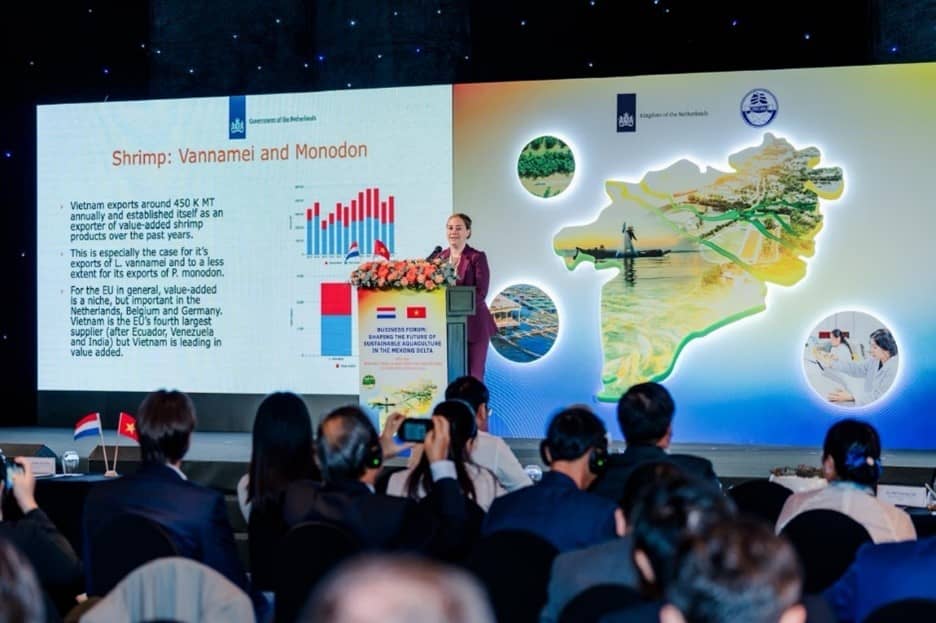
CBI presenting at event on aquaculture in Ho Chi Minh City in 2025
CBI’s intervention led to a better understanding of EU buyer perspective on sustainability, traceability, food safety and certification for both shrimp and pangasius. Next to that, it also resulted in evidence-based insights into willingness and capacity among exporters and importers to invest in more sustainable value chains. Read the most important findings of CBI’s intervention below.
Beeld: CBI
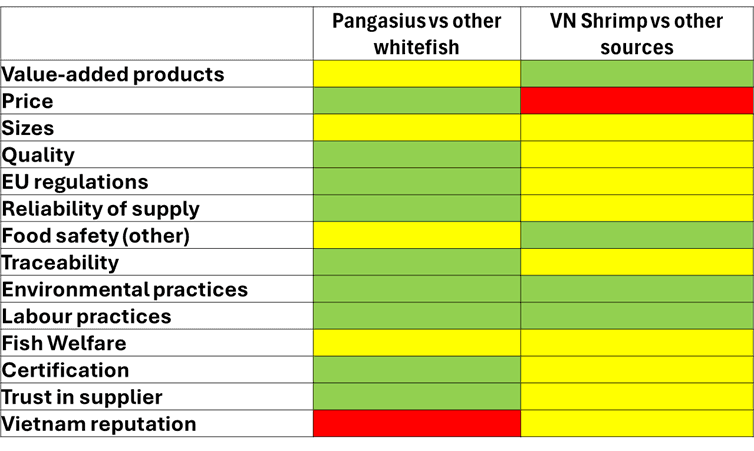
Green means importers consider Vietnam to do better than its competitors, yellow means they are considered to perform equally and red means importers consider their competitors do better.
Shrimp: Adding value in a global market
When it comes to shrimp, Vietnam is highly regarded for its value-added products and has established itself as a market leader in high-value processing. Examples include cooked, marinated, breaded and sushi shrimp products. (European) buyers choose Vietnam primarily because of the wide range of value-added products and the technical expertise the country offers. Buyers see Vietnam as a main player in the value-added sector and emphasise that Vietnam should continue to focus on this strength. Buyers also believe that food safety, environmental practices and labour practices are better than in competing countries.
Beeld: CBI
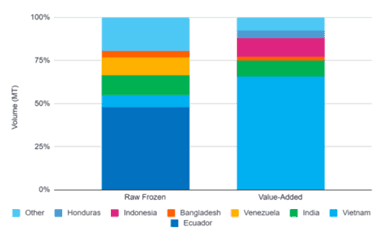
Given the rapidly changing dynamics of the global shrimp market, Ecuador remains the largest producing country. The continued growth in exports of raw L. vannamei and low prices are leading other countries that focus on selling raw shrimp at low prices to diversify. This also applies to Vietnam, which is not competitive in the raw shrimp segment due to its prices. But other markets, such as India, are also exploring opportunities for value-added and could, in a few years’ time, become a cheaper alternative to Vietnamese value-added shrimp. As other countries enter the value-added shrimp sector, Vietnam must respond effectively to maintain its current strong position over the coming years.
Beeld: EKN Hanoi
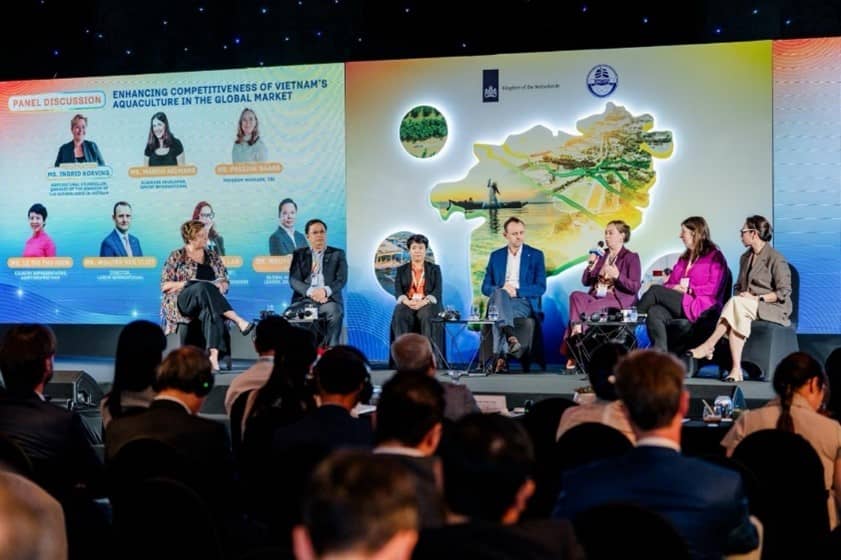
Panel discussion during Aquaculture Business Forum in 2025
Between 2023 and 2024, Europe has been Vietnam’s largest or second-largest export market. Within Europe, the United Kingdom (UK), the Netherlands, Belgium and Germany account for two-thirds of the total Vietnamese market. For Europe, Vietnam is the fourth-largest supplier, after Ecuador, Venezuela and India. But in terms of value added, Vietnam is the leading supplier. Data shows that the majority of Vietnamese exports consist of L. vannamei and P. monodon shrimp. The growth in value-added applies only to L. vannamei, which accounts for almost 50% of export value. Suppliers export most of the P. monodon in raw and frozen form.
Pangasius: Perception remains important
For pangasius, Vietnam is (nearly) the only producer, making it the main destination. Competition, therefore, comes mainly from other white fish, such as tilapia. Since the outbreak of COVID-19, pangasius exports have fluctuated significantly. Most exports still consist of frozen fillets, whilst whole fish and value-added products account for only a small proportion.
Beeld: CBI
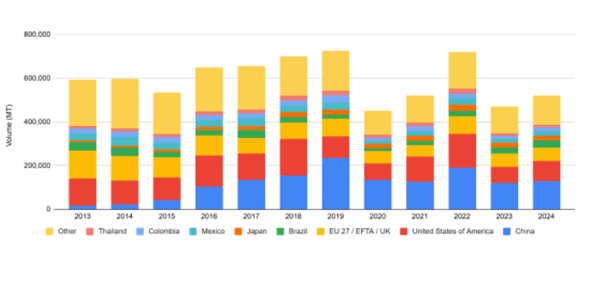
Graph: Vietnam's pangasius export markets
Markets in the north-west of the EU and the UK have grown, but demand from the south of the EU has fallen sharply over the past 10 years due to the damage to pangasius’ reputation. In general, this has led to an overall decrease in pangasius exports to EU markets. Outside the EU, after Alaska pollock and cod, pangasius remains the most imported whitefish. Over the past years, China has become Vietnam’s largest export market, contributing to the decline in exports to the EU.
Although its reputation is gradually improving, this remains the primary reason for the decline in pangasius sales on the EU market. Unfortunately, this fish is still affected by past media coverage and is generally perceived as a cheap and heavily processed product. Despite various campaigns aimed at addressing the issue, this perception remains strong among consumers. This has led to a shift in focus towards the Chinese markets, which have become more interesting. The United States (US) market is also considered more interesting, where the reputation issues are less prevalent, likely due to the use of a different name on the US and UK markets.
A positive aspect is that buyers regard the quality, food safety and compliance with EU import standards as good and reliable. Pangasius is one of the most sustainable fish proteins, with a high level of ASC certification and excellent traceability.
Recommendations
For shrimps, the emphasis should be on value-added growth, utilising processing expertise, skilled workforce and innovation. The focus should be on the premium perception of both monodon and value-added vanamei.
Most important for pangasius is to fill the market gaps left by the decline in wild white fish supply. But this also requires strong national branding to make clear why this is necessary. Demand for processed pangasius is also rising, and it makes sense to capitalise on that value addition as well.
Contact information
Do you have any questions for the Agriculture Department at the Netherlands Embassy in Vietnam? If so, please send an email to HAN-LVVN@minbuza.nl or HCM-LVVN@minbuza.nl. For the latest updates, news, funding opportunities and more, follow our LinkedIn: Netherlands Agricultural Network in Vietnam.