
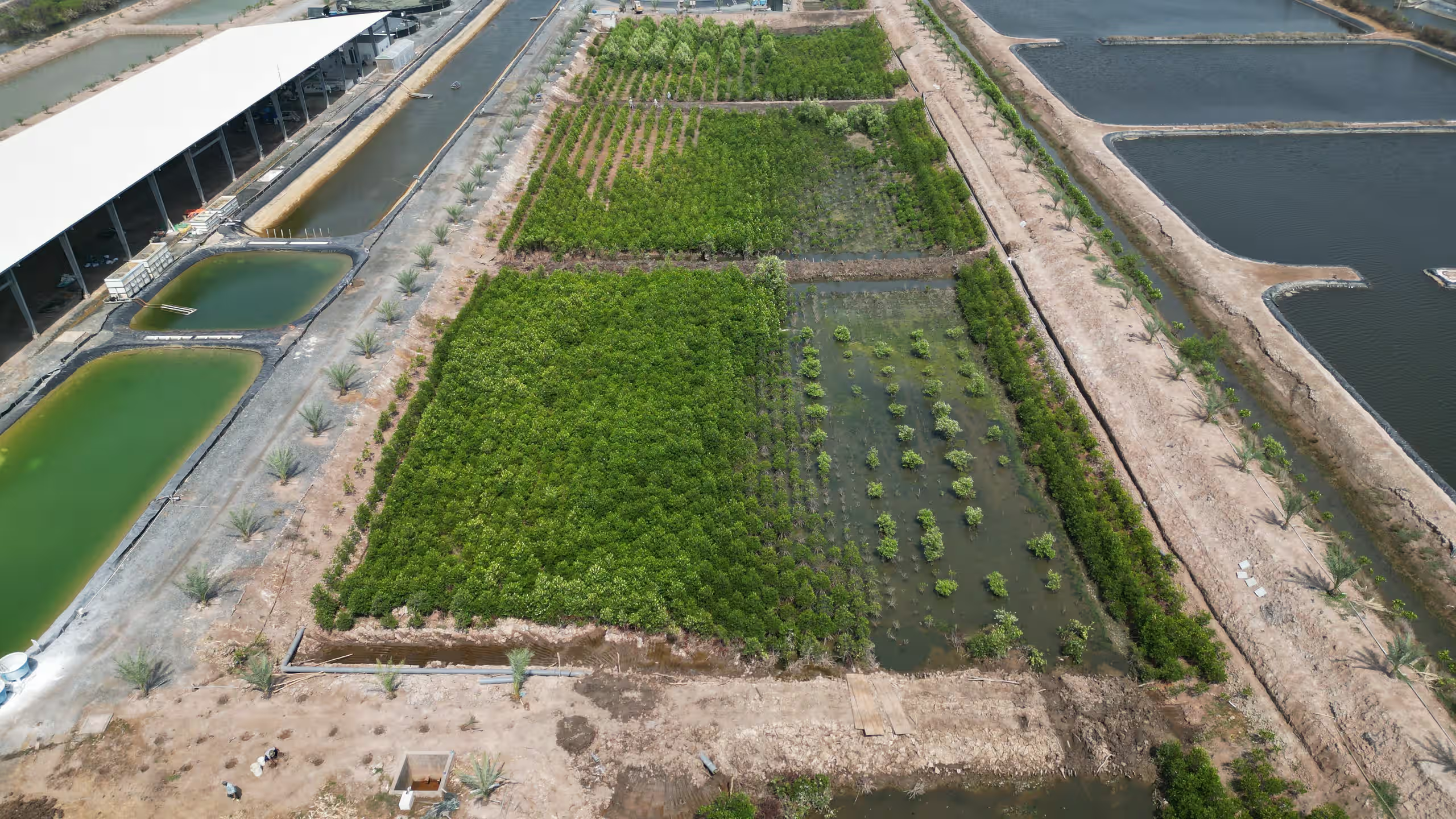
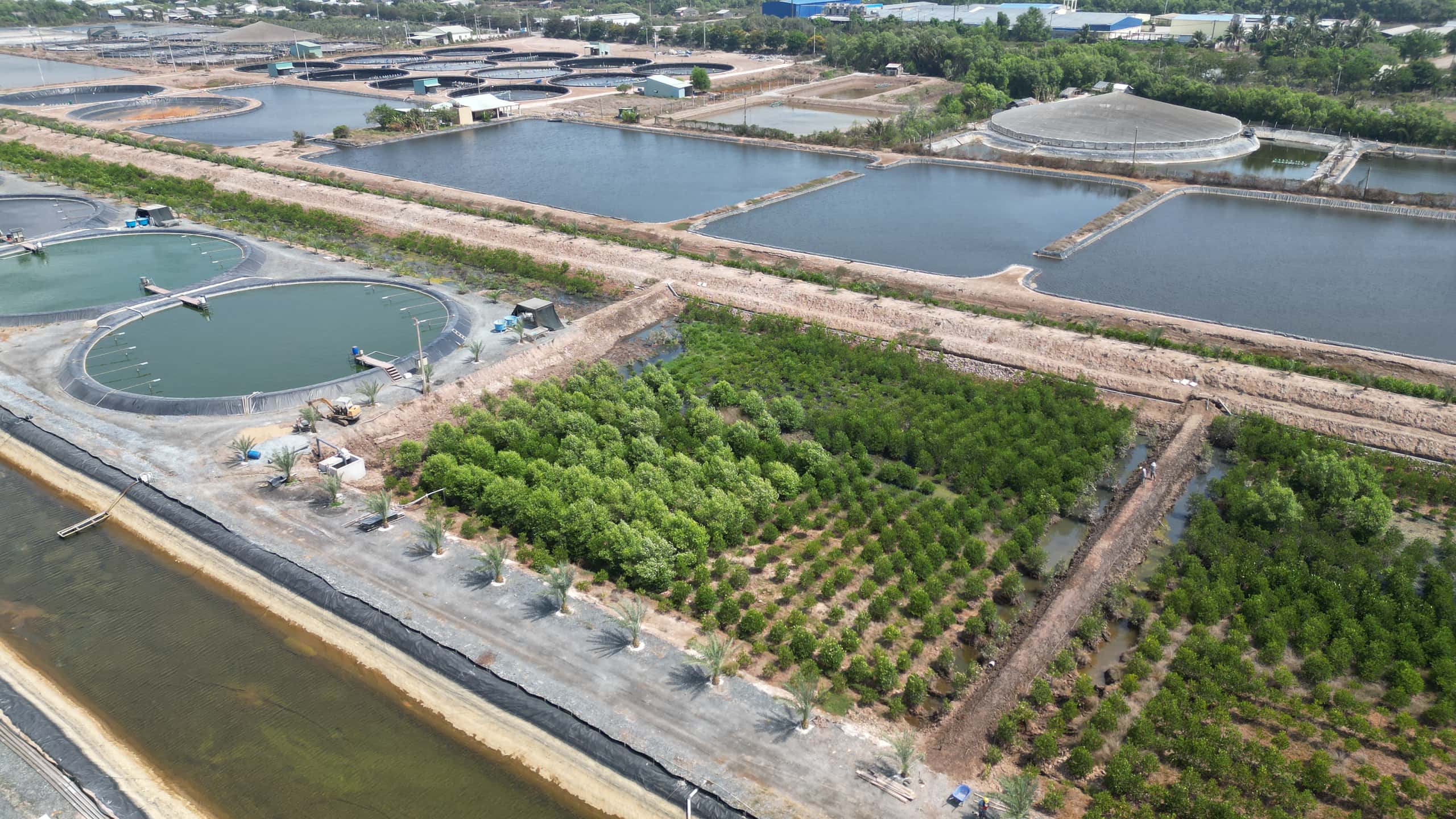
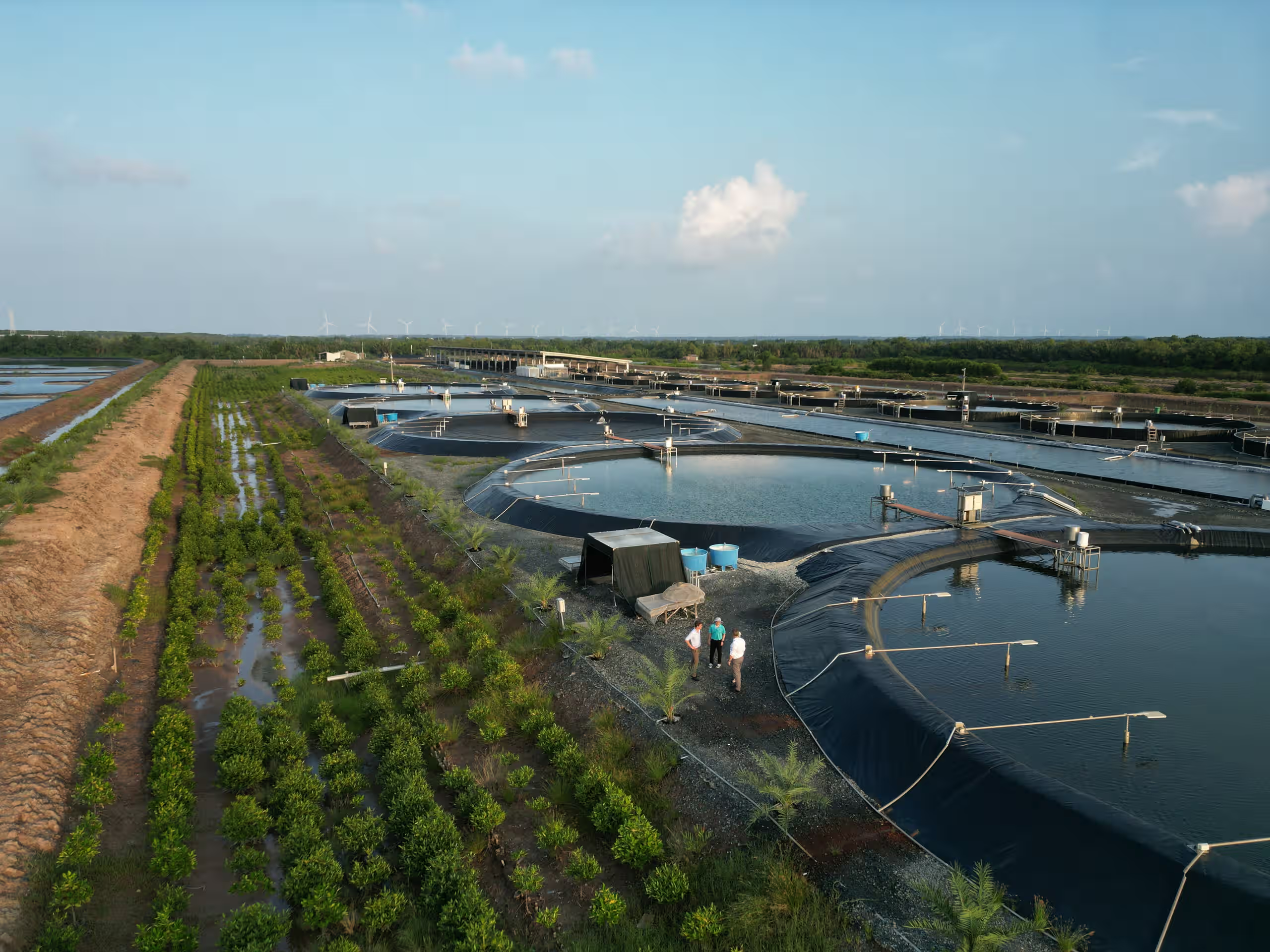
In the Mekong Delta, Van Oord Ocean Health, RYNAN Technologies Vietnam and Larive International are working on TomGoxy Zero. This is an intensive Vannamei shrimp farm system that combines mangrove restoration with low environmental impact and a viable business model. The system reduces nutrient discharge, lowers energy and water usage and makes mangrove restoration measurable.
Beeld: © Larive International
To scale this model, the consortium conducted two CERF-funded studies aimed at unlocking nature-based food systems for climate and biodiversity impact. Each study adds value to the system's route to market.
Premium market approach with focus on niche channels
Vietnam is experiencing increasing price competition from low-cost producers such as Ecuador and India. In the EU, import prices for Vannamei shrimp range between USD 6.40 and 8.30 per kg CFR. Certification can result in an average premium up to 5% compared to non-certified shrimp. However, for Vietnam, the real opportunity lies in clear differentiation in sustainability, good processing, and branding. The TomGoxy model for mangrove-integrated aquaculture is projected in the first stage to produce approximately 400 MT of shrimp per year across two farms. This volume is too small for large retailers to set up a separate, branded assortment or to deliver stable volumes every week. For comparison, a large retailer can purchase 20,000 to 25,000 MT of shrimp annually. Therefore, a niche strategy fits better than competing in volume and price-driven channels.
Recommended sales channels and focus markets for these shrimps are:
- EU and UK as primary focus, because TomGoxy aligns well with retailer requirements and consumer expectations.
- Specialized supermarkets, online retailers, meal(box) providers (e.g. HelloFresh or Crisp) and purpose-led foodservice as initial target groups.
- Large price-driven retailers should only be approached selectively, as this quickly puts pressure on the premium price.
It is important that the selected channels through which the product is offered are customer facing, so that the premium value, justifying the slightly higher price is clearly recognized.
Beeld: © Larive International
Certification and quality assurance for market entry
This research proves that establishing certification is a license to operate in premium markets in Europe and the United Kingdom. Yet, certification is more than that, it's a system for traceability, animal welfare, food safety and environmental performance.
In broad terms, for TomGoxy Zero:
- ASC is the most practical basis for EU and UK retail.
- BAP is primarily relevant if sales to North America or certain Asian buyers are desired.
- GLOBALG.A.P. is particularly relevant for direct delivery to EU retailers who explicitly request this.
Organic routes, tapping into schemes such as Naturland or EU Organic are not feasible for this high-intensity model due to requirements around low stocking densities and buffer zones. Carbon neutral claims currently provide limited additional market access and are becoming more complex due to stricter rules around consumer claims. However, existing schemes protect mangroves but don't explicitly reward the combined model of intensive production plus active mangrove restoration. Therefore, the recommendation is to develop a TomGoxy Zero mangrove add-on on top of ASC and where relevant BAP. Consider criteria such as a minimum mangrove percentage, clear water quality thresholds, digital traceability at pond level and annual reporting on mangroves and blue carbon.
Smallholder routes to premiums
For smallholders, the most realistic route to premium markets requires certification. However, these certifications involve cost barriers to obtain and retain certification. Collective certification through ASC producer group certification or BAP Cluster programs offers a practical solution by reducing individual audit costs and administrative burden. Through cooperatives or farmer associations, smallholders can share documentation, training, and certification expenses while maintaining traceability at pond level.
Beyond certification, smallholders can strengthen their positioning through improved record-keeping, antibiotic-free production protocols and compliance with animal welfare standards such as sourcing post-larvae from ablation-free hatcheries and using electric stunning at harvest. Product quality management is also important, including optimal size grading based on operational efficiency rather than maximizing size alone.
What this means for value chain partners
The route to premium markets and certification requires early collaboration between producer, processor, importer, and retailer. This collaboration goes beyond credibility claims, costs, distribution of added value and how to communicate this fairly and comprehensibly. Without these chain agreements, it remains difficult to recoup the extra value of mangrove restoration.
Contact information
Do you have any questions for the Agriculture Department at the Netherlands Embassy in Vietnam? If so, please send an email to HAN-LVVN@minbuza.nl or HCM-LVVN@minbuza.nl. For the latest updates, news, funding opportunities and more, follow our LinkedIn: Netherlands Agricultural Network in Vietnam.