
“The Netherlands and Vietnam have built a strong and trusted partnership over many years in sustainable agriculture and food security and water management. The Mekong Delta has been a focus region of our collaboration,” said Ms. Natalie den Breugom-de Haas, Deputy Director of the Sustainable Economic Development Department (DDE), Ministry of Foreign Affairs of the Netherlands, in her opening remarks at a Ho Chi Minh City business forum where stakeholders gathered to discuss sustainable aquaculture.
At the Vietnam–Netherlands Business Forum entitled “Shaping the future of sustainable aquaculture in the Mekong Delta” on November 12, 2025, aquaculture experts from both countries’ public and private sectors came together to share developments and explore innovative, practical solutions to advance the productivity and sustainability of aquaculture. The discussions covered a wide range of aspects, from genetics, sustainable feed, animal welfare, export requirements and strategies, and the competitiveness of Vietnam’s aquaculture in the global market, among others.
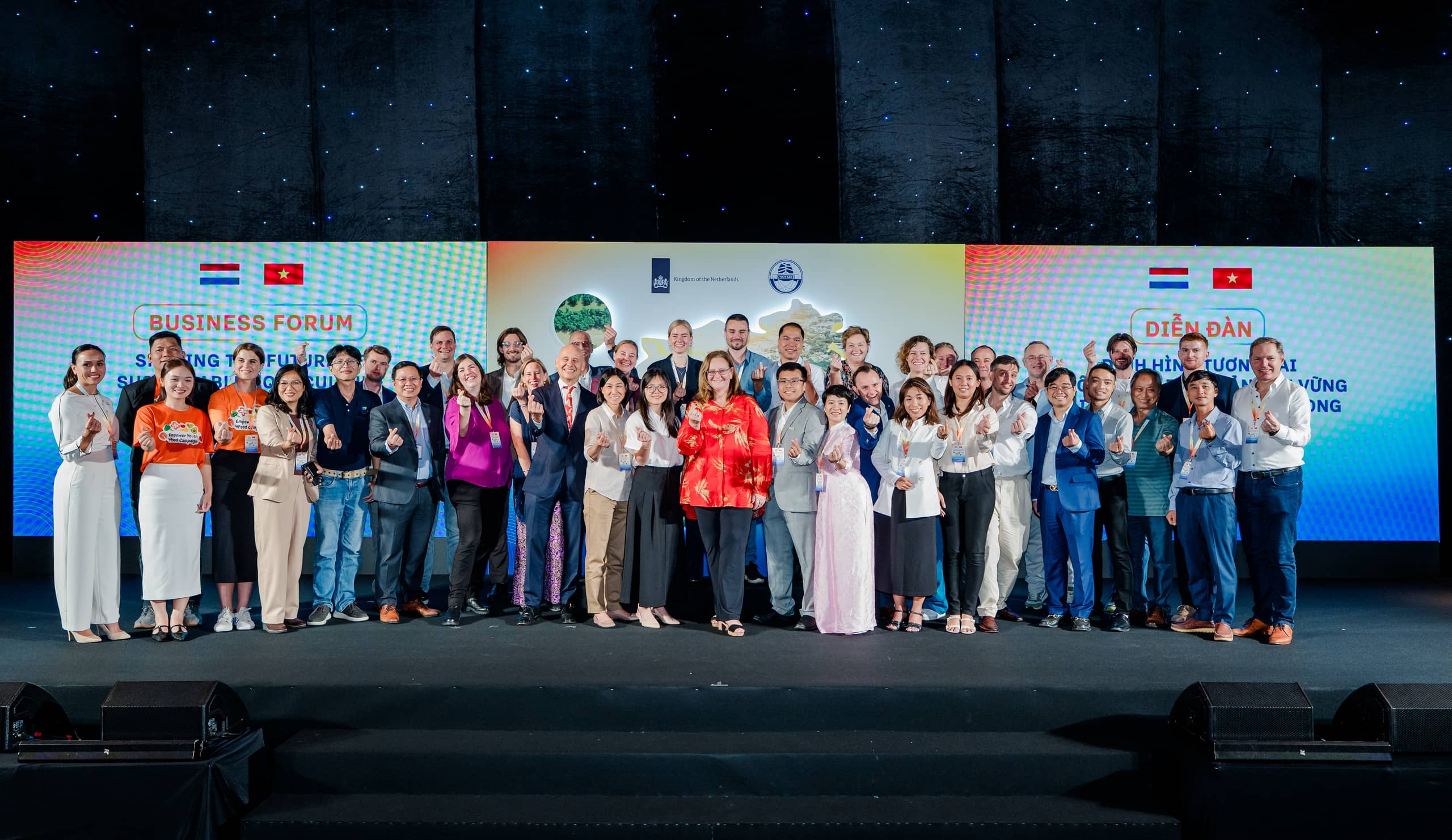
Participants at the Business Forum "Shaping the Future of sustainable aquaculture in the Mekong Delta"
The power of working together
“We are here to do more than discuss. We are here to connect – to identify new business opportunities, to share technologies, and to deepen partnerships that deliver value for both our countries. Vietnamese and Dutch businesses bring complementary strengths to the table – and when we work together, we can deliver practical and scalable innovations and solutions that are good for people, profits, and the planet,” said Ms. Natalie den Breugom-de Haas.
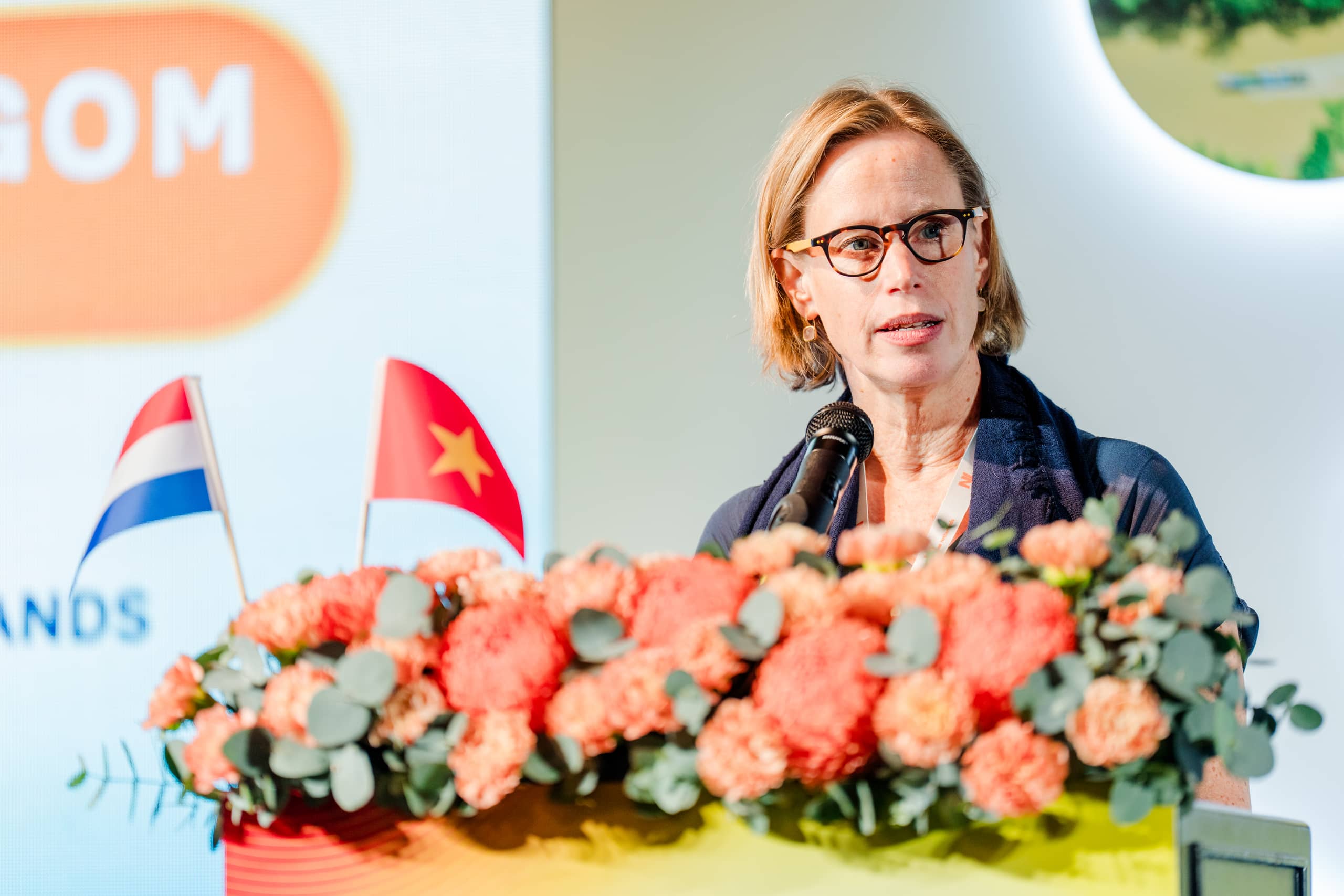
Ms. Natalie den Breugom-de Haas, Deputy Director of the Sustainable Economic Development Department, Ministry of Foreign Affairs of the Netherlands delivering opening remarks
The Netherlands and Vietnam’s collaboration in the Mekong Delta goes back a long time, with two strategic partnerships signed on sustainable agriculture and food security as well as on water management and climate change. The two delta countries, which face similar challenges and opportunities, are working together to develop intelligent and integrated solutions that foster more sustainable, convenient and efficient systems.
“Our goal is to work together to develop Vietnam’s aquaculture sector into a modern, efficient, and responsible industry that can proactively adapt to climate change and contribute to global food security,” Mr. Le Hong Phuoc, deputy head of the Research Institute for Aquaculture No. 2, remarked. “Achieving this requires long-term collaboration and commitment from the governments of both countries, the business community, international organizations, and local communities in a spirit of cooperation, knowledge sharing, and innovation.”
Three years of the Aquaculture Combitrack Program
Mr. Phuoc also highly appreciated the Aquaculture Combitrack Program initiative, featuring seven concrete collaborative projects between Vietnamese and Dutch businesses. “This cooperation demonstrates an effective approach that brings together government agencies, businesses, scientists, and local communities to develop initiatives grounded in solid technical foundations, delivering both economic benefits and environmental protection,” Mr. Phuoc said.
Launched in 2022, the Combitrack program was designed to turn shared ambitions into practical, scalable solutions – focusing on sustainable pangasius and shrimp farming. What makes combi-track special is its integrated approach: mobilizing relevant public and private stakeholders to work together, supporting the growth of climate-smart and sustainable aquaculture. “In just three years, our cooperation has already produced tangible results: boosting pangasius and shrimp farming, and helping people make a better living across the Delta. And this is just the beginning,” Ms. Aukje de Vries, Dutch Minister for Foreign Trade and Development, remarked.
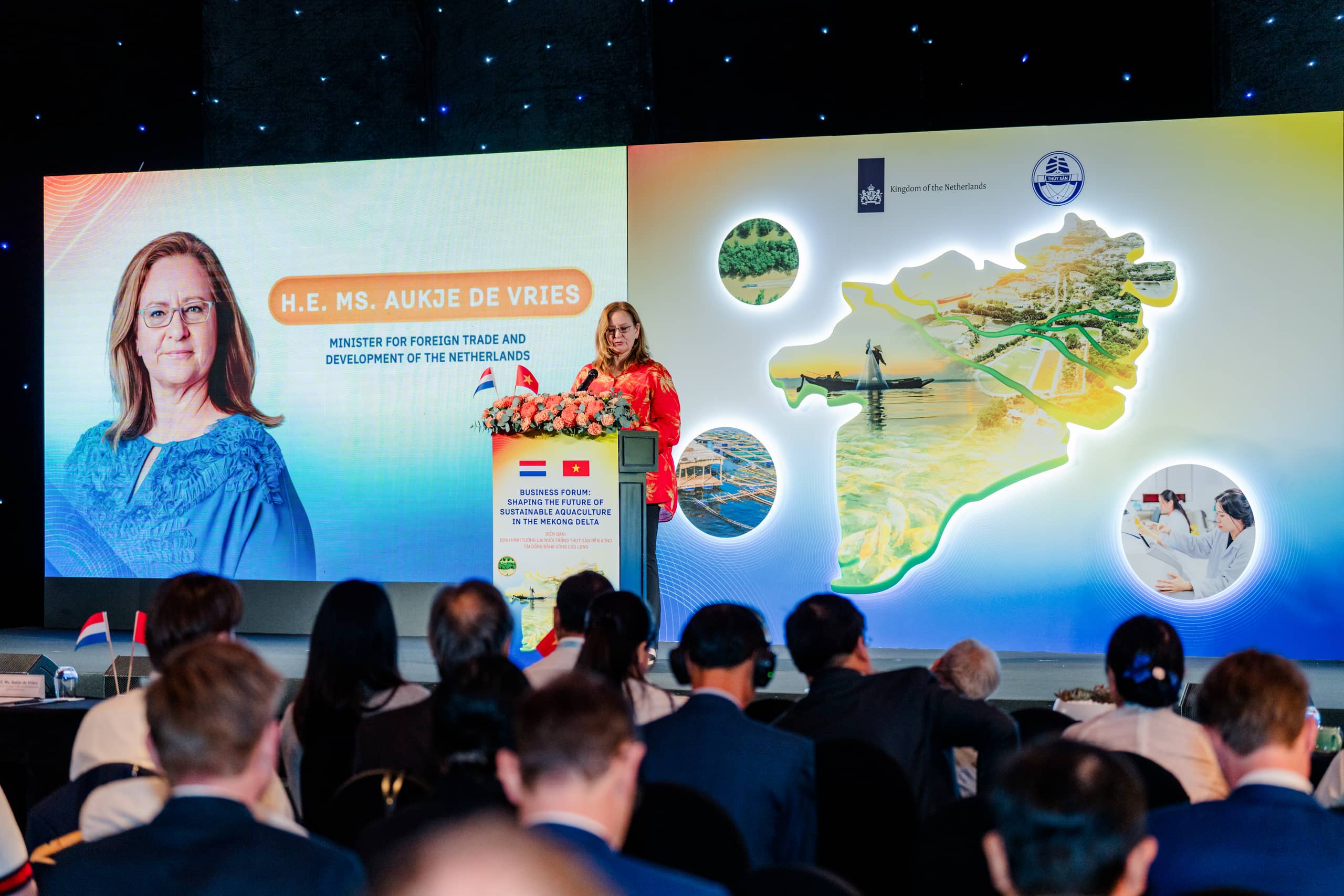
Beeld: © EKN Hanoi
Ms. Aukje de Vries, Dutch Minister for Foreign Trade and Development delivering a speech at the Forum
The Netherlands is more than just a trading partner
Vietnamese fishery products are exported to 170 countries and territories worldwide, with major markets including the U.S., China, Japan, and the EU. The EU alone accounts for more than 10 percent of Vietnam’s total fishery exports, while the Netherlands is the EU’s largest importer of Vietnamese fishery products.
“The Netherlands is Vietnam’s largest trading partner in the EU and its biggest EU-investor. Sixty percent of all Vietnamese exports for the European market enter the continent via the Dutch port of Rotterdam. And a significant part of these exports comes from the Mekong Delta: shrimps, fish and clams that end up on our plates and tables across Europe. Dutch companies, along with our state-of-the-art logistics, play a key role in delivering these products, meeting the highest standards of safety and sustainability,” Dutch Minister for Foreign Trade and Development Aukje de Vries emphasized in her speech.
“We’re more than just a trading partner,” the minister added. “Over many years, we’ve built a strong and trusted partnership.” This partnership comes to life in the Mekong Delta where Dutch and Vietnamese companies are working side by side to prepare its aquaculture for the future. “If we combine Dutch and Vietnamese expertise with the Vietnamese can-do spirit, and strengthen our public-private partnership, we can create smart solutions for the Mekong Delta - and beyond,” the minister insisted.
Genetics in aquaculture systems
Ms. Naomi Duijvesteijn, R&D Director for Shrimp at Hendrix Genetics, presented on the genetic aspects of enhancing aquaculture systems. Aquaculture entered the field of genetic improvement a little later than terrestrial livestock and poultry, which began this work decades ago and have already achieved significant progress, she noted.
“We are trying to improve shrimp or other species for the next generation, but it always involves a significant complexity,” Ms. Naomi Duijvesteijn said, citing key traits that require enhancement, including pond survival, tolerance to salinity and oxygen levels, and more uniform growth.
Mr. Bas Wolkenfelt, Product Manager for Shrimp at Hendrix Genetics, also shed light on how the company works. “We have our breeding program in a biosecure environment, but we will have to make sure that we select them for the right conditions of the farm, because the farm is not always a biosecure environment. There are diseases and stressors around. So what we do is send brothers and sisters from the families in our breeding program into the local environment to challenge them in those conditions. And then based on the performance data, we'll measure the animals. We'll take thousands of DNA samples, analyze them, and compare the DNA patterns of the animals that perform really well in those environments. Later, we'll make our selection decisions in the biosecure environment on animals that have similar DNA patterns”, he explained.
Aligning with global market standards
The “Shaping the Future of Sustainable Aquaculture in the Mekong Delta” forum featured a panel discussion on sustainable and responsible aquaculture in Vietnam. Mr. Pham Anh Tuan, a standing committee member of the Vietnam Fisheries Society (VINAFIS), presented an overview and update on the Aquaculture Stewardship Council (ASC). He noted that key areas of focus in ASC certification include food safety, animal health and welfare, environmental integrity, and the socio-economic aspects associated with aquaculture.
Mr. Tuan further explained the growing importance of aquaculture certification: as global production expands and provides significant volumes of fish for human consumption, concerns have emerged over its potential negative impacts on the environment, local communities, and consumers. Certification helps mitigate these risks while enhancing consumer confidence and the overall benefits of aquaculture production and marketing.
“If Vietnam has a fully ASC-certified supply chain for shrimp or pangasius, the country will truly differentiate itself from other key markets in the world,” Mr. Duco Onnes, General Manager of Nutreco International (Vietnam), noted, adding that it would be beneficial and further enhance the image of Vietnam.
“Aligning with internationally recognized standards such as the Aquaculture Stewardship Council is an important step that will help Vietnamese producers meet the expectations of demanding global markets, while also ensuring environmental and social responsibility - elements that are increasingly non-negotiable for global buyers,” stated Ms. Natalie den Breugom-de Haas, Deputy Director of the Sustainable Economic Development Department (DDE), Ministry of Foreign Affairs of the Netherlands.
Boosting Vietnam’s aquaculture competitiveness
Dutch and Vietnamese aquaculture experts also joined a session at the forum to discuss how to enhance Vietnam’s aquaculture competitiveness in the global market.
Ms. Pauline Baars, Program Manager of CBI noted that Vietnamese shrimp is highly regarded by European buyers for its technical expertise in value-added products (Vannamei). It is globally recognized as a reliable, high-end source for premium, value-added products (cooked, breaded, marinated, sushi shrimp).
Vietnam is competitive in the value-added Vannamei market and the niche market for raw Monodon shrimp. With EU tariffs on value-added set to drop to 0% in 2027, the competitiveness of value-added will strengthen in the short term. However, due to the continued growth of HLSO and peeled raw Vannamei exports from Ecuador, India is being pushed to shift from raw HLSO and peeled shrimp towards value addition. Due to the very low labor cost in India, this is a serious mid-and long-term threat for the Vietnamese value-added market.
Meanwhile, Vietnam’s pangasius exports have been volatile since COVID-19. Most exports consist of frozen fillets, with only minor volumes accounted for by whole rounds and value-added. China has become the largest export market and Vietnam's exports to the EU have declined.
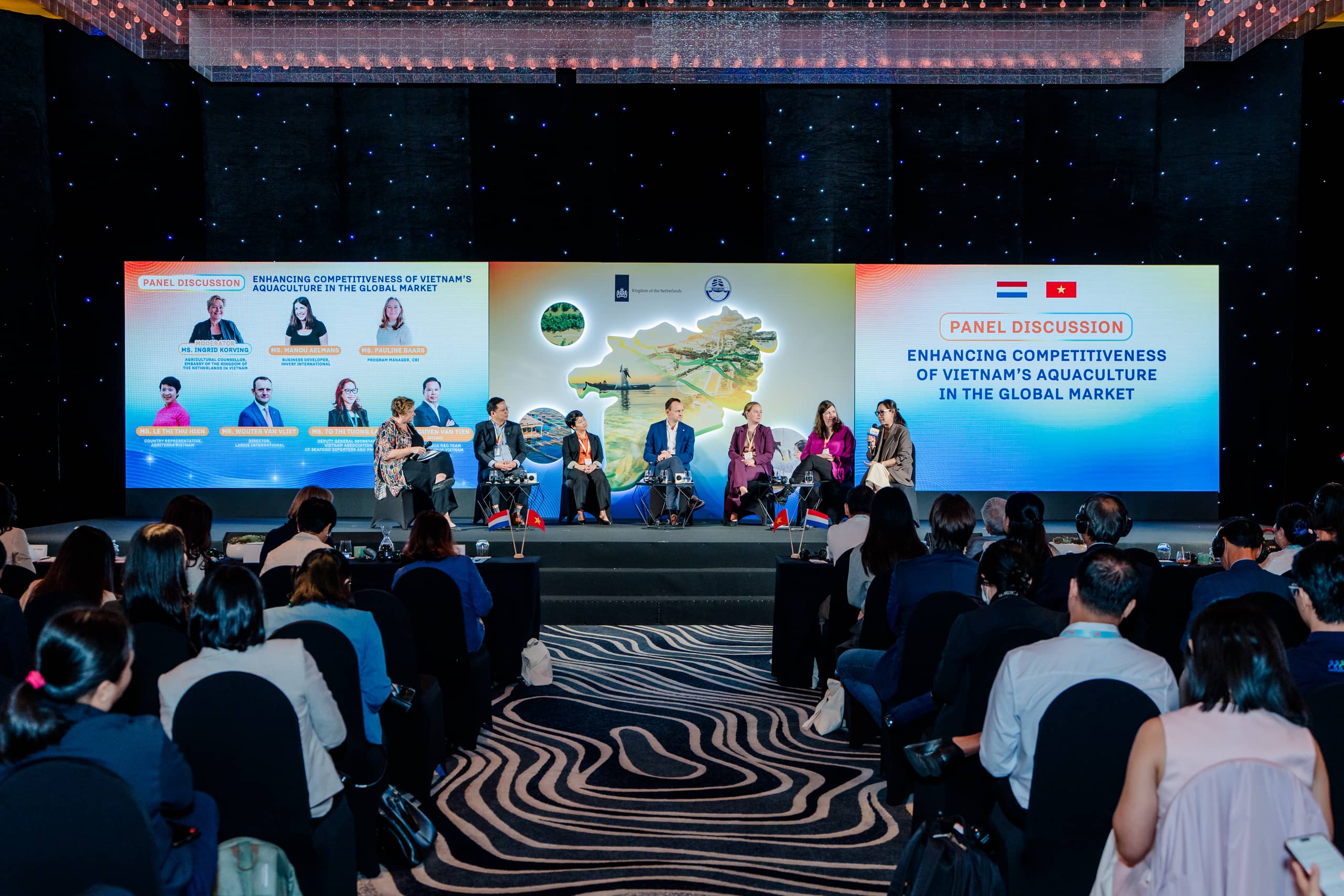
Beeld: © EKN Hanoi
Panel discussion on Enhancing Competitiveness of Vietnam's Aquaculture Sector in the Global Market
During the discussions, the panelists, moderated by Ms. Ingrid Korving, Agricultural Counsellor, Embassy of the Kingdom of the Netherlands in Vietnam, also highlighted the progress of Vietnamese aquaculture and strategies to boost the country’s competitiveness. One of the key steps in enhancing the country’s position in high-value markets, they noted, is building a strong national brand for Vietnamese aquaculture, a process that requires collaboration among multiple stakeholders. The discussion also explored questions such as which part of the aquaculture value chain needs the most improvement, and which new ideas or technologies show the greatest potential to make the sector more efficient and sustainable.
New Combitrack projects launched
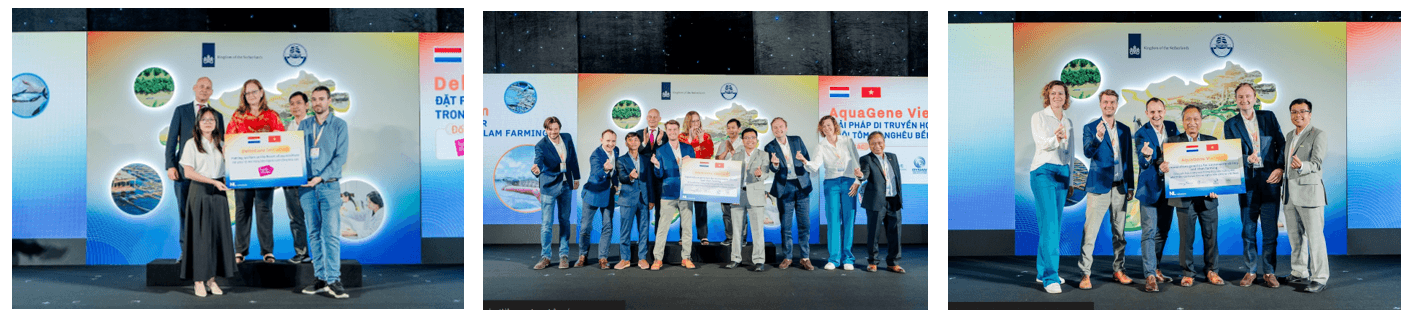
The business forum also featured the launch of new Combitrack projects, including the DeltaCare Initiative (putting welfare at the heart of aquaculture), AquaGene Vietnam (focusing on genetics for sustainable shrimp and clam farming), and Tomgoxy Zero (centering on mangrove-integrated, high-intensity Vannamei farming).
Beeld: © EKN Hanoi
TomGoxy Zero, developed by RYNAN Technologies Vietnam, Van Oord Ocean Health, and Larive International, represents a significant shift in shrimp farming by combining mangrove restoration with sustainable aquaculture practices. “‘Zero’ means we have a model that can produce shrimp with zero emissions”, said Mr. Dang Pham Bao, Project Manager of Ryan Smart Aquaculture.
Meanwhile, AquaGene Vietnam is driven by Dutch genetics companies Hendrix Genetics and Lugten Aquaculture B.V., local partner RYNAN Technologies, and project manager Larive International. Mr. Bas Wolkenfelt, Product Manager for Shrimp at Hendrix Genetics, insisted that in the aquaculture industry it is always a combination of different things, from good feeds, good management, and good genetics. And, genetics plays a fundamental role, as animals form the first step in the food chain–from genetics to hatcheries, farms, processors, and ultimately the plate.
By raising awareness, DeltaCare Initiative aims to enhance fish health, productivity and marketability by aligning with international standards and consumer demand. “Welfare is really important and it's becoming more important because it's pushed by the European market. Consumers in Europe and the UK are very aware and focused on fish welfare, they want to know that their fish and shrimp are healthy and happy. So for Vietnamese farms and companies to be competitive, they need to really focus on fish welfare,” said Mr. Joe Pearce, Aquaculture Project Manager at Fresh Studio, which implements the DeltaCare Initiative.
Contact information
Do you have any questions for the Agriculture Department at the Netherlands Embassy in Vietnam? If so, please send an email to HAN-LVVN@minbuza.nl or HCM-LVVN@minbuza.nl. For the latest updates, news, funding opportunities and more, follow our LinkedIn: Netherlands Agricultural Network in Vietnam.