
A study by DeltaVax project, in the Mekong Delta recommends that pangasius farms adopt vaccination programs and maintain water quality to improve survival rates and ensure fish health.
Beeld: © EKN Hanoi
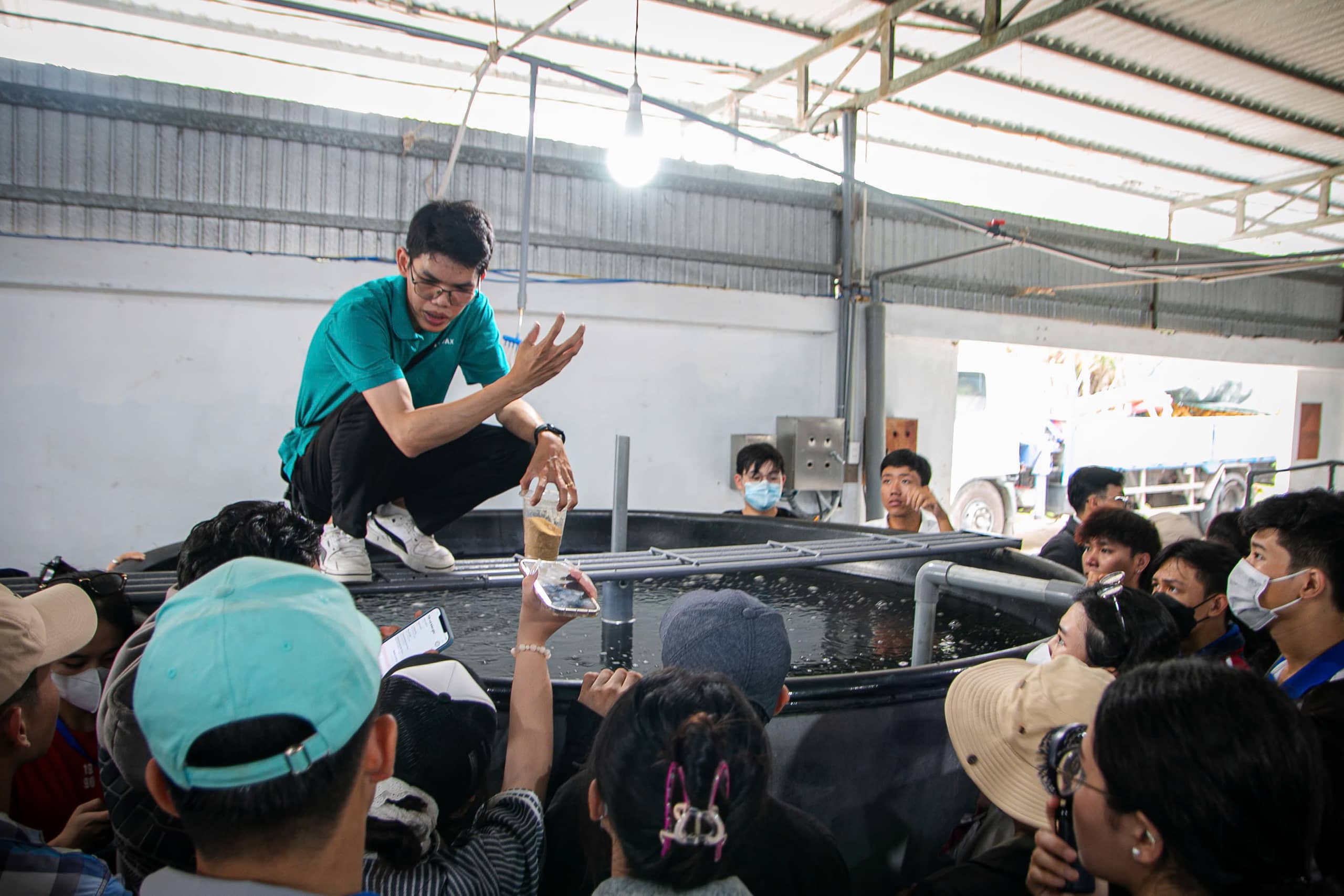
DeltaVax practical nursery training
The research was conducted under the DeltaVax project, funded by the Government of the Netherlands and implemented from 2024 to 2027. The project is a part of the Aquaculture Combitrack initiative, an integrated approach with the aim to mobilize relevant Vietnamese and Dutch public and private stakeholders to work together to support the growth of climate-smart and sustainable aquaculture.
Beeld: © EKN Hanoi
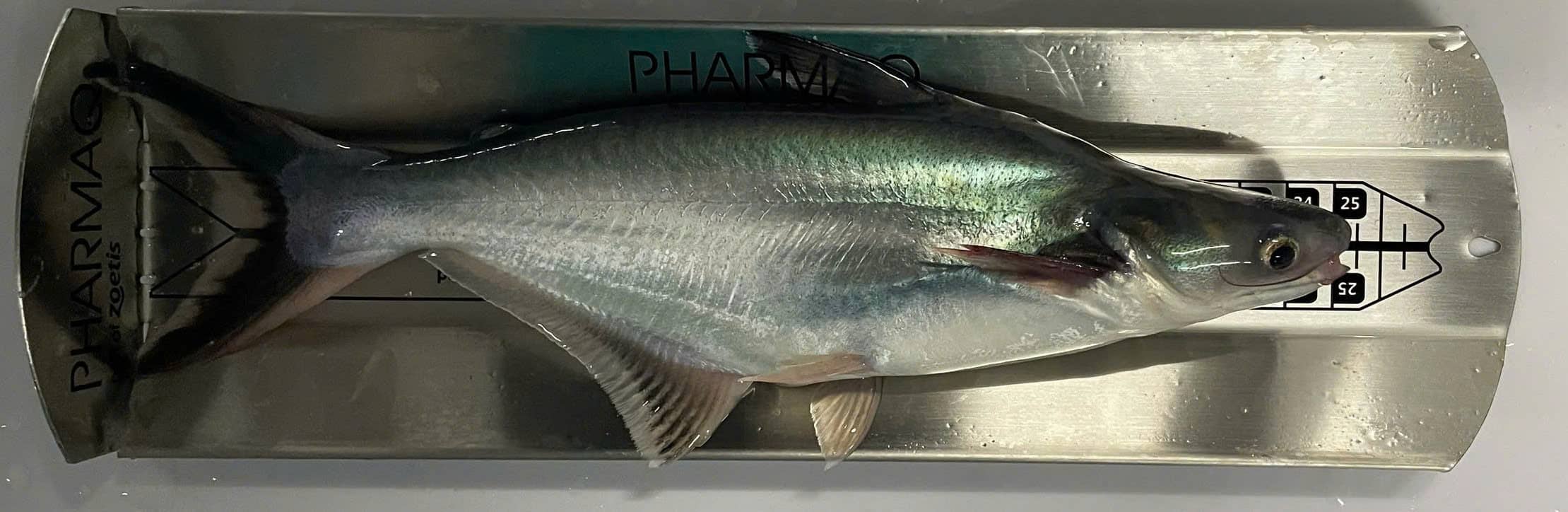
Pangasius fingerling
Global competitiveness’ of Vietnamese pangasius products
Vietnam is currently the world’s leading producer and exporter of pangasius, accounting for more than 90% of global pangasius exports. In 2024, export revenues reached USD 2 billion, representing approximately 20% of the country’s total seafood export value. According to the study, improving fish welfare is key to enhancing the global competitiveness of Vietnamese pangasius products. Pangasius farming in Vietnam is predominantly intensive, with high stocking densities. Research in the Mekong Delta shows that farmers stock fish at varying densities. The level is usually excessive, leading to increased stress, slower growth, higher feed conversion ratios (FCR), and a greater incidence of disease. The researchers therefore recommend maintaining optimal stocking densities of 30–40 fish per square meter, combined with improved water quality management—particularly dissolved oxygen, ammonia concentration and turbidity—which can significantly increase survival rates and reduce the need for chemicals and antibiotics.
Farming practices with impact
In terms of water quality, farmers are advised to monitor key parameters at least twice a week, and preferably daily, to keep ammonia and nitrite levels low. The study also encourages the use of probiotics or biofloc technology to improve water quality by suppressing harmful bacteria, stabilizing microbial communities and reducing reliance on chemicals. In addition, periodic removal of pond bottom sludge is necessary to prevent the accumulation of organic waste, which can generate toxic gases such as hydrogen sulfide and negatively affect fish health. The study highlights the need to shift from disease management models that rely heavily on chemicals and antibiotics toward preventive measures, notably vaccination programs. Trials show that vaccinating pangasius fingerlings against major bacterial pathogens such as Edwardsiella ictaluri and Aeromonas hydrophila significantly improves survival rates and reduces antibiotic use, contributing to safer and more sustainable farming systems.
Room for improvement
Harvesting, transportation and slaughtering practices remain areas of concern. Rough handling during harvesting, overly high transport densities, stacking fish on top of one another and severe oxygen deprivation can cause injuries, exhaustion and deterioration in product quality. The study recommends improvements such as the use of soft nets, minimizing air exposure and optimizing transport conditions to “enhance fish welfare while improving flesh texture and the flavor of the final product.” The research also emphasizes the urgent need for humane slaughter methods, as many current practices cause prolonged suffering before death, raising both ethical concerns and consumer perception issues.
While certification schemes such as ASC and GLOBALG.A.P. have incorporated certain fish welfare elements, there are still no species-specific welfare standards for pangasius, unlike those established in the salmon farming sector. For example, the RSPCA Assured program and the Code of Good Practice for Scottish Finfish Aquaculture set out detailed welfare requirements covering handling procedures, stocking densities and humane slaughter methods—areas that remain largely unregulated or unstandardized in pangasius farming. At many processing plants, especially those exporting to China and other Asian markets, fish are often bled without prior stunning. This method allows for high processing speeds—estimated at around two fish per second. However, field observations show that many fish continue to move their fins or attempt to swim after gill cutting, indicating that they remain conscious and experience prolonged suffering.
According to Joe Pearce, a representative of the DeltaVax project, demand in high-end markets for humanely farmed seafood is increasing, particularly in Western countries where regulators and retailers are imposing stricter animal welfare requirements.
Beeld: © EKN Hanoi
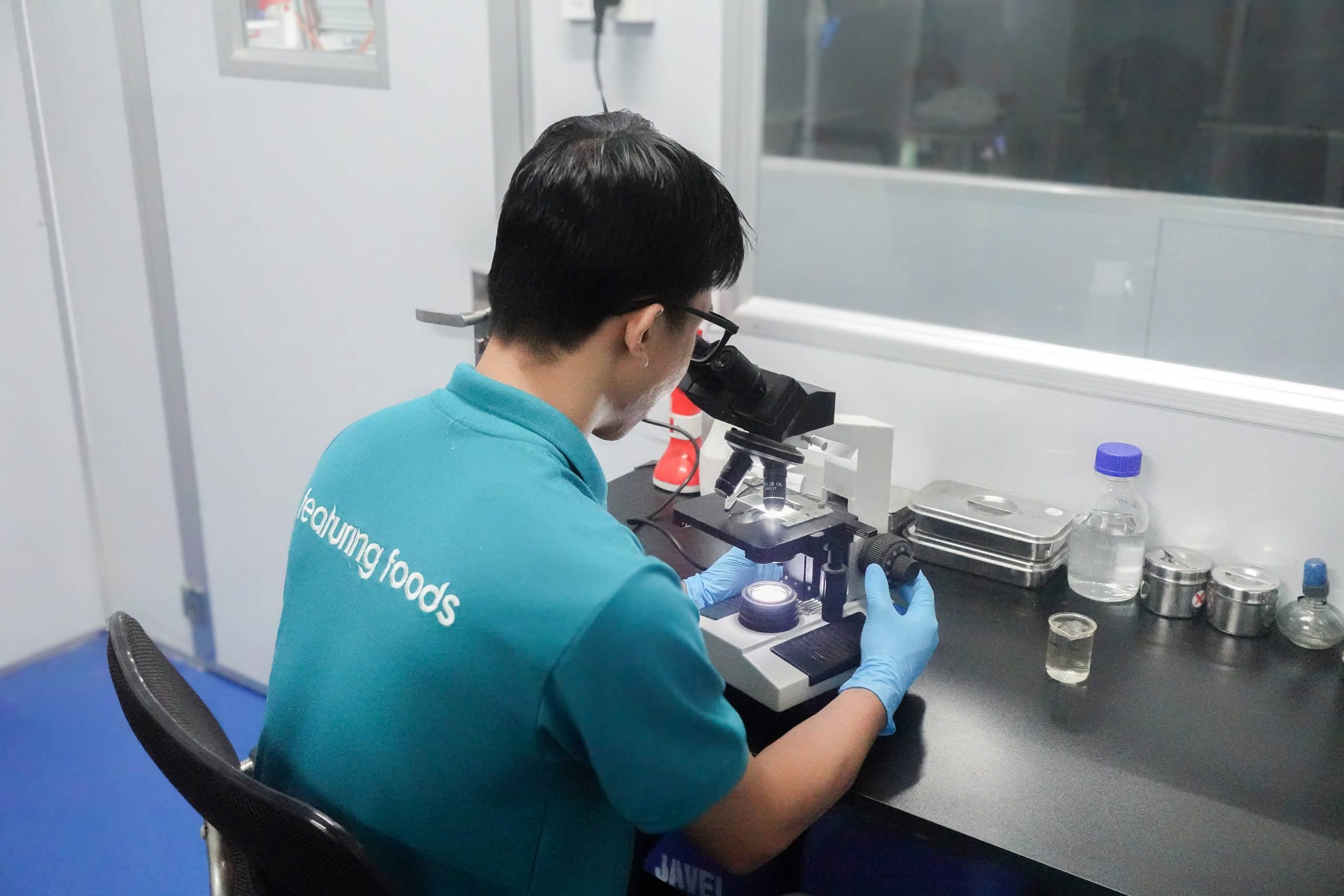
Monitoring fish health
Changing market requirements
For the EU and UK markets, electrical stunning is more commonly used. However, dry stunning—where fish are removed from water and stunned on a conveyor belt—remains the standard practice. Although it enables rapid processing, this method can still cause stress before the stunning takes full effect. Moreover, due to concerns about slowing down production lines, stunning is often applied only to fish destined for Europe, while products exported to North America and other Asian markets are frequently slaughtered without this step.
“Fish welfare is still a relatively new concept for many stakeholders, but research shows that better care leads to healthier fish, higher product quality and increased profitability for farmers, while giving consumers access to superior products,” Joe Pearce said.
Concerns over fish welfare continue to influence European market perceptions of Vietnamese pangasius. Although fish welfare is not yet a mandatory EU requirement, it is receiving increasing attention, particularly in Nordic countries where consumers and retailers place a strong emphasis on ethical and sustainable production. The study indicates that consumers are willing to pay a premium for welfare-certified pangasius, highlighting market potential for welfare-compliant products, even as cost considerations remain important in Vietnam.
“Vietnam’s seafood sector has enormous potential, and by adopting higher welfare standards, it can build stronger trust among European consumers while creating more sustainable and resilient value chains,” she said.
Vietnam and the Netherlands share more than 50 years of cooperation and over a decade of Strategic Partnership Agreement (SPA) on food security and sustainable agriculture. Numerous joint initiatives have been implemented, including in sustainable and responsible aquaculture, aimed at improving farming conditions, animal health and environmental performance, thereby enhancing the value and sustainability of Vietnam’s seafood supply chains.
More information
The full study report in English and Vietnamese can be downloaded in the links below.
Do you have any questions for the Agriculture Department at the Netherlands Embassy in Vietnam? If so, please send an email to HAN-LVVN@minbuza.nl or HCM-LVVN@minbuza.nl. For the latest updates, news, funding opportunities and more, follow our LinkedIn: Netherlands Agricultural Network in Vietnam.