
On 11-15 August a delegation of horticultural specialists and officials from Uzbekistan and Kyrgyzstan conducted a professional mission to the Kingdom of the Netherlands as part of the Netherlands Fruit Solutions Uzbekistan initiative. The visit aimed to deepen agricultural cooperation, explore innovative technologies, and build lasting partnerships with Dutch farmers, research centers, and agribusinesses.
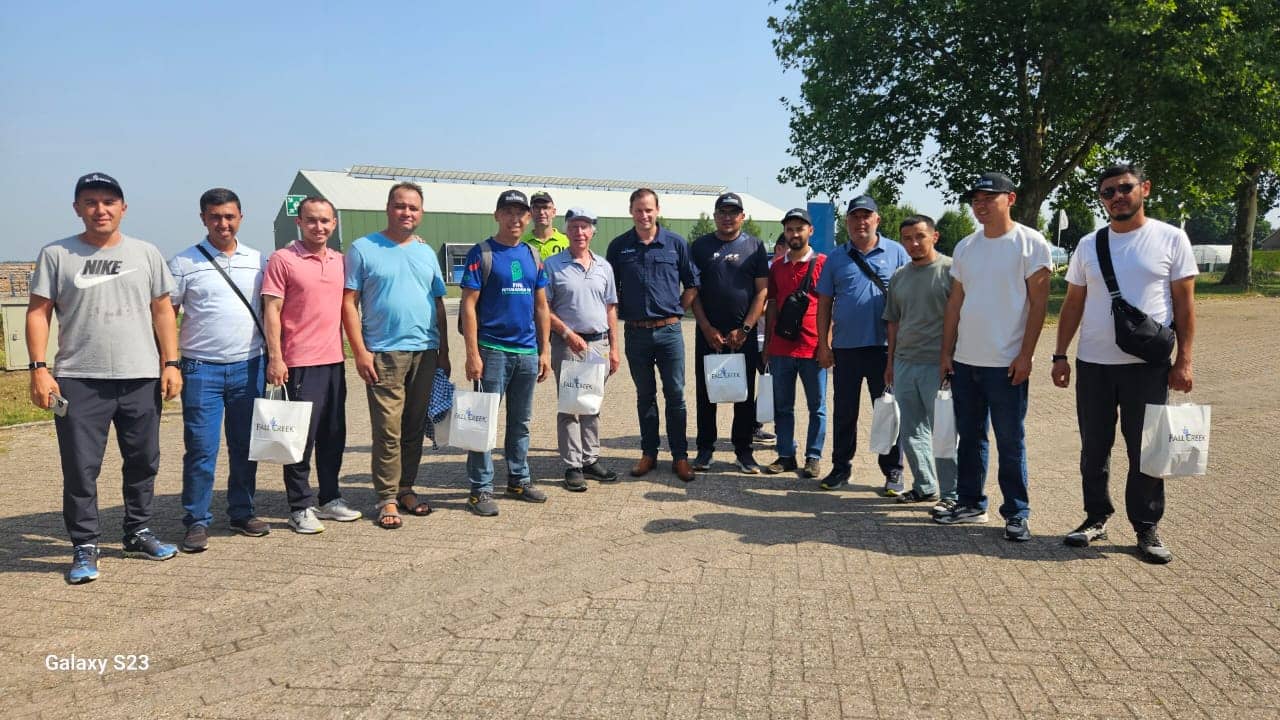
Beeld: © AST-LVVN
NFSU project: Uzbek-Kyrgyz delegation in the Netherlands
Mission objectives
The visit was organized to achieve several strategic goals:
- Exchange expertise in horticulture and fruit cultivation
- Demonstrate and explore modern agricultural technologies
- Establish long-term professional and business contacts
- Provide training in irrigation, logistics, storage, and product marketing
- Introduce new varieties of fruits and berries, particularly raspberries, cherries, apples, and pears
Field engagement and knowledge exchange
The delegation began their work with site visits to local farming clusters, where they interacted directly with Dutch farmers, consultants, and agronomists. Discussions focused on new fruit varieties, cultivation practices, and technologies for disease management and yield optimization.
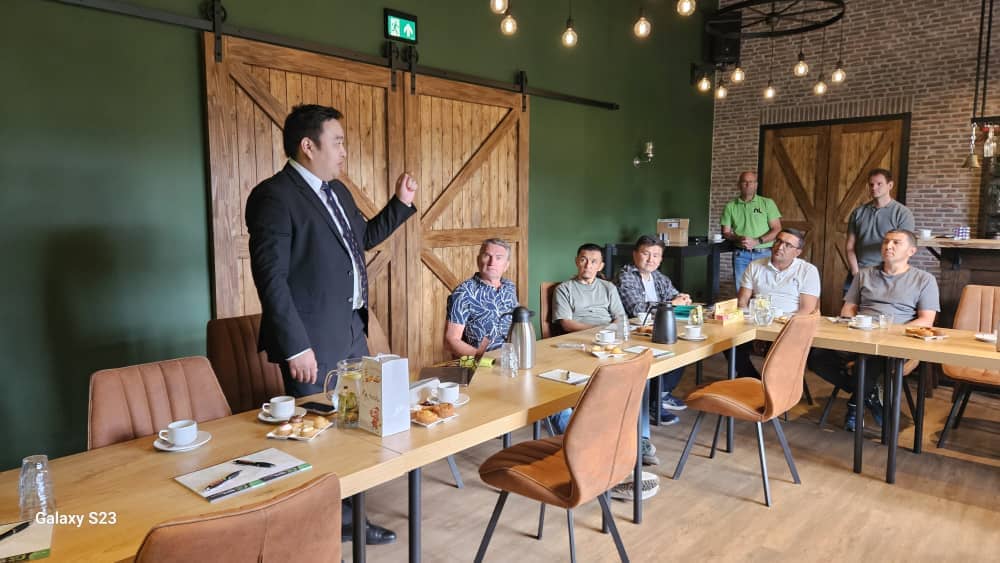
Beeld: © AST-LVVN
Chyngyz Alymkulov, Advisor to the Embassy of Kyrgyzstan
At a roundtable event with farmers and agricultural experts, project coordinator Alfred Evers introduced the goals of the mission. Representing Uzbekistan, Furkat Alimukhamedov highlighted the ambitions of Uzbek and Kyrgyz horticultural companies to establish sustainable cooperation with the Dutch agricultural sector. Participants also heard from Dick van Oostrum, who presented a case study on modular farming systems. The presence of Chyngyz Alymkulov, Advisor to the Embassy of Kyrgyzstan in Belgium, reinforced the mission’s diplomatic and developmental significance.
Visits to innovative farms and clusters
Informal exchanges with farmers at the De Landwinkel cluster provided valuable insights into the benefits of new apple and pear varieties, seedling selection, and disease control. At the De Kersenhut cherry farm, participants explored agrotechnical innovations and learned how Dutch growers achieve high yields even with limited resources.
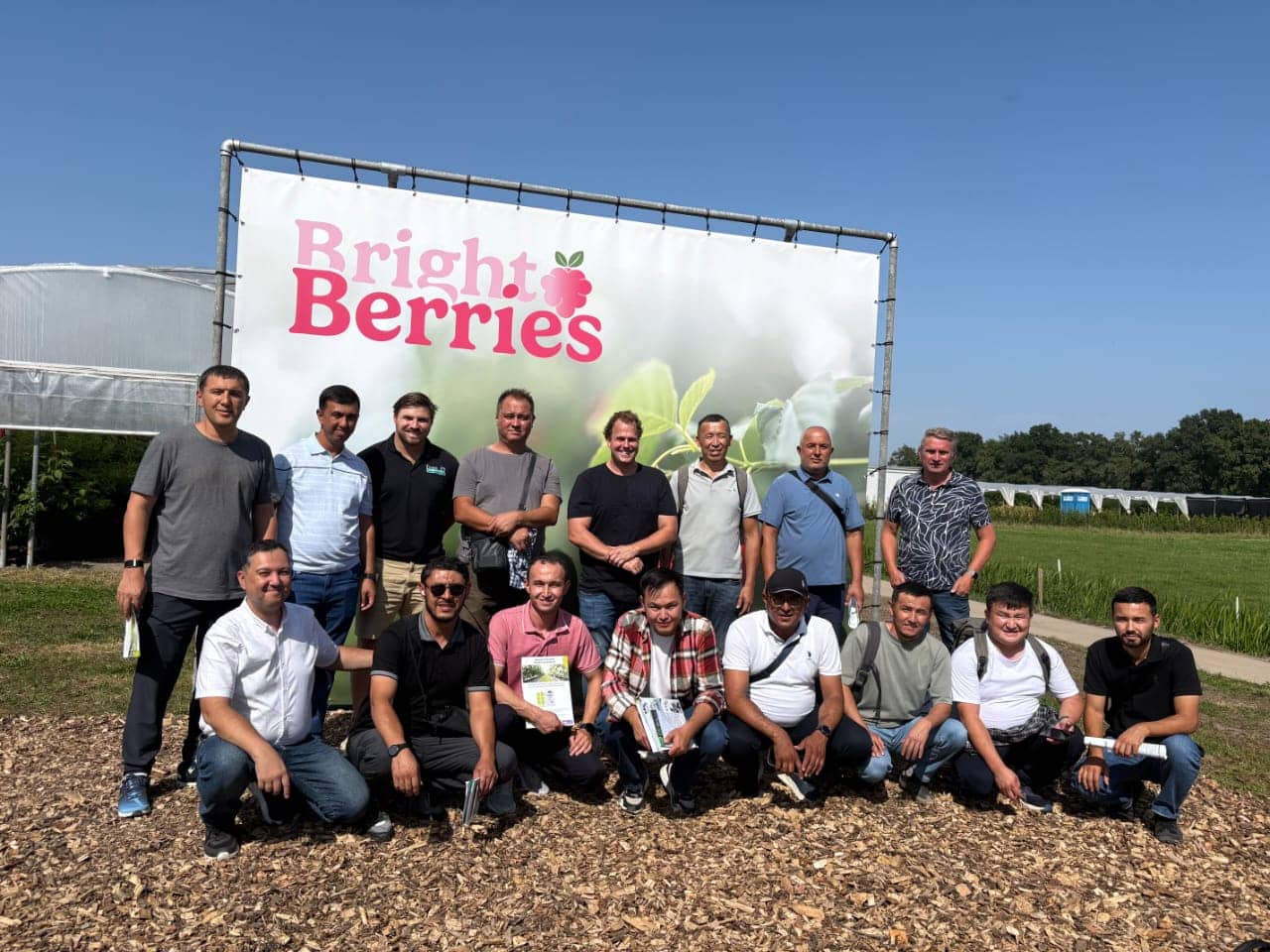
Beeld: © AST-LVVN
NFSU project: Uzbek-Kyrgyz delegation visited Puijk Fruit Company in the Netherlands
The delegation also visited Puijk Fruit and its partner VGB, where they were introduced to fertigation technologies used in berry cultivation on peat substrates. The advanced systems presented left a strong impression, inspiring interest in launching joint raspberry production ventures.
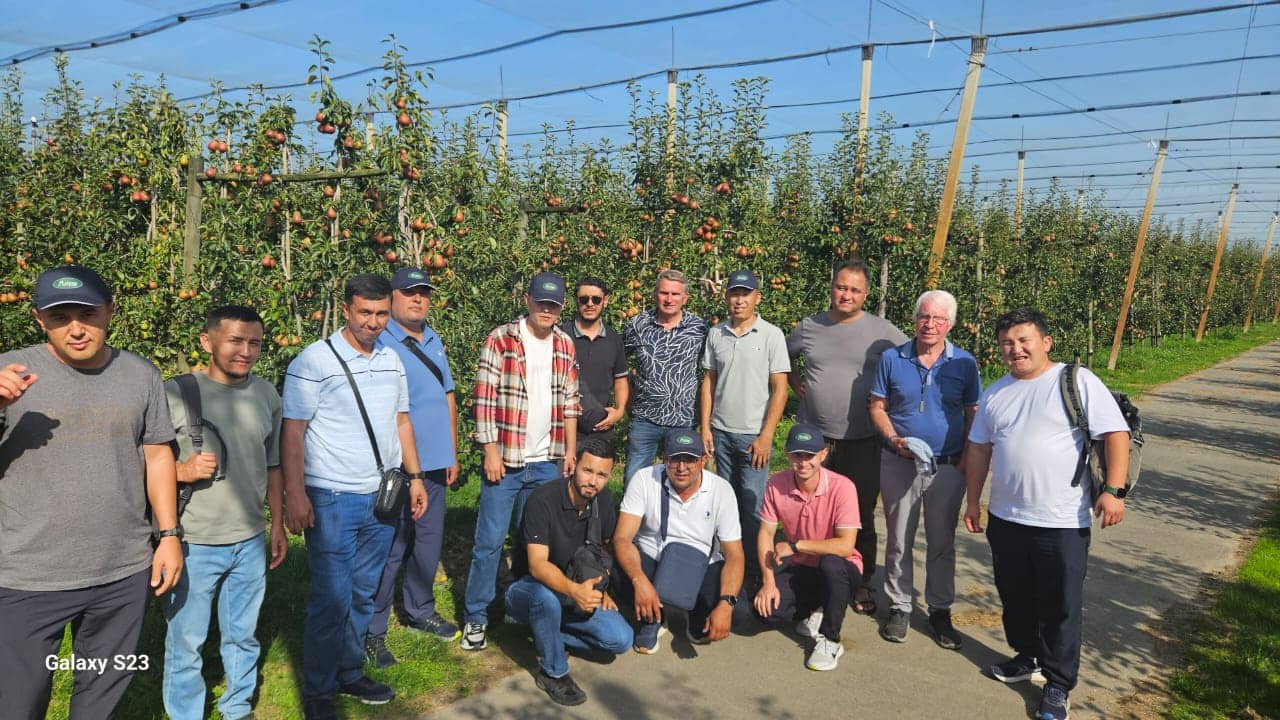
Beeld: © AST-LVVN
NFSU project: Uzbek-Kyrgyz delegation visited Dutch farm growing red pears of the GEPA variety
In red pear orchards specializing in the GEPA variety, delegates observed healthy tree development and exceptional fruit quality — reinforcing the Netherlands’ reputation as a global leader in pear cultivation.
Focus on science, varieties, and nursery practices
The delegation engaged with leading nurseries such as Fleuren, where they studied modern cherry, plum, and apple varieties. Attention was given to agro-support systems and the importance of variety-specific approaches. At Fall Creek Nursery, known for its large-scale blueberry breeding operations, participants witnessed the scientific rigor behind high-quality propagation.
Beeld: © AST-LVVN
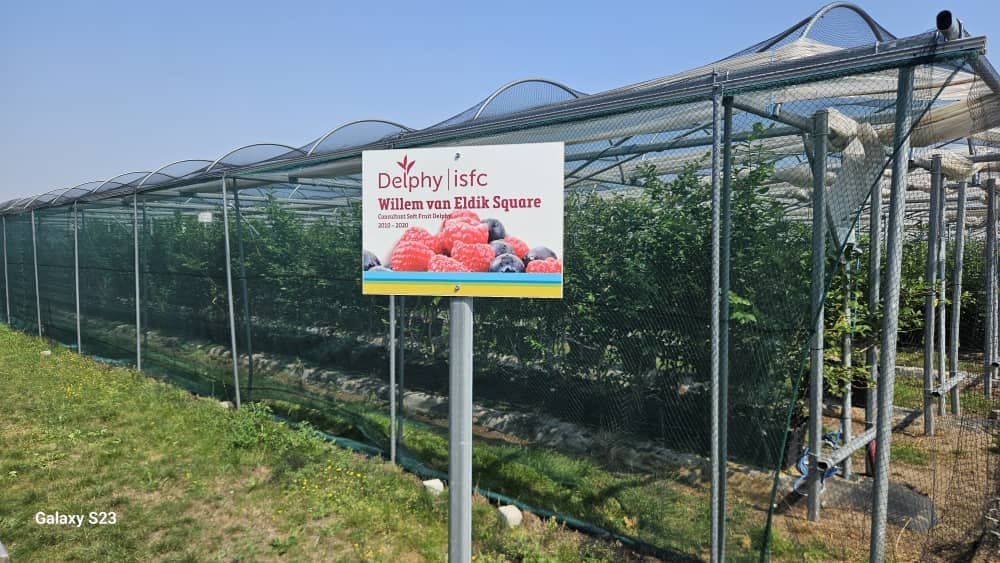
Delphy ISFC
A visit to the Delphy ISFC research center offered practical demonstrations of the latest growing methods for strawberries, raspberries, blueberries, and blackberries. As a result, delegates emphasized the need to:
- Participate more actively in international research and training programs
- Build relationships with suppliers of elite raspberry and strawberry seedlings
The mission also included a visit to the Fruit Research Center (FRC) at Wageningen University, where the integration of science and production was highlighted as key to successful horticultural development. Participants expressed keen interest in replicating such demonstration research centers in Uzbekistan and Kyrgyzstan.
Exploring logistics, processing, and business models
A visit to Geerlofs Koeltechniek in Rotterdam revealed advanced cooling and quick-freezing systems for berries and greens — technologies crucial for post-harvest value preservation. Delegates were impressed by the company’s capacity to integrate processing technologies with sustainability goals.
At Fruithandel van Os, an integrated farm-business operation, the delegation observed a full-cycle model encompassing production, energy generation, logistics, and sales. The company’s use of renewable energy to power its storage and retail facilities particularly resonated with the visitors, many of whom expressed the desire to develop similar models in Central Asia.
Beeld: © AST-LVVN
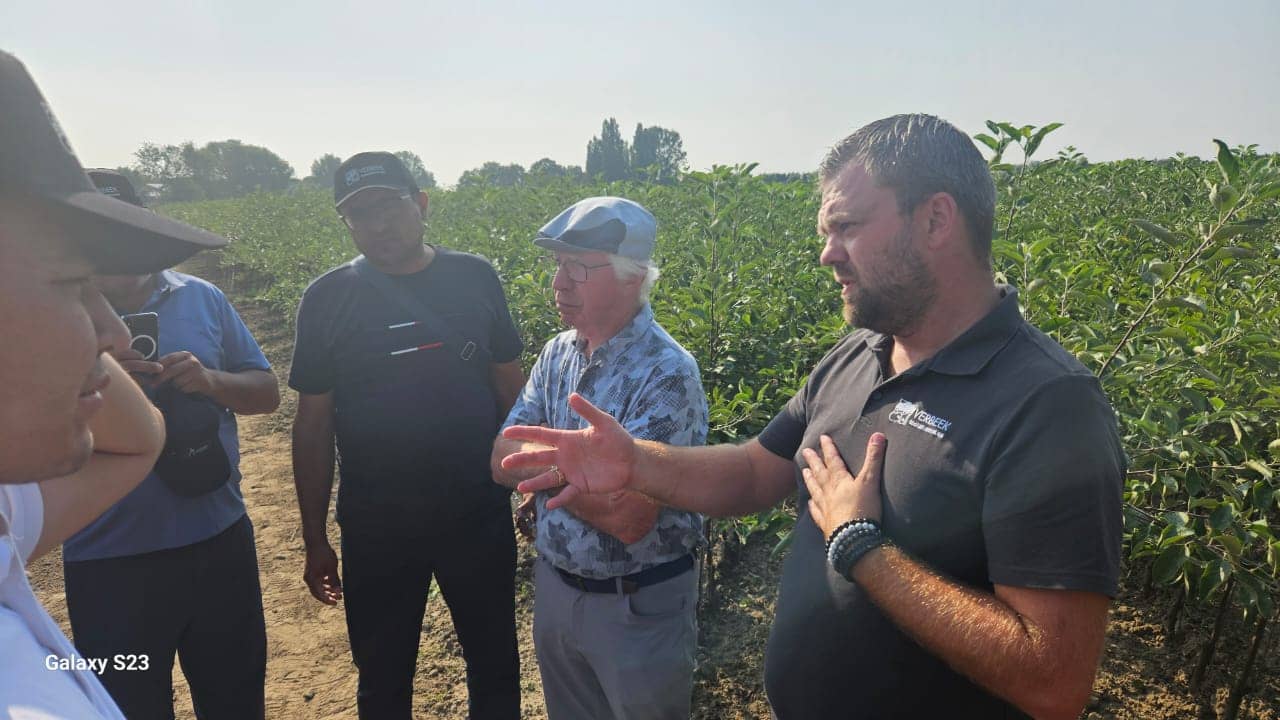
NFSU Coordinator Fred Evers with Uzbek-Kyrgyz delegation visited Verbeek Nurseries in the Netherlands
At Verbeek Nurseries, participants saw firsthand how investments in high-quality seedlings serve as the foundation for consistent, high-yield fruit production. The visit reinforced a consensus that quality planting material is non-negotiable for sustainable success.
Sustainability and family farming
Beeld: © AST-LVVN
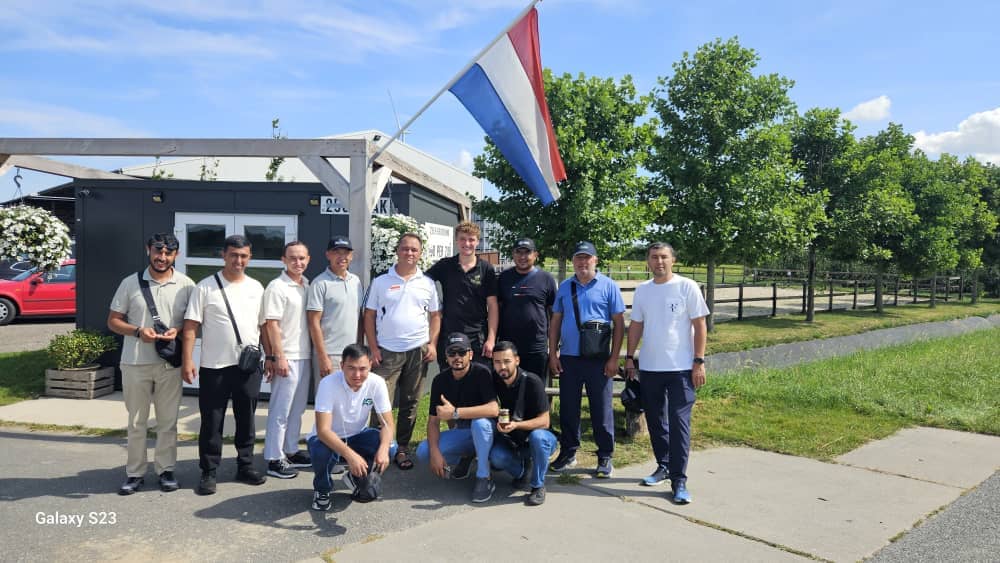
NFSU project: Uzbek-Kyrgyz delegation visited Van Riel family farm in the Netherlands
The mission concluded with a visit to a family-operated farm managed by the Van Riel family, now in its second and third generations. A notable takeaway was the longevity and productivity of their pear trees, many of which have been bearing fruit for over 40 years. This served as a symbolic representation of the Netherlands’ legacy in thoughtful, long-term horticulture.
Outcomes and reflections
Participants described the mission as highly informative and inspiring. Among the most impactful insights were:
- Innovative fruit varieties, particularly apples and raspberries, which exceeded expectations in taste, size, and appearance
- Advanced irrigation solutions such as double-hose drip systems
- Tree health monitoring and automation technologies
- Insights into Dutch marketing strategies and pricing mechanisms for cherry production
Future collaboration
The mission significantly advanced the collaboration between Dutch agro-industrial clusters and horticultural professionals from Central Asia. Building on this momentum, the Netherlands Fruit Solutions Uzbekistan project plans to implement:
Beeld: © AST-LVVN
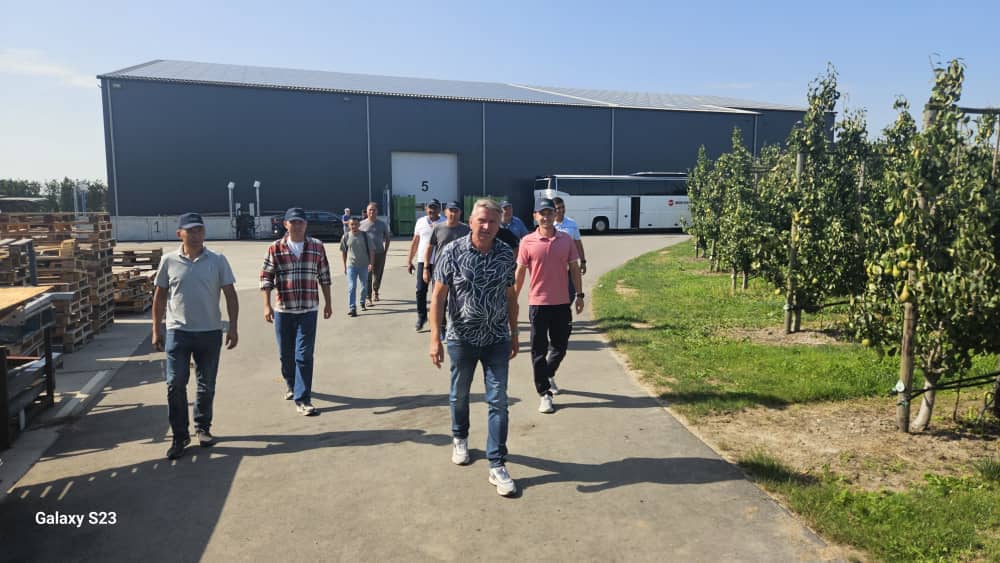
Visit to Fruit Research Center at Wageningen University
- Pilot projects in fruit growing and technology adoption
- Expert exchanges and joint research
- Training programs for farmers and agronomists
- Development of supply chains for high-quality seedlings
This mission set a solid foundation for ongoing cooperation and demonstrated the shared commitment to innovation, sustainability, and growth in the horticultural sector.
Source: Netherlands Agricultural Network team Astana together with NFSU project team