
Making Singapore's food production more viable with Dutch greenhouse technology, crop breeding and research
Putting agrifood innovation to the test
Singapore imports more than 90% of its food. Producing more food locally is expensive because of high land, energy, and labor costs. Dutch greenhouse technology, seeds and research could help Singapore meet its food security challenges. For Dutch companies, Singapore is also a testing ground for technologies that could reach Southeast Asian markets. The Netherlands Agricultural Network (LAN) team at the Dutch Embassy in Singapore supports ongoing projects and connects Dutch companies with local partners.
Singapore is a small city-state, with an area of just 745 square kilometers. Close to 50% is used for urban development and infrastructure. Only about 1% of its land is set aside for farming. Its reliance on food imports makes supplies vulnerable to shortages in producing countries and disruptions to logistics networks. Food security encompasses several dimensions: food availability through domestic production and imports, individuals' access to nutritious food, utilization of food alongside other factors to meet physiological needs, and stability of supply against disruptions. In 2019, the government introduced its 30-by-30 goal: to produce 30% of general nutrition needs locally by 2030. During COVID-19, disruptions to shipping and transport further highlighted the importance of stronger and more varied food supply networks.
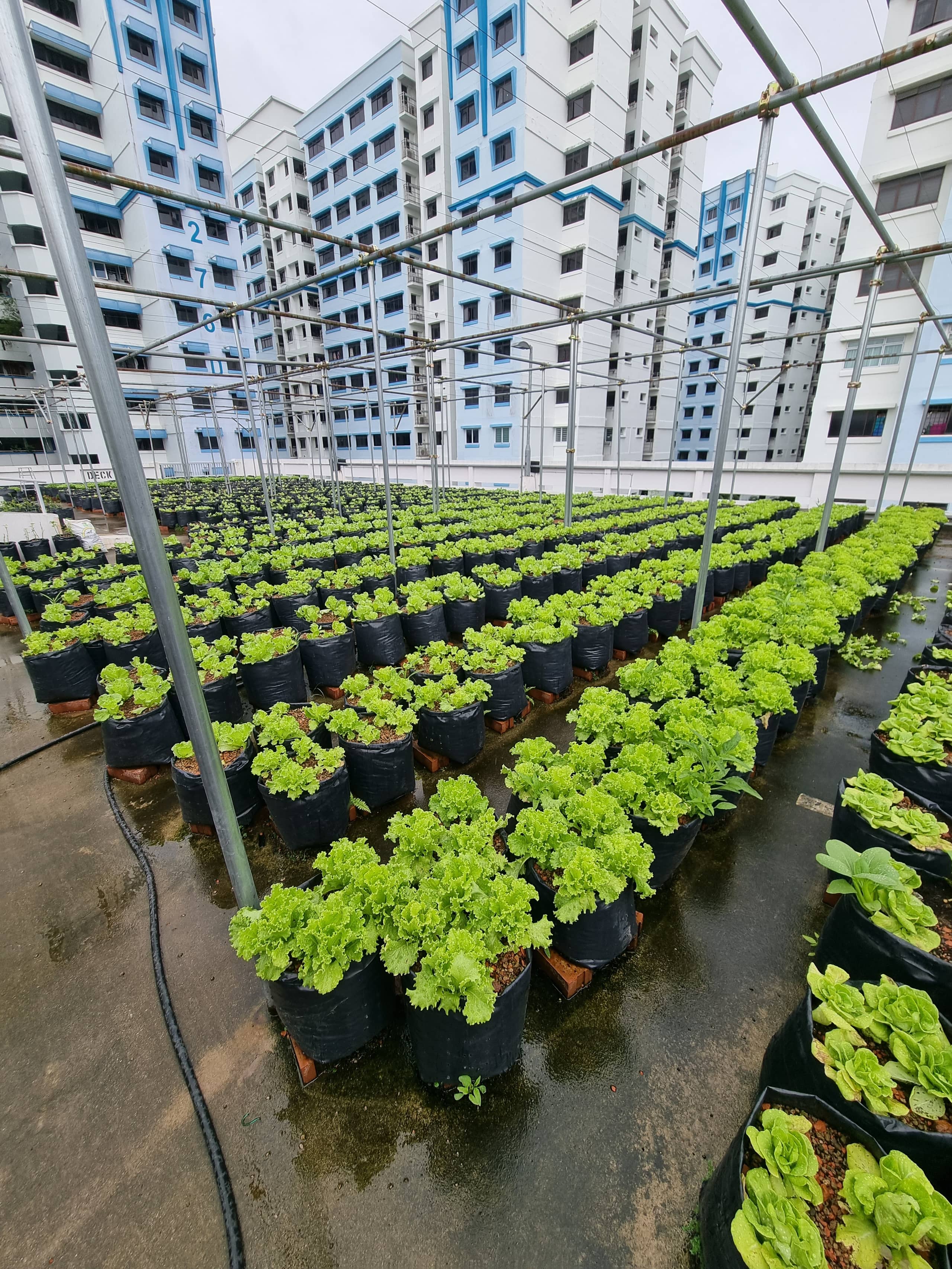
Examples of urban farms on the rooftops of buildings located in a housing area 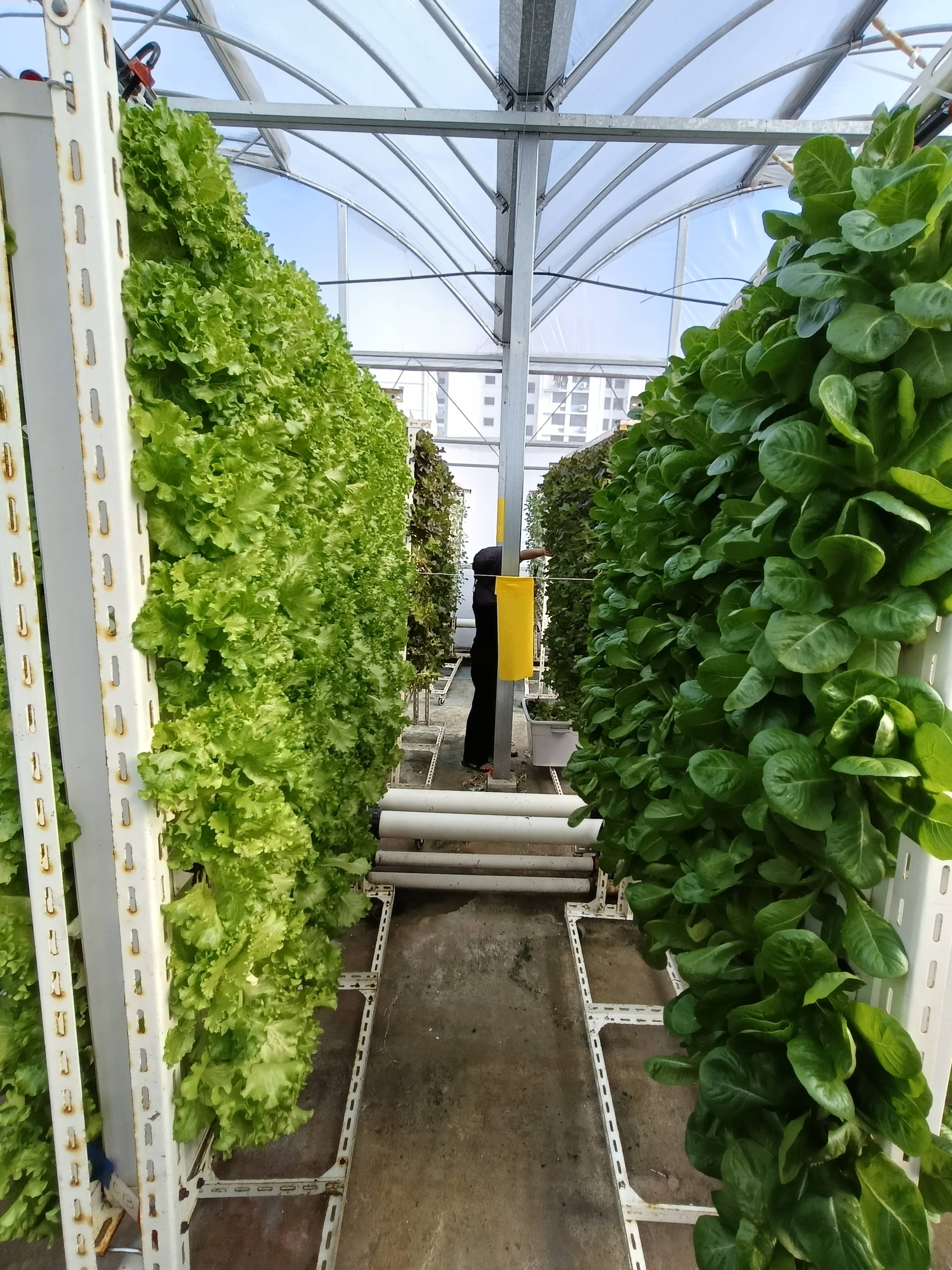
As part of the 30-by-30 goal, the government made more public land available for urban and greenhouse farms. This led to several farms being set up not only in farming areas in Singapore’s countryside but also on unused carpark rooftops. Indoor farms were also set up in private industrial parks, showing how technology can help overcome the lack of space for farming in a city.
Challenges faced in local farming
Because land is scarce, land prices remain high. Electricity prices have increased in recent years. High salaries and fees for hiring foreign workers add to labor costs. These costs, combined with the energy requirements of some high-tech farming systems, make locally produced food relatively expensive.
Locally grown produce is usually fresher, and controlled-environment farms can use fewer pesticides. Yet it struggles to compete with cheaper imported produce, which is not subject to import tariffs due to Singapore's free-market policy. Over time, with weak demand and funding shortages, several of the indoor and greenhouse high-tech farms eventually closed.
For high-tech farming to contribute to long-term food security, solutions also need to be productive, resource-efficient, and financially viable. Singapore has adjusted its original goal to 20% of its fiber needs and 30% of its protein needs to be produced locally by 2035. The fiber target covers leafy and fruiting vegetables, bean sprouts and mushrooms; the protein target covers eggs and seafood. The government remains committed to increasing local production, with more time to work through these challenges.
'Singapore has adjusted its original goal to 20% of its fiber needs and 30% of its protein needs to be produced locally by 2035'
Investment and new production models
In response to these challenges, the Singaporean government has provided more grants for farms to invest in new technologies, such as automation for farming and post-harvest work, energy-saving and waste-management technologies, and environmental monitoring and optimization systems. Such technologies can help farms increase productivity while making more efficient use of land, energy, and other resources.
The Agri-Food Cluster Transformation (ACT) Fund, first introduced in 2021, was renewed as ACT Fund 2 in 2026, with SGD 70 million (approximately EUR 49 million) available from 2026 to 2031. The ACT fund provides grants for farms to use new farming methods and equipment, expand high-tech production, and run pilot projects with research institutions and other agri-tech partners.
The government is also focusing on seed breeding because farms need more productive seed varieties, suited to high-tech farms in tropical lowland climates. It allocated SGD 22 million to research with local universities and seed companies to find the most suitable varieties for high-tech farming conditions.
Singaporean agri-tech companies have been exploring agri-tech parks in the Singapore-Johor Special Economic Zone in nearby Malaysia, and farms have begun moving into the zone. This could reduce farming costs while keeping the farm-to-table journey short and produce fresh. Since late 2025, the Netherlands Agricultural Network (LAN) team in Singapore has been connecting Dutch organizations with projects in the zone.
Dutch technology is helping, but more innovation is needed
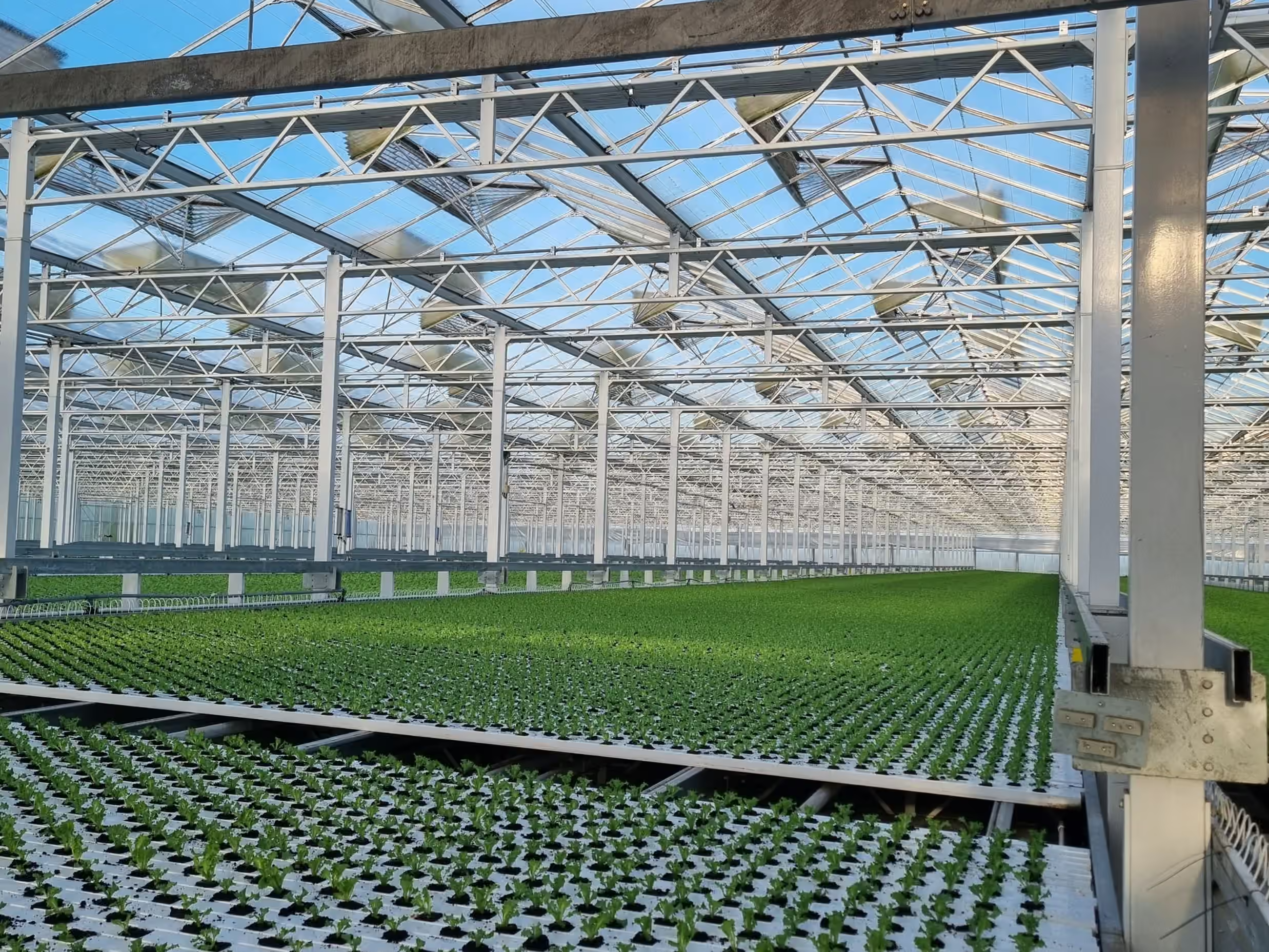
Several high-tech farms in Singapore grow their vegetables in Venlo-type glass greenhouses, adapted to Singapore's warm, humid lowland climate. Within these greenhouses, climate monitoring and control systems made by Dutch company Priva improve growing conditions, combining environmental sensors and ventilation such as roof vents and fans.
Some greenhouses use moving gutter hydroponic systems, supplied and installed by DanDutcH, to optimize growing space at different growth stages. Green Harvest, which describes itself as Southeast Asia's largest hydroponic glass greenhouse, uses moving gutter and conveyor systems commissioned by DanDutcH. The farm credits its moving gutter system with significantly increasing productivity. Rijk Zwaan lettuce seeds are also widely used in Singapore.
Glass greenhouse in Singapore with a moving gutter system
In 2026, Wageningen University & Research (WUR) and Nanyang Technological University (NTU) started SingFarmS (Singapore Indoor Farming Systems), a five-year research project to make high-tech farming more efficient and sustainable. Its research laboratory is due to open in 2027, when preliminary findings will be shared, with commercial farm trials planned later. Most research concerns indoor farming, but its findings could also benefit outdoor production. It has three research areas with related goals:
- Select seed varieties faster, using genomic methods. These seeds could produce plants that are more compact, allowing more layers in vertical farms, or they could grow into plants that require less light, reducing lighting needs and costs.
- Study the balance between light, temperature, and humidity to improve crop growth while using less electricity. AI is used to analyze data and develop models to predict crop growth and farm operations.
- Make high-tech farming more sustainable by reducing losses after harvesting and reusing materials. By-products from agrifood processing are used to make products that help keep vegetables fresh for longer or improve crop growth.
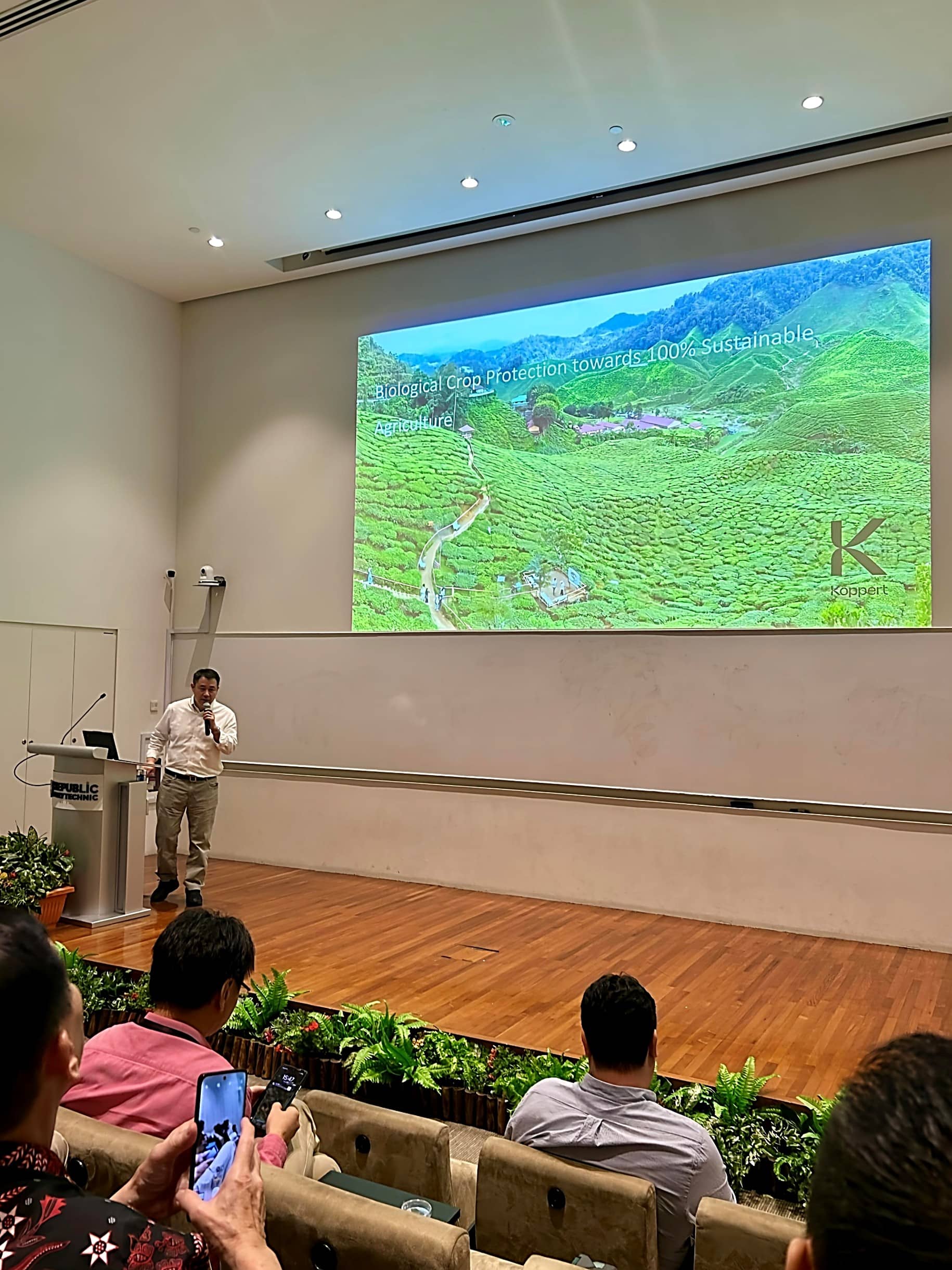
Koppert Korea General Manager, Mr Geum-yong (James) Kim presenting at a workshop and doing farm visits in Singapore 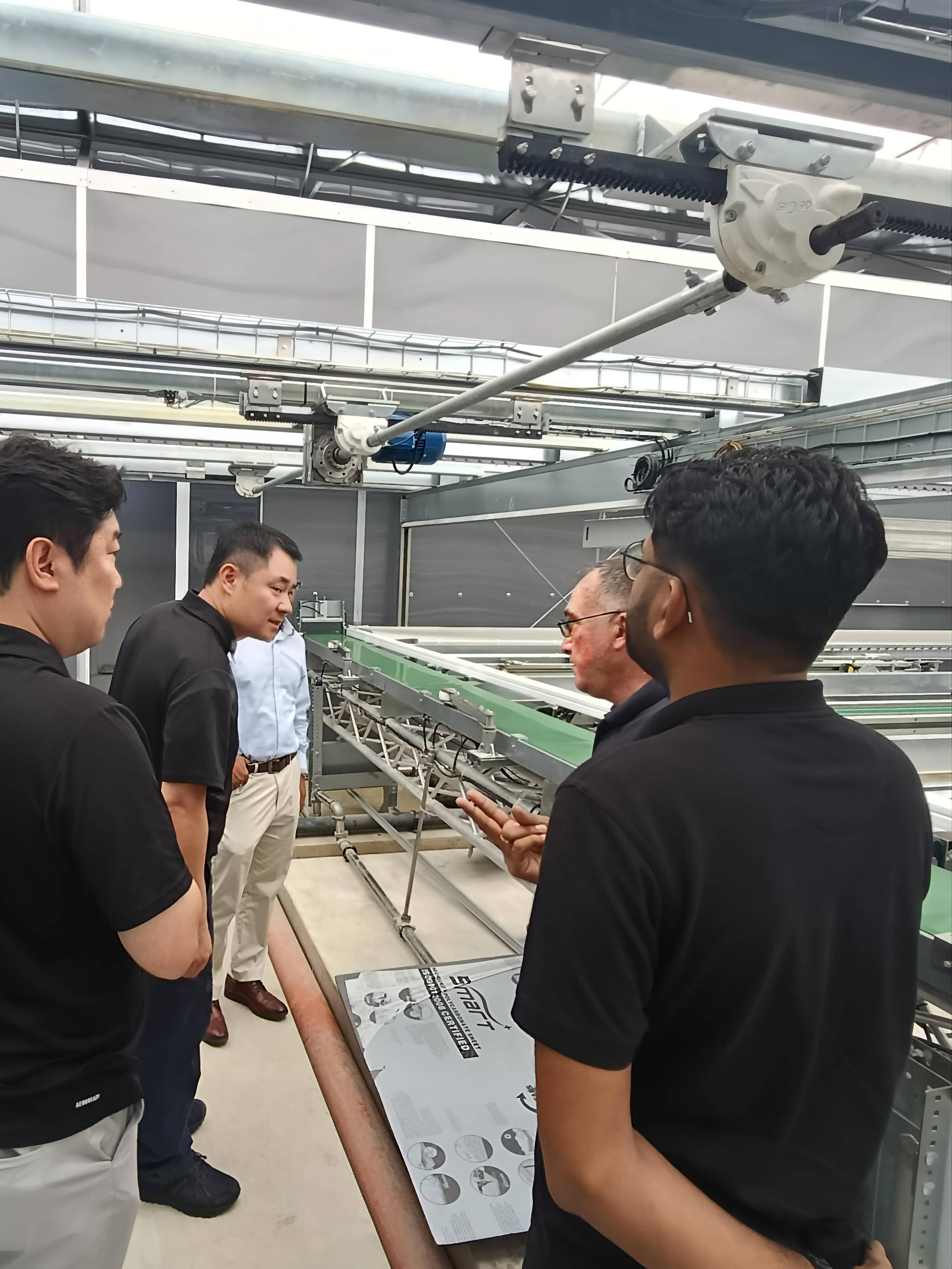
Koppert Korea General Manager, Mr Geum-yong (James) Kim doing farm visits in Singapore
Pesticide-free farming is also of interest in Singapore. In enclosed high-tech farms, pesticide residues can linger and pose long-term risks to workers. Following interest from Singaporean research institutions and government, Dutch company Koppert held a 2025 workshop on biological pest control in tropical lowland areas. The LAN team helped organize it with Koppert and Republic Polytechnic and facilitated Koppert's visit and meetings with agricultural stakeholders. Koppert and Republic Polytechnic are now preparing an indoor trial of a Koppert product.
A gateway to Southeast Asia
Commercial farms and research projects in Singapore are open to trying new seeds, equipment, and inputs to improve productivity and resource efficiency. Singapore can serve as a testing and demonstration environment for Dutch agricultural technology adapted to tropical lowland conditions. Promising opportunities include seeds for Asian leafy vegetables suited to the tropics and affordable equipment and inputs that fit existing farming systems. Trials and demonstrations could encourage uptake and expansion into Southeast Asian markets with similar climates. Some Asian leafy vegetable varieties are already grown in both Singapore and lowland Malaysia.
Singapore's position as a regional innovation, research and investment hub further strengthens this potential. Connections between research institutions, businesses, investors and government agencies help start-ups and scale-ups develop, test and commercialize solutions. Dutch companies can use these networks to develop technologies and explore neighboring markets.
NUSX, formerly NUS Enterprise, supports university spin-offs, industry partnerships and investment. Forte Biotech, a Singaporean company specializing in on-site molecular diagnostics for aquaculture and livestock, was incubated at the NUS Agritech Centre, part of NUSX. It now sells diagnostic kits to prawn farmers in Vietnam.
Invest International and Atradius Dutch State Business could help Dutch companies reduce the risks of international expansion. Businesses seeking to scale up may need funding to reach economies of scale; intellectual property protection and cybersecurity may also require attention.
'Singapore can serve as a testing and demonstration environment for Dutch agricultural technology'
LAN connects Dutch companies with Singaporean partners
At the Netherlands Embassy in Singapore, the LAN team supports ongoing projects and connects Dutch companies with local partners. With the Netherlands Innovation Network, it helped WUR and NTU establish SingFarmS, a joint research program between Nanyang Technological University (NTU) Singapore and Wageningen University & Research (WUR), focused on developing productive, resource-efficient, and resilient indoor farming systems. It provides matchmaking and visibility opportunities, including during Singapore International Agri-Food Week, and holds government-to-government discussions to improve conditions for Dutch businesses and share Singaporean policy priorities.
More information
If you would like to know more about opportunities for Dutch agrifood companies in Singapore and the wider Southeast Asian region, you can visit the country page of Singapore on this website. You can also email the LAN team at the Netherlands Embassy in Singapore: SIN-LVVN@minbuza.nl.