
Kazakhstan and the Netherlands reshape agricultural cooperation through digitalization and new business models
New roles for Dutch technology, knowledge, and services
Kazakhstan is investing heavily in agricultural modernization. Across greenhouse horticulture, dairy, poultry and arable farming, sophisticated systems are being introduced. Dutch technology already plays a role, from greenhouse systems and poultry equipment to dairy solutions and precision agriculture. But installation is only part of the transition. The Netherlands Agricultural Network (LAN) at the Dutch Embassy in Astana can support both countries by identifying partners, organizing sector-specific missions and connecting Dutch technology providers with Kazakh producers and knowledge institutions.
Making advanced technology perform consistently requires skilled staff, reliable data, effective plant and animal health systems, and adaptation to Kazakhstan’s production conditions. This opens a new area for Dutch-Kazakh cooperation: developing solutions together rather than simply transferring technology.
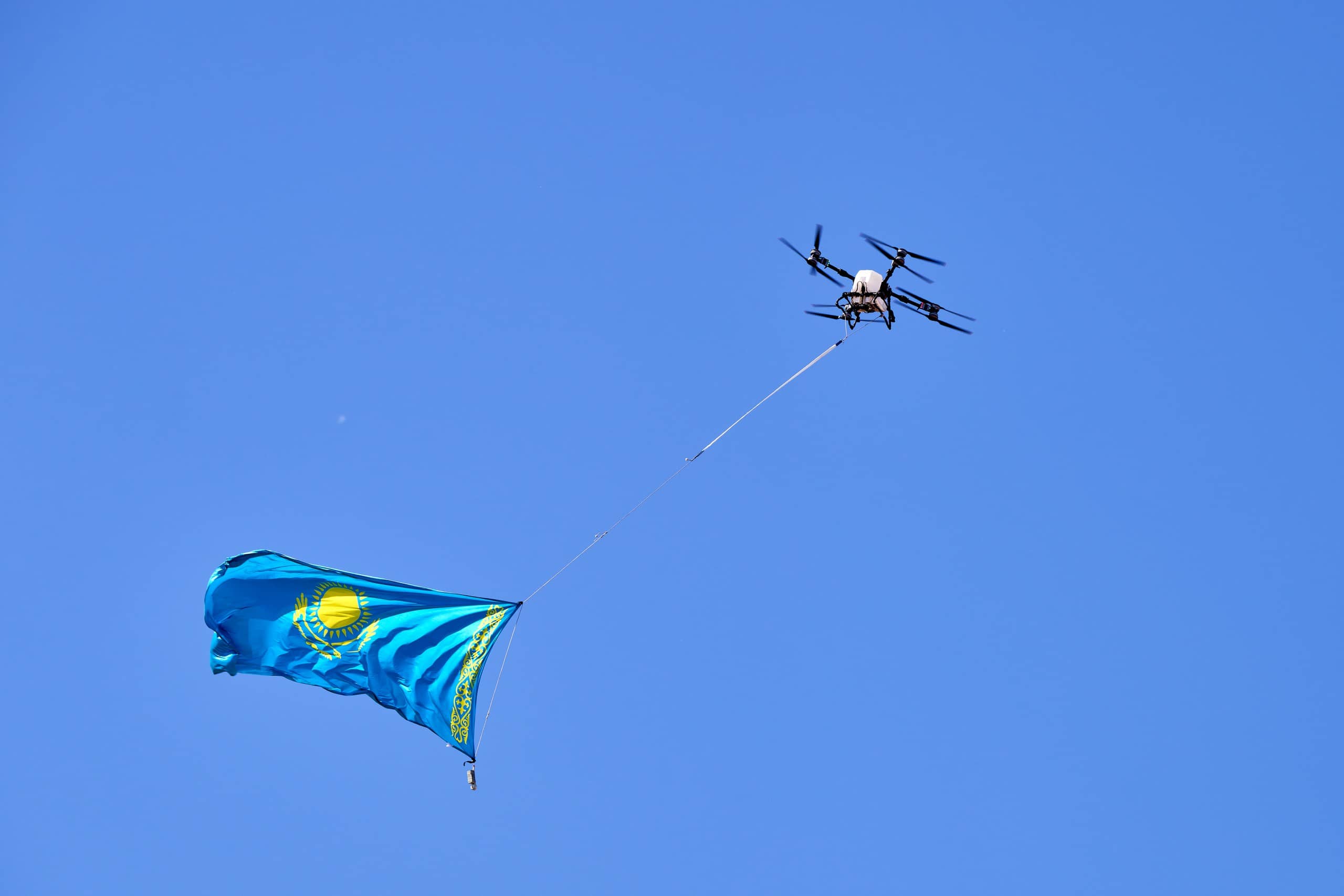
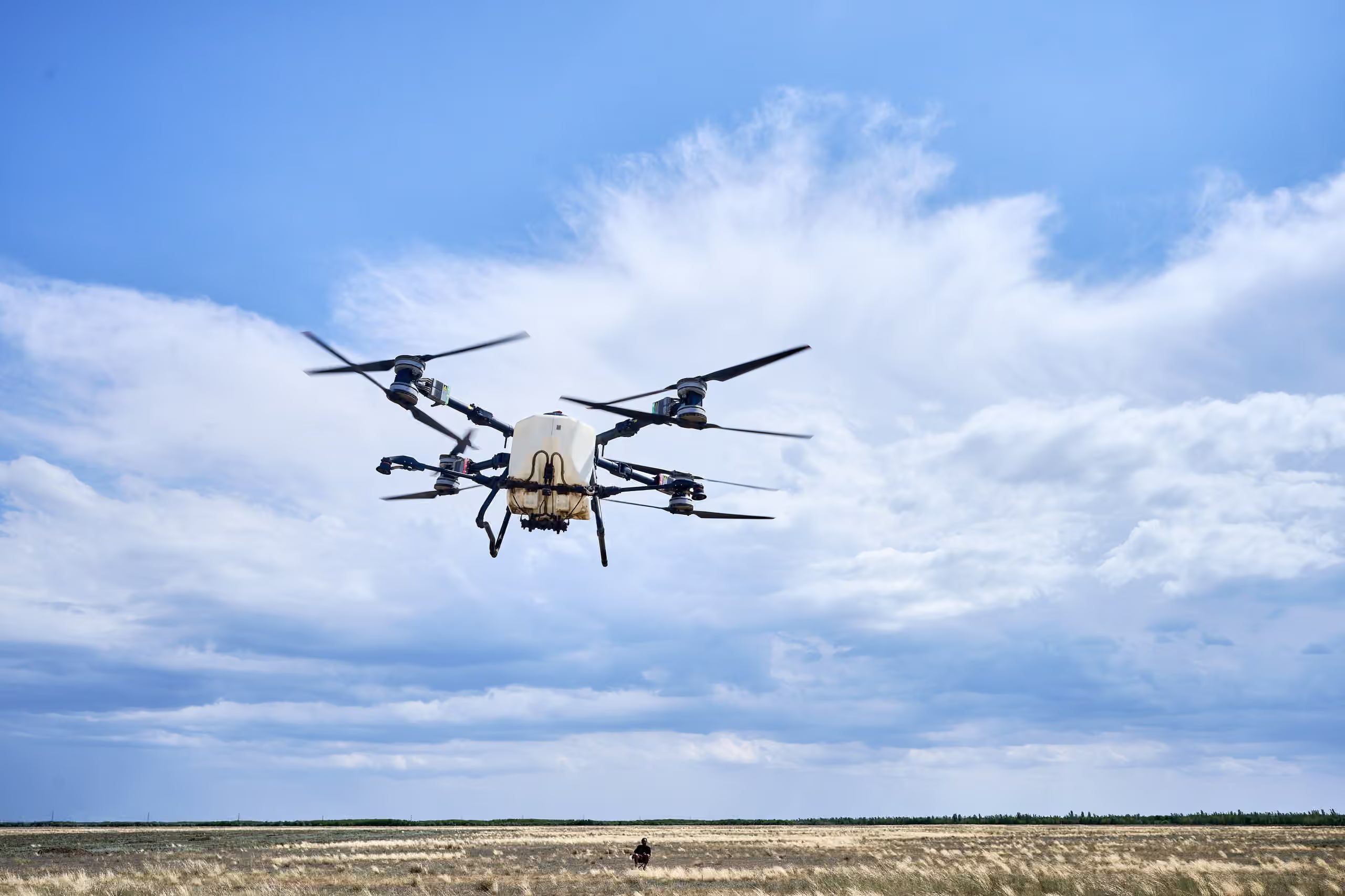
Beeld: © Evgeniy Volkov
Drone flying with the flag of Kazakhstan
Smart farming across vast distances
Kazakhstan prioritizes digitalization and artificial intelligence in agricultural modernization. The Kazakh Ministry of Agriculture is developing e-APK, a single digital ecosystem linking systems for subsidies, land management, livestock identification and crop traceability to simplify administration and improve decisions. An updated digital transformation roadmap covers 144 administrative and agricultural processes, including subsidy applications, land management and product traceability.
According to the Ministry of Agriculture, 648 agricultural enterprises use digital technologies, with reported applications including precision farming and automated feeding and animal health monitoring at 104 dairy farms and 30 feedlots. The Ministry identifies more than 200 ‘smart farms’, combining sensors, satellite information, navigation systems and digital management tools.
With farms covering vast areas far from population centers, remote monitoring of fields, herds and production facilities address a practical need rather than simply adding technology.
Digital technology creates opportunities
Kazakh company Egistic combines satellite imagery, field monitoring, machinery telematics and agronomic information on its farm management platform. Vegetation, moisture, nitrogen, and chlorophyll indicators help farmers locate problems and target inspections. Its mobile app works offline, useful where connectivity is unreliable.
The AgroTech Research and Innovation Center at Astana IT University researches smart farming, Internet of Things applications, machine learning, computer vision and vertical farming. In May 2026, researchers presented an AI model for detecting tomato leaf diseases in vertical farming, achieving 98.61% accuracy on test data and 97.83% when identifying healthy leaves in an operational hydroponic facility.
For the Netherlands, Kazakhstan is more than a technology market: it offers opportunities to examine how digital agriculture operates across vast areas, how remote monitoring could reduce dependence on labor and how tools can work where infrastructure and connectivity differ from those in the Netherlands.
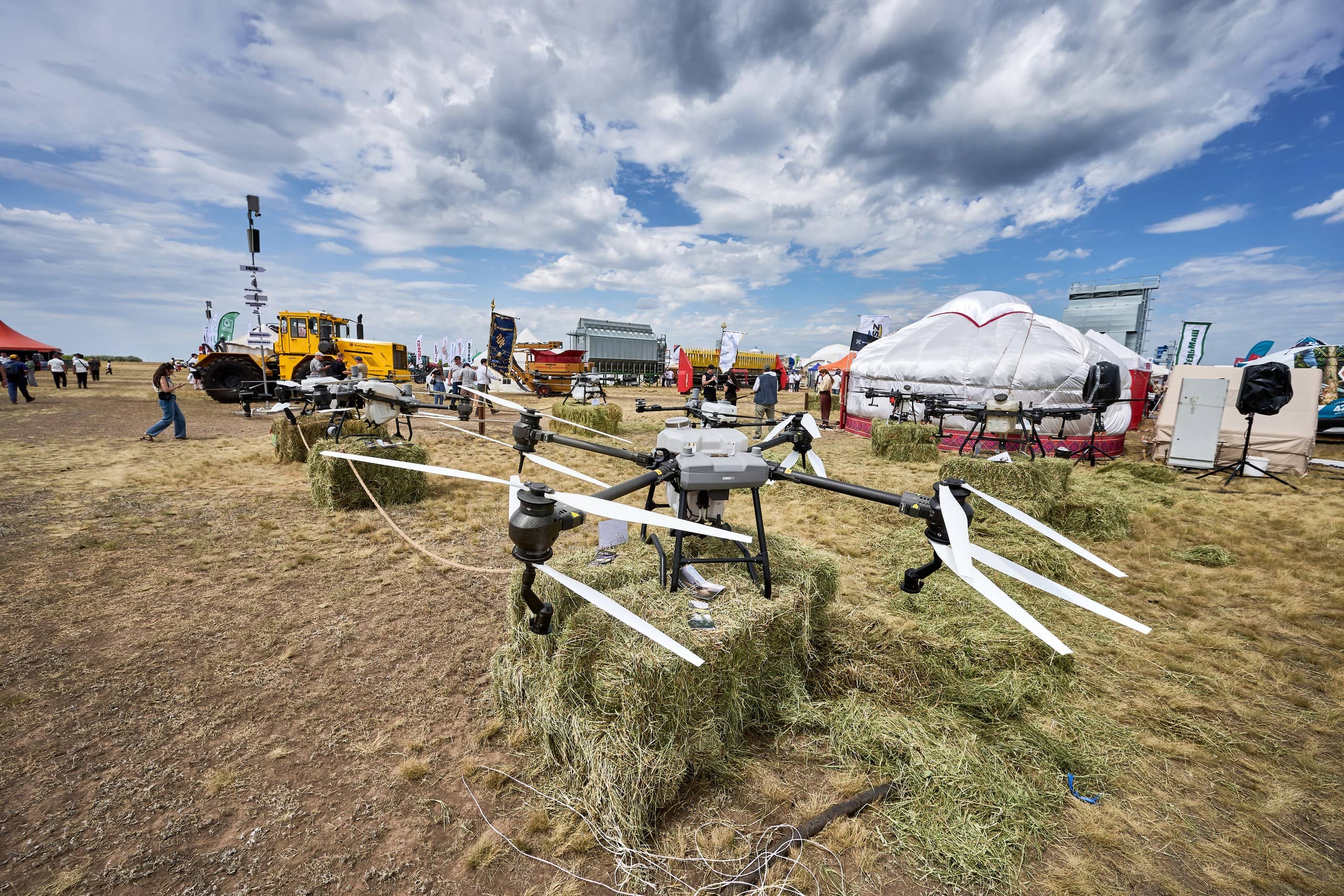
Beeld: © Evgeniy Volkov
Demonstration of technology at fair
PIB for poultry sector reflects broader need for skilled workers
A recurring challenge in Kazakhstan’s agricultural sector is finding enough qualified people to operate increasingly sophisticated production systems. Modern greenhouses, dairy farms, and poultry facilities use advanced climate control, feeding, monitoring, and automation, but performance depends on operators. Technology can reduce routine labor needs while increasing demand for specialized technical skills.
The recently launched Poultry Forward Kazakhstan addresses this need in the poultry sector. Dutch firms Trouw Nutrition, Royal Pas Reform and Vencomatic Group will work with Kazakh poultry companies and authorities. Wageningen University & Research and Dutch Poultry Centre contribute knowledge and Groenpact supports educational cooperation. The Netherlands Agricultural Network (LAN) team at the Dutch Embassy in Astana participates in this Partners for International Business (PIB) program linking business, knowledge exchange and education.
At Agroworld 2025, the Dutch poultry program presented technological solutions and exchanged practical knowledge on poultry nutrition, incubation, veterinary care and processing with Kazakh industry representatives. Aeres Training Centre stressed the need for skilled labor alongside new equipment.
The Dutch Poultry Centre and the Kazakh Poultry Union subsequently signed a cooperation agreement on technology and future professional training. The event itself delivered no formal training with reported outcomes; future activities could include vocational, in-company, on-site and train-the-trainer programs. In 2025, Groenpact signed an agreement with Kazakhstan’s National Agricultural Science and Education Centre, and Aeres Group partnered with KazGASA to develop joint agricultural education programs.
Beyond training, digital decision support, automation, remote technical assistance and AI could reduce routine tasks requiring scarce specialists and help employees operate advanced equipment. They also offer longer-term software, maintenance, and training services alongside equipment sales.
Beeld: © Evgeniy Volkov
Digital traceability reaches crops and livestock
Kazakhstan is modernizing laboratory diagnostics, veterinary infrastructure, disease surveillance and digital traceability under its Comprehensive Plan for the Development of Veterinary Services for 2026–2030. The plan includes veterinary information systems and electronic monitoring of animals throughout their life cycles.
A proposed AI-supported Veterinary Assistant would provide digital veterinary guidance but is not yet operational. A crop-traceability system covering production from sowing to sale was piloted in the Akmola Region near Astana, in north-central Kazakhstan. It incorporates satellite monitoring.
Dutch expertise includes diagnostics, seed quality, biological crop protection, greenhouse production and veterinary systems. During a Dutch phytosanitary mission to Kazakhstan in April 2026, both countries discussed certification, seed trade, laboratory systems and electronic phytosanitary procedures.
‘A recurring challenge in the agricultural sector is finding enough qualified people to operate increasingly sophisticated production systems'
The mission strengthened direct contacts between the two countries’ phytosanitary authorities, followed by talks on certification and traceability in June. Naktuinbouw and Kazakh horticultural researchers cooperate on virus-free apple planting material: more than 7,000 Dutch apple rootstocks were delivered in 2026, alongside local laboratory propagation and development of a demonstration site near Almaty.
The question is how expertise from both countries can be combined into solutions adapted to Kazakhstan’s production conditions, potentially for use elsewhere, rather than simply exporting Dutch systems. The April 2026 mission also included Uzbekistan, where Dutch expertise in certification, laboratories and digital systems is being applied.
Beeld: © OpenAI
Satellite control on Kazakhstan
Connecting Dutch and Kazakh innovation
The LAN team in Astana develops Dutch-Kazakh agricultural cooperation in greenhouse horticulture, dairy, poultry, plant health and education, connecting businesses, research and educational institutions and authorities. It works through the Netherlands-Kazakhstan Joint Agricultural Working Group, sector-specific trade missions, conferences and fairs such as Grow Expo Astana and AgroWorld. The team is also exploring a possible innovation mission in 2027.
More than 50 Dutch greenhouse and floriculture companies participated in Grow Expo Astana in 2026, including KUBO Group, Royal Brinkman and Grodan, representing greenhouse construction, horticultural technology and cultivation substrates. The exhibition enabled matchmaking and knowledge exchange, but specific commercial outcomes for these firms have not been publicly reported. Dutch companies have also been active at major poultry, dairy and open-field agricultural events. The next step is linking established commercial ties with Kazakhstan’s growing digital innovation ecosystem of technology companies, start-ups and research institutions.
Government support and private investment are accelerating modernization. In 2026, Baiterek holding announced more than KZT 1.2 trillion in planned agricultural financing, including preferential loans and machinery leasing at 5% interest. At the October 2026 Joint Agricultural Working Group meeting in the Hague, Deputy Minister of Agriculture Kanafin highlighted subsidies and food-chain modernization support through Kazakh Invest.
Another example is the USD 50 million irrigation technology project announced by Kazakhstan’s Kusto Group and US-based Valmont Industries. Furthermore, at GreenTech Amsterdam 2026, a Kazakh-Dutch business forum led to agreements and arrangements worth EUR 160 million for joint projects across multiple sectors.
These developments create opportunities for Dutch equipment, digital solutions and specialized services. The Dutch approach offers a sustainable business model combining technology with long-term partnerships, technical support, training and knowledge transfer. These services generate recurring revenue for Dutch companies while helping Kazakh partners maximize productivity and long-term investment value. This integrated model gives Dutch agribusiness a competitive advantage, providing value that can justify higher initial costs than cheaper alternatives.
‘The question is how expertise from both countries can be combined into solutions adapted to Kazakhstan’s production conditions’
Joint pilot projects and long-term partnerships
Both countries seek healthier, more efficient and resilient food production. Kazakhstan offers scale, agricultural potential and a rapidly developing digital ecosystem; the Netherlands contributes a dense network of agricultural companies, knowledge institutions and specialized technology providers. Together they could develop solutions and business models applicable far beyond either country, not just to sell technology.
Progress requires innovation missions, demonstration projects, joint research, professional training, matchmaking between companies and knowledge institutions, and support for pilot projects in Kazakhstan. Short term priorities could include matchmaking and pilots in greenhouse technology, precision agriculture, and poultry farming. The LAN team can identify partners, organize sector-specific missions and connect Dutch technology providers with Kazakh producers and knowledge institutions.
A potential long term business case combines Dutch greenhouse technology with climate-control software, remote monitoring, maintenance and staff training. Kazakh farmers and producers could define practical challenges, test systems under local climatic conditions, and provide feedback. Such partnerships could yield commercially viable solutions for Kazakhstan and other large-scale Central Asian agricultural markets. Similar models could combine precision irrigation with remote monitoring or digital livestock management.
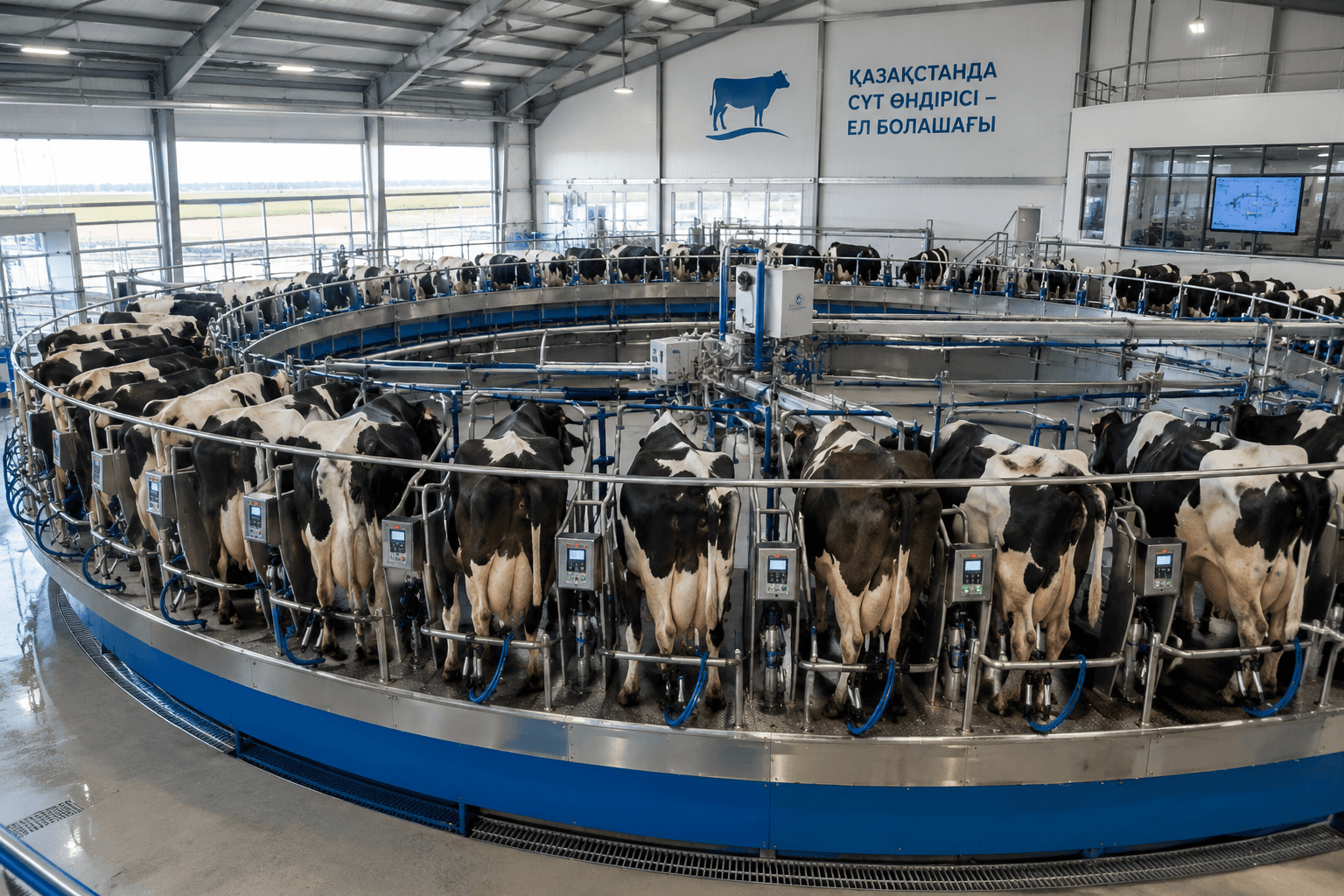
Beeld: © OpenAI
Robotic milking
More information
If you would like to know more about agricultural innovation and smart farming in Kazakhstan, you can go to the country page of Kazakhstan on this website. You can also send an e-mail to the LAN team at the Dutch Embassy in Astana: AST-lvvn@minbuza.nl
References
Ministry of Agriculture of the Republic of Kazakhstan. (2025, November 10). 648 agricultural producers in Kazakhstan are introducing digital technologies and elements of artificial intelligence. Government of Kazakhstan. (Original in Kazakh; title translated into English.)