
India and the Netherlands target climate-resilient crops and AgTech
Gene editing, bio-inputs, and AI in Indian agriculture
India is looking to climate-resilient crops, biological inputs, and digital farming technologies to address growing pressure on its food system. Dutch companies and research institutions are active in India in plant breeding, agricultural technology and research. Cooperation ranges from gene editing and regenerative farming to artificial intelligence (AI) applications for farmers, offering opportunities to develop and test innovations suited to Indian conditions. The Netherlands Agricultural Network (LAN) team in India supports cooperation between Dutch and Indian partners, including in plant breeding and agricultural technology.
Cooperation on agricultural innovation forms part of the Agrifood Agenda of the India-Netherlands Strategic Partnership, announced by Prime Ministers Narendra Modi and Rob Jetten in May 2026. The agenda includes biotechnology, AgTech, plant breeding, clean-plant facilities, and collaboration with startups. The Netherlands Agricultural Network (LAN) team in India helps implement this cooperation by connecting Dutch and Indian partners and supporting follow-up activities.
Against this backdrop, Dutch Minister for Food Security, Fisheries and Horticulture Silvio Erkens led a trade mission to India this year with 18 Dutch companies and organizations, highlighting agricultural innovation in food security and sustainable food systems. Indian companies and academics see the Netherlands as a frontrunner in agrifood innovation. Companies in food processing, animal husbandry, horticulture, seeds and agricultural logistics are increasingly using Dutch innovations, while knowledge partnerships are developing across India.
India has a large talent pool and an agricultural sector of considerable scale. It is the world’s largest producer of milk, pulses, bananas, and mangoes. Its food systems are developing rapidly. Although research and development spending in India hovers around 0.7% of gross domestic product (GDP), many startups are emerging from the ICT innovation hubs around Bangalore, Hyderabad and Mumbai, including startups focused on agriculture. India also has extensive traditional and emerging expertise in agroforestry systems and bio-inputs. Co-creation and exchange of knowhow with Indian partners in innovative fields within the agrifood sector are key.
Minister Erkens with planetary infrastructure company Pixxel
India’s priorities: resilient cropping and AgTech
In India, many agricultural innovation developments can be seen in resilient varieties and cropping systems and using new technologies to address challenges such as climate change, labor shortages, and an aging farming population.
-
Resilient cropping – Following the green revolution's enormous production increases in India, now with climate change, serious overuse of agro-chemicals, and the effects of geopolitics on fertilizers price and availability, the country has prioritized resilience and strategic autonomy. In that respect, so-called nature farming (re-gen) and breeding for climate resilient varieties have moved up the political agenda.
-
AgTech– In the Netherlands and large parts of Asia, young people leave rural areas to find jobs in the cities. Also, the farmer population is aging. Soon robots may be more commonly used in farming. Low-cost data has led to rapid adoption of mobile phones by its 140 million farmers. Already 110 million farmers have registered in India’s governmental Agristack database, on which applications can be built through private sector initiatives. Read more about this topic here (in Dutch).
‘Co-creation and exchange of knowhow with Indian partners in innovative fields within the agrifood arena are key’
Regenerative farming and biological inputs
Approximately 30% of India’s geographical area is affected by land degradation, according to the country’s 2023 National Action Plan to Combat Desertification and Land Degradation. In June 2026, the Indian government launched Khet Bachao Abhiyan, a nationwide campaign to improve soil health, promote balanced fertilizer use and encourage sustainable farming practices. Climate change is forcing farmers, companies, and policymakers to adapt to heat, drought, and unpredictable weather patterns. Awareness of pesticide residues and food safety is also growing.
Regulatory reforms in the registration of bio-inputs, sustainability concerns, and global geopolitical developments are collectively increasing demand for biological products for soil enrichment and crop protection. According to AgriBiologicals India (June 2026), India’s biostimulant market is worth around €300 million. Seaweed extracts are the largest product category, followed by humic and fulvic acid derivatives, protein hydrolysates, and amino acid-based products. Seaweed extracts support plant growth and stress tolerance. Microbial biostimulants remain a small segment but have growth potential as regulatory approvals expand.
Leading Indian companies are introducing regenerative farming methods through their supply chains. Amul Dairy is developing circular approaches with its member farmers, Hindustan Unilever is working with tomato growers on regenerative sourcing for puree and Hyfarm is supporting regenerative practices among potato suppliers. These companies work directly with farmers, including through training. On the Dutch side, OnePeterson provides monitoring, certification and advice on sustainable agriculture. Solidaridad, IDH and Raddis help develop regenerative or organic commodity value chains, connect producers and buyers, and strengthen training and traceability.
Breeding crops for greater resilience
India’s plant breeding sector includes government institutions, private companies and several seed breeders with Dutch roots, including Rijk Zwaan, Bejo, Enza Zaden and East-West Seed. India permits the release of varieties developed through certain gene-editing techniques, including CRISPR. Genetically modified organisms (GMOs) are generally not allowed, except for Bt cotton.
In 2022, biotechnology regulations were revised to allow field trials and eventual commercialization of crops developed using site-directed nuclease techniques (SDN-1 and SDN-2), which make targeted changes to plant DNA. CRISPR is a technology used for this type of gene editing. Government research agencies are now investigating these methods, both to develop indigenous techniques and to breed new varieties.
The Ministry of Science and Technology and the Department for BioTechnology support their research programs actively. In 2025, minister Chouhan of Agriculture and Farmer Welfare announced the breakthrough on 2 gene-edited rice varieties. And this year, India will be the first country to grow gene-edited rice for seed multiplication in the field. International intellectual property (IP) laws and Indian regulations are however complex and can slow down cooperation on commercialization or with the private sector. Also, venture capital investors have not yet jumped on to this.
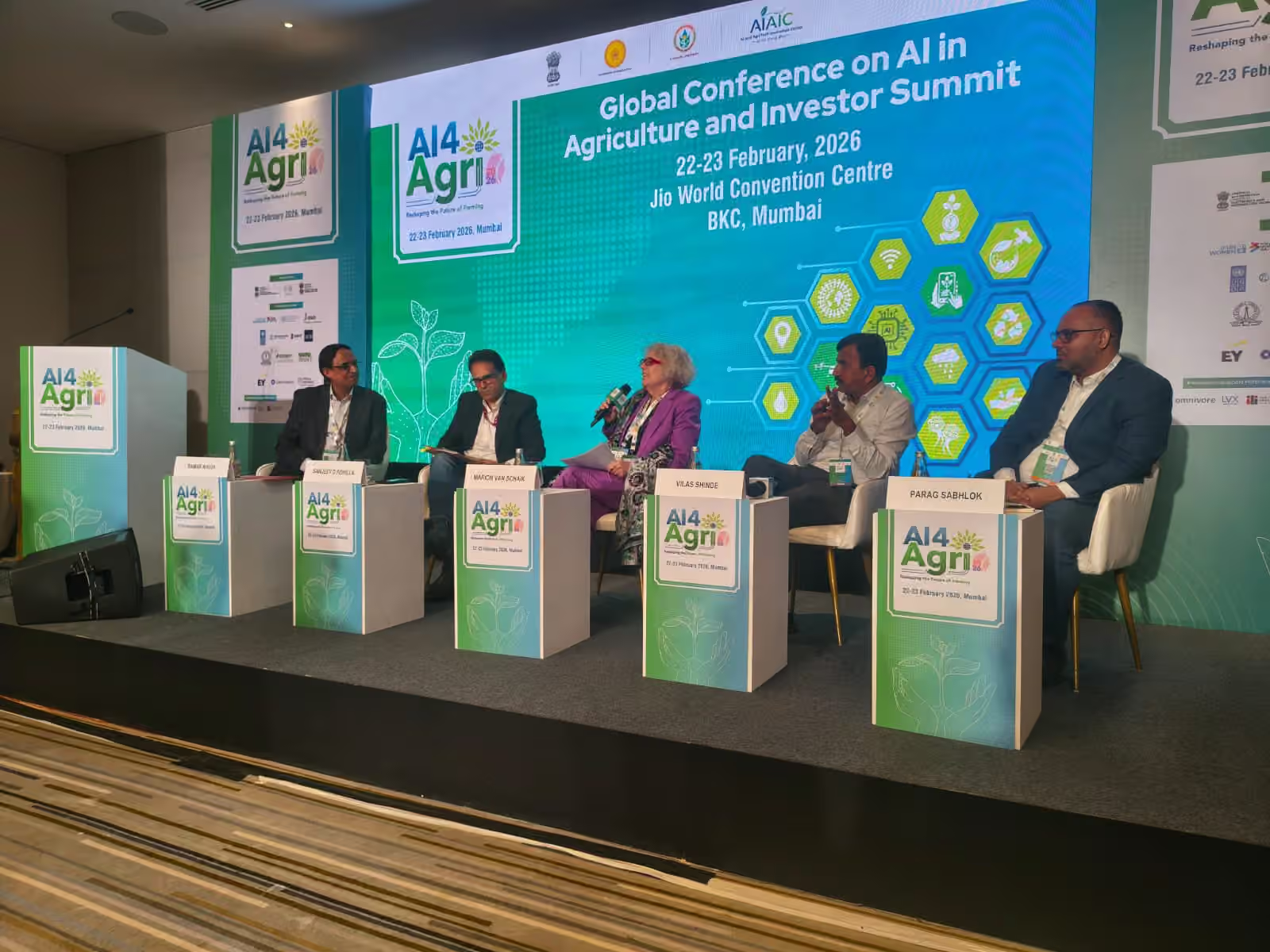
In February 2026, Wageningen University (WUR) announced a Memorandum of Understanding with the Maharashtra Council of Agriculture Education and Research (MCAER) at the AI 4 Agriculture Summit in Mumbai. The agreement concerns joint research on AI-assisted genome editing. It is still at an early stage, and no research results have yet been reported.
The LAN team at the Dutch Embassy in Mumbai is helping WUR maintain contact with Maharashtra state authorities and address administrative obstacles to implementing the agreement. The team has also supported Hudson River Biotechnology in presenting its platform to India’s Department of Biotechnology and the Biotechnology Industry Research Assistance Council (BIRAC), with the aim of exploring cooperation with Indian partners.
Following an earlier LAN-supported innovation mission on climate-smart agriculture, Dutch and Indian organizations submitted joint research proposals. A 2022 call by the Dutch Research Council (NWO) and India’s Department of Biotechnology supported three projects: Ad-RiCCE on adaptive rice cultivation, involving WUR and the University of Agricultural Sciences, Bengaluru; FielDHeat on tomato tolerance to dry and humid monsoon heat, involving Wageningen University & Research and the ICAR-Indian Institute of Horticultural Research; and BrightspotsCSA on high-performing climate-smart farming systems, involving Vrije Universiteit Amsterdam and the Indian School of Business.
WUR and MCAER sign MoU on AI empowered advanced breeding at AI4Agri
AI and digital technologies for farmers
The World Development Report 2026: The Promise of Artificial Intelligence highlights several AI tools that are generating tangible benefits in India. These AgTech applications provide localized advisories or improve weather forecasting and access to public services. AI-powered chatbots are designed to empower millions of Indian farmers with instant answers. Adoption of AI would not have been possible if the government had not successfully created a digital infrastructure for biometric identity, electronic payment, and other services. India will gain greatly from AgTech solutions as it can solve practical problems at scale.
‘India will gain greatly from AgTech solutions as it can solve practical problems at scale’
According to McKinsey’s 2025 report Value creation in Indian agriculture, India’s AgTech sector counts 2,800 entrepreneurs and addresses biotechnology, biomaterials, finance and insurance, post-harvest, precision agriculture, drones and the Internet of Things (IoT), controlled environment technology and climate resilience.
The annual Innovation and Investment Report of ThinkAg, an Indian platform for Food Tech and AgTech start-ups, has documented these AgTech companies, their innovations, and the investments into them. Last year, it also included an analysis on adoption rates of AgTech innovations by farmers. Despite the robust growth in number, these companies find it challenging to scale profitability. The analysis resulted in the following recommendations:
-
Establish a system-based understanding of why farmers adopt new technologies
-
Find technologies that fit local conditions, are financially viable and embedded in ongoing support
-
Get investors and policy makers on board early on.
Several Dutch organizations are active in India’s AgTech sector. Financiers such as FMO, the Dutch Good Growth Fund and Oikocredit invest in agricultural technology, either directly or through venture capital firms such as Omnivore and Ankur Capital. Among the practical collaborations, DeHaat works with Amul, India’s largest dairy cooperative, on a marketing-information system. Rabo Partnerships works with NABARD, India’s agricultural development bank, on AI applications for farmer advisory and insurance services. WUR is also validating new AgTech applications for startups.
Innovation mission planned for 2027
The LAN team in India is preparing an innovation mission on resilient cropping for the second half of 2027. More precise dates and participation details will follow. A series of screenings of the Planet Soil documentary has already introduced research insights from Utrecht University, Vrije Universiteit Amsterdam and WUR about the underground ecosystem. Building on these screenings and discussions, the LAN team plans roundtables to identify relevant partners and opportunities for future cooperation.
More information
For more information about agrifood innovation and cooperation with India you can go to the country page of India on this website. Or you can send an email to the LAN team at the Dutch Embassy in New Delhi: nde-lvvn@minbuza.nl.