
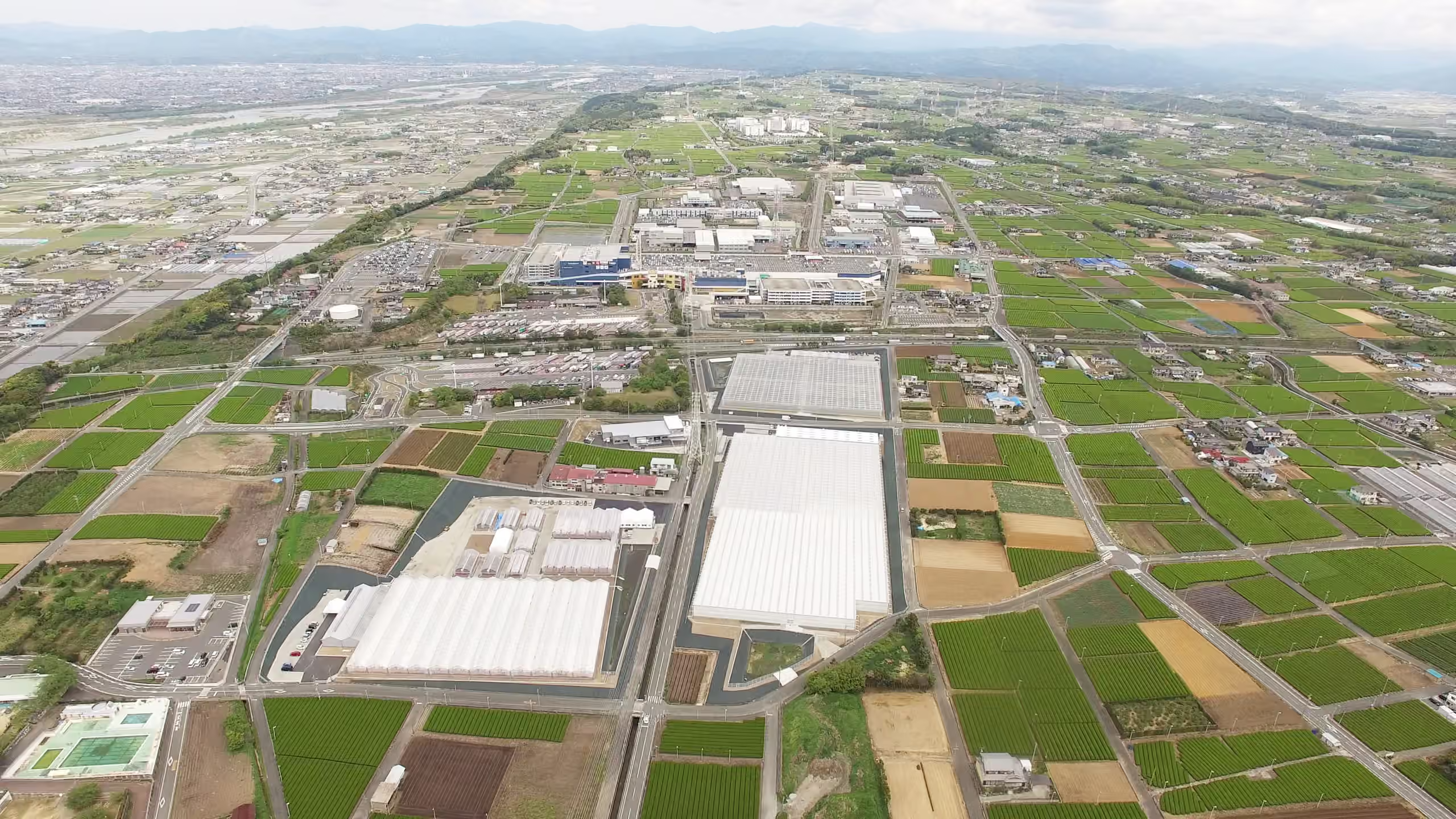
Japan develops new model for future-proof horticulture
LAN team in Tokyo supports development of integrated Agri-Valleys
Japan’s horticultural sector is under growing pressure from an ageing agricultural workforce, labor shortages and rising production costs. The Netherlands Agricultural Network (LAN) team at the Dutch Embassy in Tokyo is supporting the development of Agri-Valleys — regional production clusters where greenhouses, energy supply and logistics are planned together. Working with public and private partners, the LAN team is exploring how Controlled Environment Agriculture (CEA) can contribute to more resilient and sustainable food production in Japan.
The pressures on horticulture are part of a broader demographic shift in Japanese agriculture. The country’s core agricultural workforce has fallen below one million for the first time, while the average age has reached 67.7 years. Rising prices for inputs such as energy and fertilizer are putting further pressure on food production. Food now accounts for almost 29 percent of average household spending.
These pressures are increasing the need to modernize food production, including horticulture. In June 2026, the Japanese government presented a plan to invest 370 trillion yen, around €2 trillion, in seventeen key sectors. The strategy includes ‘food tech’, with a focus on plant factories, land-based aquaculture, food machinery, and future foods. Its main aim is to develop Japanese technologies for export, rather than to increase domestic food production. For food-factory technologies, the government is targeting a 30 percent share of the global market.
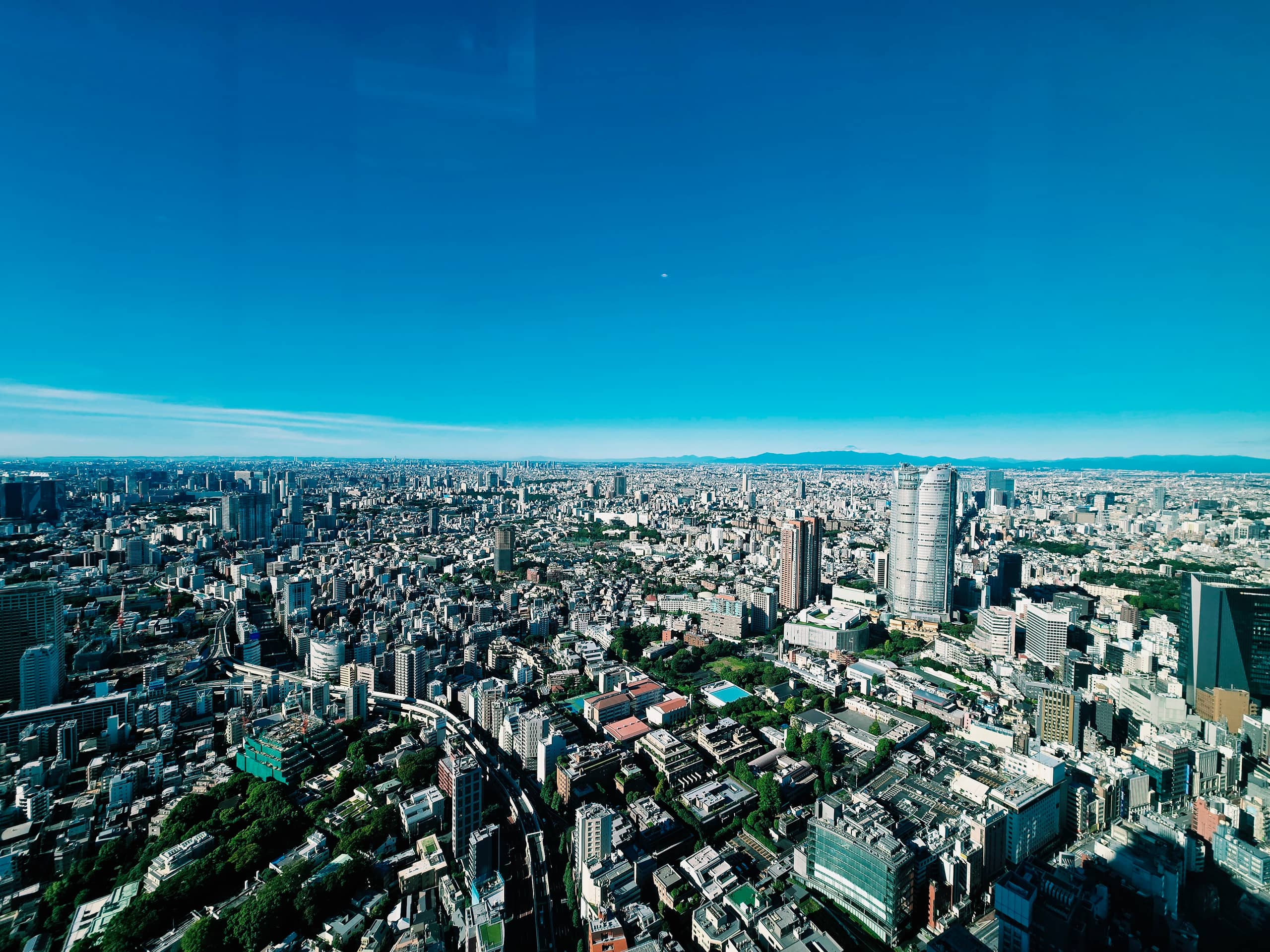
Tokyo skyline
Innovating horticulture goes beyond building high-tech greenhouses
Modernization requires more than high-tech greenhouses. Technology, policy, energy infrastructure, and local needs must be considered together. Agri-Valleys require suitable sites, reliable energy supplies and logistics, as well as the support of local authorities and investors. The approach must be adapted to each region.
Local leadership is central to this development. Several Japanese regions are working on integrated horticultural production, but many plans are not yet public. Local governments must develop a long-term vision, build political support, and make sites attractive to investors. In Mutsu City, for example, a greenhouse has been built using Dutch technology. The city also maintains a relationship with the Municipality of Westland, a Dutch center of greenhouse horticulture. By building trust with local authorities, the LAN team aims to position Dutch businesses as partners in future projects.
‘Connecting horticultural production with local energy infrastructure helps reduce operating costs and support further development of smart farming'
Energy is an important part of this regional approach. Sources such as biomass, solar and geothermal or hot-spring energy could be combined with thermal storage, while industrial heat and CO₂ could also be reused. Connecting horticultural production with local energy infrastructure could help reduce operating costs and support the further development of smart farming.
Japan is still some way from this approach. A greenhouse visited by the LAN team in Mutsu City in October 2026 uses biomass and natural gas but is not connected to the local energy grid. In Hokkaido, planned data centers could offer opportunities to coordinate energy infrastructure and greenhouse production. At present, energy, data centers, and food production are generally planned separately.
Ad One Farm Okadama, featuring a cutting-edge MGS (Mobile Gutter System) greenhouse for automated hydroponic leafy vegetables, including Rijk Zwaan’s Salanova lettuce
Dutch and Japanese expertise comes together
The Netherlands and Japan have a long history of cooperation in horticulture, including on modern greenhouse projects. Both countries have experience with producing food in densely populated areas where land is limited, and efficient use of resources is important.
The two countries bring different strengths to this cooperation. Dutch horticulture has decades of experience in data-driven environmental optimisation, biological crop health and resource-efficient seed genetics. Japan brings expertise in industrial engineering, robotics and a strong focus on quality.
NL HortiRoad2Japan is a multi-year public-private partnership program coordinated by Dutch Greenhouse Delta and officially launched at GPEC Tokyo in July 2026. It brings Dutch companies, knowledge institutions and government organizations into contact with Japanese stakeholders. The program operates through the Partners for International Business (PIB) framework.
The program aims to adapt Dutch horticultural methods to Japanese conditions, including hotter climates in some regions, and help produce fresh, safe and nutritious food close to consumers. The LAN team builds relationships with local authorities and connects them with Dutch Greenhouse Delta and potential Dutch partners. This requires sustained contact over several years.
NL HortiRoad2Japan – Horti Trade mission to Japan (12–17 July 2026). A group photo taken in front of a greenhouse at Murakami Farm, Japan's leading sprouted vegetable producer, in Date City, Hokkaido
Where innovation meets precision in Japan
In July 2026, a mission to Japan explored opportunities for further investment and cooperation. The program included visits to Hokkaido, Japan’s northern horticultural region, and Tokyo. Field visits, roundtable discussions and meetings with local stakeholders focused on the development of integrated horticultural production, strengthening relationships, and identifying areas for future cooperation.
The mission visiting the J-Farm Sapporo Plant, a joint venture between Ad One Farm and JFE Engineering pioneering advanced agriculture in the region
‘Looking at the decade ahead, developing successful Agri-Valleys requires more than building individual greenhouse structures’
What comes next for NL HortiRoad2Japan
Looking at the decade ahead, developing successful Agri-Valleys requires more than building individual greenhouse structures. The LAN team and Dutch Greenhouse Delta are exploring how regional production, land use, energy and supply chains can be planned together. Their work points to four conditions for long-term development:
-
Integrated land planning. Large greenhouse projects need contiguous, accessible sites. Japan has many small and sometimes unused plots, but combining them is difficult because of laws, regulations and local political circumstances. This remains a major obstacle to investment.
-
Pre-planned energy infrastructure. Shared heat, biomass, and renewable energy systems should ideally be designed from the start rather than added after greenhouse construction.
-
Connected digital supply chains. Linking rural production clusters with urban population centers through integrated cold-chain networks can help reduce food loss.
-
Human capital development. Joint educational initiatives with local universities can help prepare young growers and other professionals to manage the digital farming systems of the future.
Finding investment partners is another challenge. Japanese agriculture is dominated by relatively small businesses, while investors in high-tech horticulture generally need larger projects. Combining greenhouses with energy systems, automation, and supply chains can make investment more attractive. Dutch Greenhouse Delta and the LAN team are approaching institutional investors and larger companies. Dutch suppliers and knowledge institutions could contribute technology and expertise to these integrated projects.
For Dutch companies, the opportunity lies in becoming long-term partners in developing Agri-Valleys. The PIB program has focused mainly on new greenhouses and supports the regular contact needed to move plans towards investment. An investor roundtable is being prepared for the first half of 2027.
A scene from a roundtable session in Date City, Hokkaido. The discussion focused on Date City’s active initiatives to attract advanced agricultural enterprises to the region
More information
If you would like to know more about Controlled Environment Agriculture, smart farming and Agri-Valleys in Japan, you can go to the country page of Japan on this website. You can also send an e-mail to the LAN team at the Netherlands Embassy in Tokyo: tok-lvvn@minbuza.nl.