
The answer is the black-tailed godwit (Limosa limosa), known in Dutch as the grutto. As the national bird of the Netherlands and a migratory species that winters in West Africa, including in Senegal, it represents a powerful ecological and diplomatic connection between continents. Its story touches on biodiversity conservation, international collaboration in agriculture, and the urgent need to cooperate on protecting migratory species across borders.
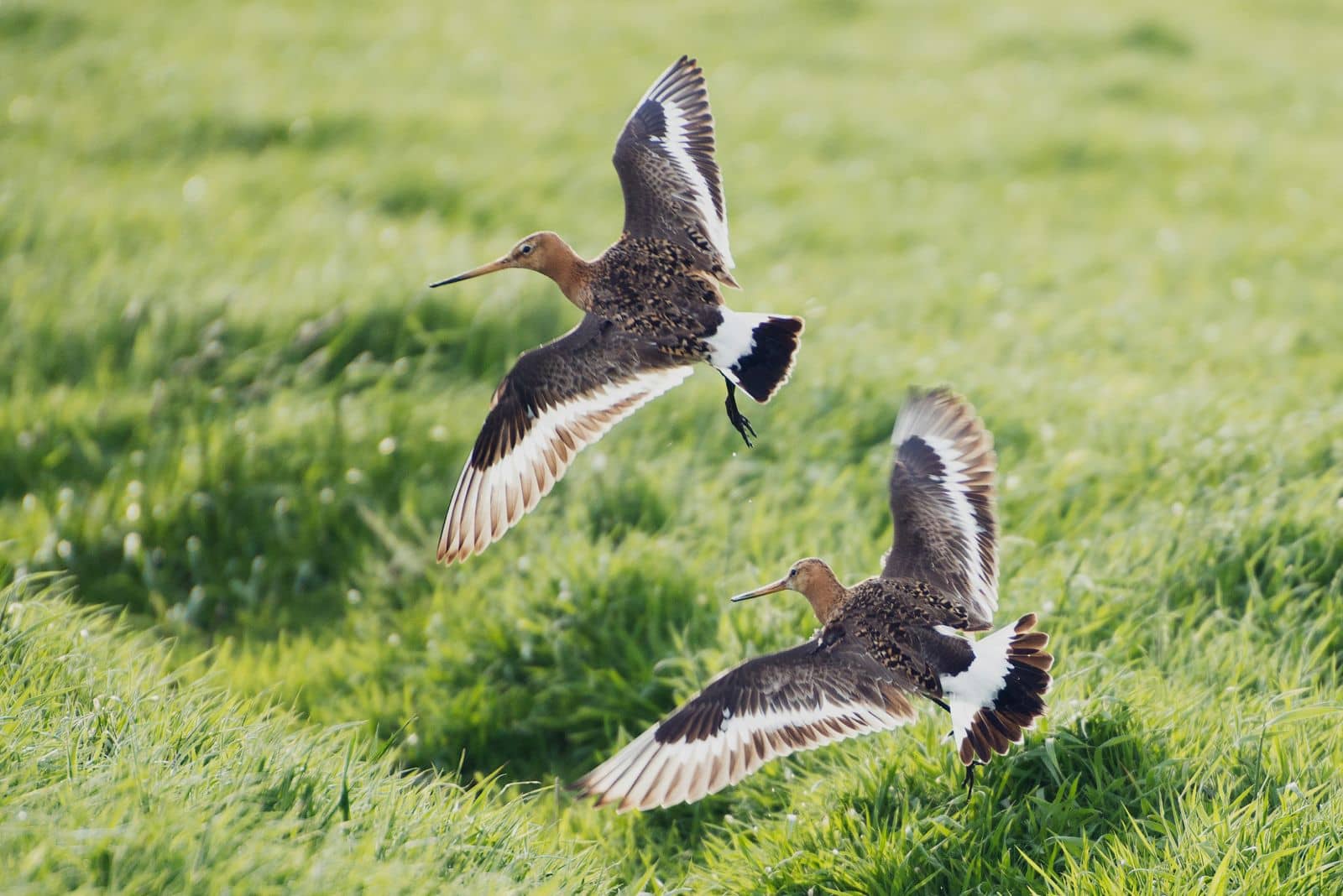
Two black-tailed godwits flying side-by side-a symbol of bilateral cooperation
An unbelievable journey
Each year, the black-tailed godwit undertakes an extraordinary migration from breeding grounds in the Netherlands to wintering areas in West Africa, especially in Senegal and neighboring countries. This journey – beautifully documented in Grutto! – physically links ecosystems, but also creates a shared responsibility between nations.. it is protected in The Netherlands, consumed in France and suffers poisoning by rice farmers in the Senegal river valley..
An emblematic species for biodiversity conservation
Spearheaded by the Embassy of the Kingdom of the Netherlands, the "Domaines 30x30" initiative has been officially launched in Côte d'Ivoire and Senegal. This marks an important step toward global biodiversity conservation. The goal of this initiative is to create the first network of private landowners in Côte d’Ivoire and Senegal explicitly contributing to the 30x30 objective: a worldwide commitment to protect 30% of the planet’s land and water by 2030.
The 30x30 initiative in Senegal was launched on the 19th of May at Université Cheikh Anta Diop de Dakar (UCAD) and was organized by TreeAid. The black-tailed godwit was chosen as the symbol to unite and represent the initial group of more than 30 stakeholders. Here, once again, the bird has become an emblem of international cooperation for biodiversity collaboration between the Netherlands and Senegal.
In Côte d’Ivoire the launch of the "Domaines 30x30" initiative was held at the Centre d’Excellence Horticole Ivoiro-Néerlandais (MOYE) in partnership with the Ministry of Environment and Sustainable Development of Côte d’Ivoire. For the Ivorian network, the European bee-eater is used as the symbolic bird uniting Côte d’Ivoire and the Netherlands on international biodiversity cooperation since the bird migrates between the two nations. The “Domaines 30x30” launch event was held with 25 organizations from the public and private sectors.
Both the network in Senegal and the network in Côte d’Ivoire focus on mutualizing private landowner efforts to rehabilitating and conserving biodiversity in general, sharing information among stakeholders, facilitating access to conservation resources and promoting voluntary contributions from private landowners together with public players.
A diplomatic symbol of agricultural cooperation
Beyond serving as a bridge between ecosystems, the black-tailed godwit also connects people. In old Wolof “diaba” means “market.” This gives the bird a powerful symbolic role: a gathering point where exchange happens. It has therefore also been launched as the symbol for the environmentally friendly horticultural cooperation between the Netherlands and Senegal at HortiCôte. The bird was also featured during the annual Orange Farm event held in Dakar, Senegal to highlight the market for sustainable Dutch agricultural inputs for environmentally friendly agriculture.
Because the bird depends on habitats in both regions, conservation cannot succeed within a single country. Efforts in the Netherlands to protect breeding meadows are ineffective if the birds cannot survive in African wetlands and vice versa. This interdependence makes the black-tailed godwit a natural symbol of “ecological diplomacy” where shared environmental challenges encourage partnerships, knowledge exchange, and mutual stewardship between countries.
Organizations like Vogelbescherming Nederland actively work with partners in West Africa to safeguard these migratory routes. A major initiative has raised nearly €1 million to protect black-tailed godwits across Morocco, Mauritania, Senegal, and Guinea-Bissau, demonstrating how conservation fosters international cooperation.
The work of Vogelbescherming Nederland on protection the "Grutto"
Along the East Atlantic Flyway Vogelbescherming Nederland is helping transform local conservation into a force for global biodiversity protection. The funds they raised enable grassroots organizations to carry out essential activities such as bird monitoring, habitat restoration, and environmental education. Tracking migration routes and survival rates is crucial. Studies show that young birds may remain in Africa for years before returning to Europe, underlining the importance of African habitats in the species’ life cycle. “We want to ensure that our strategy is not just a document on a shelf, but a living, breathing effort that translates into tangible results.
“We want to ensure that our strategy is not just a document on a shelf, but a living, breathing effort that translates into tangible results. These small grants will be a catalyst for change, enabling communities to lead the way in safeguarding the incredible migratory species that rely on the East Atlantic Flyway”
A bird that connects worlds
The black-tailed godwit is more than a symbol of Dutch identity. Its migration route transforms it into a living link between the Netherlands and Senegal, illustrating how nature transcends borders.
As biodiversity declines globally, the black-tailed godwit reminds us that conservation must be international, cooperative, and forward-thinking. Through the work of organizations like Vogelbescherming Nederland and individuals like Jaime Garcia Moreno, the bird has become a powerful ambassador for collaboration.
Protecting the “diaba diaba” ultimately means protecting the ecosystems and partnerships that sustain life across continents.
Why the black-tailed godwit matters for biodiversity
The grutto is considered an indicator species, meaning its health reflects the overall state of the ecosystem. Its decline signals broader environmental problems.
Globally, the species is classified as Near Threatened, with populations declining significantly in recent decades. This decline is tied to several biodiversity issues:
- Loss of wet grasslands in Europe due to agricultural intensification
- Degradation of wetlands in Africa from water extraction and land use changes
- Climate change, migration timing and habitat availability
Because the grutto relies on multiple ecosystems across continents, protecting it helps preserve entire ecological networks. Wet grasslands in the Netherlands support insects, plants, and other meadow birds, while African wetlands sustain countless migratory species.
In short, saving the grutto means safeguarding biodiversity on a flyway scale, not just locally.
More information
For more information about the black-tailed godwit, you can reach out to the Netherlands Agricultural Network (LAN) team in Abidjan and Dakar: abi-lvvn@minbuza.nl
Article written by: Ceres Brouwer (intern LVVN Dakar/Cote d'Ivoire)
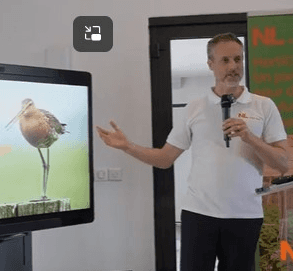
Presentation by the Embassy (Ben Kubbinga) during Orange Fram Event 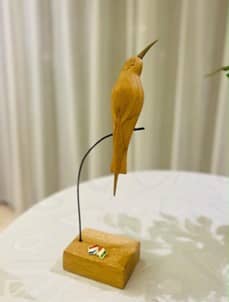
Wooden statue of the European Bee-eater 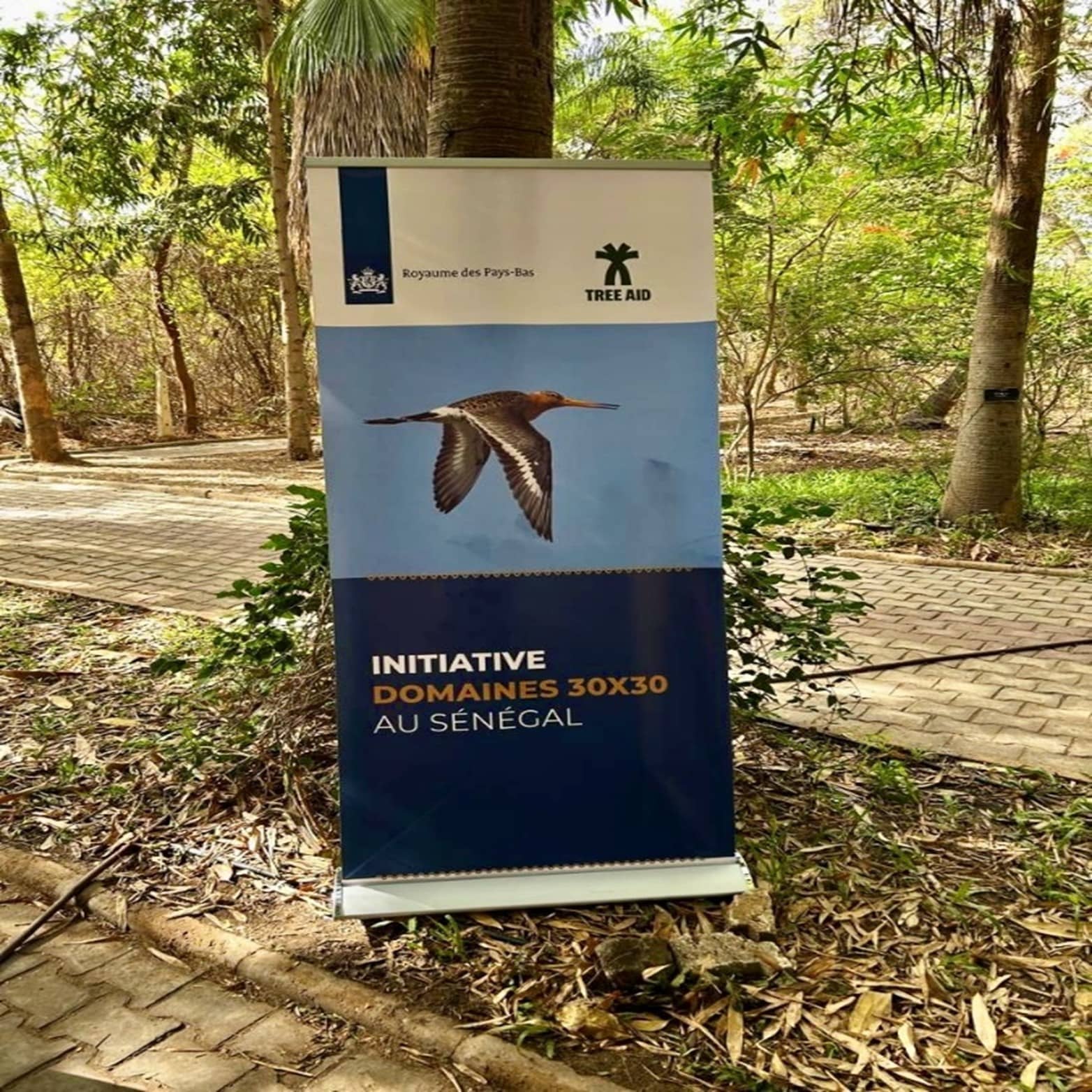
30x30 domain initiative network for biodiversity conservation in Senegal