
Dutch greenhouse expertise meets Southeast Europe’s geothermal potential in Bulgaria, Romania, Moldova and Serbia
Geothermal energy in horticulture is the new export product from the Netherlands
Across Southeast Europe, geothermal resources could reduce greenhouse heating costs and make horticulture more sustainable. The Netherlands Agricultural Network (LAN) team in Bucharest and Sofia are exploring opportunities in Bulgaria, Moldova and Romania through studies, business missions and potential demonstration projects. The LAN team in Belgrade is separately looking at possible geothermal applications in protected cultivation in Serbia.
Innovation is a core priority of the Dutch Ministry of Agriculture, Fisheries, Food Security and Nature (LVVN). Combining geothermal energy with modern greenhouse technology offers opportunities to make horticulture more sustainable. It can also contribute to several UN Sustainable Development Goals including affordable and clean energy (7), industry, innovation and infrastructure (9), responsible consumption and production (12), and climate action (13).
Over recent decades, the Netherlands has developed specialized knowledge, experience, and businesses in the use of geothermal and ground-source heat in agrifood production, including in greenhouses. Combining this with its world-leading position in greenhouse technology gives the Netherlands a unique position to be a key long-term partner in Southeast Europe – Bulgaria, Moldova, Romania and Serbia. This combination offers opportunities for Dutch companies and knowledge institutions in the region.
Deep geothermal energy in Bulgaria
Geothermal energy is one of Bulgaria’s major natural resources. Repeated energy shocks have increased interest among businesses and policymakers. Bulgaria’s geology offers a wide range of geothermal sources – from artesian hot mineral wells and exceptionally warm shallow geothermal horizons in several areas, to large sedimentary basins with temperatures at depths of 4–6 km exceeding 150°C and even 200°C in some locations. These resources support different technologies and scales of application.
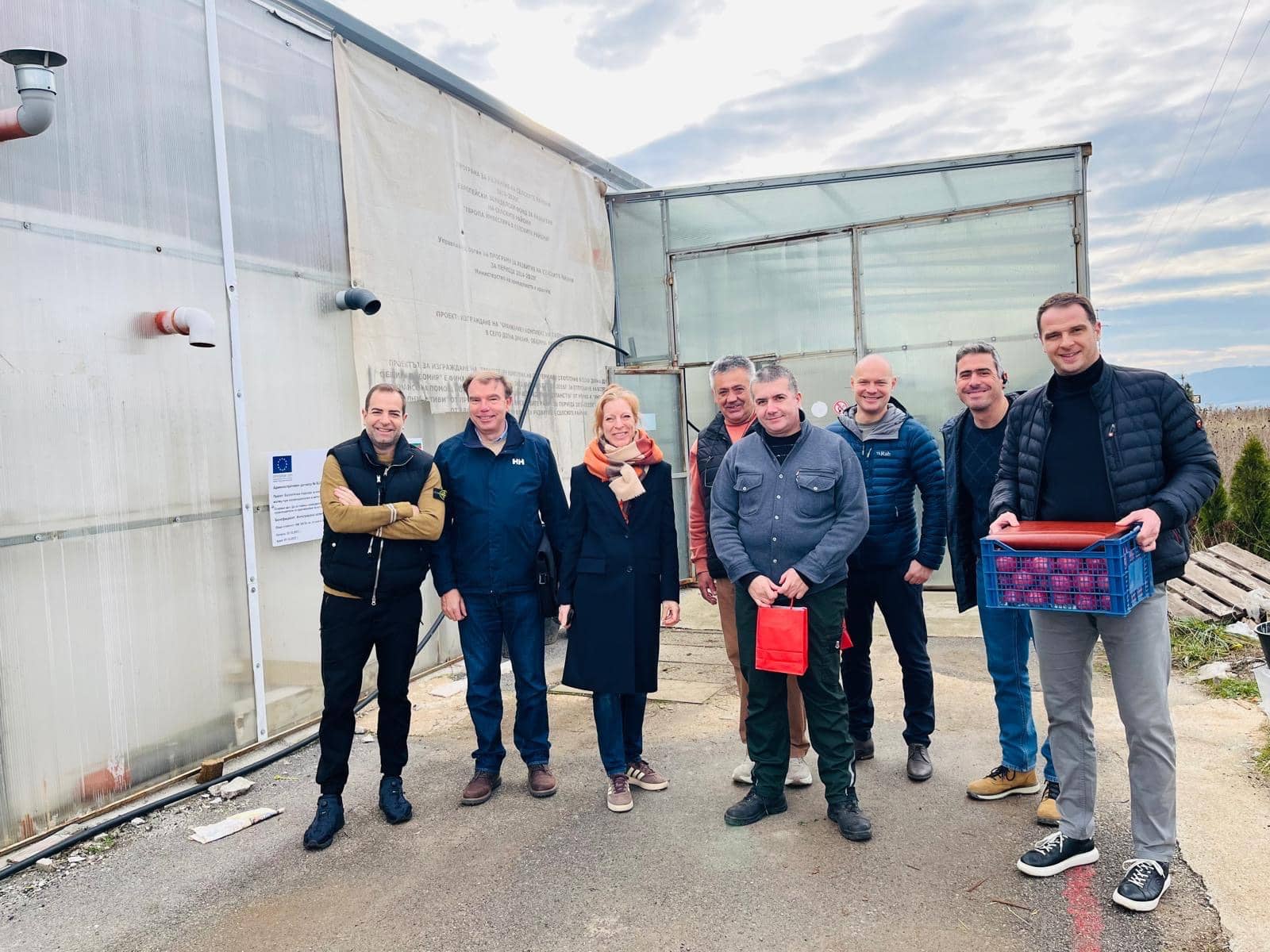
Scoping mission Geothermal energy in modern greenhouses, Bulgaria December 2025
Bulgaria’s greenhouse sector faces two persistent challenges: high, volatile energy costs and low technological efficiency. Outdated greenhouses increase energy use, while rising costs squeeze margins and prevent growers from modernizing.
As a result, domestic production meets only one-third to one-half of Bulgarian demand for major vegetables, making imports essential. Tomatoes, cucumbers and peppers are major crops; supply gaps for vegetables such as zucchini and eggplant are even wider. COVID-19 supply disruptions, empty shelves, and price increases exposed the resulting food security risks. The war in Ukraine and conflict in the Middle East have made affordable, sustainable local energy a national security and competitiveness priority.
Bulgarian growers are modernizing with Common Agricultural Policy (CAP) investment funding. They are installing biomass systems and exploring geothermal energy.
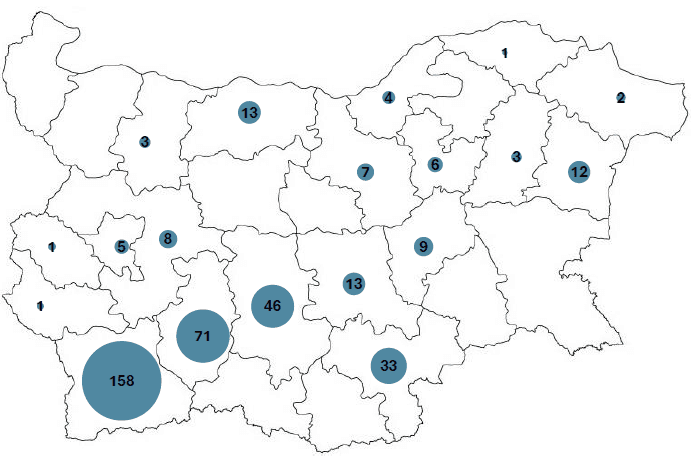
Beeld: © Bulgarian Greenhouse Production. Potential for Implementation of Geothermal Energy report based on data from State Fund Agriculture, 2023
Geographic structure of the heated greenhouses in Bulgaria (ha)
Bulgaria was among the pioneers of geothermal greenhouse heating in the 1970s and 1980s, using the shallow, hot, artesian mineral waters available in several parts of the country. Today, some of these modernized greenhouses, along with several newly built facilities, are among the most competitive and best performing on the market. However, shallow mineral water capacity limits the growth and size of greenhouses and faces competition for water from spa hotels and resorts.
This has prompted interest in exploring deep geothermal energy. Realizing its vast unexplored potential, the Bulgarian government prioritized deep geothermal energy in its long-term energy transition strategy and partnered with the World Bank on a comprehensive feasibility study on the most prominent directions and approach for geothermal implementation. The agri-food sector, especially greenhouse horticulture, was identified as a promising application. Some of the areas with high geothermal potential overlap with greenhouse-growing regions or major fresh-produce markets. The study identified priority areas, not individual project sites, and much of southern Bulgaria remains insufficiently explored.
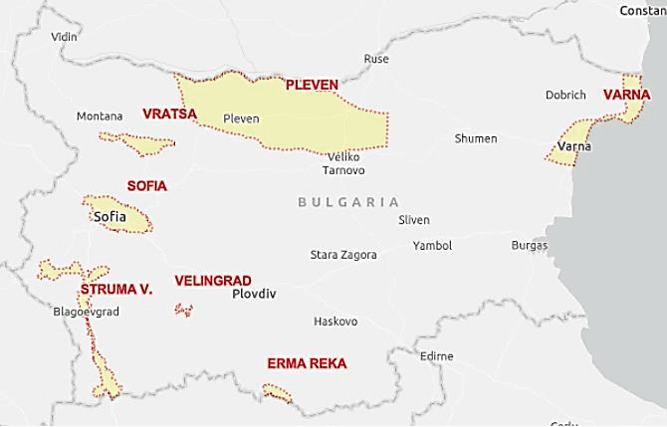
Beeld: © the World Bank, Geothermal Energy for Energy Security in Bulgaria, Conference panel, Feb. 2025
Proposed priority areas to kickstart geothermal in Bulgaria – match with key horticulture supply and demand regions
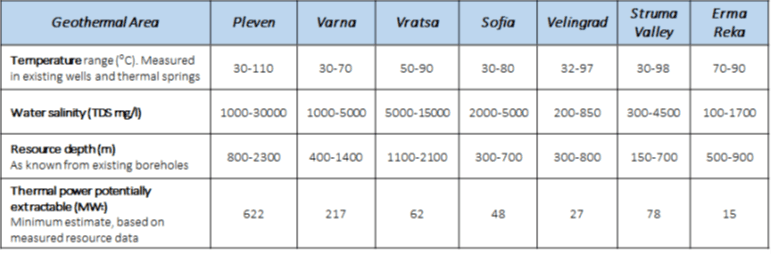
Beeld: © World Bank, Geothermal Energy for Energy Security in Bulgaria, Conference panel, Feb. 2025
‘Dutch expertise in geothermal and ground-source heat for agrifood production, offers opportunities for long-term cooperation in Southeast Europe’
Modernizing the horticulture sector
Dutch expertise in greenhouses and geothermal technology positions the Netherlands as a partner in modernizing Bulgarian horticulture. The LAN team in Sofia is building on established bilateral cooperation. Following a four-step approach – research, identify opportunities, showcase potential and connect partners – the LAN team initiated a market scan in 2024 to study the Bulgarian greenhouse sector and the possible adoption of geothermal energy to identify feasible business cases, relevant networks and approaches for Dutch partners. The market scan found that combining geothermal heat with advanced greenhouse systems could offer Dutch companies a competitive proposition.
Public events and an exploratory business visit followed in 2025. The visit helped the LAN team refine its approach and build contacts ahead of the innovation mission. Growing interest on both sides led to plans for a Dutch innovation mission to Bulgaria scheduled for 24–26 November 2026. The mission brought together more than 15 Dutch companies and knowledge organizations to exchange expertise and seek partnerships. Participants include TU Delft, TNO and Inco-Drilling, alongside greenhouse suppliers Certhon, Dalsem and KUBO. The program included a conference and B2B meetings on efficient geothermal greenhouse heating. Field visits were also planned. As a possible follow-up, the LAN team is considering a Partners for International Business (PIB) program to connect Dutch and Bulgarian geothermal and greenhouse companies and support joint projects.
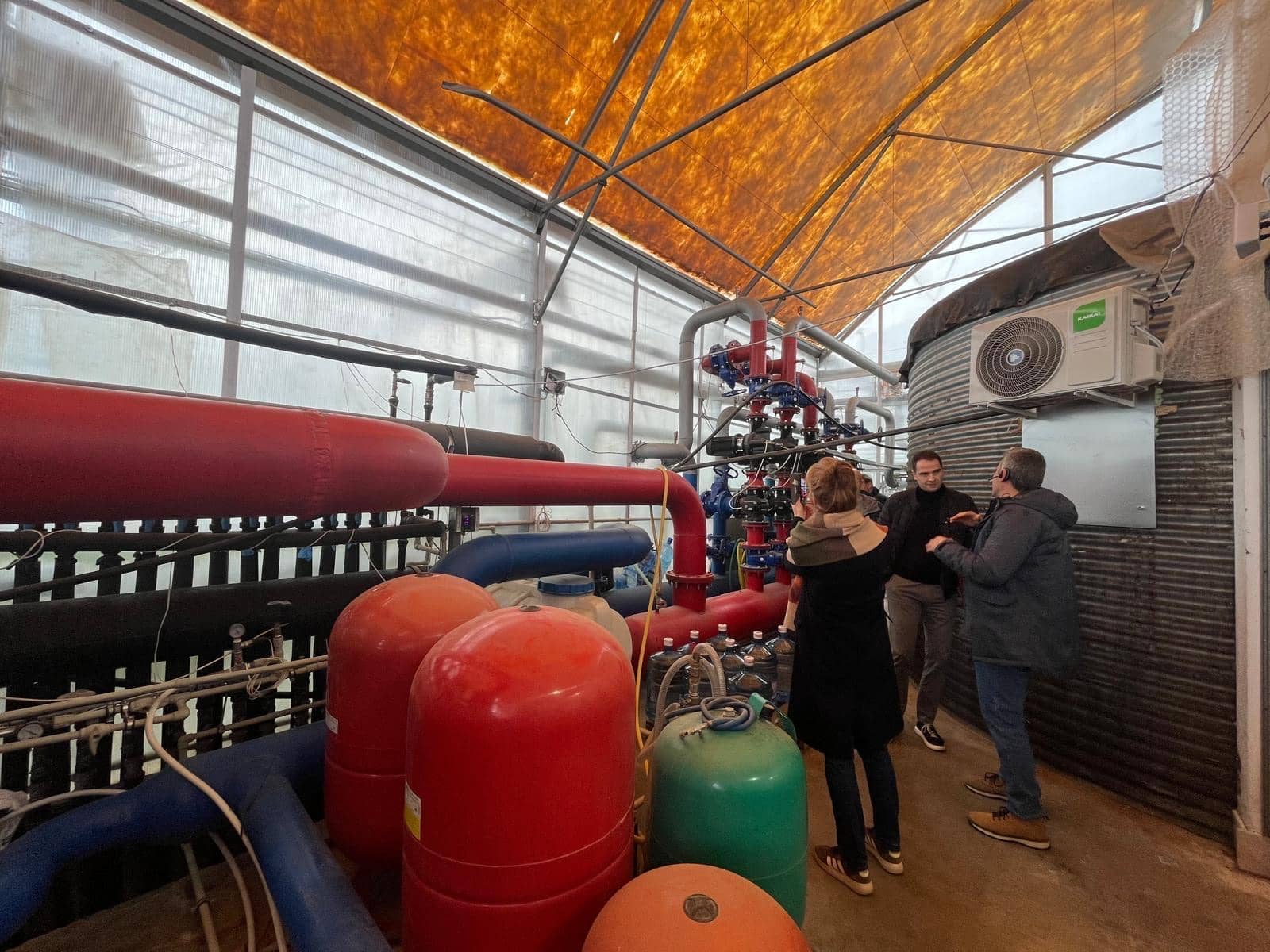
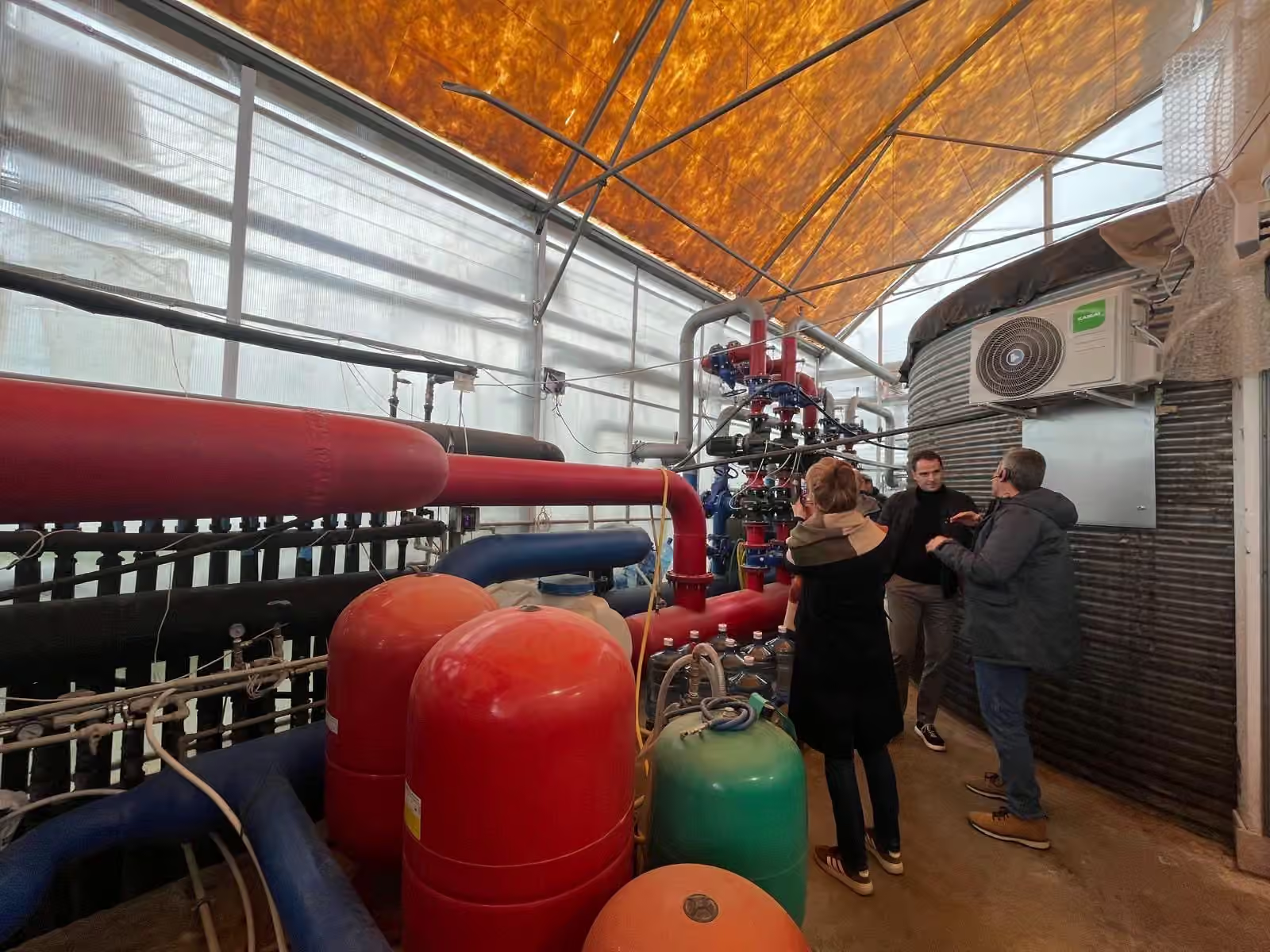
A state of art shallow, closed-loop, geothermal system with 1500 kW heat pumps heating 0,9ha greenhouse in Dolna Dikanya – along the Struma valley, and built by the Bulgarian Geothron Engineering. It utilizes the very warm earth close beneath the surface. A Dutch delegation visited in 2025.
Subject to approval and funding, the LAN team hopes to organize a return visit to the Netherlands in 2027 for Bulgarian stakeholders to explore Dutch solutions across the protected-horticulture production chain. The aim is to develop lasting business partnerships. Updates will be shared on the Bulgaria country page on this website.
Romania’s promising but underused potential
Romania also possesses significant geothermal resources. They are located particularly in the western part of the country, but also in its less-explored southern region, including around the capital Bucharest. The favorable geological conditions support the exploitation of hot groundwater for heating and other applications. Despite this potential, geothermal energy remains underused and overlooked. Existing applications include mainly district heating, spas, and recreation, while its application in greenhouse cultivation remains limited – the sector presenting huge opportunities but equally significant investment hesitation.
Investment hesitancy is related to profitability concerns (compared to production in countries with milder climates), while profitability is directly linked to the type, availability, and cost of energy in this sector. An increasing number of local and foreign investors are exploring investments in modern greenhouses because Romania still imports most of its vegetables, while local supply is visible only during the limited growing season.
Geothermal developer Green Tech International has begun work on geothermal-heated hydroponic greenhouses and aims to develop at least 50 hectares over five years. Dairy producer DN AGRAR also plans to enter greenhouse horticulture, with construction of its first greenhouse scheduled for 2028. According to the LAN team, bank financing remains difficult for capital-intensive projects, and EU funds are not always well suited to them.
‘The LAN team in Bucharest sees opportunities to match Dutch greenhouse and renewable-energy expertise with Romanian horticulture’s needs’
The LAN team in Bucharest sees opportunities to match Dutch greenhouse and renewable-energy expertise with Romanian horticulture’s needs. In 2025, the LAN team commissioned a Romanian horticulture study identifying cooperation opportunities. Published in February 2026, the report points to opportunities in turnkey greenhouses and green energy. It has also organized a trade mission to Romania, with two focus sectors, one of which was greenhouse horticulture. It resulted in business leads currently being followed up. In 2026 the focus was on promoting Dutch agricultural technology in general through an online campaign and dedicated event.
Subject to approval, the LAN team plans to conduct a more detailed study in 2027 on the use of geothermal and other renewable energy sources in greenhouse horticulture. It would build on the earlier horticulture report and help investors assess energy options and project feasibility. Similar efforts in neighboring countries could strengthen business, government and knowledge partnerships, benefiting the Netherlands and Romania while supporting regional food security, affordability and sustainability.
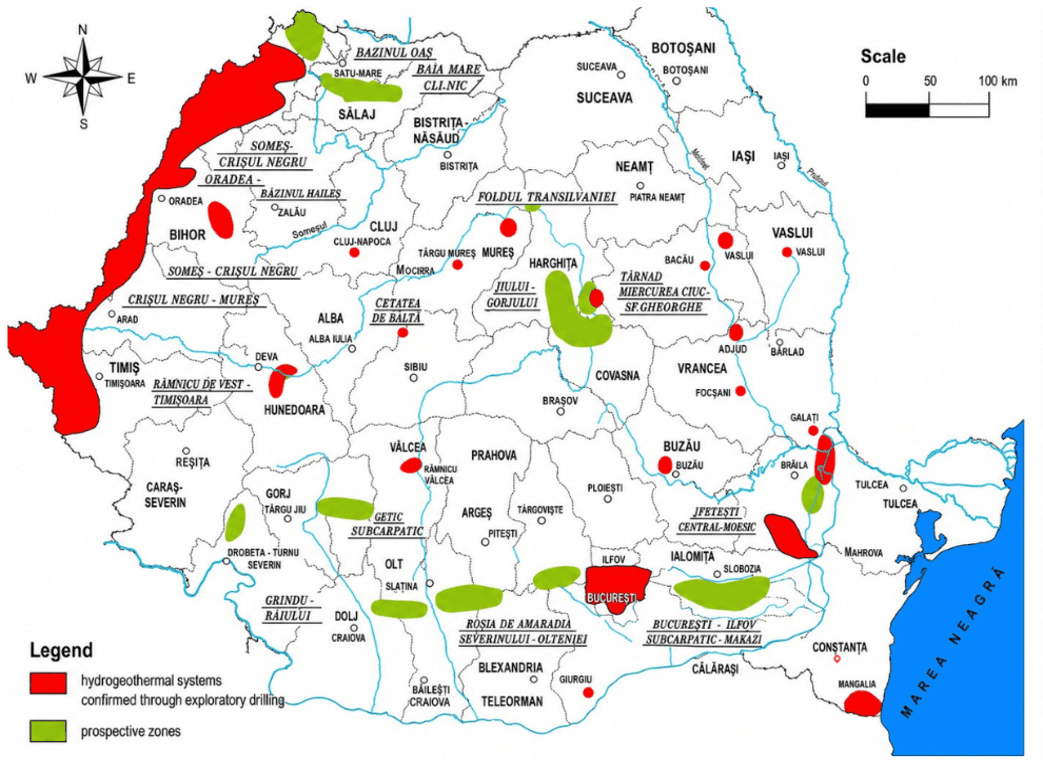
Beeld: © Assessment and Potential of Geothermal Energy in Romania: A Path to Sustainable Heating Solutions, Dan Iudean, Calin Muresan, Laszlo Rapolti, Marius Bolba, Rares Pop and Radu Adrian Munteanu; Technical University of Cluj-Napoca, Romania, 2026
Geographical distribution of researched geothermal systems and prospective zones in Romania/ Red-marked areas indicate hydro-geothermal systems confirmed through exploratory drilling. Green-marked areas indicate prospective zones with identified geothermal potential not yet confirmed by drilling
Moldova looking to replace fossil heating
Moldova’s largely unassessed geothermal resources could improve energy security and support renewable energy. Research into existing wells has identified opportunities for shallow geothermal energy for heating and cooling buildings, as well as deeper resources for supplying heat to district heating networks and industrial processes. One identified well in Ghidighici, near Chișinău, reaches temperatures of up to 53°C at a depth of 1,140 meters. However, more mapping and feasibility work is needed.
TU Delft is leading a pre-feasibility study with TNO and the Technical University of Moldova at its campus in Chișinău. The LAN team in Bucharest helped bring Dutch and Moldovan stakeholders together. The study examines whether geothermal energy could replace fossil heating for academic buildings, greenhouses, laboratories, dormitories, and shared facilities. Results are expected by the end of 2026. If findings are positive, and funding and partners can be secured, a demonstration greenhouse on campus could follow, using Dutch technology and offering practical training and knowledge exchange for students and growers.
More information
For more information on geothermal energy and sustainable greenhouse horticulture, visit the country pages for Bulgaria, Romania and Moldova, and Serbia on Agroberichten Buitenland. You can also contact the LAN teams by email: Sofia (sof-lvvn@minbuza.nl), Bucharest (bkr-lvvn@minbuza.nl) or Belgrade (bel-lvvn@minbuza.nl).