
German partners and practical trials matter for Dutch innovators entering the market
From agricultural robotics to alternative proteins and research partnerships
Germany offers Dutch agrifood innovators opportunities in robotics, precision farming, and alternative proteins. The two countries bring complementary strengths: Dutch expertise in precision agriculture, circular food systems, and controlled-environment farming alongside German strengths in agricultural machinery and large-scale testing infrastructure. But entering the German market takes more than technology. Companies also need funding, local partnerships, and the trust of potential users. The Netherlands Agricultural Network (LAN) team in Germany helps Dutch innovators navigate the market and develop partnerships with German stakeholders.
Germany’s startup sector has grown rapidly. According to Germany Trade & Invest, 3,053 startups were founded in the first half of 2026, 52 percent more than in the second half of 2025. More than one-third focused on artificial intelligence (AI). These figures cover startups across all sectors, not just agrifood. For companies entering a new market, capital and local partnerships remain essential.
The German Federal Ministry of Agriculture, Food and Regional Identity (BMLEH) runs funding programs to support innovation in agriculture and food. Its priorities include field robotics, livestock housing technologies, sensors, the bioeconomy, and practical testing. Most programs are aimed at companies established in Germany, but they can also create opportunities for collaboration with Dutch partners. The de:hub AgriFood Osnabrück/Hannover connects startups, research institutions, and industry. Its partner organizations offer Dutch businesses and researchers contacts in a major German agricultural region.
Agrifood startups face financing challenges. Natural processes and seasonal production can lengthen the time needed to bring new technologies to market. BMLEH regularly supports innovation projects, including agricultural robotics and automation. The Landwirtschaftliche Rentenbank supports agrifood startups through financing and investments in venture capital funds. Together with TechQuartier, it also runs the Growth Alliance, a network offering startup programs and contacts with industry and investors. These German funding opportunities mainly target companies based in Germany, so Dutch innovators often need local partnerships rather than applying directly.
‘Field robotics, sensors and real-world testing are central to Germany’s innovation strategy’
Research networks in Bavaria
Innovation is supported not only by the federal government but also by individual German states. Bavaria is particularly active in AgTech, drawing on institutions such as TU Munich, the University of Applied Sciences Weihenstephan-Triesdorf, and the Bayerische Landesanstalt für Landwirtschaft.
The Bavarian ministries responsible for agriculture and economic affairs help develop networks connecting businesses, research institutions, and farmers through the AgriTechHUB and the Kompetenznetzwerk Digitale Landwirtschaft (KNeDL). Their aim is to promote the practical use of new technologies. For example, CropX works with the Bavarian State Research Center for Agriculture on field trials, while the Dutch company AgXeed participates in trials with Bavarian institutes. The Netherlands Agricultural Network (LAN) team in Germany helped establish the CropX collaboration following a 2024 innovation mission to Bavaria. German startup programs and practical trials offer opportunities for the two countries to exchange experience and build on their complementary AgTech expertise.
Entering the German market
Germany is the EU’s second-largest agricultural producer by output value and the Netherlands’ most important trading partner. It is therefore an important market for Dutch AgTech companies. Yet expanding into Germany brings practical challenges.
Growers may hesitate to invest in unfamiliar, expensive robots without evidence that they work on their own fields, can be insured, and retain their value. Autonomous machinery may not be allowed on public roads between fields, while internet coverage is unreliable in some rural areas. Data handling can also be complicated by the presence of federal and state-level data protection authorities, as well as difficulties in connecting equipment from different manufacturers. Dutch companies can build trust and test their solutions under German farming conditions by working with local growers and demonstration sites.
The LAN team at the Dutch Embassy in Berlin has conducted a market study to help Dutch companies navigate the German market. It outlines German funding opportunities and the importance of local partnerships. The study is not available online, but Dutch companies and organizations can request it by emailing bln-lvvn@minbuza.nl.
Beeld: © Aurea Imaging
The TreeScout is a camera that can be placed on the tractor (see image) which creates orchard maps by using high definition images and deep learning techniques. This enables management at the individual tree level
Aurea Imaging builds local trust
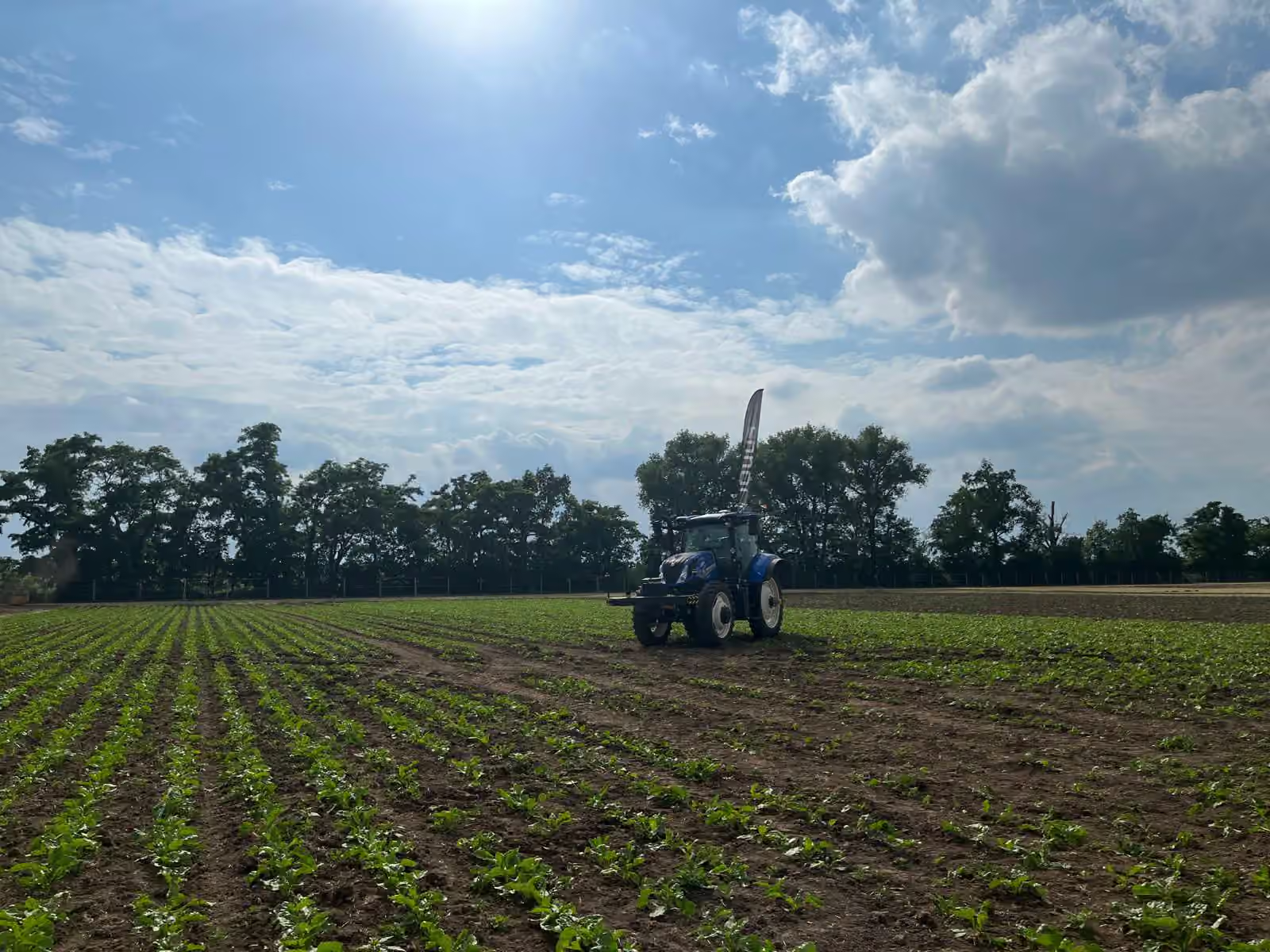
Aurea Imaging illustrates the importance of working with local partners. Its tractor-mounted TreeScout system scans individual orchard trees while growers spray, mow, or spread. It produces blossom and vigor maps that can guide spraying, pruning, and spreading, as well as apple counts and yield estimates months before harvesting. With a DHI subsidy from the Netherlands Enterprise Agency (RVO), the Dutch company demonstrated its technology with a fruit grower in northern Germany. According to Aurea Imaging, the grower ‘became our local ambassador’. Since those first demonstrations, the company has expanded to three regions and is working to secure more orders.
Jurrian Ham, employee at Aurea Imaging, says the company is now active in ‘the region around Hamburg, Saxony-Anhalt and the region around Bodensee, three geographically and agriculturally very different areas'. Germany is an important market because of its large fruit-growing sector, proximity to the Netherlands, and similarities in how growers use machinery and planting systems.
Jurrian also sees differences between generations of growers. ‘We notice that younger generations are very interested in our technique, but older growers are generally still hesitant to implement new technology. Building up trust in the new technique takes time, and it is important to do that together with local partners.’
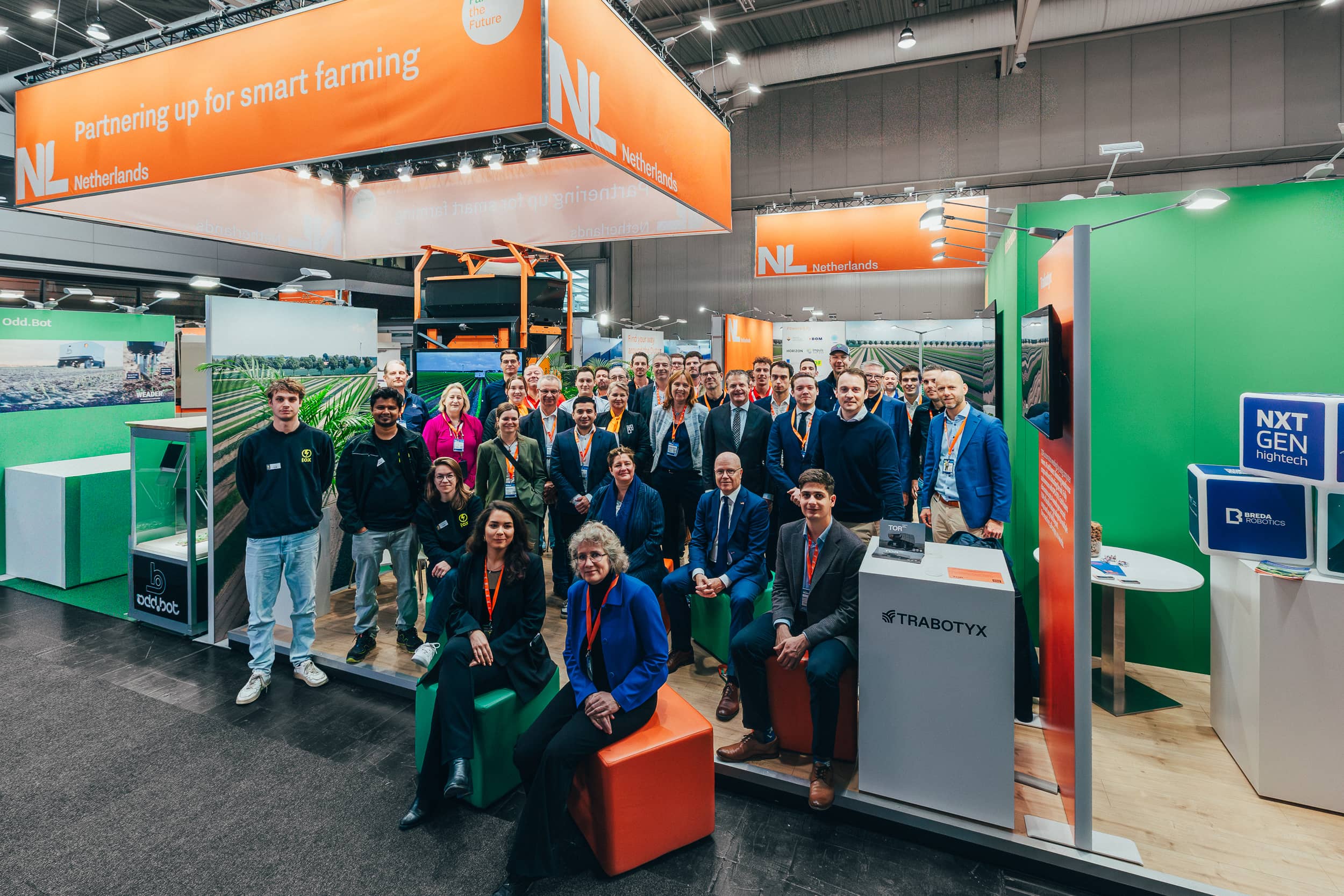
Group photo taken during Agritechnica 2025 at the NL Pavilion
Joint research and common standards
During Agritechnica 2025, the LAN team organized a joint panel with Dutch and German partners. This helped expand an existing French-Dutch initiative on agricultural robotics to include Germany. At Grüne Woche 2026 in Berlin, organizations from the three countries signed a Memorandum of Understanding (MoU) to strengthen cooperation on agricultural innovation. Dutch partners include FME, Wageningen University & Research, and Fedecom; French partners include RobAgri, INRAE, and Axema; and German partners include Agrotech Valley Forum and the Leibniz Institute for Agricultural Engineering and Bioeconomy (ATB) in Potsdam. The partners aim to address challenges such as water scarcity, pest threats, and workforce shortages through research, field trials, and exchanges of expertise.
Deploying autonomous systems also requires harmonized safety standards, safe AI solutions, and standardized data for agricultural robotics. At Agro Techniek Holland in September 2026, the MoU partners met and developed a joint roadmap aimed at accelerating agricultural robotics and automation. Further implementation steps are currently being worked out.
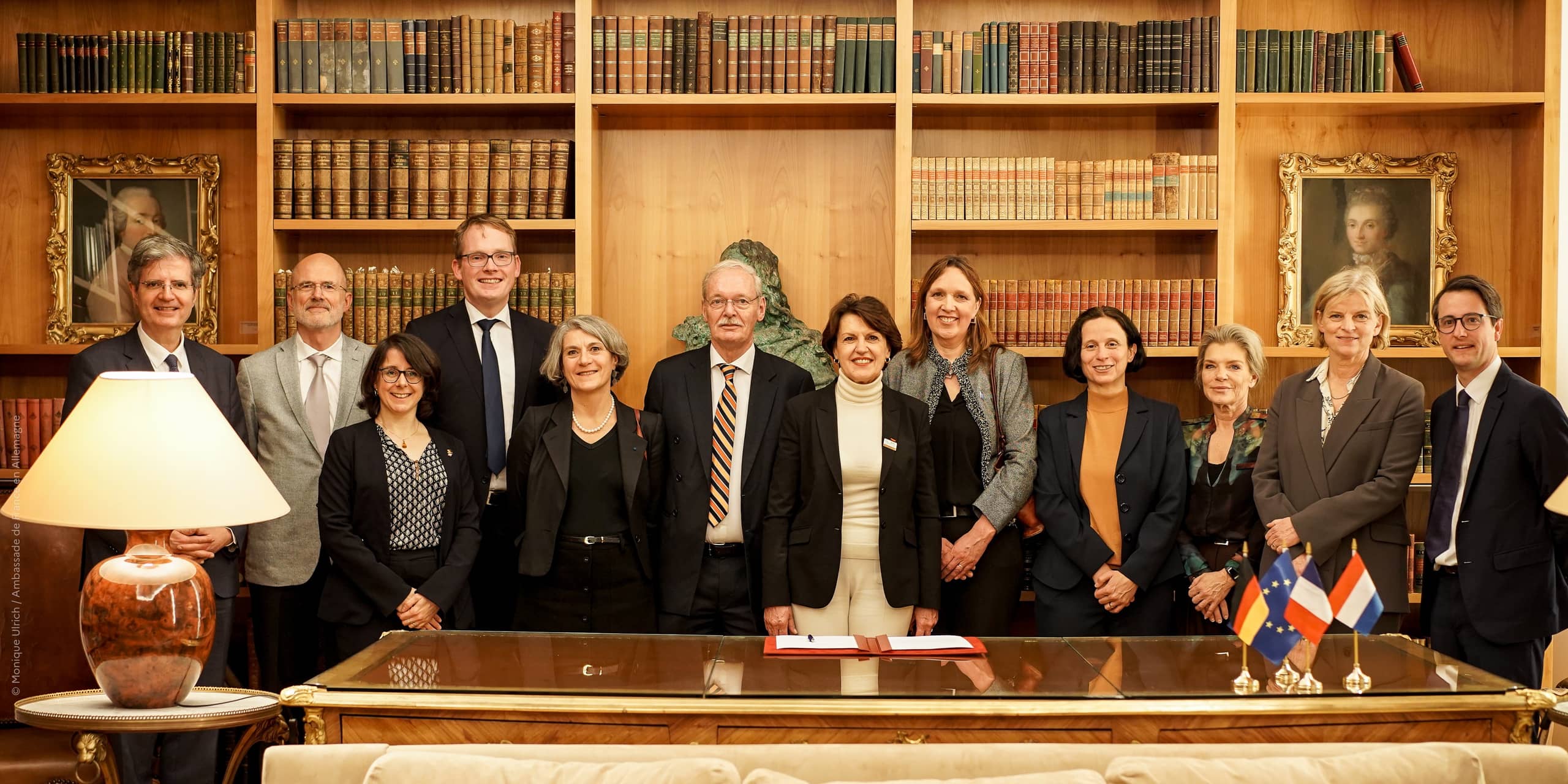
Signing of the MoU at Grüne Woche 2026 between France, Germany and the Netherlands 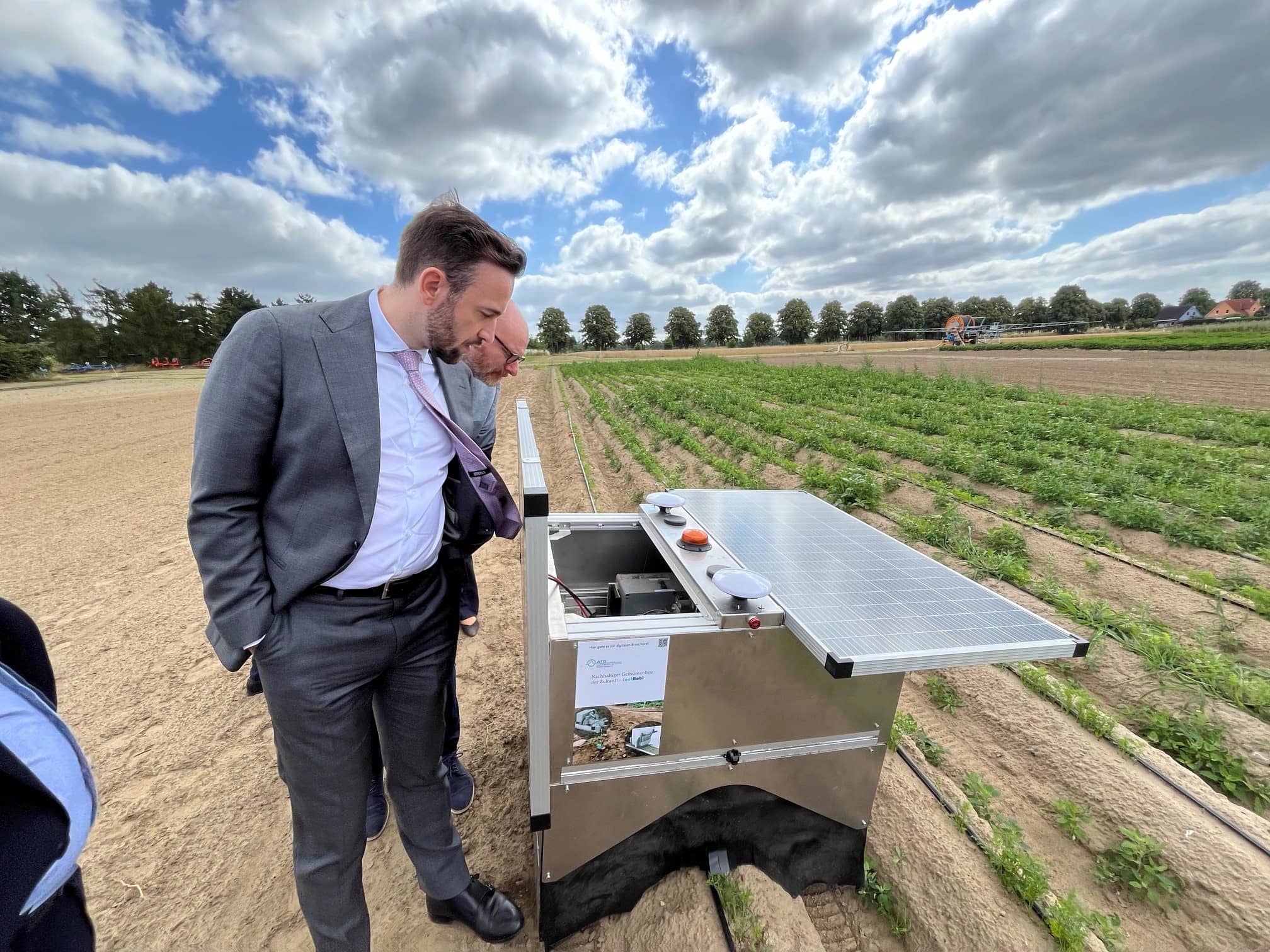
Vice-minister Erkens visited Potsdam to learn more about agricultural innovation in Germany
‘Research into cultivated meat and precision fermentation is gaining momentum’
Cooperation on innovative proteins
Alongside farm-level technologies, Germany and the Netherlands are working on FoodTech innovations, including plant-based meat, cultivated meat, and precision fermentation. According to the Good Food Institute Europe, Germany is Europe’s largest market for plant-based foods.
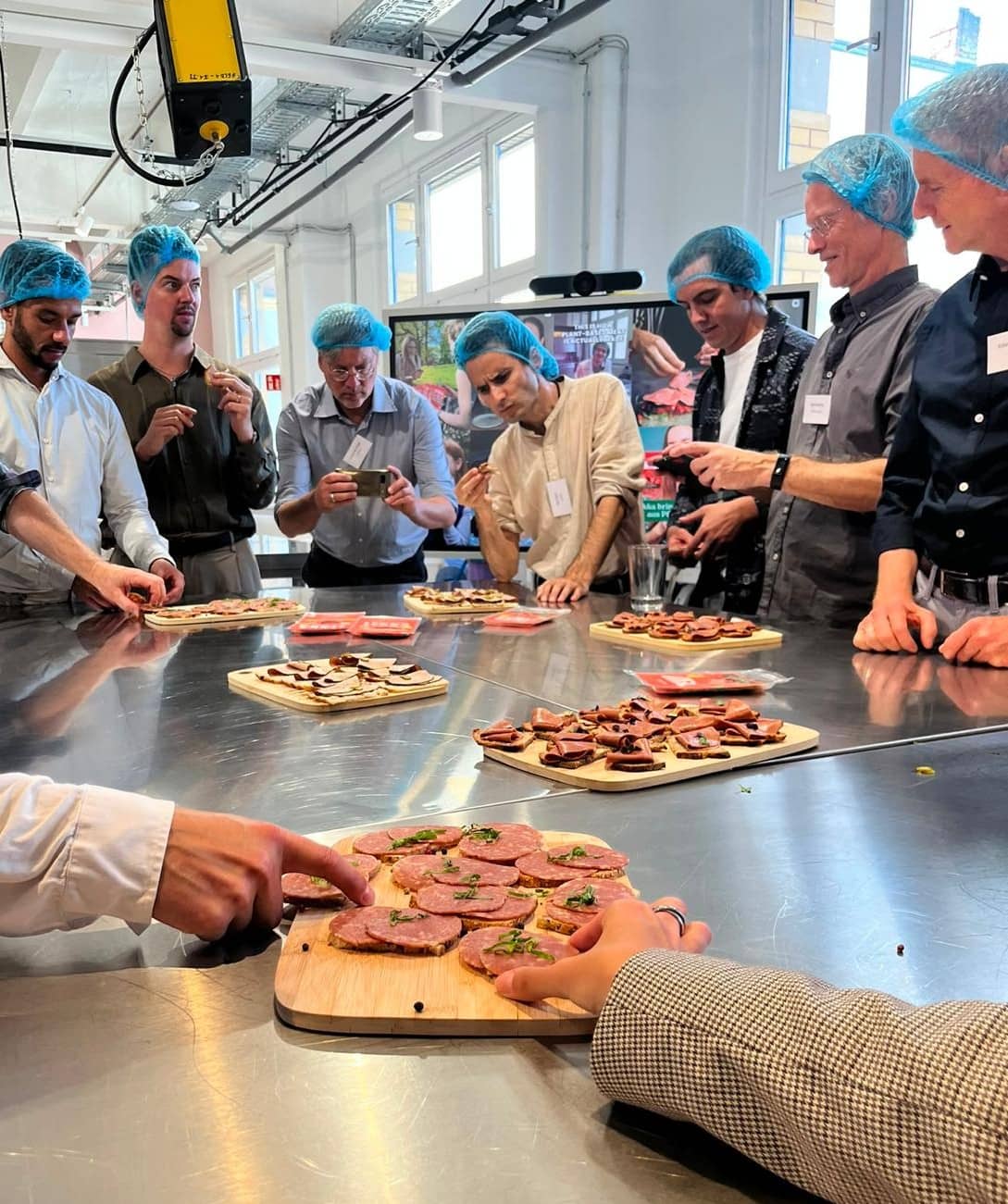
Dutch companies on a food innovation tour in Berlin
In 2024, the German Ministry of Agriculture established the Pioneer Network and funded 27 research projects intended to accelerate the development of alternative proteins for human consumption. These German funding programs do not directly support Dutch applicants but may offer examples for research and innovation policy in the Netherlands. Research also focuses on cultivated meat and precision fermentation. In a 2024 YouGov survey commissioned by the Good Food Institute Europe, almost half of Germans said they would try cultivated meat, while 65 percent supported its sale if food safety regulators approved it.
With research institutes as well as startups playing an important role in FoodTech, the LAN team in Germany initiated the project Connecting German and Dutch innovation ecosystems to support the international protein transition, managed by Münster University of Applied Sciences. The project connects German and Dutch innovators and researchers, with a closing conference scheduled for February 2027. It is part of a wider three-year effort to improve market access through trade fairs and reciprocal delegation visits, including the New Proteins Germany partnership. The LAN team has observed strong interest among German researchers and innovators in further collaboration. For Dutch companies and knowledge institutions, these contacts offer opportunities to develop research partnerships and access an important international market.
More information
For more information about partnerships in agricultural robotics, precision farming, or innovative proteins, as well as local trials and funding opportunities, visit the Germany country page of the Netherlands Agricultural Network. You can also contact the LAN Germany team at bln-lvvn@minbuza.nl. This address serves colleagues in both Berlin and Munich.