
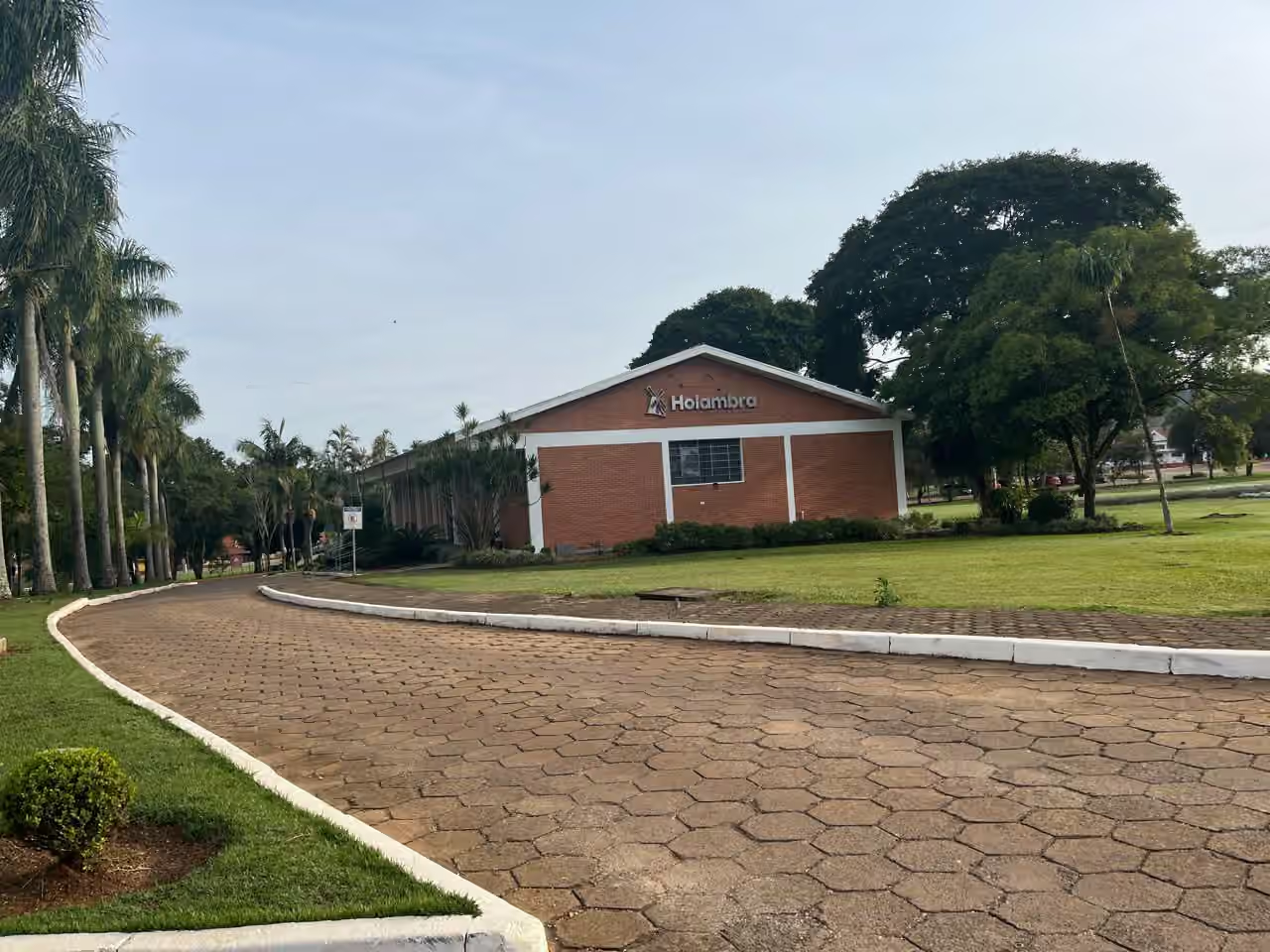
Brazil turns bio-inputs and crop residues into food innovation
Dutch expertise can help local partners build market-ready products
Brazil’s diverse climates, large agricultural sector and food-processing industry create favorable conditions for food innovation. Bioreactors could turn underused crops into protein ingredients. Dutch expertise in biotechnology, controlled production, breeding and process engineering can complement Brazil’s strengths in tropical biology, biomass and large-scale implementation. The Netherlands Agricultural Network (LAN) team in Brazil is helping to bridge expertise, foster partnerships and advance opportunities for innovation in this field.
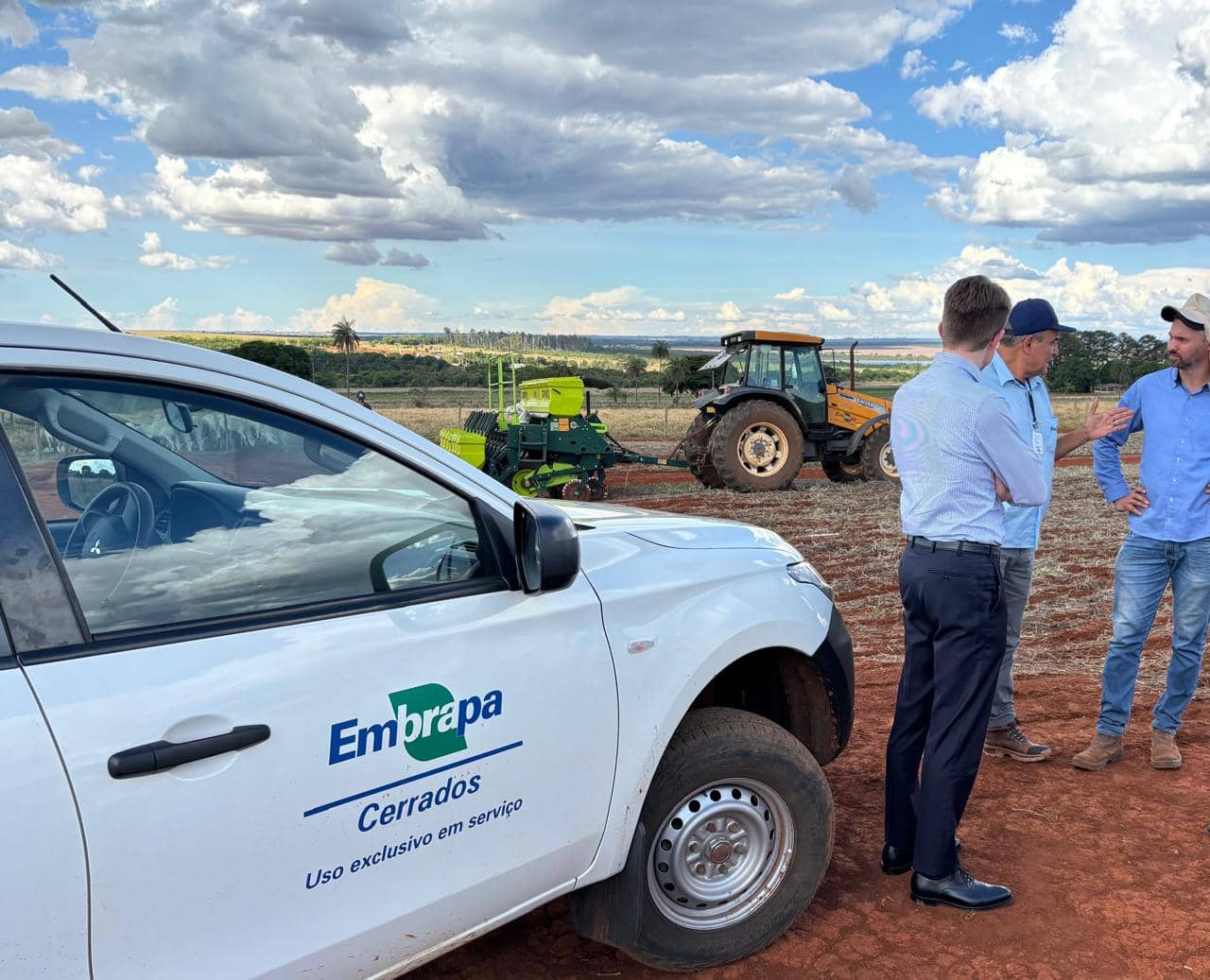
Beeld: Alf de Wit, LAN-Brazil
Visit to Embrapa Cerrados, one of the many federal agritech research stations
In 2025, strategic intelligence and ecosystem Radar Agtech mapped 2,075 agricultural technologies (AgTech) and 390 innovation hubs where AgTech startups can develop projects in Brazil. The report concluded this was 5% more AgTech than the previous year. This ecosystem extends from precision farming and biological crop protection to fermentation and new food ingredients. Brazil's work on heat, drought and biological pressures is increasingly relevant to European climate resilience. For Dutch businesses and researchers, the opportunity is not simply to export technology, but to adapt, test and develop it together.
Bioinputs: practical co-innovation in crop protection
Bioinputs – including microbial products, inoculants, biostimulants, and beneficial insects – illustrate Brazil’s capacity to innovate at scale. According to CropLife Brasil, sales reached R$5 billion in the 2023/24 harvest, while an estimated 15,000 or more soybean farms produce biological inputs on-farm.
Farmers seek to manage resistance, reduce dependence on chemical products, and maintain yields. Brazil’s National Bioinputs Program and Law 15.070 of December 2024 support this expanding sector. Dutch strengths in biological crop protection, formulation, precision application and integrated pest management create opportunities to jointly develop products tested in tropical fields and suited to demanding sustainability standards.
An example of established cooperation is Koppert, a Dutch specialist in biological crop protection that operates in Brazil through Koppert do Brasil. It participates in the São Paulo Advanced Research Center for Biological Control (SPARCBio), together with the University of São Paulo (USP/ESALQ) and research foundation FAPESP. Dutch expertise is particularly strong in greenhouse crop protection, while Brazil has extensive experience with biological controls in large-scale arable farming. This offers opportunities for mutual learning.
‘For Dutch businesses and researchers, the opportunity is not simply to export technology, but to adapt, test and develop it together’
The Netherlands Agricultural Network (LAN) team in Brazil helped organize a bio-input innovation mission in November 2024, with nine Dutch companies and organizations, including Wageningen University & Research (WUR). The mission mapped possibilities for joint research and technical exchanges. A 2025 WUR project then worked towards a Dutch–Brazilian bio-input innovation consortium; a symposium with WUR, the Federal University of Lavras (UFLA) and Embrapa Meio Ambiente brought together more than 250 participants in October 2025. These are concrete steps in building research cooperation, rather than evidence of a commercialized joint product.
Alternative proteins: Dutch and Brazilian strengths
Alternative proteins also connect Brazil’s agricultural resources with Dutch food-technology capabilities. At a GFI Brasil workshop in October 2026, science and technology director Cristiana Ambiel highlighted Brazil’s established large-scale production of soy, corn, beans, sugarcane and oilseeds, its public research network and its fermentation experience. Developing domestic scientific capacity to turn these assets into new products is central to Brazil’s ambition.
The Netherlands has an established ecosystem in cellular agriculture, precision fermentation and alternative proteins. Brazil brings abundant feedstocks, industrial infrastructure and a large consumer market. The future is unlikely to depend on one meat substitute: conventional livestock, plant proteins, fermentation-derived ingredients, cultivated meat and products made from industrial side streams may coexist.
An existing business connection is The Vegetarian Butcher, a Dutch plant-based brand acquired in 2025 by Vivera, part of Brazilian food group JBS. According to the LAN team, the brand is exploring opportunities in Brazil, but no specific joint Dutch–Brazilian research pilot or LAN involvement has been reported.
In Paraná, the Araucária Foundation and GFI Brasil launched a R$2 million research program in June 2025 focused on fermentation and cell cultivation. Four university-based projects began in April 2026, including research coordinated by the Pontifical Catholic University of Paraná (PUCPR), with UNICAMP and Embrapa Suínos e Aves, on animal-free culture media for cultivated meat. The projects remain at the research stage; commercial outcomes have not been reported.
Beeld: Alf de Wit, LAN-Brazil
Canavalia ensiformis (jack bean), source of proteins with different applications
From agricultural residues to valuable ingredients
At UNICAMP, doctoral researcher Bárbara Flaibam, working with Professor Rosana Goldbeck, studies how soybean meal, corn DDGS, sunflower meal, and brewer’s yeast residues can become animal-free nutrients for cell culture. Enzymatic processing yields protein hydrolysates that might partly replace costly ingredients in cultivation media; some materials may also help form cell scaffolds.
A 2024 laboratory study estimated hydrolysate production at approximately US$0.17 per gram, versus US$70–159 per gram for commercial fetal bovine serum on a dry-weight basis. These figures exclude certain costs and do not establish industrial feasibility, but they reveal the potential for low-value agricultural residues.
Innovation can also begin with familiar crops. Researchers at Universidade Positivo, supported by Embrapa Agroindústria de Alimentos for digestibility testing, developed a fava-bean protein shake. In tests with 52 tasters, it outperformed pea-and-rice and whey shakes on several sensory attributes. Such research suggests opportunities to diversify ingredients beyond soy, while applying similar approaches to underused European crops. Dutch seed breeders, ingredient suppliers and food manufacturers could help develop products for both markets.
Beeld: Alf de Wit, LAN-Brazil
Traditional manioc flour house, common in all of Brazil
Market maturity and consumer acceptance
According to Euromonitor figures compiled by GFI Brasil, Brazilian retail sales of plant-based meat and seafood substitutes reached R$1.9 billion in 2025. Yet cultivated meat remains at the research stage. As Embrapa Suínos e Aves researcher Ana Paula Bastos explains, researchers are still developing cell lines, media, bioreactors and production protocols while building interdisciplinary expertise. Cost, reproducibility, and industrial scale remain major challenges.
Nevertheless, consumer studies suggest room for growth. Embrapa researcher Vivian Feddern notes that Brazilian surveys often find considerable willingness to try cultivated meat, although willingness to replace conventional meat is lower. One 2021 study found 59.3% positive consumption intention but only 40% willing to replace meat in their daily diets; another found 73% willing to try it, but 19.4% willing to substitute it.
An explanatory video increased positive intention in a separate experiment, suggesting information matters. These are stated intentions, not evidence of actual purchasing behavior. The available summaries do not establish the sample sizes of the quoted surveys or how representative they are. Joint consumer studies and pilot tastings could help Dutch and Brazilian developers assess pricing, communication, and product design.
Crossing the gap between research and scale
The biggest obstacle may be the “valley of death” between laboratory proof of concept and commercial production. For ingredients made from agricultural residues, safety, consistency, performance, regulation and economics must all be validated at scale. Startups can move quickly, but need demonstration facilities, partners, and patient capital.
Brazilian institutions such as BNDES and Finep have supported agricultural and food innovation through initiatives including Inova Agro. One concrete example is an Embrapa-led project financed by Finep to develop protein ingredients from cashews and peanuts through greener extraction methods. UNICAMP and other Brazilian research units participate, with support from Funarbe. The project is still in progress; no Dutch project partner or commercial result has been identified.
For larger cross-border ventures, Dutch actors such as Invest International may be able to structure financing. Its 2022 memorandum with Latin American development bank CAF offers a cooperation framework. This is a potential financing route rather than evidence of funding for the specific research projects cited here.
Another example of research cooperation is a 2025 review of starch-based scaffolds for cultivated meat, co-authored by researchers at Brazilian universities, Mosa Meat and Maastricht University. The paper assesses the potential of different starches for food biofabrication and acknowledges financial support from Finep. It is a research review, not evidence of an industrial-scale pilot.
Beeld: © Castrolanda Cooperative
One of the larget malt factories in South America. A cooperation between Ag cooperatives of the Parana State, some of which of dutch immigrant farmers
From research to joint innovation pilots
Future Dutch–Brazilian cooperation could take the form of concrete projects. Possible directions include jointly funded innovation challenges in alternative proteins, pilot initiatives that combine Brazilian agricultural residues with Dutch fermentation and process technology, and trials that allow Dutch startups to test solutions under tropical, large-scale conditions.
LAN Brazil intends to organize an innovation mission on alternative proteins in the first half of 2027, which could lead to follow-up activities and help facilitate research and innovation consortia between the Netherlands and Brazil. Potential partners include Brazilian universities, research institutions and private research groups, alongside companies, cooperatives, and investors. These are proposals, not existing joint pilots.
‘The goal is not a one-way technology transfer, but a genuine co-innovation’
Brazil and the Netherlands approach food innovation from different starting points. That is precisely their advantage. By combining Dutch technical expertise with Brazilian biological diversity, biomass, and scale, they can develop affordable, resilient, and more sustainable solutions for global food production. The goal is not a one-way technology transfer, but a genuine co-innovation.
More information
For more information about Dutch-Brazilian cooperation on bio-inputs, alternative proteins and the use of agricultural residues for new food ingredients, visit the country page of Brazil or email the LAN team at the Dutch Embassy in Brasília: bra-lvvn@minbuza.nl.
Sources
- Confea interview with Vivian Feddern (15 September 2026)
- GFI Brasil, “Prioridades Científicas para Proteínas Alternativas” (October 2026).