
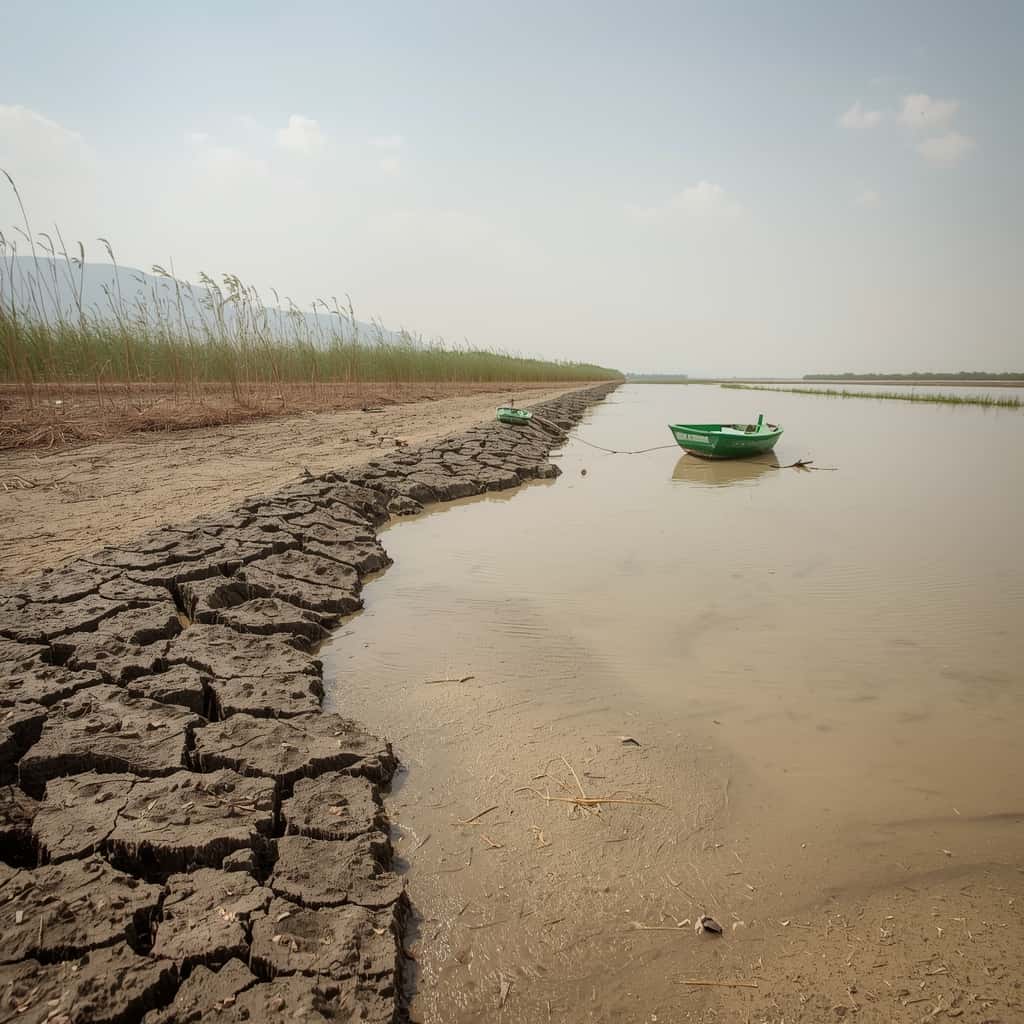
Food loss in Türkiye puts pressure on prices, water, and food security
How international collaboration can accelerate structural transformation
Reducing food loss is becoming an increasingly important part of building a more resilient food system in Türkiye. It requires attention not only to production and logistics, but also to policy, technology, and cooperation across the supply chain. The Netherlands Agricultural Network (LAN) team at the Dutch Embassy in Ankara identifies resilience, digitalization, and circular economy solutions as collaboration opportunities between Türkiye and the Netherlands to mitigate food loss.
Türkiye is one of the world’s leading agricultural producers and a strategic food logistics hub connecting Europe, Asia, and the Middle East. Despite strong food availability, the country faces significant structural challenges related to food loss and waste across the supply chain. An estimated 19 to 26 million tons of food are lost or wasted each year, generating approximately USD 5 billion in economic losses and intensifying inflationary pressures. Climate change, through drought, frost, and desertification, has further amplified these losses.
Türkiye’s food system is also strained by regional geopolitical dynamics. As a primary corridor for the Black Sea Grain Initiative and a neighbor to conflict zones in the Middle East, Türkiye faces unique pressures:
- Conflicts in the Black Sea and the Middle East frequently force the rerouting of agricultural exports, leading to longer transit times. For perishable goods like fruits and vegetables, these delays turn 'potential exports' into 'immediate food loss' at the borders.
- Global fluctuations in energy and fertilizer prices – driven by geopolitical tensions –disproportionately affect Türkiye’s smallholders. If the cost of harvesting or transporting goods exceeds the market price due to high fuel costs, farmers will often be forced to leave crops to rot in the fields.
- Migration and demand surges: Türkiye hosts the world’s largest refugee population. This sudden, large-scale increase in domestic demand, coupled with regional supply chain disruptions, intensifies the need for a hyper-efficient, zero-waste food system to maintain national food security.
‘Türkiye is one of the world’s leading agricultural producers and a strategic food logistics hub connecting Europe, Asia, and the Middle East’
Scale of food loss in Türkiye
Türkiye loses an estimated 18.8 to 26 million tons of food each year, representing approximately USD 4.9 billion in economic losses. The most critical loss points occur at the agricultural production stage and at the household consumption stage. Overall, approximately 12% of agricultural production is lost.
Losses are particularly severe in perishable product groups. Post-harvest losses in Türkiye average 30% overall, with the highest impact on fruits and vegetables, where losses reach up to 53%, or 9.5 million tons annually, including key products such as grapes, olives, and tomatoes. These figures are further driven by losses in fish, which range from 53% to 70%, as well as by daily bread waste, amounting to 4.9 million loaves. Cereals, by contrast, show lower losses of 4% to 15%.
‘Each year, approximately 12% of agricultural production is lost in Türkiye, including nearly 9.5 million tons of fruits and vegetables.’
Structural drivers across production and distribution
A large share of these losses occurs at farm level. Nearly 70% of farmers operate less than 5 hectares, and many small, fragmented farms cannot afford pre-cooling units, refrigerated storage, or durable standardized crates. As a result, harvested produce sits in the heat while trucks collect small loads from many scattered plots, causing repeated breaks in the cold chain through stop-and-go loading. Poor packaging adds further losses, as unstable crates shift or collapse during transport on rough rural roads.
These farm-level constraints are reinforced by broader weaknesses in Türkiye’s food logistics system. In 2025, the food logistics sector was valued at approximately USD 1.07 billion, supporting agricultural exports that reached USD 36.4 billion, or roughly 15.3% of total goods exports. However, rapid export growth has exposed structural weaknesses in cold-chain systems, storage capacity, and digital traceability infrastructure, driven by geographical disparities, high investment barriers, and a lack of integrated standards.
In addition, traditional harvesting techniques, limited mechanization, and insufficient technical knowledge result in crop damage and yield loss. In 2025, extreme weather events, including severe frost in April and prolonged drought, reduced fruit production by more than 30%. According to the UNCCD Global Drought Report, 88% of Türkiye’s territory is at risk of desertification, placing the country among the most climate-vulnerable areas in the Mediterranean Basin.
Türkiye is also identified in the OECD Agricultural Policy Monitoring and Evaluation 2025 report as facing mounting pressure on water resources, reinforcing concerns that it may shift from water-stressed to water-poor conditions by 2030. Given that agriculture is highly exposed to these environmental pressures and remains a major water-using sector, as reflected in Türkiye’s UNCCD National Report 2022, climate volatility is becoming a structural driver of food loss.
In some cases, high harvesting costs combined with low market prices make it economically irrational for farmers to harvest crops, resulting in field-level losses. This type of loss primarily affects labor-intensive, high-volume perishables rather than grains such as wheat or barley, which are machine-harvested and can be stored. Economic abandonment is most common in stone fruits such as peaches, apricots, and nectarines, as well as tomatoes, peppers, leafy greens, onions, and potatoes, when labor, transport, or input costs exceed the price farmers can obtain in the market.
View of arid land in Türkiye
Macroeconomic and environmental pressure
With a population of more than 86 million, Türkiye has substantial agricultural production capacity, yet food loss remains a major economic and environmental burden. In a country projected to become water-poor by 2030, wasting 9.5 million tons of fruits and vegetables is equivalent to wasting billions of cubic meters of water. Furthermore, food that decomposes in landfills or is left in fields is a major source of methane emissions, a greenhouse gas significantly more potent than CO2, directly undermining Türkiye’s climate resilience and contributing to the droughts and heatwaves that threaten future harvests.
These losses also directly affect domestic price stability. As of early 2026, food remained the most influential component in Türkiye’s inflation basket, accounting for 24.44% of the Consumer Price Index. In January 2026, prices of food and non-alcoholic beverages rose by 6.59% in one month, contributing 1.61 percentage points to overall inflation of 4.84%. Food loss therefore contributes not only to environmental degradation, but also to inflationary pressure and food affordability challenges.
Bread wasted on the ground
Logistics, storage, and processing
Infrastructure weaknesses generate substantial post-harvest losses in Türkiye. The food logistics sector is highly fragmented and depends largely on thousands of independent truckers rather than large, integrated cold-chain operators, resulting in a severe shortage of FRC-certified refrigerated trailers capable of maintaining stable temperatures over long distances. During peak harvest periods, many smallholders are forced to rely on open-air or non-insulated trucks because refrigerated vehicles are either too expensive or already contracted by large exporters, while additional delays caused by multi-stop collection from scattered farms, congestion at wholesale markets, and border and customs bottlenecks further reduce shelf life.
As a result, insufficient temperature-controlled storage contributes to losses of up to 8% of fruit and vegetable production immediately after harvest, while inadequate packaging, weak refrigerated transport coverage, and logistical delays lead to spoilage and physical damage in transit; in dairy and fruit processing, sterilization and maturation inefficiencies add a further estimated 3% of total production waste.
While modern supermarkets are expanding, approximately 30% to 35% of retail food sales still take place through traditional channels, including open-air bazaars where storage conditions are less controlled. Overordering and weak demand forecasting result in products expiring before they are sold.
National policy response
In 2020, with support from the Food and Agriculture Organization (FAO), Türkiye launched the Protect Your Food, Take Care of Your Table-initiative, its first comprehensive national effort to combat food loss and waste. Key achievements include the development of the National Strategy Document and Action Plan, the implementation of nearly 100 targeted actions, awareness campaigns reaching more than 21 million citizens, and alignment with the Food Loss Hierarchy framework.
Developed by the Ministry of Agriculture and Forestry in collaboration with the FAO, this Türkiye’s initiative marked a fundamental shift in the country’s approach to food loss, moving the issue from one framed primarily in terms of charity and individual behavior to one embedded in national strategy and economic resilience. However, the Turkish private sector still faces the need for substantial structural change.
Stand at bazaar in Türkiye with crates of produce
Opportunities for Dutch stakeholders
As the world’s seventh-largest food producer, Türkiye represents an important partnership market for Dutch expertise. Opportunities include cold-chain and logistics modernization, such as:
- smart temperature monitoring systems
- sustainable cooling technologies
- digital supply chain tracking solutions
- modernized storage facilities
Türkiye is already a global powerhouse in food processing, particularly in products such as tomato paste, apple juice, and hazelnut derivatives. Yet, many of the sector’s side streams, including peels, seeds, and pomace, are still discarded rather than valorized. This creates a significant opportunity for Dutch technology to recover high-value bioactive compounds, such as pectin from citrus peels, lycopene from tomato skins, and antioxidants from grape seeds, for use in the food ingredients.
A second opportunity lies in insect-based protein solutions, especially using Black Soldier Fly larvae. Türkiye’s livestock and aquaculture sectors, including trout and sea bass production, remain heavily dependent on costly imported soy and fishmeal. By using non-marketable food waste, such as bruised or unsellable fruits and vegetables, as feed substrate, Black Soldier Fly systems can convert low-grade organic waste into high-quality protein and oils. This would help create a more localized and resilient feed supply, reduce costs for farmers, and lessen dependence on volatile global commodity markets.
Other opportunities besides the valorization of by-products include precision farming systems, AI-based pest detection, robotics for yield optimization, and advanced packaging and preservation technologies such as shelf-life extension, freezing and preservation innovations, and sustainable retail packaging aligned with national strategy goals.
Watermelon wasted on the ground
Policy recommendations
The largest share of food loss occurs at the farm level. Food loss in Türkiye is a systemic efficiency challenge, exacerbated by climate change, fragmented production, and infrastructure gaps. Addressing these structural weaknesses is essential not only for environmental sustainability, but also for macroeconomic stability, inflation control, and long-term food security resilience.
International collaboration, particularly with technologically advanced agricultural economies such as the Netherlands, can accelerate this structural transformation. In this context, Türkiye is seeking to prioritize farm consolidation and mechanization, the expansion of cold-chain infrastructure, the integration of digital traceability systems across the supply chain, stronger municipal organic waste recovery systems, consumer awareness and behavior-change campaigns, and public-private innovation partnerships.
‘International collaboration, particularly with technologically advanced agricultural economies, can accelerate structural transformation’
More information
If you would like to know more about post-harvest losses, cold-chain infrastructure, storage capacity, and climate-related pressures in Türkiye, you can visit the country page of Türkiye on this website. You can also send an e-mail to the LAN team at the Dutch Embassy in Ankara: ank-lvvn@minbuza.nl.