
Stay updated with our newsletter published every month.
By LAN team Vietnam
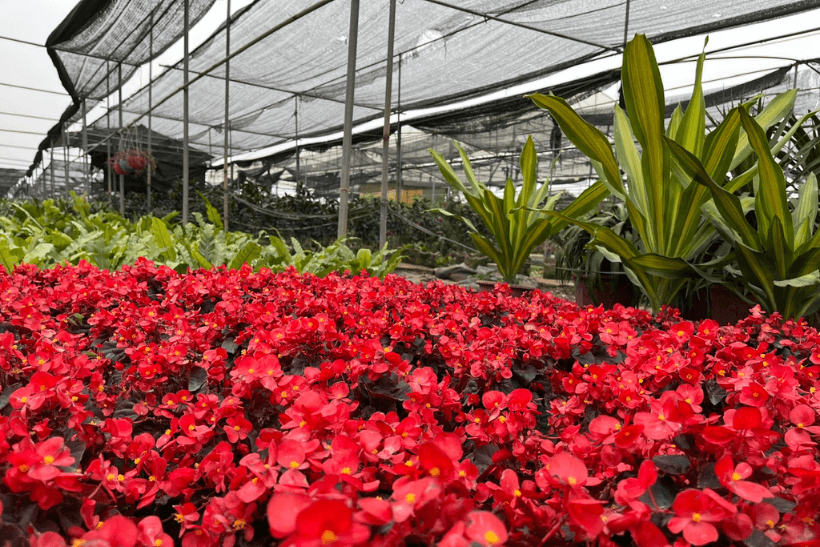
Beeld: EKN Hanoi
A flower garden and market in Xuan Quan, Hanoi. Photo courtesy of the Netherlands Embassy in Vietnam.
Draft Law amending Law on Product and Goods Quality
On May 6, the National Assembly reviewed the draft Law amending the Law on Products and Goods Quality. This includes all types of products and goods such as agricultural products, food, veterinary medicines, plant protection chemicals, machinery, equipment, etc.
The draft introduces a new approach to categorizing Group 2 products and goods according to their potential risk (high, medium, or low), considering factors such as chemical, physical, biological properties, usage, and storage. High-risk products (e.g., explosives, veterinary drugs, petroleum) will be subject to pre-clearance control, while lower-risk items (e.g., helmets, household electronics) may follow post-clearance or self-declaration procedures. Sectoral ministries will determine product risk levels based on regulatory capacity and product characteristics.
More information of the draft: Cân nhắc quản lý chất lượng sản phẩm, hàng hóa theo mức độ rủi ro
Agricultural products play key role in exports in the first four months of the year
According to General Statistics Office latest report, Vietnam’s merchandise exports in the first 4 months of 2025 recorded a strong recovery, reaching a total export turnover of USD 123.64 billion, up 15.0% compared to the same period in 2024. Notably, the agricultural, forestry, and fishery products group also showed positive signs of recovery, significantly contributing to overall results.
enterprises have tried improving product quality to meet increasingly stringent requirements from major markets such as the United States, Japan, and the EU. Improvements in post-harvest preservation, increased investment in preliminary processing technologies, and the development of cultivation areas that meet GAP standards are providing a solid foundation for this sector's sustained growth. EU recorded an export turnover of USD 18.3 billion (up 13.9%)
Ensuring product quality, traceability, and compliance with SPS regulations from importing markets will be essential to sustain growth in the long term.
More info: Agro-forestry-fishery trade surplus $5.2 billion in four months
Projects launched toward a more sustainable agriculture in Vietnam
On April 22, the Ministry of Agriculture and Environment (MAE), held the kick-off workshop for the project Sustainable Agriculture for Forest Ecosystems in Vietnam (SAFE) for the 2025-2028 period. As Vietnam’s largest EU trade partner and the biggest EU investor, the Netherlands is committed to deepening EU-Vietnam trade relations, with a strong focus on enhancing understanding of and compliance with EU regulations.
More info:
SAFE Project: Sustainable transformation of coffee supply chain
SAFE project launch – Netherlands Embassy in Vietnam
On May 6, the Crop Production and Plant Protection Department (Ministry of Agriculture and Environment – MAE), in collaboration with the Food and Agriculture Organization of the United Nations (FAO), convened a workshop to launch project TCP/RAS/3907 – “Strengthening the capacities of Government counterparts and relevant stakeholders for increasing productivity and building climate resilient agriculture through nature-based solutions in Asia”.
The project will support the development and refinement of legal and regulatory documents aimed at promoting research, production, registration, and use of biological plant protection products (PPPs), biological control agents (BCAs), and biopesticide formulations. This effort seeks to reduce dependence on chemical pesticides and contribute to a safer, more sustainable agricultural production system.
More info: FAO launches project to promote biological PPPs in Vietnam
Vietnam Redefines Private Sector’s Role: Key Highlights from Resolution 68
In a symbolic move on May 4, 2025, Vietnam’s Politburo introduced Resolution 68-NQ/TW, a new directive acknowledging the central role of the private sector in Vietnam’s economic growth.
Resolution 68 focuses on facilitating the private economy’s access to land, capital, and high-quality human resources. Mechanisms and policies are in place to control land price fluctuations, particularly for production-related land, minimizing impacts on enterprise investment plans.
Investors and foreign businesses can effectively align with Vietnam’s new priorities outlined in Resolution 68 by embracing collaboration and innovation. By supporting local enterprises, investing in technology and skills development, and engaging in sustainable practices, they can contribute to the growth of the private sector while enhancing their own market presence.
Source:
Vietnam Redefines Private Sector’s Role: Highlights from Resolution 68
Contact information
For the latest updates, news, funding opportunities and more, follow us on LinkedIn Netherlands Agricultural Network in Vietnam and the Vietnam page on Agroberichten Buitenland.
Beeld: LAN