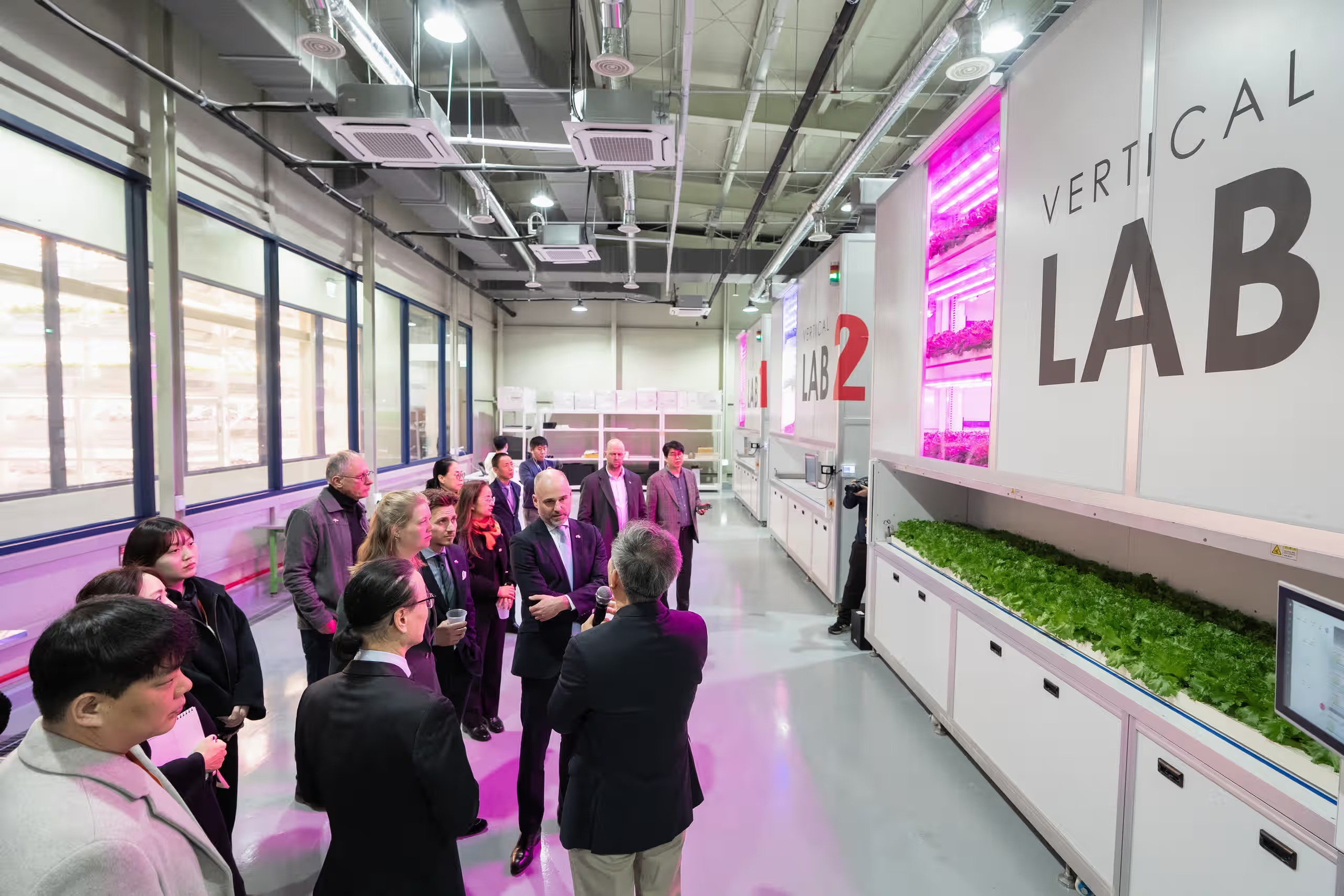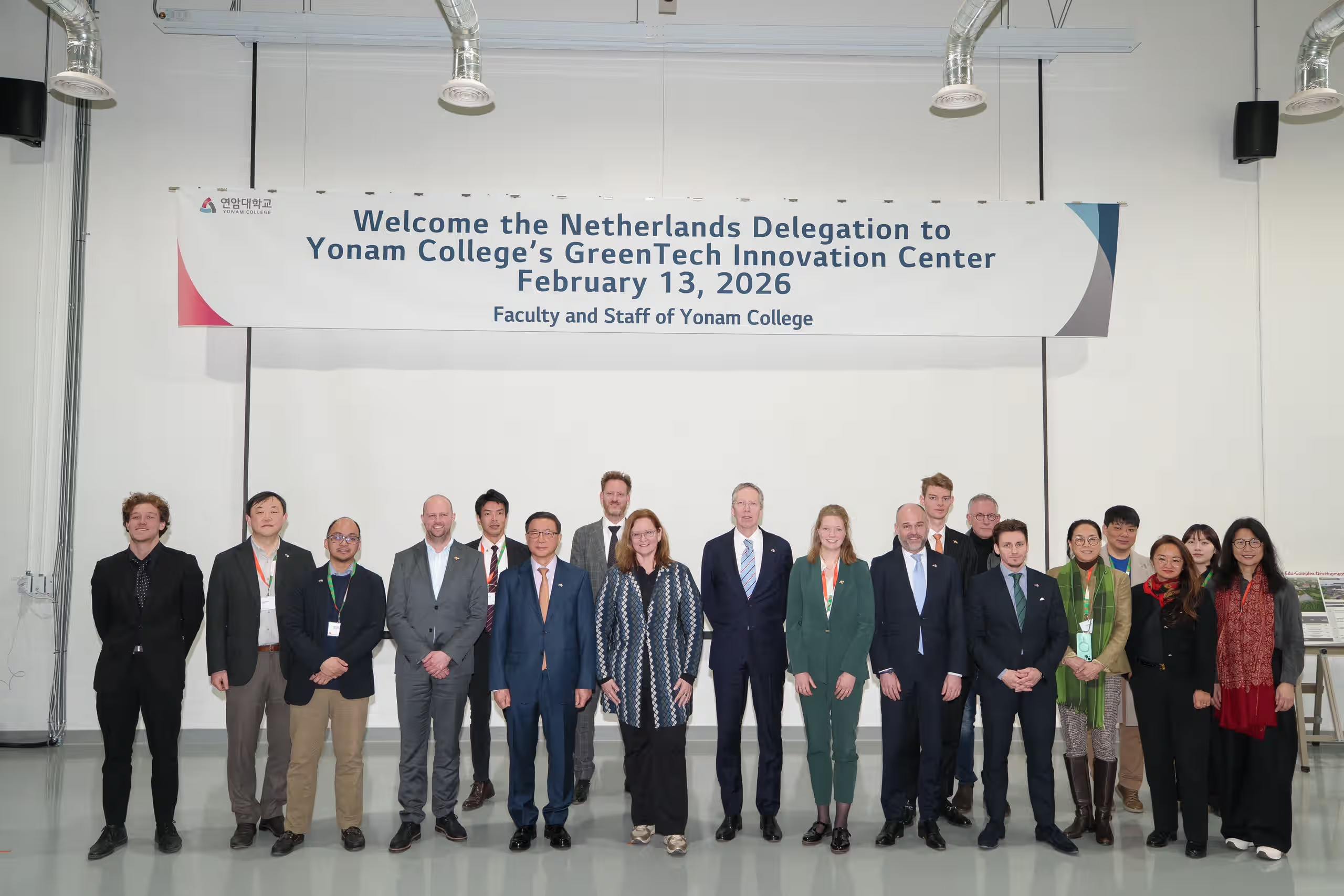
A Dutch horticulture delegation has concluded a series of visits across South Korea aimed at strengthening cooperation and trade in horticulture technology. The horticulture program formed part of a broader Dutch economic mission led by the then-trade minister Aukje de Vries and brought together companies, research/education institutions, investors, and government representatives from the Netherlands.
The visit highlighted a growing partnership between the Netherlands and South Korea as both countries seek solutions to pressing agricultural challenges including climate change, labor shortages, as well as energy availability and sources. Smart greenhouse horticulture has emerged as a key area of cooperation between the two countries.
Beeld: © SEO-LVVN
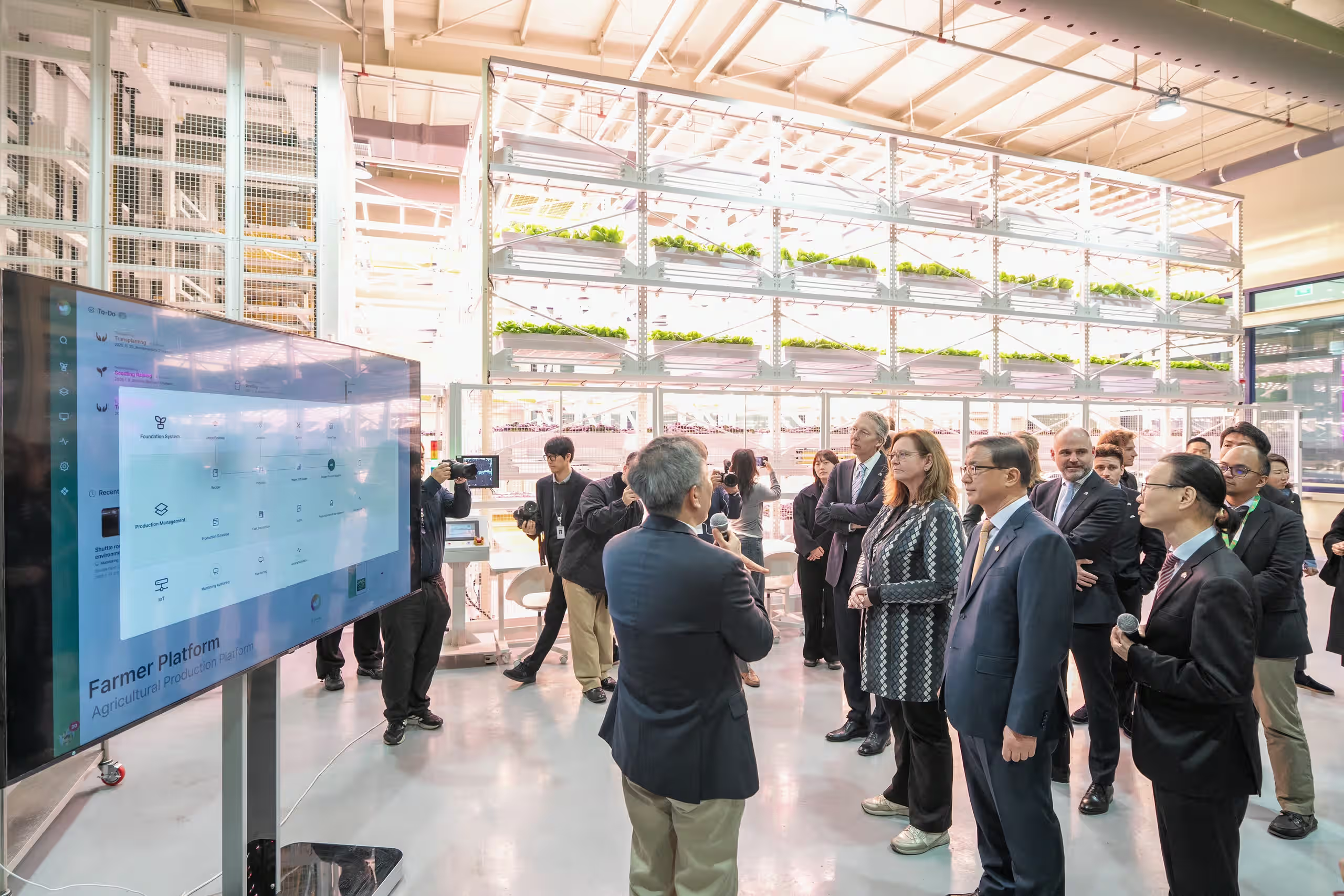
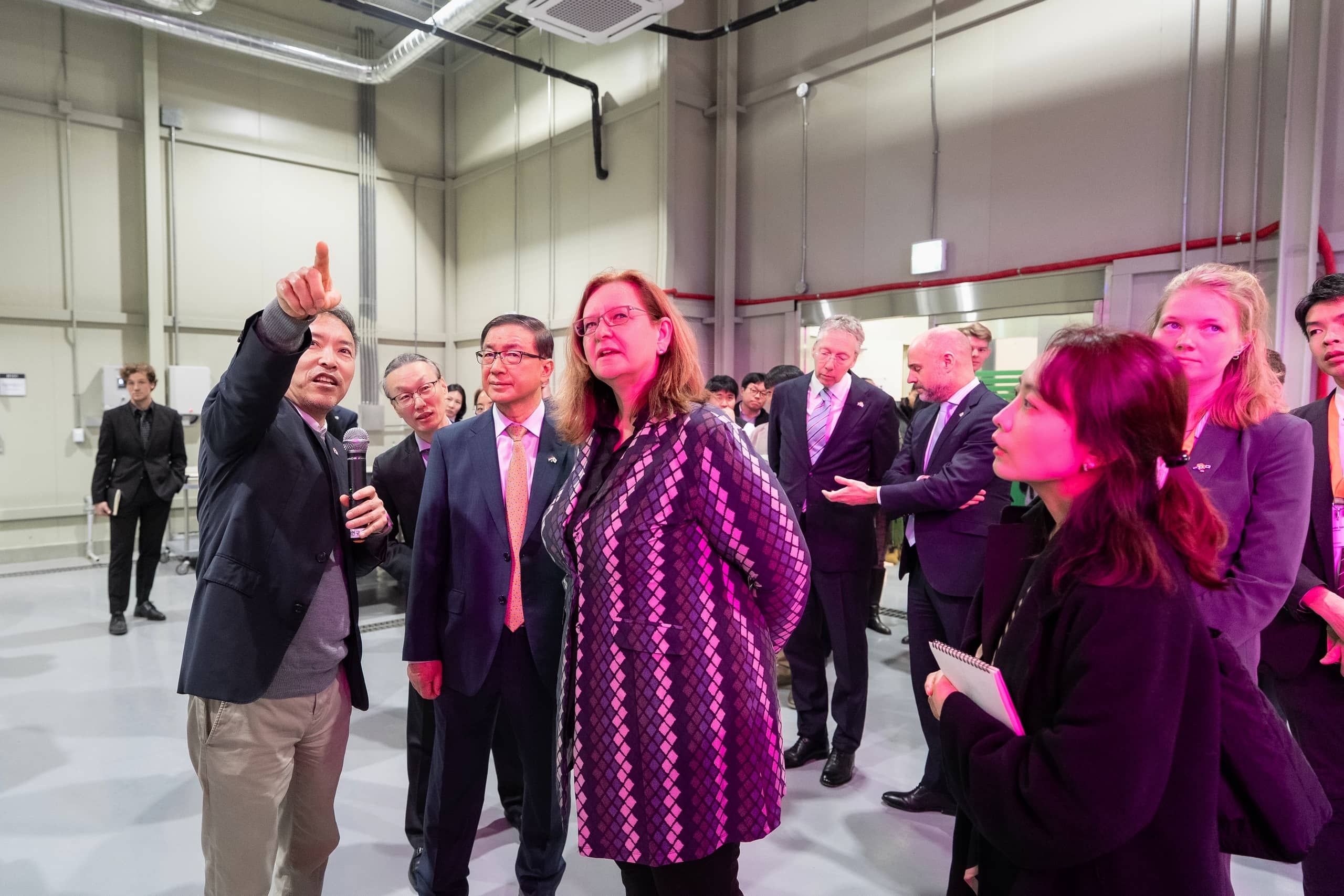
Minister Aukje de Vries visiting LG vertical farm at Yonam college
A Shared Vision for Smart Horticulture
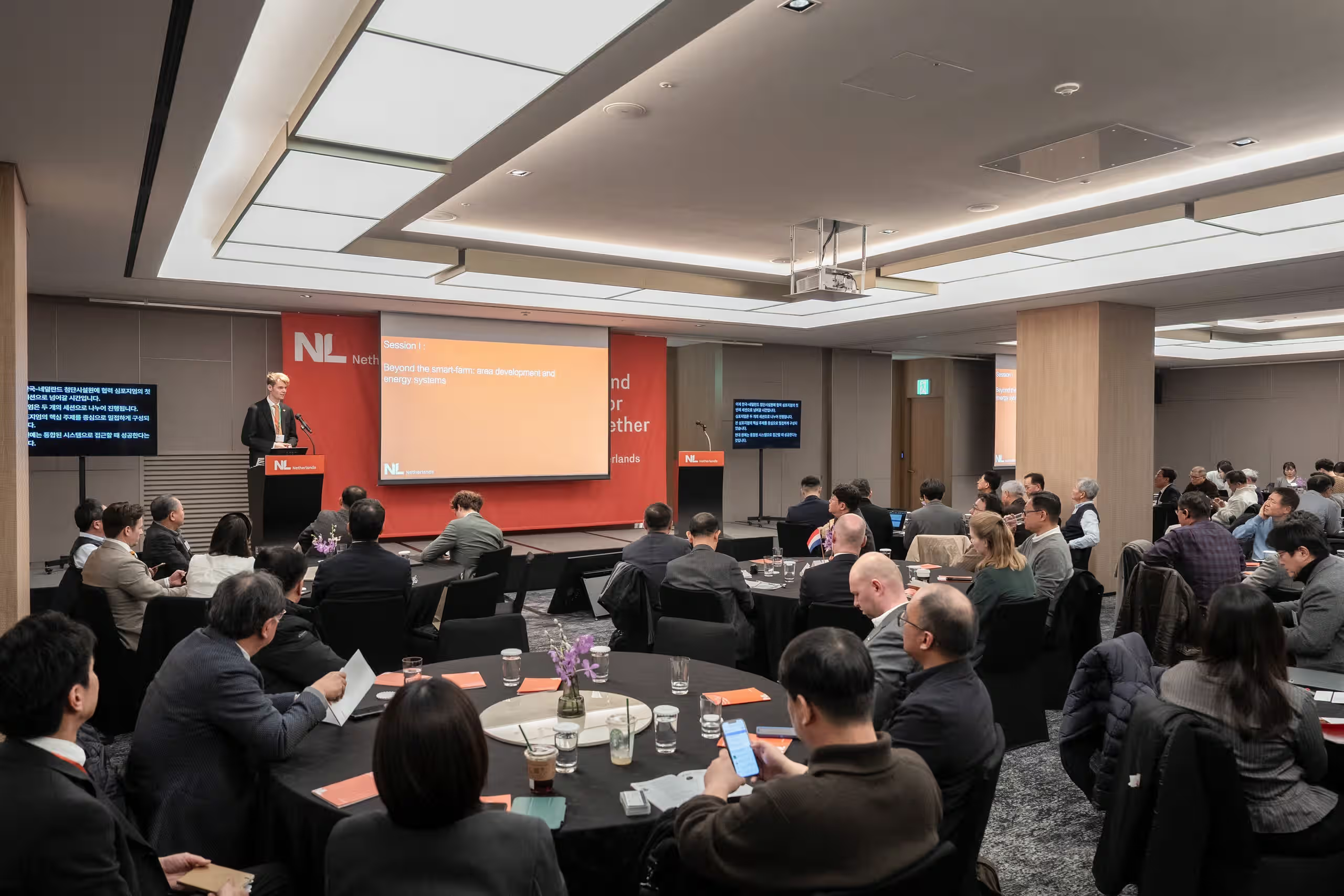
A central moment of the mission was the Netherlands-Korea High-tech Horticulture Cooperation Symposium organized by the Netherlands Embassy in South Korea. The event brought together Dutch delegates and Korean horticultural stakeholders to discuss collaboration and innovation strategies for the future of horticulture.
Speakers at the symposium highlighted the innovation ecosystems that underpin Dutch horticulture. Dense networks of growers, technology companies, research institutions, and public authorities operate according to the “triple helix” model, linking government, industry, and academia to drive innovation. Greenhouses in different regions (such as the Westland municipality) are connected to energy networks that supply waste heat and carbon dioxide from nearby industrial facilities, including those linked to the Port of Rotterdam. Farmers cooperate in building and financing shared infrastructure, helping distribute costs and reduce risks.
Education also plays a key role in sustaining the sector’s innovation capacity. Institutions such as Lentiz Education Group and Aeres train future horticulture professionals through programs closely connected to industry practice. Dutch technology providers such as Priva also presented how artificial intelligence and integrated data platforms are transforming agriculture into a highly data-driven sector.
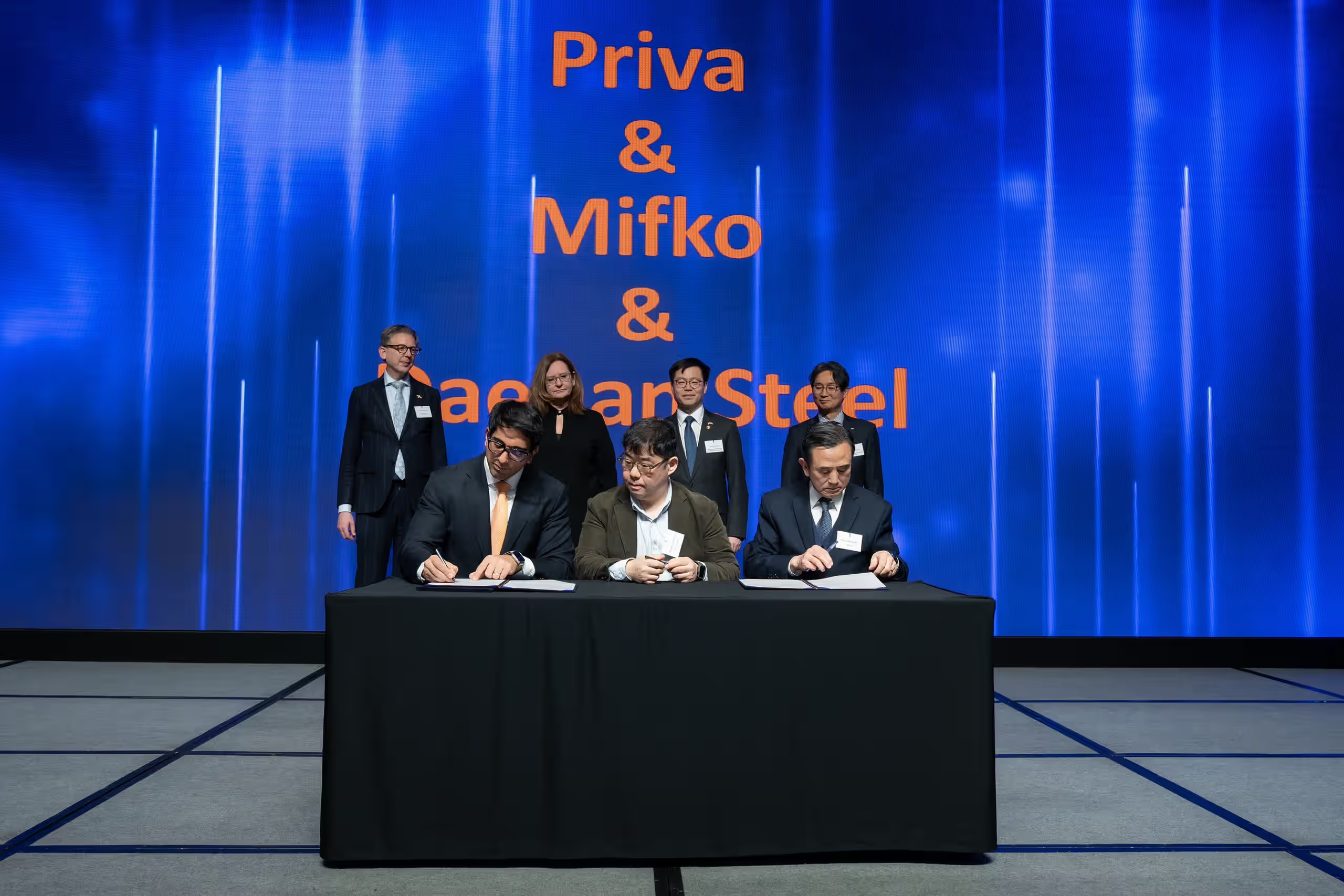
The Korean speakers mainly highlighted practical applications of smart-farm technology within Korea’s industrial and market context. The Daehan Steel company presented the Eco-Grid Dangjin project, which aims to power a large smart-farm cluster by reusing steel-plant waste heat, LNG regasification cold energy, and captured CO₂, demonstrating a circular energy model for greenhouse agriculture. LG Science Park focused on the economic viability of vertical farming, emphasizing improvements in energy efficiency and the importance of achieving competitive unit economics through AI-driven crop optimization and modular systems. Finally, KS Farm highlighted generational change in Korean agriculture, noting the rise of data-oriented young farmers who use smart-farm technology not only for production but also for marketing and consumer engagement.
The symposium highlighted how Korea’s ambitions, tech-drive and market dynamism can combine with the Netherlands’ greenhouse expertise and ecosystem approach to build a more energy-efficient, economically viable, and talent-driven future for smart horticulture.
Visiting Korea’s Smart Farming Pioneers
Beyond conferences and presentations, the delegation travelled across South Korea to observe the country’s rapidly evolving smart farming landscape.
One visit took the delegation to a paprika greenhouse operated by agricultural company Sunmate in Jincheon. The 2.5-hectare facility produces paprika for both domestic consumption and export markets and forms part of a regional agricultural export cluster. During the visit, members of the Dutch delegation praised the company’s strategy of maintaining year-round paprika production and expressed interest in exploring further cooperation. Local officials highlighted the region’s favorable conditions for smart agriculture, including abundant water resources and its central geographic location within South Korea.
Another highlight of the mission was a visit to a high-tech smart farm developed by SP Agri in Seosan. The facility operates as a large-scale “strawberry factory,” combining AI-based climate control, harvesting robots, automated packaging systems, and integrated cold-chain logistics to enable year-round strawberry production. The greenhouse environment is managed through advanced climate control systems from Priva together with artificial intelligence software from Blue Radix. These technologies allow temperature, humidity, and energy use to be optimized automatically, enabling near-autonomous operation of large greenhouse complexes.
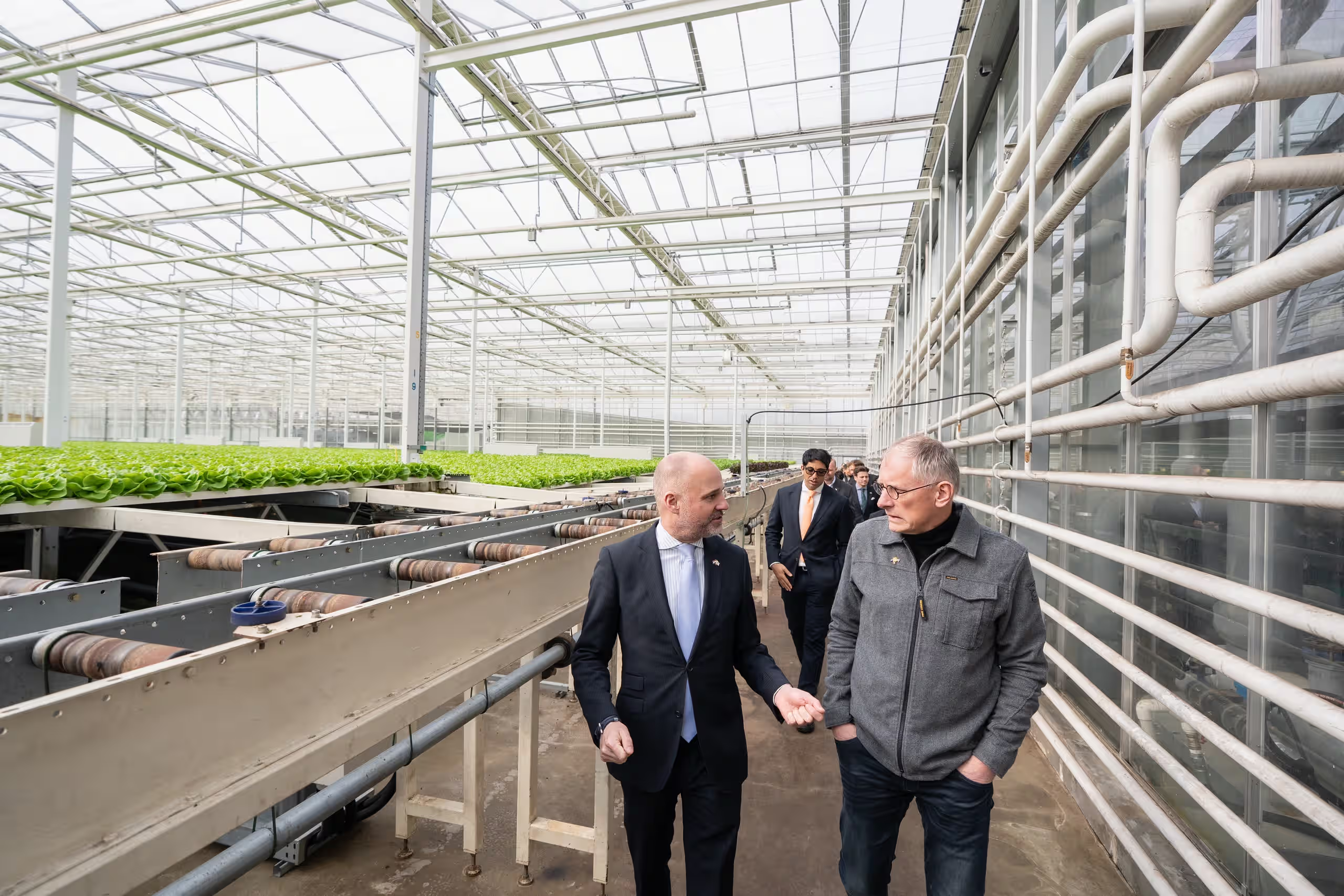
Essence Farm, a 2.5-hectare state-of-the-art greenhouse producing leafy vegetables, offered another glimpse of Korea’s evolving horticulture sector. Built turnkey by the Dutch builder Certhon, the facility integrates local technology for 100% electric heating and cooling. The project was financed by a non-agricultural investor, signaling growing interest from banks and private capital.
Education and the Future of Smart Agriculture
The delegation also visited the Green Tech Innovation Center at Yonam University. Opened in 2025, the center integrates vertical farming technologies with artificial intelligence and big-data-driven environmental control systems.
Serving as both a research platform and educational facility, the center aims to train the next generation of smart agriculture specialists. During the visit, Minister de Vries highlighted the importance of education and research partnerships in building resilient agricultural systems.
She noted that cooperation between Dutch horticulture companies and research institutions such as Wageningen University & Research and Korean partners demonstrates how advanced smart farming technologies can be successfully integrated into both research and education.
Building a Shared Ecosystem
Across the mission’s meetings and site visits, one message became clear: the future of horticulture depends not only on technology but also on building strong ecosystems that connect growers, technology providers, researchers, educators, and policymakers.
By combining the Netherlands’ long-standing expertise in greenhouse horticulture with South Korea’s rapidly advancing capabilities in artificial intelligence, robotics, and automation, both countries see significant opportunities to develop more resilient and sustainable food production systems.
For the Dutch delegation, the visit offered valuable insight into how quickly the Korean smart farming sector is evolving. At the same time, it reinforced the Netherlands’ role as a key partner in shaping the next generation of high-tech horticulture.
Join the 2026 KIEMSTA
Dutch companies that would like to follow up on this mission could consider to participate in the KIEMSTA expo, taking place in Daegu from 4 till 7 November. KIEMSTA is an international trade fair for agricultural machinery, equipment, science, and technology. Don’t hesitate to get in touch with the agriculture team of the embassy for more information through seo-lvvn@minbuza.nl.