
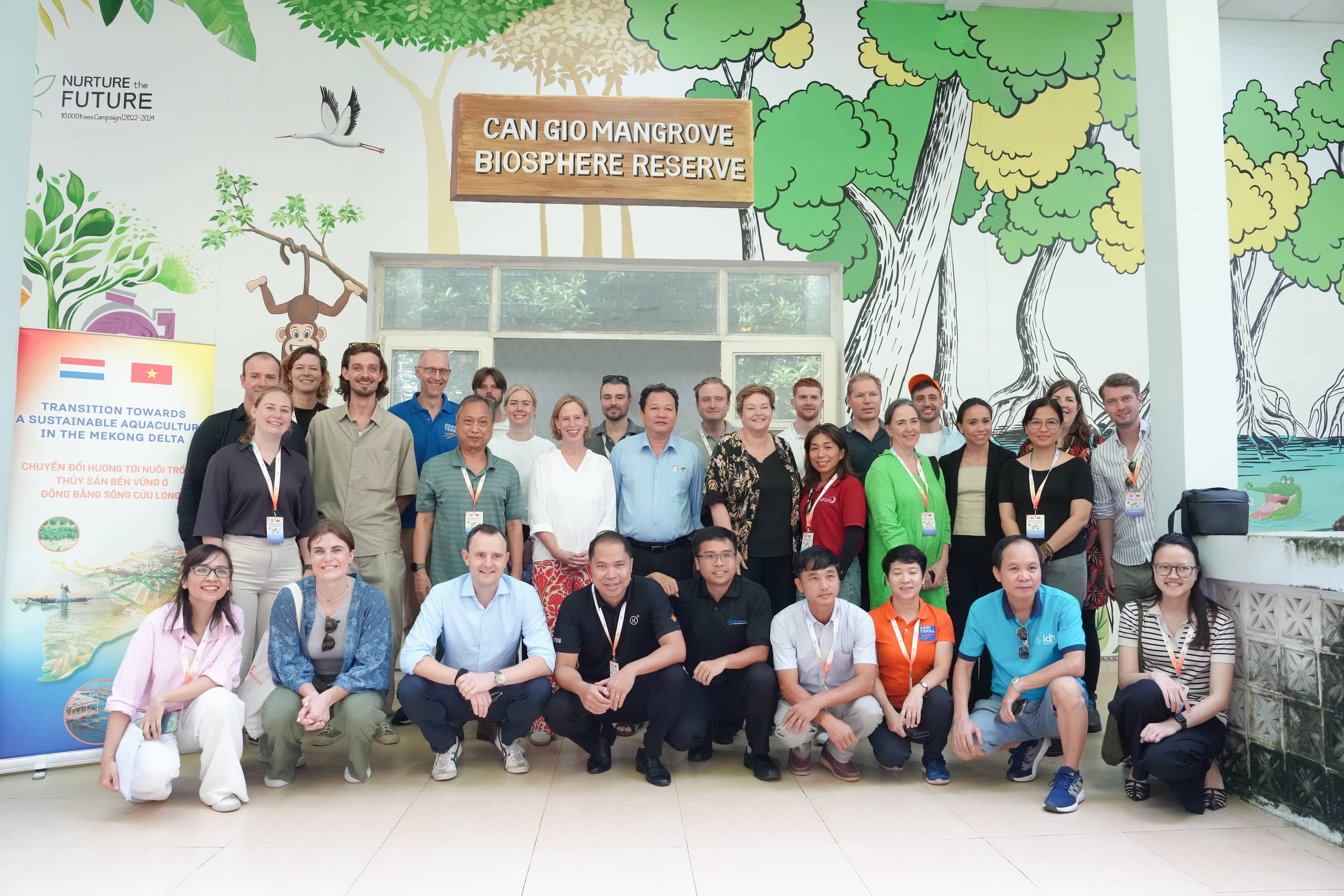
“The Netherlands has many projects related to water and aquaculture, including five focused specifically on mangroves,” said Ms. Ingrid Korving, Agricultural Counsellor at the Embassy of the Kingdom of the Netherlands in Vietnam, during a visit to the Can Gio Mangrove Biosphere Reserve in Ho Chi Minh City on November 13th, 2025.
Beeld: © EKN Hanoi
Dutch and Vietnamese partners of the Combi-Track at Can Gio Mangrove Biosphere Reserve in Ho Chi Minh City, Vietnam
The trip, organized by the Embassy of the Kingdom of the Netherlands, brought together Dutch and Vietnamese partners of the Combi-Track program – a collaboration between the Vietnamese and Dutch governments, as well as public and private stakeholders – that promote sustainable aquaculture in Vietnam.
Dutch-Vietnamese collaboration
“The Combi-Track partners work together on the sustainable development of aquaculture and mangroves are a part of the aquaculture environment. We wanted to make a visit to the mangroves so that people can see up close how it is important to preserve nature, and also how you can also work with nature in nature-based solutions where nature can be part of a solution”, explained Ms. Ingrid Korving.
She noted that the Netherlands, also a delta nation, understands the challenges of working with water and addressing the impacts of climate change. These shared conditions form the basis of the Dutch-Vietnamese collaboration. Vietnam and the Netherlands have two strategic partnerships signed on sustainable agriculture and food security as well on water management and climate change, all of which underpin the two delta countries’ collaboration.
Explaining how the Netherlands’ expertise could support mangrove preservation in Vietnam, Ms. Ingrid Korving noted that mangroves are part of nature, and the Dutch have experience working with natural systems to develop nature-based solutions.
“For example, in our coastal protection, we use sand as a natural barrier, and we also plant vegetation to strengthen our dikes and ensure coastal safety. We work with nature, though with different types of trees,” she said. “ We can also learn from Vietnam. We face similar challenges. The tree species may differ, but the impact can be very similar.”
Beeld: © EKN Hanoi
Mangrove preservation brings benefits
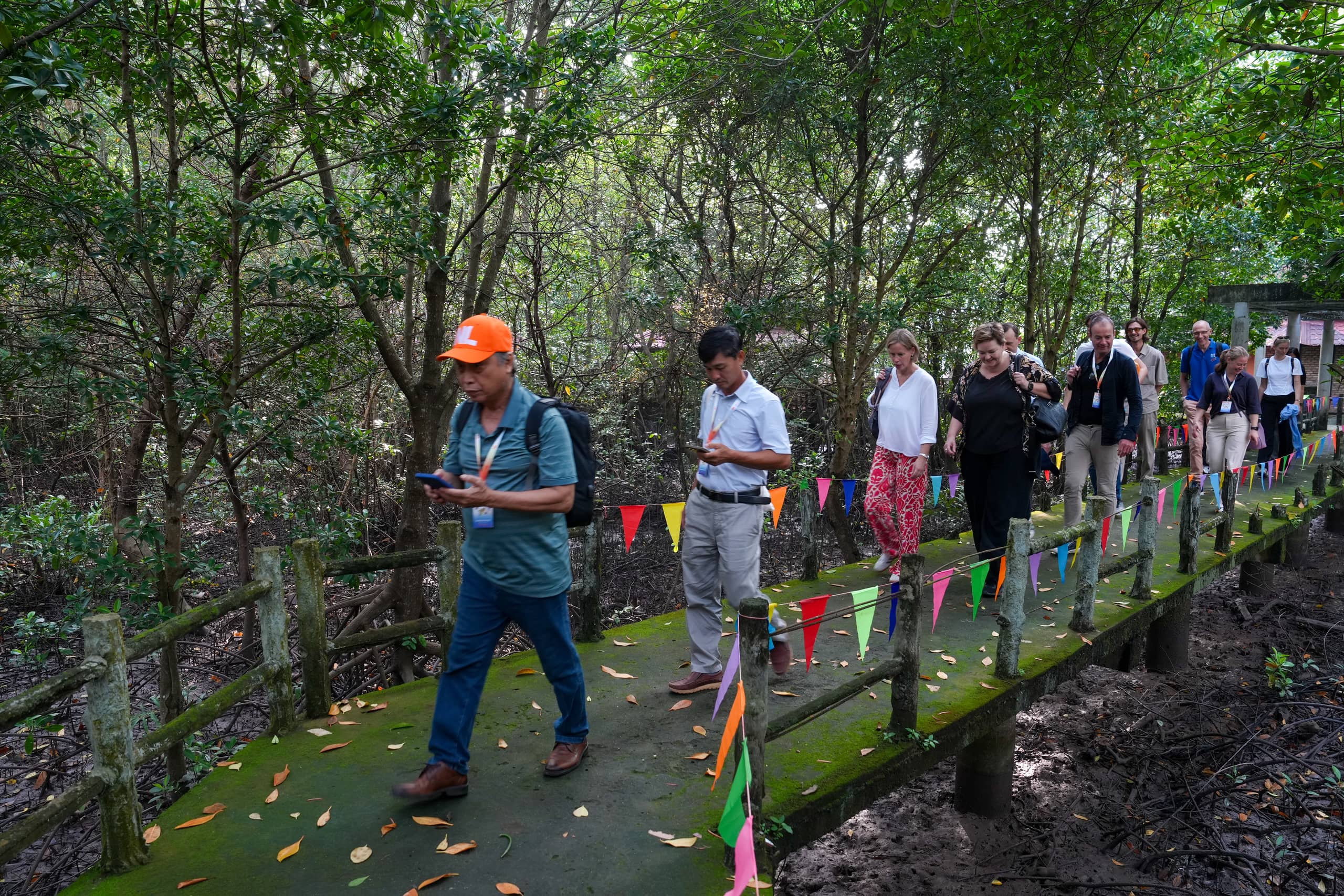
During the trip to the Can Gio Mangrove Biosphere Reserve, Dutch and Vietnamese aquaculture experts visited the reserve’s museum and met with its management board to gain a deeper understanding of the reserve’s history and formation, its unique forest structure, and rich biodiversity.
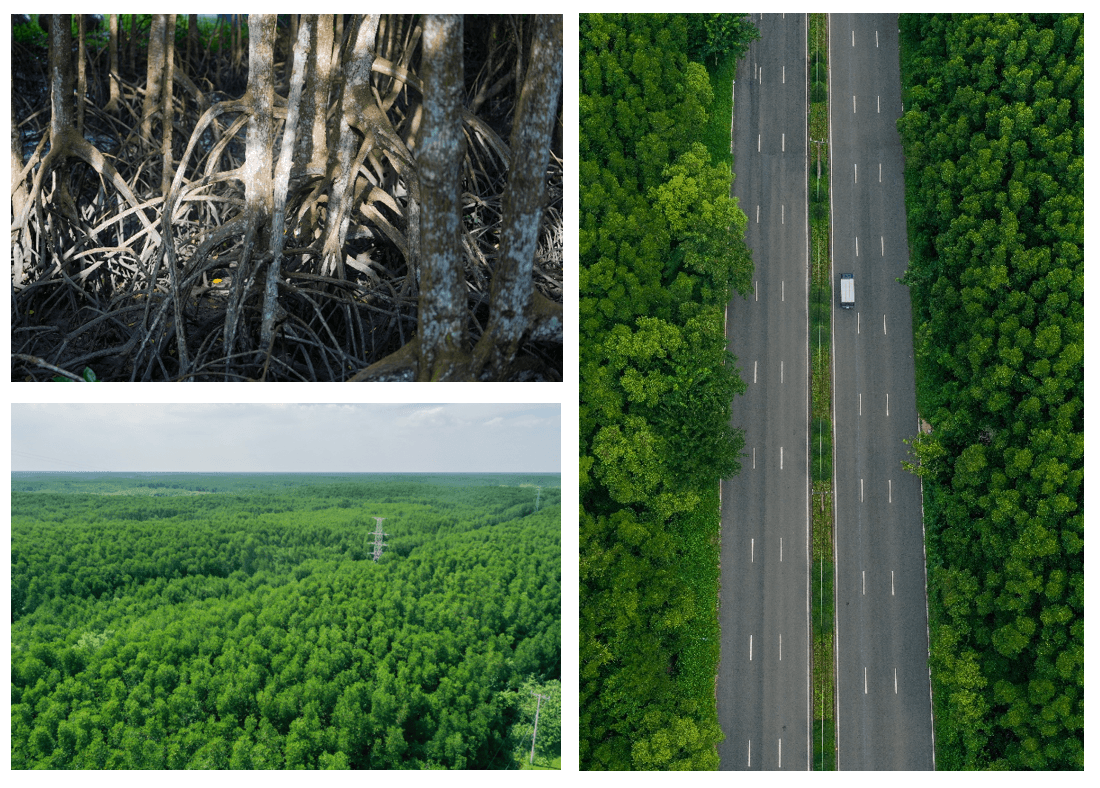
Vietnam’s first UNESCO-recognized biosphere reserve, the Can Gio Mangrove Biosphere Reserve was designated in 2000. Situated in the lower reaches of the Dong Nai River in southeastern Ho Chi Minh City, the reserve spans a total of 75,740 hectares. It is organized into core, buffer, and transition zones and includes three wildlife conservation areas specifically dedicated to the protection of birds, bats, and monkeys.
Beeld: © EKN Hanoi
Nature's beauty at Can Gio Mangrove Biosphere Reserve
Mr. Huynh Duc Hoan, director of the Ho Chi Minh City Special-use and Protection Forest Management Board and deputy head of the Can Gio Mangrove Biosphere Reserve, said that the Can Gio mangroves were completely destroyed during the war. Restoration efforts began in 1978, and today the mangrove forest covers 35,000 hectares. In the 20 years leading up to the reserve’s UNESCO recognition, nearly 2,000 hectares were reforested annually, despite the significant challenges faced by a country still recovering from the war at the time, Mr. Hoan said.
The restoration of the Can Gio mangrove forest has delivered numerous benefits, including providing food and livelihoods, supporting local tourism, serving as spawning grounds and shelters for aquaculture, acting as a blue carbon sink, and offering vital natural protection against natural disasters such as tsunamis.
Encourage youth to protect mangrove
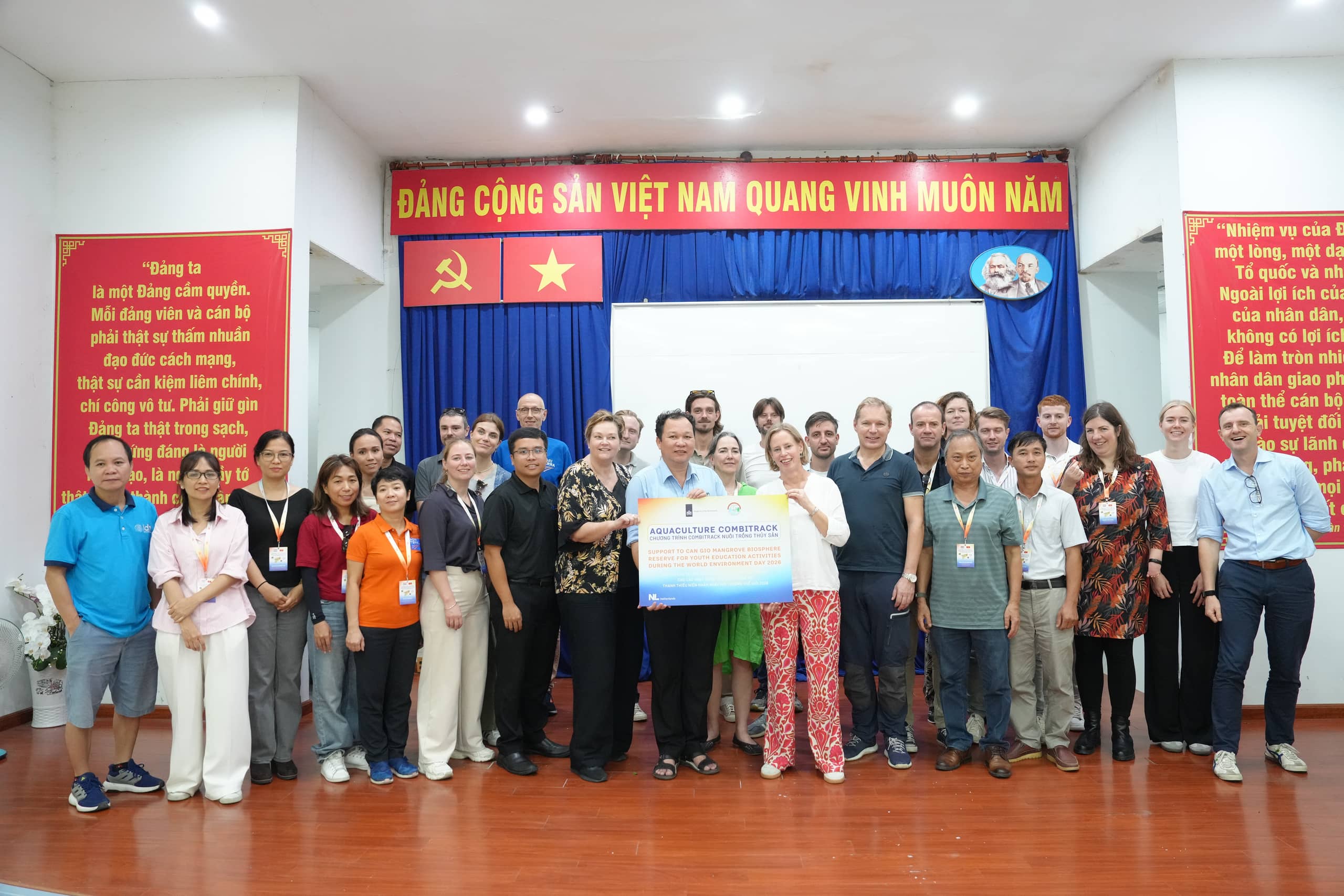
At the visit, the Combi-Track program presented a ceremonial handover to the Can Gio Mangrove Biosphere Reserve, representing support in the form of equipment and materials for youth education initiatives at the upcoming World Environment Day 2026.
During its operation, the management board of the Can Gio Mangrove Biosphere Reserve has prioritized raising environmental awareness among students and promoting women’s engagement in climate action. The Can Gio Mangrove Biosphere Reserve museum also showcases numerous paintings by local students, all created with environmental themes.
Beeld: © EKN Hanoi
Handover ceremony between Combitrack partners and Can Gio Mangrove Biosphere Reserve Management Board
Turning farm wastewater into a resource
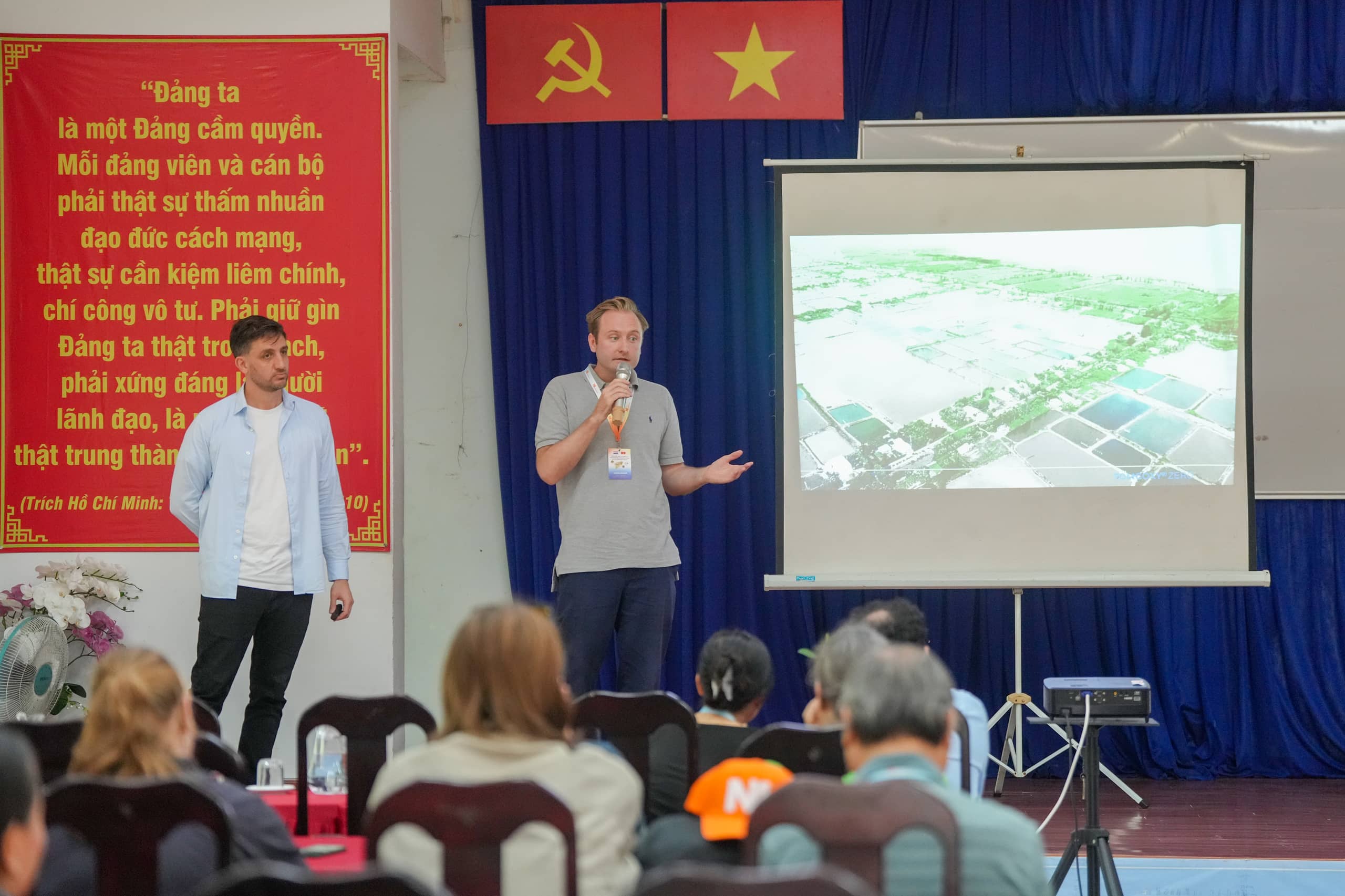
The visiting delegation brought together representatives from Larive International, Van Oord Ocean Health, and RYNAN Technologies Vietnam, who contributed to the discussion on mangrove restoration by presenting TomGoxy Zero. This innovative system combines mangrove restoration with super-intensive vannamei shrimp farming.
A new project under the Combi-Track program, TomGoxy Zero provides a paradigm shift: "Revolutionize shrimp farming through innovative integration of mangrove restoration and sustainable aquaculture". The project, which is piloting a site in Tra Vinh Province (now Vinh Long Province), aims to demonstrate a profitable shrimp farming model that serves as a blueprint for global implementation, demonstrating how environmental regeneration and commercial aquaculture can thrive together.
The project was developed in response to the challenges of traditional shrimp farming, where nutrient-rich wastewater is often discharged untreated. This practice degrades water quality and contributes to coastal degradation. Rising sea levels have further increased shrimp mortality rates in Vietnam, reduced farmers’ profits and jeopardized the country’s competitive advantage in the market. By integrating mangroves into aquaculture farm design, wastewater can be transformed into a resource, with mangroves naturally filtering and processing excess nutrients.
Beeld: © EKN Hanoi
New project "Tomgoxy Zero"
TomGoxy Zero’s key environmental highlights include zero nutrient loading from effluents into waterways, restored mangrove ecosystems supporting biodiversity, enhanced coastal protection, and active carbon sequestration to combat climate change. “The ‘TomGoxy’ name reflects the innovative approach to shrimp farming, while ‘Zero’ signifies net-zero shrimp farming and also represents zero effluents in the wastewater,” explained Mr. Rogier Becker, senior project manager at Larive International.
Each TomGoxy Zero partner contributes their unique expertise to make the project possible. RYNAN Technologies Vietnam provides the TomGoxy farming technology along with farm system expertise in design, construction, and operations. Van Oord Ocean Health brings expertise in mangrove restoration, ecological monitoring systems, and carbon markets. Meanwhile, Larive International supports project development, structuring, management, and scaling to new markets.
Contact information
Do you have any questions for the Agriculture Department at the Netherlands Embassy in Vietnam? If so, please send an email to HAN-LVVN@minbuza.nl or HCM-LVVN@minbuza.nl. For the latest updates, news, funding opportunities and more, follow our LinkedIn: Netherlands Agricultural Network in Vietnam.