
This article provides an overview of Sweden's forestry sector and challenges, as an important part of the nation's economy, culture, and nature. The topic intersects with biodiversity, climate, and EU-policies.
Sweden is one of the most forested country in the European Union. Forests cover almost two-thirds of land and are vital to the livelihoods of many Swedes. The forest industry alone employs around 115.000 people and contributes significantly to the economy (anywhere between 2-3% and 9-12% of GDP, depending on the source).
Forests are also key reason many Dutch citizens are drawn to visit—or even move to—Sweden. The tourism sector (representing 7% of GDP) benefits largely from Sweden’s image as a country with lots of forests and nature attracting many domestic and international tourists.
For Swedes, forests are more than an economic asset. They are a way of life. Many Swedes own cottages in the forest, where they retreat to connect with nature. Nearly half of Sweden's forests are privately owned, with owners often combining agriculture and forestry. A common philosophy among these owners is the belief in generational responsibility: to leave the forests in better condition for future generations than when they were inherited.
Carbon sinks: trees can help the climate
Forests provide many climate benefits. Trees act as carbon sinks, absorbing more greenhouse gases than they emit, and can also biomass for the bioeconomy. Examples are paper for packaging and materials for houses. Timber can be important to reduce society's dependence on fossil fuels as a biofuel. They are central to achieving the EU’s climate goals.
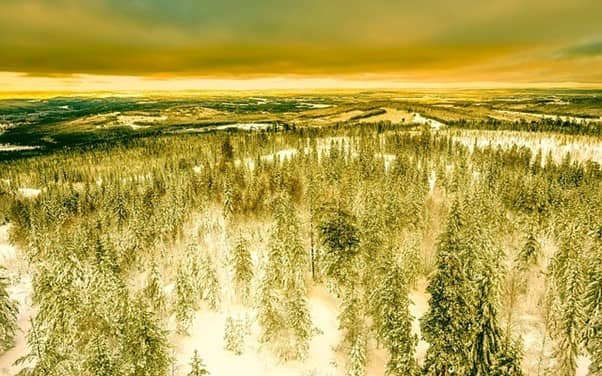
One of the EU climate goals related to forests is the LULUCF (Land Use, Land-Use Change, and Forestry) regulation (see more in BOX 1). The regulation sets targets for how much carbon dioxide forests and land must store, with specific requirements for each member state. While other land use also contributes to carbon uptake and emissions, forests covering 58% of Sweden's land area, account for the largest share of net carbon absorption
The EU's climate policy is divided into three main parts
1. Emissions Trading System (EU-ETS):
This regulates emissions from industries across the EU, allowing countries to trade emission allowances without national restrictions. Each country is allocated a set number of allowances, which can be auctioned.
2. Effort Sharing Regulation (ESR):
This governs emissions outside the EU-ETS, such as transport, agriculture, and machinery. In Sweden, the focus is on reducing emissions from transport and machinery, as cutting agricultural emissions often means reducing livestock—a sensitive issue.
3. Forests and Land (LULUCF):
This regulates how much carbon dioxide is stored in forests and land. Each EU country has specific targets, with Sweden facing ambitious goals to enhance carbon storage.
The ESR and LULUCF regulations have flexibilities, meaning that if Sweden does not reach the LULUCF goal with, say, 10 million tons of CO2, the allowable emission space for the transport sector (ESR) will decrease by the same amount.
Sweden’s first LULUCF commitment spans from 2021 to 2025, during which the land-use sector must achieve zero net emissions. The baseline for measuring forest carbon storage—called the forest reference level—is based on forest management practices from 2000 to 2009.
Beeld: © Pixabay
Agriculture’s role in carbon storage
Agriculture can also contribute to CO₂ storage in soils and vegetation through measures like sustainable soil management and increasing organic matter in the soil.
Read more about agriculture’s role as a carbon sink in our next article.
Biodiversity: ecosystems for reindeers and services for livelihoods
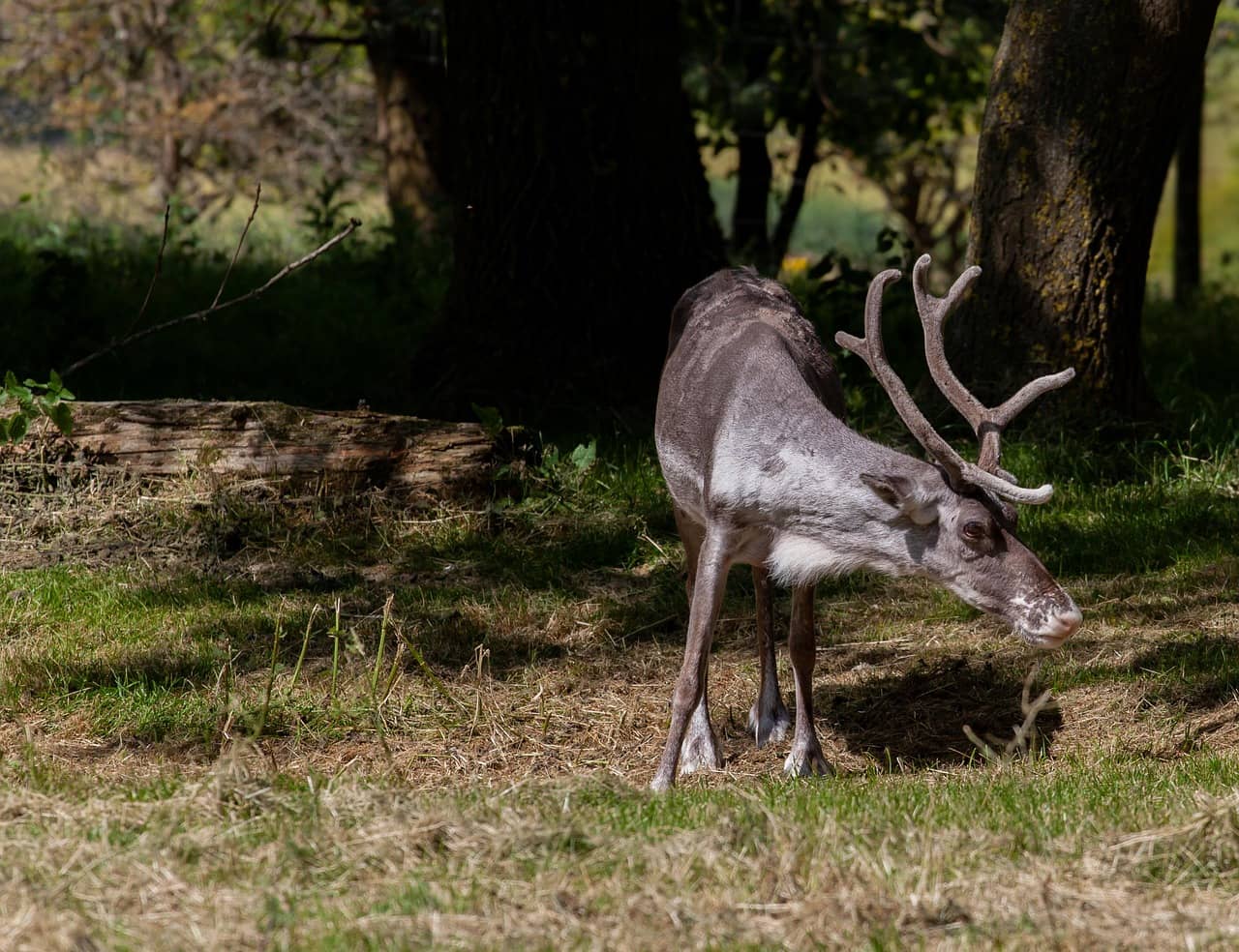
Forests are home to countless plant and animal species. For example, the reindeer relies on certain mosses for browsing. Ants are also very important in the forest ecosystem; they redistribute plant material and act as pollinators when they collect seeds.
When species are abundant, a forest is high in biodiversity. Biodiversity enhances the resilience of forests, making them and livelihoods around them better equipped to withstand climate extremes. For instance, healthy forests are more effective at preventing avalanches and floods. Beyond these protective benefits, forests also support recreation, ecotourism, wild berry harvesting, and sustainable wood production.
As part of the EU, Sweden must fulfill various international biodiversity commitments. The EU’s Nature Restoration Law aims to restore damaged ecosystems by 2050, with ambitious goals for forests, wetlands, grasslands, and ecosystem connectivity. The EU Birds and Habitat Directives (Nature Directives) focus on preserving protected species and habitats through monitoring and management. Additionally, the EU Sustainable Taxonomy and Corporate Sustainability Due Diligence Directive (CSRDDD) promote sustainable investments, prioritizing biodiversity protection and restoration.
Beeld: © Pixabay
Will Sweden reach the EU climate goals?
The potential of forests to store carbon is decreasing.
Over the past decade, Sweden's uptake of greenhouse gases by forests and land has steadily declined. In 2015, Sweden had a carbon sink of -55 million tons of CO2 equivalents. The latest statistics from 2023 show a decrease to -31 million tons. In 2030, Sweden must have reached -49 million tons per year.
One major factor is increased logging. Another is the outbreak of the spruce bark beetle. The outbreak began during the exceptionally hot summer of 2018 and destroyed a large number of trees. The full impact of this is only now becoming apparent in the data.
Additionally, trees themselves seem to be growing more slowly. While the exact cause remains uncertain, researchers suspect drought and soil water shortages. When air becomes drier, trees essentially go dormant.
To reach the LULUCF goals If Sweden fails to meet EU carbon storage targets for forests and soils, it risks fines or will need to offset emissions elsewhere. This could include stricter reductions in the transport sector, potentially leading to higher fuel prices for Swedish citizens.
Biodiversity in forests is also decreasing.
Currently, 9.2% of forest land is formally protected and 4.8% voluntarily set aside by forest owners, adding up to 14% protected forest land. But, there is also 10.9% unproductive forest land that is not being logged.
To protect forests, forest owners' associations assist owners in creating sustainable management plans and regulating forest activities. For example, 5% of a property must consist of protected forest with conservation interventions. Additionally, owners have the option to pursue double certification, ensuring high environmental and sustainability standards.
However, a 2023 report by the Swedish Forest Agency (Skogsstyrelsen) reveals declining biodiversity trends. Under the EU Habitat Directive, 13 out of 15 forest habitat types are in poor condition. Nearly 2,000 forest species are endangered.
To illustrate, the non-native North American Contorta pine was widely planted in Sweden 50 years ago. In these monoculture areas, both reindeers and ants are rarely found.
In Sweden, 1% of productive forests is cut down annually. Clear-cutting, the practice in which all the trees in a given areas are felled at once, is very efficient and used on 97% of managed forest areas. A study by Swedish University of Agricultural Sciences found that 394 species suffer from clear-cutting. Six species have gone extinct since the 1950s due to forestry practices.
A 2021 ruling by the European Court of Justice determined that Sweden had not adequately considered species protected by the EU Nature Directives. The Swedish Forest Agency’s report concluded that Sweden would need to do more to reach national and international biodiversity goals.
Polarized debate: Industry vs. environmental and indigenous groups
The forestry industry advocates for forestry as a sustainable practice. Active forestry can be a win-win situation: economic returns and employment, combined with significant climate benefits.
Sweden's forest industry is among the most efficient in the world. Despite being a labor-intensive sector, Sweden remains highly competitive thanks to cutting-edge innovation and advanced, highly mechanized management techniques.
According to the Swedish Forest Industry (Skogsindustrierna), for every tree cut, two are replanted. This ensures country’s forest landscape as a whole continues to grow steadily and contributes to carbon storage. Forests are most effective at absorbing carbon during their growth phases, with middle-aged forests storing roughly twice as much carbon as old forests. Active forestry has increased the carbon stock in both trees and soil by 170 tons of carbon dioxide per Swedish citizen since 1990.
The Swedish Forest Industry stresses the need to balance the EU Nature Restoration Law with other societal priorities. They argue that the legislation should not overly restrict forest use. Renewable materials are critical for achieving climate goals, ensuring energy security, and maintaining strategic autonomy. Additionally, they express concerns about the restoration reference levels, which are based on pre-industrial conditions. These conditions represent a period when Sweden was far from its current prosperity. Therefore, according to the industry, reverting forests to such conditions is neither practical nor desirable.
Environmental groups are raising concerns over Sweden’s efficient forestry practices, which they argue harm biodiversity, water quality, and climate stability.
Environmental groups criticize intensification of forestry and its associated widespread clear-cutting threaten Sweden’s ability to meet its LULUCF climate goals. Clear-cut areas, they point out, can take a decade to become effective carbon sinks again. Growing trees absorb carbon dioxide, but old-growth and boreal forests store much more carbon, primarily in the soil, while also supporting rich biodiversity. With these forests covering just 10-15% of Sweden’s total forest area, their protection seems essential for fighting climate change.
Another topic of concern are monocultures. Natural forests are replaced by plantations of fast-growing trees, fragmenting habitats for threatened and sensitive species. Environmental groups accuse the forestry industry of prioritizing large volumes of cheap pulpwood and timber over long-term environmental health. They argue this focus on maximizing yields disregards ecological consequences and the well-being of seasonal laborers. Instead, they call for a shift to “closer to nature” practices, like selective logging and continuous-cover forestry, to strike a better balance between profits and ecological needs.
They also highlight gaps in Sweden's liberal forest laws. With limited mature plantation wood and high demand, some forest owners’ resort to harvesting old-growth forests. Forest owners’ associations face challenges enforcing sustainability, struggling with resources and capacity to advise owners, protect forests, and monitor compliance. Conflicts of interest further complicate matters, as strict enforcement risks driving members to competitors.
The indigenous Sámi rely on forests for reindeer husbandry and traditional livelihoods. They say clear-cutting poses a threat to their livelihoods. Beard lichen, a crucial winter food for reindeer, is disappearing due to logging. The loss of old spruce forests also reduces natural shelter for reindeer, leaving them more vulnerable to heat and insects.
A logical next step is for the government to step in, who has the responsibility to balance the interests of all stakeholders. The government sets forest policy and enforces environmental regulation.
Beeld: © Pixabay
What is Sweden doing?
In August 2022, the Miljömålsberedningen (MMB), representing all parliamentary parties and expert bodies, was tasked with proposing strategies for meeting EU biodiversity and LULUCF goals. After two years of debate and an extended deadline due to disagreements, the final report is set to be released on February 14, 2025.
The MMB is exploring solutions such as:
- Extending tree rotation periods to let forests grow longer before harvesting
- Protecting old-growth and natural forests
- Restoring wetlands
- Practices to reduce harm to wild animals
- Compensating landowners for fertilizing forests with nitrogen to boost growth
The MMB has received a scientific basis which references a Lund University report and an analysis by the Swedish Forest Agency analysis on forests' climate benefits. Both suggest longer rotation periods, reduced logging, and prioritizing long-lasting wood products to boost carbon storage. Short-lived wood products like pulp currently account for 80% of forest biomass use. The Swedish Forest Agency emphasizes that cutting less is the only way to significantly increase carbon storage in both the short (30 years) and long (80-100 years) term.
Political divide in the Miljömålsberedningen
Members of the Tidö parties, the government coalition, oppose a general ban on logging in natural or old-growth forests, arguing that "the government must safeguard the competitiveness of the forestry sector." They also reject proposals for longer rotation periods and funding logging notifications through compensation.
Instead, they propose a compensation system for submitting objections to logging notifications. They believe the regulation should be revised or even abolished. It could drive up timber prices and fail to adequately consider the climate benefits of forest products and bioenergy.
The Social Democrats (S) propose increasing the minimum age for tree felling by 30%. This would reduce logging in the near future. Their plan also includes measures for transition support for foresters adopting methods that do not involve cutting trees.
But S also does not aim to shrink the Swedish forestry sector. Instead, they suggest using flexibility within EU climate policy, allowing the transport sector to compensate for carbon storage losses in forests. This could involve a separate emissions trading system that raises fuel prices to fill the gap. The opposition emphasizes that meeting EU climate goals is vital for Sweden's credibility.
The Swedish government, alongside Finland, is pushing the EU for a more flexible interpretation of the LULUCF regulation. They argue that natural factors like drought, pests, and accounting uncertainties need more consideration.
Climate Minister Romina Pourmokhtari clarified that these talks are not about reducing Sweden’s obligations. "There is no discussion about reducing requirements, but we want to ensure the LULUCF rules are interpreted correctly, clearly, and feasibly," she said.
Sweden is urging the European Commission to set "realistic expectations" for the forestry sector, focusing on reducing emissions from fossil fuels instead of relying on uncertain carbon sinks in forests.
In its 2025 budget letter, the Swedish government has tasked the Swedish Forest Agency with promoting sustainable forest fertilization next year. The agency must propose the annual area to be fertilized and assess how quickly this can be scaled up. They are also required to suggest economic instruments and report on the potential effects on biodiversity, ecosystem services, and Sweden’s EU LULUCF commitments.
Two and a half years ago, the Swedish University of Agricultural Sciences (SLU) was given a similar task. When SLU presented their findings in May 2023, they advised against increasing forest fertilization. The SLU report warned that the practice could negatively impact biodiversity by altering species composition as soil fertility rises due to fertilization.
Sweden aims to revise its reference levels to make its LULUCF goals more achievable. The country’s future success will depend heavily on measurement methods.
Finland, with similar forest coverage, found that forests stored much less greenhouse gas during the 2000-2009 period than previously thought. As a result, Finland’s total carbon requirements for 2021-2025 were reduced by 40 million tons—roughly the same as Sweden’s total annual emissions. Even small changes in forest growth rates could have big impacts on Sweden’s carbon absorption and its standing within the EU.
In December 2024, the Swedish University of Agricultural Sciences (SLU), the Swedish Environmental Protection Agency, and the Swedish Forest Agency were tasked with proposing adjustments to Sweden’s reference level. Authorities have four months to submit their plan, with revised calculations due by 2027.
What’s next for Swedish forestry?
The future likely lies in finding a middle ground.
Swedish forestry will likely not scale back down in the near future. While awareness of its environmental impact is growing, the sector’s economic importance and the current government’s position make drastic changes unlikely.
Instead, the focus could shift to improving growth methods, such as sustainable fertilization, balancing native and exotic species, and leveraging advanced techniques like selective breeding or CRISPR for faster-growing trees.
EU regulations could support by integrating the argument of strategic autonomy into forestry, while standardized certification systems across the EU could help ensure a level playing field.
Combined with step-by-step implementation of longer rotations, reduced clear-cutting, and protecting old-growth forests, this combination could offer long-term benefits for biodiversity, sustainability, and economic viability.
More information
This article was written by Aimee Chan with input from Roberto Stelstra of EUSTAFOR.
February 2025