
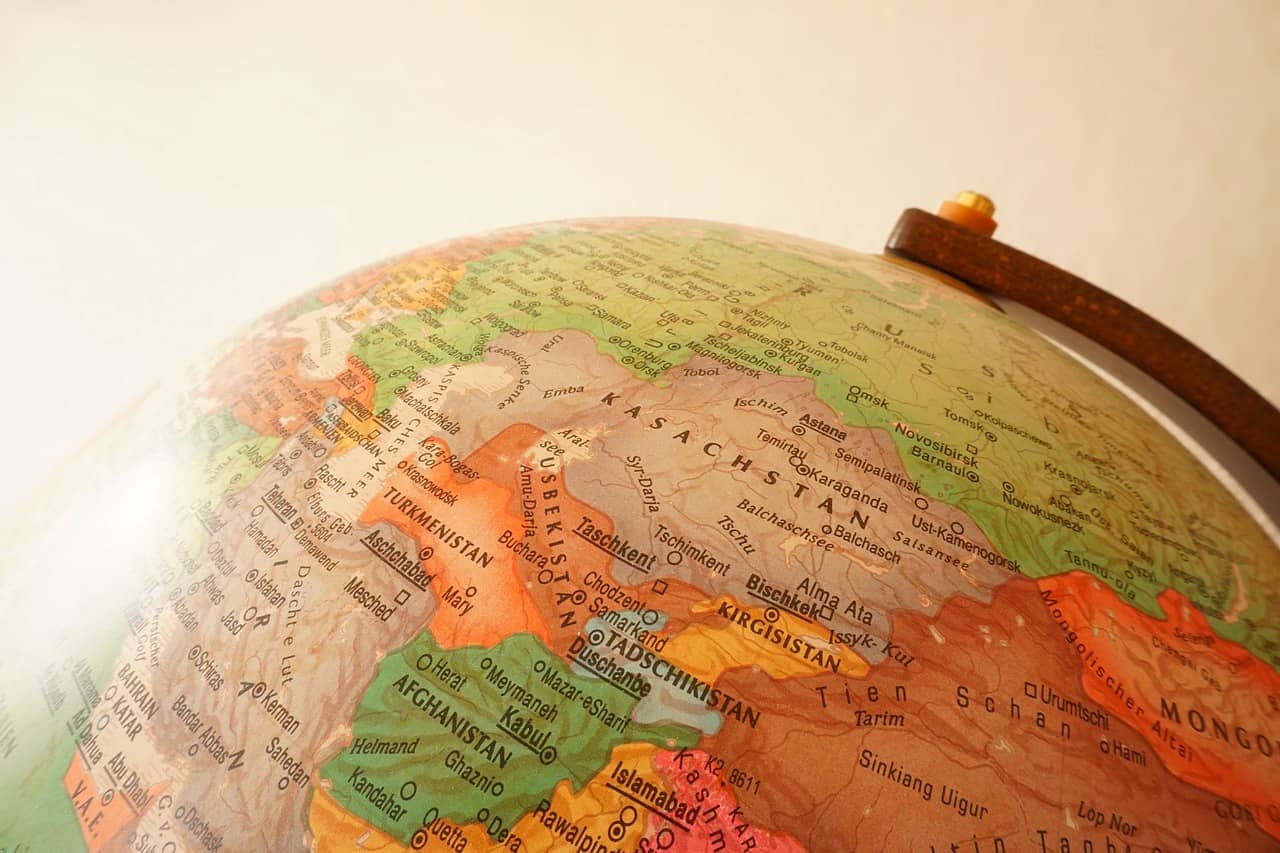
This month edition is highlighting Kazakhstan’s drive toward efficiency, technology and global influence, Uzbekistan’s tax reforms designed to bring farming out of the shadow economy and Kyrgyzstan’s targeted incentives for agribusiness. Regional leaders are also raising alarm on looming environmental challenges, with the Caspian Sea crisis moving to the top of the agenda.
Illustrative
Kazakhstan: Agriculture as Multiplier for Entire Economy
Kazakhstan is putting agriculture at the heart of its national strategy. The country is reforming its land and subsidy system, scaling up technology and processing and positioning itself as a neutral, reliable food supplier across Eurasia.
KZ flag
- A record one trillion tenge has been allocated for the agricultural sector this year, but reforms stress results over spending.
- Land policy is going digital, with 13.7 million hectares reclaimed since 2022 and a national online land map due in 2025 to ensure transparency and investor confidence.
- Digital tools, AI, and satellite monitoring are already raising yields by up to 30%, while 1.7 billion euro in new processing projects target higher-value exports. Oilseeds, meat and processed foods are seen as the next growth drivers, with potential to triple exports within a decade.
- At the same time, Kazakhstan is building a role in “food diplomacy.” As one of the top-10 wheat exporter, it is positioning itself as a neutral, reliable partner across Central Asia, the Middle East and China.
- Challenges such as limited port capacity, high Trans-Caspian transport costs and climate risks remain, but investments in infrastructure and insurance are underway. Agriculture is now framed as both a strategic sector and a diplomatic tool, making Kazakhstan a country to watch in the new era where food is the new oil.
Kyrgyzstan: Targeted Tax Incentives
Kyrgyzstan is targeting niche sectors like floriculture with new tax incentives.

- As of August 25, 2025 imports of tulip bulbs, tubers, corms, and rhizomes (HS code 0601103000) are exempt from VAT.
- The measure is part of broader efforts to support domestic producers, improve business conditions and expand floriculture.
Uzbekistan: from Shadow Economy to Transparency
Uzbekistan is reshaping its tax system, aiming for more transparency and industrial-scale agribusiness.
UZ flag
- From January 2026 Uzbekistan will reduce VAT on farm product sales from 12% to 0%, excluding cotton and grain.
- Farmers will still receive VAT refunds on seeds, fertilizers, fuel, transport, and electricity. Combined, the reforms will leave them with an extra 48.4 million euro annually.
- President Shavkat Mirziyoyev stressed the goal of pulling the agricultural sector out of the shadow economy, where large volumes of production remain unrecorded.
- The reforms, designed with IMF and international experts, aim to encourage transparency, strengthen supply chains, and foster large-scale plantations and modern processing enterprises.
Central Asia Spotlight: Caspian Sea Crisis
Environmental challenges in Central Asia are emerging as a defining issue for long-term food security and regional cooperation.
- President Kassym-Jomart Tokayev warned the Caspian Sea’s falling water levels are nearing an ecological catastrophe.

- He proposed creating a Water Issues Analysis Center in Astana under the Shanghai Cooperation Organization (SCO) and announced a Regional Environmental Summit in partnership with the UN in April 2026.
- The Caspian’s decline has been ongoing since the 1990s, with water levels now at historic lows.
LVVN team Astana will bring you more updates and developments from this significant region in the next edition!
Sources: Kazinform, Delovoy Kazakhstan, uzdaily.uz, Interfax, tazabek.kg