
In July edition we bring updates on Kazakhstan moving forward on its ambitions - food self-sufficiency and climate-resilient agriculture. While progress is visible in irrigation, dairy import dependency remains a priority. Uzbekistan, meanwhile, steps onto the global stage through FAO membership and goes ahead with seed certification reforms. Kyrgyzstan’s potato sector sees results from international collaboration in high-altitude trials.
Illustrative
Dairy Matters
Kazakhstan remains 25% dependent on imported dairy. In 2024, local production reached 2.23 million tons, while consumption stood at 2.73 million. Imports filled the gap, particularly in milk powder (80% of demand), condensed milk (68%), and cheese/cottage cheese (48%).
Plans are in motion to close this gap by 2027. Since 2019, 69 modern dairy farms have been commissioned and another 47 are in development. Once all 116 are operational, milk output is expected to rise by 600,000 tons annually.
Historic overreporting in milk statistics has been addressed and national figures adjusted significantly.
Irrigation Expansion Plans
Kazakhstan is planning to nearly triple its use of water-saving irrigation systems, from 470,100 hectares in 2024 to 1.3 million hectares by 2030. Subsidy levels for water-saving tech and well drilling have been raised to 80% as part of the national water conservation strategy.
The government is preparing construction of four major reservoirs starting in 2025, with a longer-term aim to build 42 reservoirs, reconstruct 37 hydraulic structures, and renovate 14,000 km of irrigation canals.
The new Water Code, adopted in March, introduces “water security” as a legal concept for the first time.
Uzbekistan Joins FAO Council
FAO flag
Uzbekistan has been elected to the FAO Council for 2028–2029, securing a seat at the global table on food and agriculture policy.
This marks its first membership and comes amid growing international engagement in agricultural development and reform.
The Council is responsible for discussing the FAO's budget and programs and for adopting important decisions and recommendations.
Uzbekistan Reforms Seed Quality Assessment System
Starting in 2026, Uzbekistan will require all imported and domestic seeds to be labeled with QR codes under a newly centralized seed quality control system. Non-compliant seeds will be blocked from customs clearance.
A state agency “Center for Quality Assessment of Agricultural Products” will oversee the system, which aims to enhance transparency, traceability, and food security.
Kyrgyzstan’s Seed Potato Sector Gaining Momentum
Beeld: © AST-LVVN
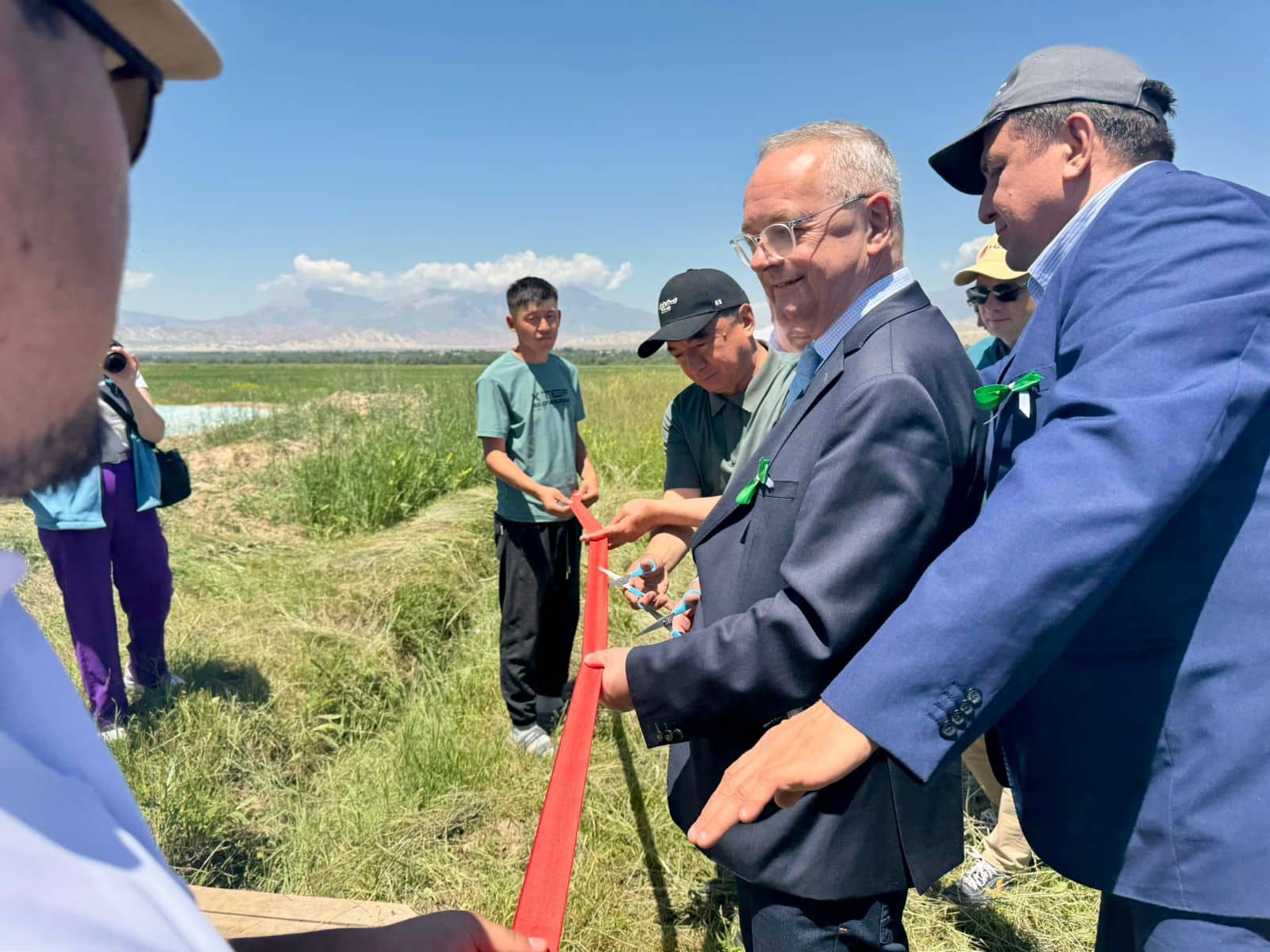
Opening of elite potato field in Naryn, Kyrgyzstan
Within the project to develop a value chain for seed potatoes in Kyrgyzstan, the Seed Potato Field Day in Naryn region gathered stakeholders from the Dutch and Kyrgyz government, international partners, local institutions, and farms.
The event highlighted promising results from trials of super-elite and super-super elite seed potatoes, supplied by the Dutch company HZPC and sown on 25 hectares in high-altitude fields.
With structured quality control underway and seed potatoes being grown in compliance with all the necessary seed potato cultivation agrotechnology, including crop rotation, drip irrigation, momentum is building for a robust regional seed potato sector.
The importance of offering services, coaching, training and education by technology providers and other stakeholders was recognized as a crucial part of success.
LVVN team Astana will bring you more updates and developments from this significant region in the next edition!
Sources: ElDala, Interfax, uzdaily.uz