
Côte d’Ivoire stands at the forefront of a circular revolution in agriculture, with poultry manure valorization through composting and the farming of black soldier flies (BSF) emerging as transformative solutions. These innovative practices not only diversify income streams for poultry farmers but also enhance human health and environmental sustainability. For Dutch companies keen on sustainable agriculture, this is an exceptional opportunity to engage in Côte d’Ivoire and the wider West African region.
Key findings from recent research
The insights are drawn from the study “Circular Valorization of the Poultry Sector in Côte d’Ivoire: Challenges and Opportunitie commissioned by the Dutch government through the Netherlands Enterprise Agency (RVO) and conducted by Circle Economy in collaboration with Netherlands Food Partnership (NFP) highlights a transformative opportunity for the poultry industry.
Côte d’Ivoire offers favorable investment opportunities. Local stakeholders—farms, cooperatives, and processors—are eager for technical partnerships. The Ivorian government’s commitment to self-sufficiency and food sovereignty aligns well with the goals of Dutch organizations like NFP, which actively promotes collaboration. Initiatives such as LONO (a Dutch-Ivorian SME) and BIOANI provide valuable resources for knowledge sharing and training.
The poultry sector is a critical component of Côte d’Ivoire’s agricultural landscape, with investments exceeding 110 billion CFA francs. In 2022, the industry produced over 82 million chicks, resulting in 97,222 tons of meat and 1.68 billion eggs, generating a total revenue of 350 billion CFA francs.
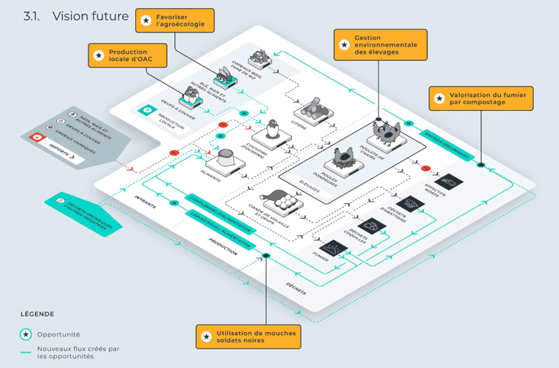
Figure 1: Innovative solutions aimed at promoting circularity and sustainability in the poultry industry
Poultry Manure Composting: A lucrative business model
Poultry manure is an underutilized resource with huge potential for compost production. This high-demand product is increasingly sought after due to the rising costs of chemical fertilizers. Côte d’Ivoire generates over 500,000 tons of poultry manure each year, yet less than 1% is processed. In 2021, the country relied heavily on imported chemical fertilizers, bringing in around 570,000 tons.
Dutch companies can play a pivotal role by offering expertise and technology in closed composting systems, transformation equipment, and quality control solutions. Their knowledge in compost formulation and capacity building is essential for developing this sector.
Escalating prices of fertilizers, coupled with the urgency for climate action, make local alternatives like composting all the more attractive.
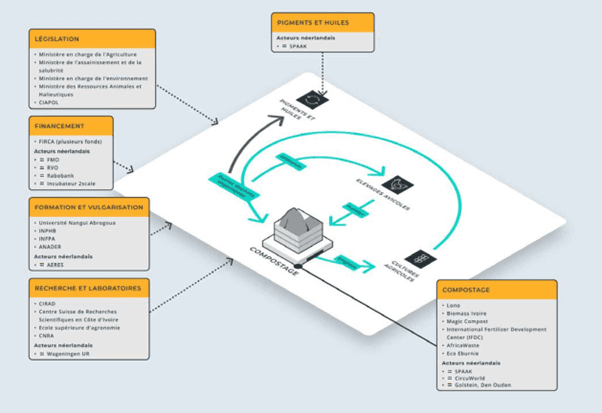
Figure 2: Cycles and key local and Dutch stakeholders involved in achieving circular compost production from poultry manure.
Black Soldier Flies: A game-changer for Ivorian agriculture
The BSF model offers dual advantages—nutritional and agronomic—creating a resilient local sector less reliant on imported soy and chemical fertilizers. BSF larvae provide sustainable protein feed (for poultry, but also for fish), while the resulting frass serves as a potent fertilizer. Compared to imported soy, larvae require less water, land, and transport, making them a more environmentally friendly option. Pilot projects in Ghana and Benin have confirmed that frass can significantly enhance crop yields.
With poultry and fish farming expanding at a rapid pace—poultry production is growing at 12% per year—the demand for local alternatives is surging amid fluctuating soy prices.
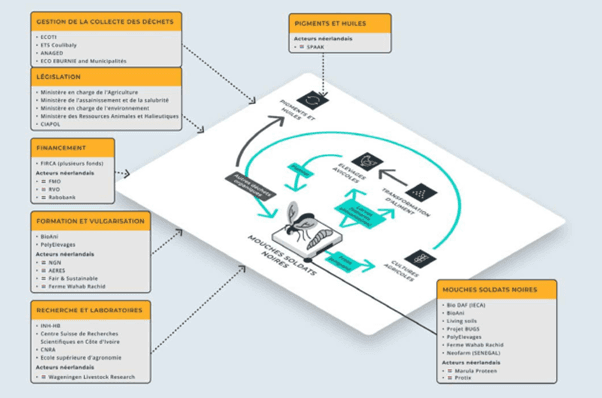
Figure 3: Cycles and key local and Dutch stakeholders involved in achieving a sustainable and circular system for breeding and managing BSF
Engaging Dutch companies
The insect-agri-waste value chain is still largely untapped, presenting a golden opportunity for early entrants. Dutch companies can engage through:
- Co-investments with local startups (e.g., BIOANI, Living Soils, Project BUGS),
- Technology transfer (sorting systems, incubators, drying units),
- Pilot projects with rural cooperatives supported by Dutch foundations.
The expertise of Dutch firms aligns well with local needs, allowing them to act as advisors, investors, incubators, or technical partners in developing robust local value chains
Conclusion
In light of this study, a trade mission is being organized for Dutch companies specializing in circular solutions seeking to expand their networks in West Africa. The mission, will be organized by the Netherlands Enterprise Agency (RVO) will kick off in Ghana and then Côte d’Ivoire, where a delegation of Senegalese companies will join. The mission is scheduled for the third week of September 2025. Please check the RVO website for more details.
For More Information
- Embassy of the Kingdom of Netherlands in Abidjan: abi-lvvn@minbuza.nl
- Netherlands Food Partnership: info@nlfoodpartnership.com
- Circle Economy: info@circle-economy.com