
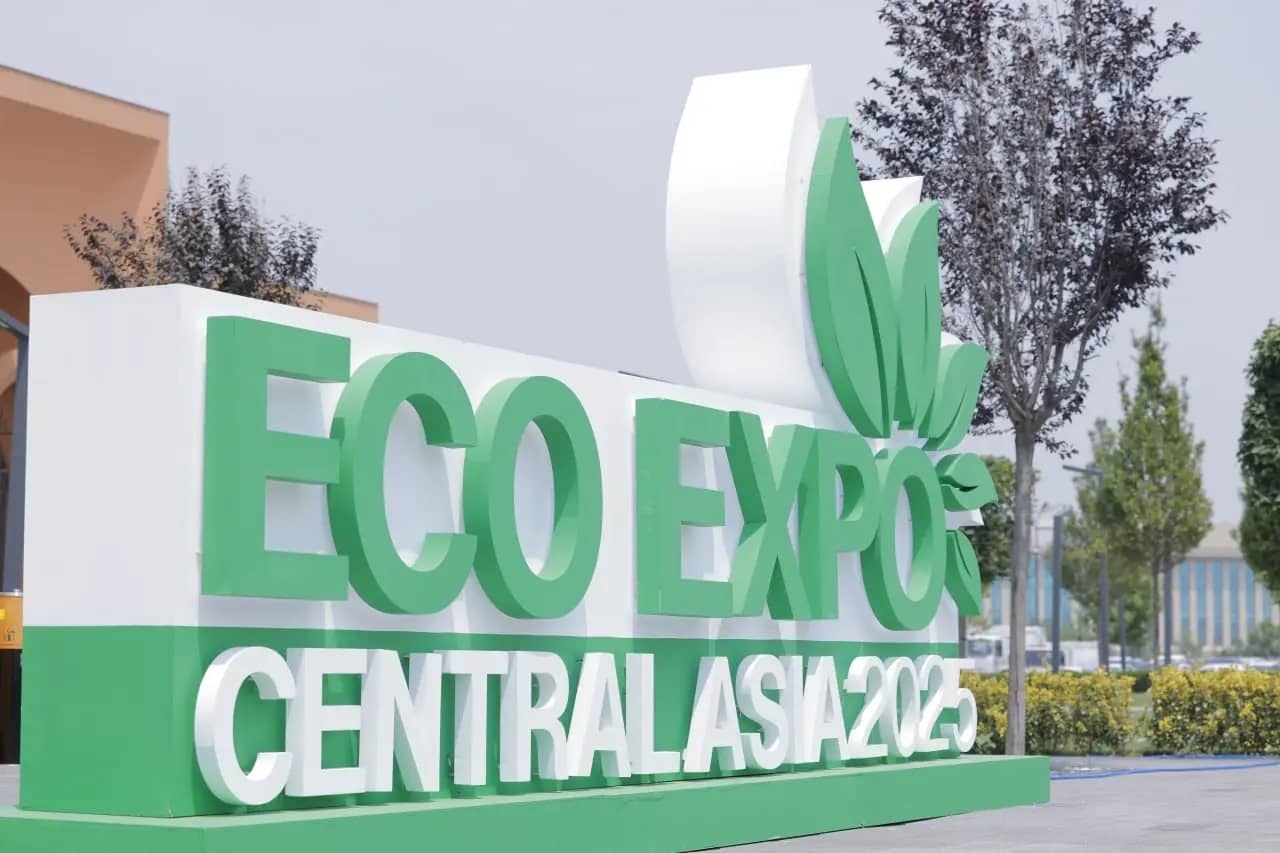
The Ministry of Agriculture of the Republic of Uzbekistan is participating in the prestigious international exhibition “Eco Expo Central Asia 2025,” held in Tashkent from June 19 to 21 under the stand titled “Sustainable Agriculture.”
Beeld: © Ministry of Agriculture of Uzbekistan
The main goal of the exhibition is to create the largest platform in Central Asia for environmental technologies and sustainable solutions. More than 200 companies from over 25 countries are showcasing their innovations and products at the event.
The exhibition features not only technological advancements but also approaches that support sustainable development, including environmental innovations and top products of the “green” economy. The Ministry of Agriculture’s stand is a vivid reflection of these ideas.
On display are the latest crop varieties developed by Uzbek scientists, environmentally friendly agrotechnologies, AI-powered drones for monitoring, and water-saving systems. Notably, high-yield rice varieties such as “Mustaqillik,” “Lazurniy,” and “UzROS,” new hybrids of sorghum and amaranth, bio-fertilizers and natural growth stimulants, portable analyzers, and biotests for early disease diagnostics — all symbolize environmental sustainability, innovation, and food security.
The exhibition also features agrivoltaic technology developed in collaboration with France, enabling the cultivation of melons and gourds under solar panels without harming the plants.
In addition, a technology for reducing ammonia levels at poultry farms is presented, contributing to environmental safety and improving indoor microclimates.
Visitors are also introduced to drought- and salt-tolerant vegetables and melons, as well as olive and blueberry trees — all the result of scientific and practical research aimed at adapting to agro-climatic conditions.
As part of the “Green Cotton” project, implemented with the support of the German Agency for International Cooperation (GIZ), resource-efficient technologies in cotton and rice farming are also being showcased.
All of these developments represent the practical results of efforts to ensure environmental sustainability, the rational use of land and water resources, and the broad implementation of “green” technologies in agriculture.