
Italy’s AgTech market grows, but adoption lags
Dutch innovation mission explores digital farming and robotics
Italy’s AgTech market is expanding, but adoption on farms remains limited. Digitalization, robotics, and artificial intelligence offer farmers new ways to manage production, yet many Italian agricultural holdings have not introduced smart technologies. The country’s fragmented farm structure, high investment risks, and shortage of digital skills are among the obstacles. These challenges were central to a Dutch innovation mission to Naples and Emilia-Romagna in October 2026 organized by the Netherlands Agricultural Network (LAN) at the Dutch Embassy in Rome.
Italy has a large and economically significant agricultural sector, but its highly fragmented farm structure makes the adoption of innovation challenging. The country has approximately 1.13 million active agricultural holdings, with an average farm size of 10.9 hectares. Farm sizes vary considerably across the country, averaging 15.9 hectares in northwestern Italy and 7.3 hectares in the south. Italian agriculture is also highly diverse in its production systems and agricultural products. In Italy, a small farm is not necessarily a low-tech farm: high-value crops can justify investments in automation, sensors, and precision tools.
Innovation is essential to safeguarding food production and strengthening the resilience of Italy’s food supply. Key challenges include climate change, to which Italy is highly exposed, labor shortages, an aging farming population, competitiveness, and farm incomes. In Italy, food is more than an agricultural product or an economic activity: it is an integral part of national and regional identity, family life, and cultural heritage.
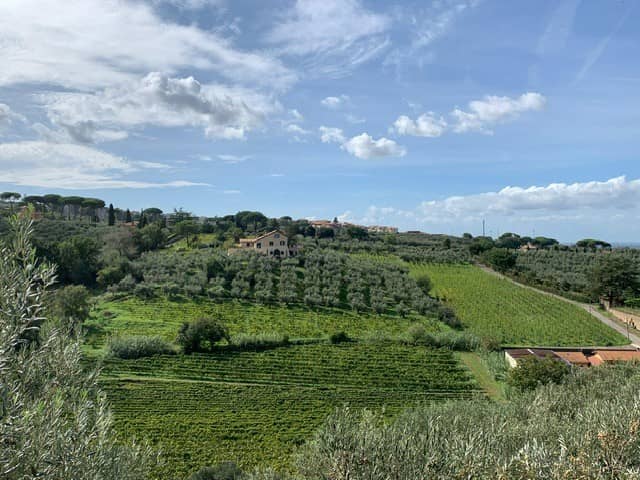
Agricultural landscape nearby Frascati in the region Lazio (Italy)
Investing in innovative AgTech
Generational renewal is another challenge. About 58% of farm heads are aged 60 or older, while only 9% are under 41. Among farms led by younger farmers, 24% are introducing innovations. Younger farmers are more likely to invest in new technologies, and generational change affects both demand for innovation and farmers’ capacity to adopt it.
‘The challenge is not to develop new technologies, but to make innovations affordable, practical, and scalable across a diverse agricultural sector.'
Italy is investing in the development and adoption of innovative agricultural technologies (AgTech) and moving toward smarter, data-driven farming. The challenge is not simply to develop new technologies, but to make innovations affordable, practical, and scalable across a highly diverse agricultural sector.
Digitalization, robotics, and precision agriculture play a key role in this transition. By combining data from sensors, satellite imagery, drones, robots, software, and artificial intelligence (AI), farmers can manage their operations with greater precision. Applications include optimizing irrigation, targeting crop protection products, detecting diseases and pests at an early stage, and using water, energy, and other production inputs more efficiently.
AgTech connects research and industry
An important form of government support for agricultural technology (AgTech) is the national Agritech research program and the National Research Centre for Technology in Agriculture in Naples, established with European funding. The program was launched in 2022 and runs through 2026. Any work continuing afterwards will need to be integrated into existing institutions or secure additional funding.
Coordinated through the Agritech Center in Naples, the program covers the entire innovation chain. It is a public-private partnership involving 28 universities, five national research institutes, including the Council for Agricultural Research and Economics (CREA), 17 private organizations and companies, and financial institutions.
Its research agenda focuses on making agriculture more resilient and better prepared for the future. Priorities include reducing the use of agricultural chemicals, developing technologies for smarter and more sustainable agricultural management, minimizing environmental impacts, and strengthening the resilience of agricultural and forestry systems to climate change.
A distinctive feature of Italy’s innovation capacity is its links with other industrial sectors in which the country has traditionally been strong. Many agricultural applications build on knowledge and technologies from precision engineering, mechanical engineering, the automotive industry, and the space sector. Sensors, remote-sensing technologies, traceability systems, drones, and robots are increasingly being adapted for agricultural use. This cross-sector collaboration creates opportunities to develop existing technologies further and tailor them to the specific needs of agricultural holdings.
Most farms have yet to adopt Agriculture 4.0
Agriculture 4.0 combines connected technologies, data-driven farm management, and increasing automation. The Italian market for digital agricultural technologies is growing. According to the Italian Smart AgriFood Observatory’s 2026 report, the market for Agriculture 4.0 technologies reached approximately €2.5 billion in 2025, representing a 9% increase compared with the previous year. Advanced farm management systems, decision-support systems, and connected machinery are among the main contributors to this growth. The range of available technological solutions continues to expand.
Italy also has a growing agri-food technology start-up ecosystem. According to the latest available figures, around 405 agri-food tech providers were active in Italy in 2025. Artificial intelligence is an important part of this ecosystem: 43.8% of agri-food tech start-ups use AI in their solutions.
Despite this growth, the adoption of digital technologies on farms remains limited. In 2025, 58% of Italian agricultural holdings were not using smart Agriculture 4.0 solutions. Digital technologies were used to manage approximately 10% of the country’s utilized agricultural area (UAA). Among the 42% of farms using at least one Agriculture 4.0 solution, 9% were considered digitally mature. The adoption of AI among farmers also lags behind its use in the wider agri-food technology ecosystem. The latest available figures indicate that 8% of farmers use AI solutions.
Among adopters, connected machinery is the most common technology. Robots remain a niche segment, despite the attention they receive. These figures show the gap between the growing supply of innovative technologies and their practical adoption on farms. The reasons extend beyond limited financial resources and include fragmented farm structures, high investment risks, and a shortage of digital skills.
The EU-supported Agricultural Knowledge and Innovation System (AKIS) is an important instrument for national and regional authorities seeking to accelerate the adoption of innovation and digitalization on farms. AKIS provides a framework for knowledge exchange, the practical testing of technologies, collaboration between stakeholders, and the development of digital skills. In Italy, CAP-supported projects, including EIP-AGRI Operational Groups, help farmers test and adopt innovations.
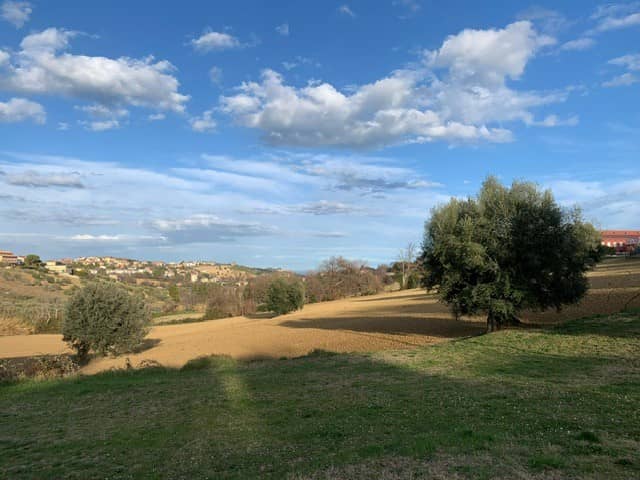
Agricultural landscape nearby Fermo in the region Marche (Italy)
Innovation mission to Naples and Emilia-Romagna
Against this background, an innovation mission focusing on digitalization and robotics was organized by the Netherlands Agricultural Network (LAN) team at the Dutch Embassy in Rome and the Netherlands Enterprise Agency (RVO) in October 2026. The mission aimed to gain deeper insights into Italy’s agricultural innovation ecosystem, research activities, market developments, and investment climate. It also sought to strengthen networks and identify opportunities for collaboration with Italian policymakers, research institutions, producers, start-ups, and distributors.
‘Italy and the Netherlands both possess advanced expertise in smart farming and automation.’
Italy and the Netherlands both possess advanced expertise in smart farming and automation. Building on these shared strengths, the mission brought together representatives from policymaking, industry, research, and farming cooperatives in both countries to exchange knowledge, explore innovation ecosystems, and identify opportunities for closer collaboration.
Given the importance of the Agritech program, the mission began in Naples before continuing to the Emilia-Romagna region, known for its agricultural technology industry. The program included visits to research institutes, technology companies, and demonstration farms in both regions, providing firsthand insights into developments in automation, commercial applications, and on-farm practices.
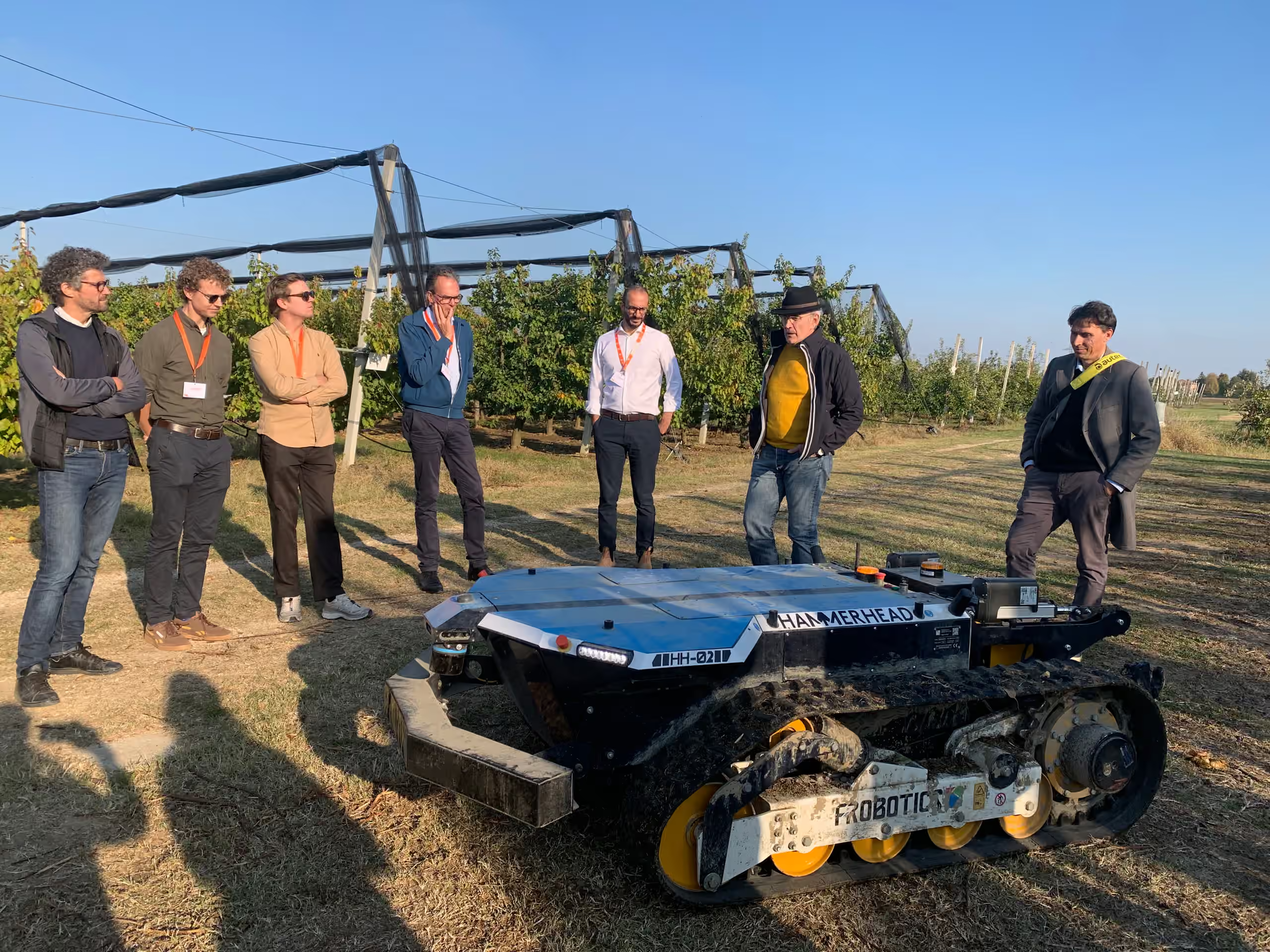
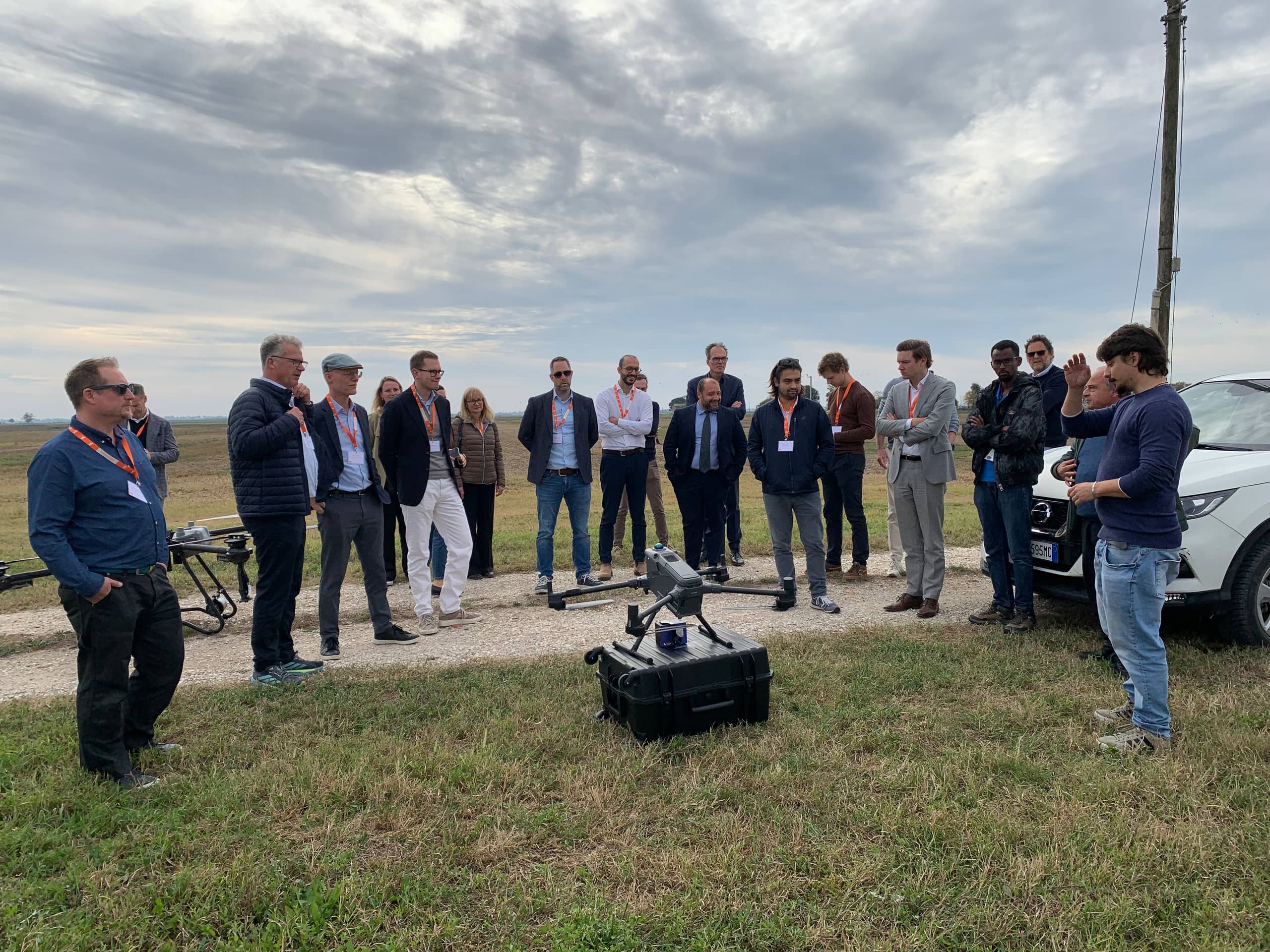
The mission included visits to Bonifiche Ferraresi (BF), part of a major Italian agri-food group, where participants saw drones applied in open-field farming. The visit was arranged by Diagram Group, a provider of digital and precision-farming solutions associated with BF. Participants also visited Field Robotics, a University of Bologna spin-off developing autonomous ground robots for orchards and vineyards and technology for aerial monitoring, and Porto Felloni, a farm in the Po Delta that has used precision farming for more than 25 years to support cereal, vegetable, and nut production, including organic farming.
Throughout the mission, the central question was how to accelerate the adoption of digital solutions and robotics in open-field agriculture, and how policymakers, industry, researchers, and practitioners could work together to achieve this.
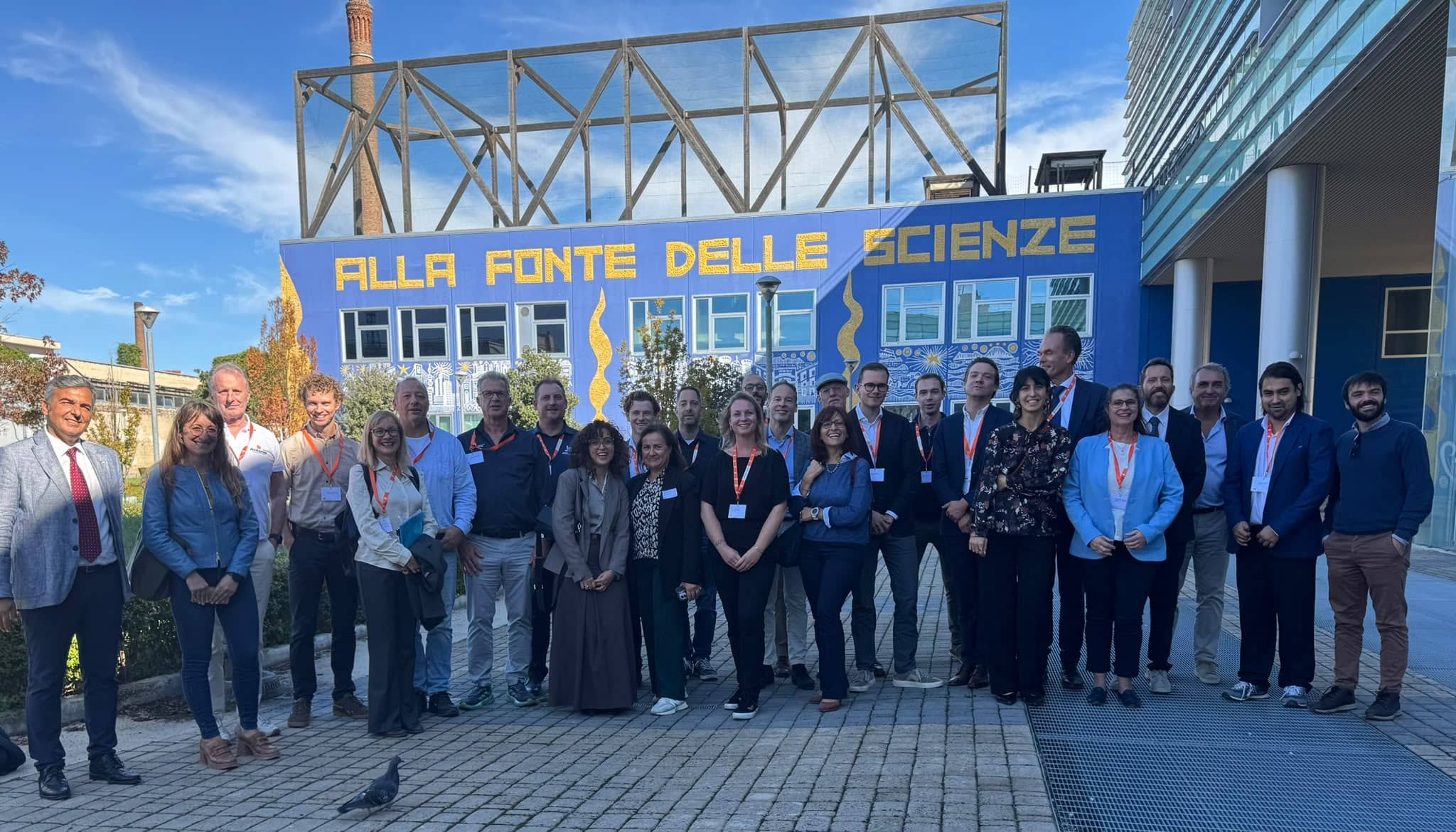
NL delegation innovation mission to Italy 2026, start of mission at Agritech Center Napels
Findings from the innovation mission
Focusing mainly on open-field arable and vegetable production, the mission highlighted a strong need for labor-saving solutions in Italy’s labor-intensive cropping systems. Farm sizes, crop types, and levels of digitalization vary widely. Italy also has an extensive, well-equipped innovation ecosystem, with universities, research institutes, businesses, banks, and start-ups collaborating on research, pilots, and technological development. A key challenge is turning laboratory results and prototypes into scalable commercial products.
Participants saw examples of data integration and practical applications on farms, including organic farming. Innovation requires connecting data, machinery, agronomic knowledge, and farm management rather than simply purchasing equipment. Digital technologies are already in commercial use, including satellite- and sensor-based monitoring, production support systems, and some weeding robots, while other robotic solutions remain in development. Applications also support fertilization, sowing, irrigation scheduling, and crop protection. Combining artificial intelligence with these technologies is still at an early stage.
Italy’s agricultural machinery industry is one of its strengths. Its mechanical engineering and crop-specific expertise can be complemented by robotics, while an established machinery ecosystem can help foreign technologies enter the market more quickly.
Technical skills remain a major barrier. As AgTech journalist Tommaso Cinquemani of AgroNotizie put it during the mission: “The challenge is not only selling 4.0, but building the capabilities to use 4.0.” Among adopters, 46% report low or very low digital skills. Seven out of ten have received no training, and six out of ten do not expect to receive any in the next three years. Training and after-sales support can therefore be as important as the technologies themselves.
Limited awareness and reliance on incentives also hamper adoption. Some 33% of Agriculture 4.0 solutions are unknown to farmers. Only 21% of farms invest without incentives, while 51% of farms not currently using digital solutions have no plans to invest in the coming years. Nevertheless, adopters report that the benefits meet or exceed their expectations, and they plan to invest again.
‘New technologies may also attract young farmers seeking better ways to work and a better work-life balance.’
New technologies may also attract young farmers seeking better ways to work and a better work-life balance. The mission highlighted the value of cross-border knowledge exchange alongside industrial and commercial partnerships. Collaboration with universities and research institutes can support research and development, validation, and student exchanges. Banks, companies, research spin-offs, and start-ups can help develop, apply, and integrate technologies.
Demonstration of drone in open field by Diagram at experimental farm Bonifiche Ferraresi
More information
Would you like to know more about digitalization, robotics and agricultural innovation in Italy? You can go to the country page of Italy on this website. You can also send an email to the LAN team at the Dutch Embassy in Rome: rom-lvvn@minbuza.nl.