
Constantijn van Oranje on ambition, disruptive newcomers, and clear choices in Dutch agrifood
Dutch agrifood needs more room for newcomers
The Dutch agrifood sector has world-class knowledge and strong international networks. Yet relatively few young companies develop into international businesses. Constantijn van Oranje, special envoy at Techleap, draws on his experience with start-ups, scale-ups, financing, and international growth. Agrifood is not a priority area for Techleap, but he sees a sector in which established interests, cautious investors and short-term priorities can slow innovation.
Constantijn van Oranje
Scaling a start-up into an international company is difficult, but Constantijn says Dutch entrepreneurs need to be willing to take greater risks. ‘How aggressive and hungry is the entrepreneur? For Dutch companies, competing internationally means competing with Silicon Valley, Singapore, and China. ‘Keeping things comfortable is no longer an option. Entrepreneurs must be prepared to move very fast and take risks.’
Access to capital affects not only how fast companies can grow, but also how founders think about their ambitions. ‘The more effort a company puts into raising capital, the more time it spends on something that is not productive. If entrepreneurs are uncertain about future funding, they tend to make short-term decisions instead of planning for long-term growth. More certainty about funding allows them to think bigger and over a longer period. Dutch investors often think in terms of relatively small funding rounds and incremental steps. As a result, entrepreneurs must keep returning to the market for new funding, which creates a lot of uncertainty.’
New ideas meet an established sector
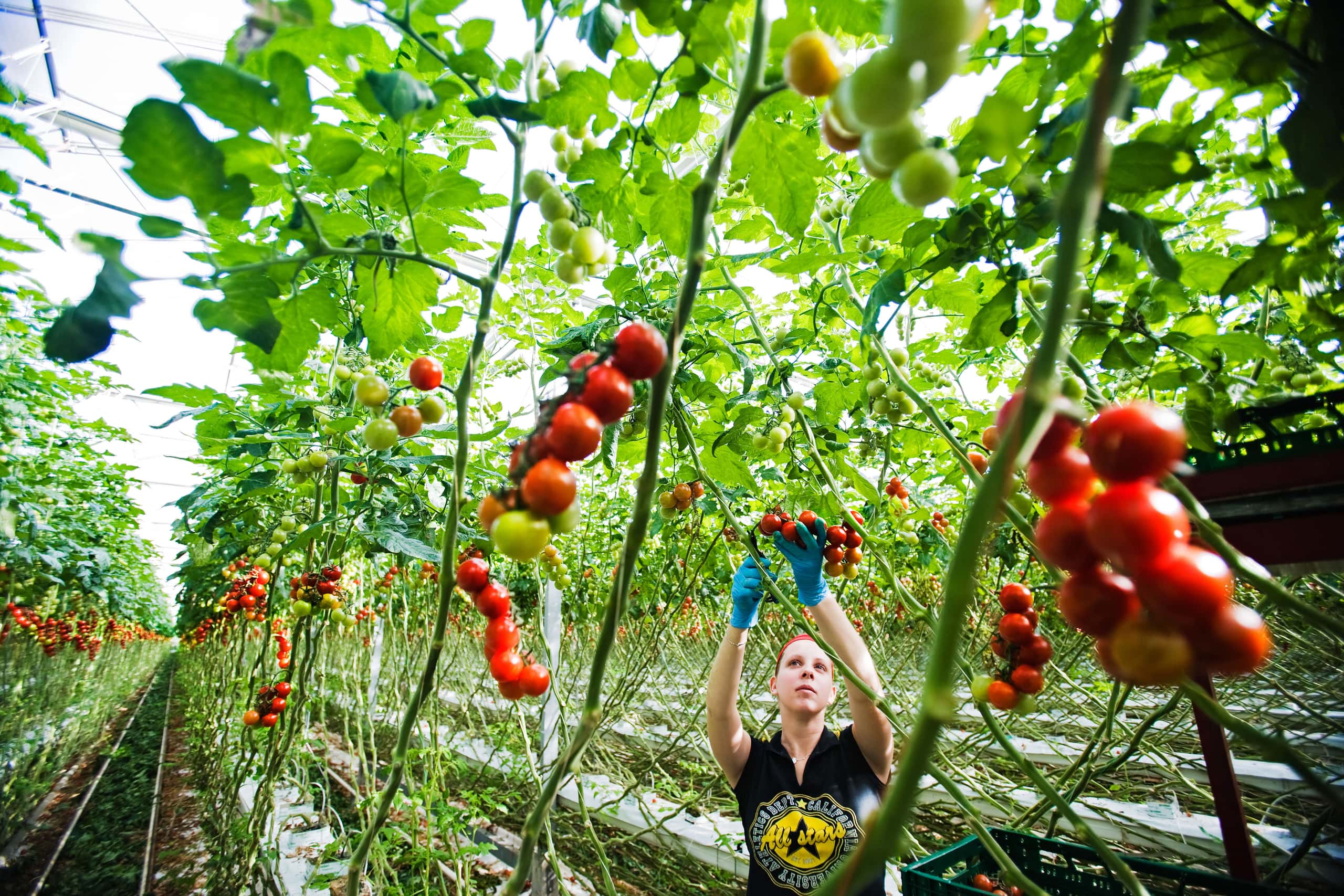
Constantijn sees additional obstacles in agrifood itself. ‘Agrifood is a very conservative sector, including in the way it is financed. There are many family businesses that generally do not use the type of capital start-ups use. For instance, very little venture capital goes into greenhouse horticulture, even though the Netherlands is highly innovative in that field. Many innovations are still applied within an existing model - robotics in the greenhouse, for example - while entirely new concepts struggle to reach the market when they challenge established business models and relationships.’
The seed cluster around Enkhuizen, an innovation region in the northern part of the Netherlands, is one example. ‘It is extremely innovative, but it was late to adopt digital technologies, especially AI. Companies know each other well and have built strong relationships over many years. That has clear advantages, but it can also make it harder for new players and radically different ideas to break through.'
The challenge is not only to develop new knowledge and technology, but also to turn them into scalable businesses. Wageningen University & Research produces internationally recognized knowledge and is a world leader in agricultural research and technology. ‘Someone may invent a new protein, a new seed variety or an exciting ingredient, but that is not yet a business you can finance. We need more entrepreneurship, not just science.’
Established companies can also help young companies grow, he says, for example by becoming customers. ‘There are companies such as Unilever and FrieslandCampina in the Dutch agrifood ecosystem. How do you get them to buy more from these young companies?’
Making room for newcomers
Constantijn questions the tendency to talk about agrifood as if countries rather than individual companies compete with one another. ‘When people in horticulture talk about the sector, they talk about the Netherlands and then say that Spain does this or China does that. It starts to sound like a national soccer team. But Spain is made up of individual entrepreneurs. The same is true of China: it is not simply “China” competing, but individual companies and entrepreneurs. In the Netherlands we talk a lot about the need to cooperate, and this cooperation has led to a strong agrifood sector. But in doing so we may also be protecting the status quo.’
New companies are essential even if many of them ultimately fail, he says. ‘If an industry wants to remain competitive, it needs new companies. They may fail, but at least they push existing companies to keep innovating. With the Dutch top sector approach, we created a system around academia, established companies and government - a kind of triple helix. But I think entrepreneurs and venture capital investors were not really part of it. That system left little room for companies that want to do things in a completely different way. That increases the risk that too little disruptive innovation takes place.’
Picnic, the Dutch online supermarket, is one example of how existing rules can make it harder for a new business model to develop. Unlike traditional supermarkets, Picnic has no stores and operates with a different labor model. Constantijn argues that forcing such a company into rules designed for traditional supermarkets can protect established players at the expense of newcomers.
‘The more effort a company puts into raising capital, the more time it spends on something that is not productive.’
Start with clear objectives
The Dutch Ministry of Agriculture, Fisheries, Food Security and Nature (LVVN) is developing a multiannual Agrifood Innovation Agenda focused on four domains: AgTech, Resilient crops and cultivating systems, Food innovation and (greenhouse) Horticulture. The agenda aims to strengthen the Dutch innovation ecosystem, create new business activity and economic growth, improve competitiveness, and reinforce the Netherlands’ strategic autonomy. It also seeks to develop a future-proof agrifood sector that contributes to solutions for nature, water, climate, and animal welfare.
These objectives are underpinned by broader considerations about what the Netherlands wants to retain, develop, and scale, and about the role government should play in supporting innovation. Asked more broadly what effective innovation policy requires, Constantijn stresses the importance of translating ambitions into clear choices. ‘Is the goal to maintain an economic position? Or a strategic one? Does the Netherlands want to make sure that it can always produce certain foods or control certain technologies? Those are different considerations.’
Beeld: © Luca Locatelli
The Westland region - situated between the Hague and Rotterdam - is well-known for its high concentration of the greenhouses, giving it the nickname Glazen Stad (Glass City).
Greenhouse horticulture makes that choice concrete. Constantijn points to the Westland, the main greenhouse horticulture region in the Netherlands. Should the priority be to maintain production there, or to use Dutch knowledge and technology to develop greenhouse production elsewhere, for example in the United States or India? ‘We export tomatoes, but perhaps the focus should be on the technology or the cultivation method.’
Those choices also affect the role of the Dutch government. If retaining a particular technology or food production capacity is strategically important, government support or subsidies may be justified. If the main objective is economic growth and building internationally competitive companies, Constantijn argues that attracting capital and giving the market room to operate may be more appropriate. ‘If you are not very clear about why you are doing something and what you want to achieve, it becomes difficult to define the role of government and the other parties in the ecosystem.’
He also argues that policy should start from what companies need to grow. Rather than beginning with available instruments or subsidies, he suggests looking at promising companies in each priority area and asking what would enable them to make a significant leap in scale. The answers, he says, may point to interventions that could benefit a much larger group of companies.
Create a market
Another point for consideration in Dutch innovation policy, he says, is the strong focus on helping companies develop technology rather than helping them find customers. ‘We do a great deal on the supply side. We make more money available to companies, help build incubators around universities, and tell universities to commercialize their research. That is all on the supply side. Very little is done to stimulate demand.’
Innovative procurement is one way to change that. Constantijn points to the US DARPA model, in which government sets ambitious technological challenges and funds different parties to develop solutions, and to NADI, a Dutch approach inspired by challenge-driven innovation. In such an approach, the government sets a challenge for the market and gives new players room to develop competing solutions.
The Agrifood Innovation Agenda itself already identifies cultivated meat as an area where new ways of testing innovation could be explored. Constantijn’s broader point is that the Dutch government can also use its purchasing power to create demand. He uses cultivated meat as a hypothetical procurement example: ‘The government could set a goal of serving cultivated meat in its restaurants by 2030, then invite several companies to develop and test products. Over time, it could narrow the field and continue working with the most promising suppliers. That would give companies a customer and help create a market at the same time.’
‘For a good start-up that wants to internationalize, the Netherlands Agricultural Network can be enormously valuable.’
The short term usually wins
Constantijn argues that innovation also suffers when policy is divided into separate silos. Agriculture, economic policy, and environmental goals are closely connected, he says, but are often addressed separately. ‘If you keep solving one problem at a time, you lose sight of the bigger picture. You are not going to build a coherent economic, agricultural, or innovation strategy that way. And if we can produce something more efficiently and sustainably in the Netherlands, moving that production abroad may simply increase its environmental impact.’
Long-term innovation can easily lose out to more immediate interests. ‘Innovation is always about looking forward. It is future growth and future jobs. Those priorities almost always carry less weight than current growth, current political interests, and short-term concerns. If you do not have some way of safeguarding that long-term perspective, you can write an innovation agenda, but the short term will keep getting in the way.’
An international network for start-ups
For companies that are ready to expand internationally, Constantijn sees one Dutch strength that is already firmly in place: the Netherlands Agricultural Network (LAN). ‘The LAN is a gem. It is still very much geared toward established companies, but if a start-up wants to internationalize, it can benefit enormously from that network. The people are real experts, they are very well connected, and the network has been around for so long that it is deeply embedded in the countries where it operates.’
He sees the international infrastructure as a major Dutch advantage. ‘It really is an asset, a unique selling point for the Netherlands. But you still need companies that are ready to use it.’