
By LAN Vietnam team
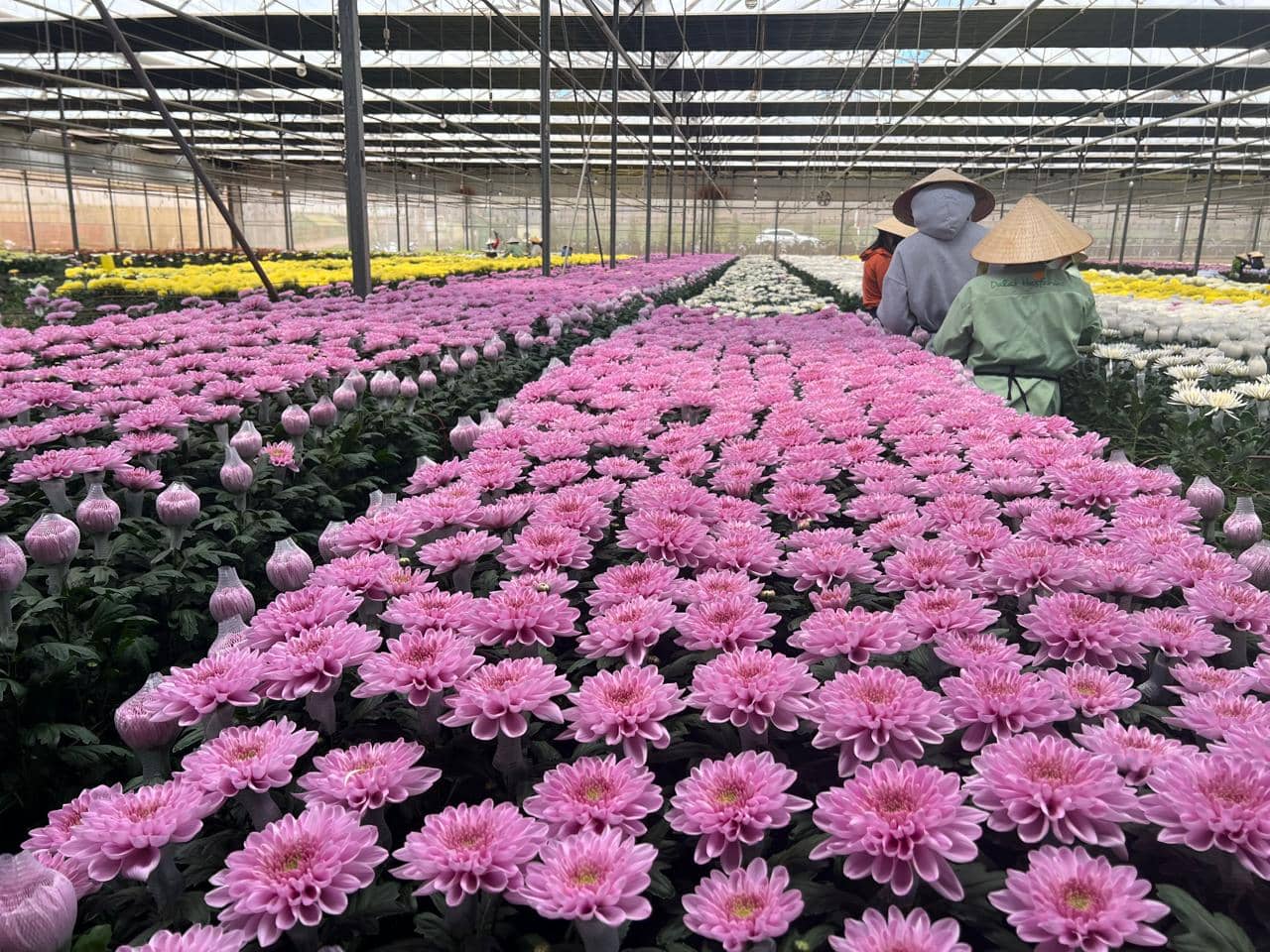
Beeld: © EKN Hanoi / Ingrid Korving
A flower farm at Dalat Hasfarm company in Lam Dong, Vietnam
Vietnam becomes Southeast Asia’s 2nd largest importer of European poultry
Vietnam imported more than 56,500 tonnes of poultry meat from Europe in 2025, making it the second-largest buyer in Southeast Asia after the Philippines. Shipments to Vietnam included chicken, duck and goose products from the European Union (E.U.), reflecting steadily rising demand for imported poultry in the country. Poland is the largest exporter of European poultry to Vietnam, followed by Fance, Hungary, Italy and the Netherlands.
Chicken consumption accounted for 33% of Vietnam’s total meat consumption, showing an upward trend. Average egg consumption reached about 198 eggs per person per year, still below the global average of 250 to 300 eggs, suggesting further room for market growth.
Source: Vietnam becomes Southeast Asia’s 2nd-largest importer of European poultry - VnExpress International
Vietnamese fruit exports may face stricter EU controls
According to a report on monitoring and control of pesticide residues in food placed on the market, published in February 2026 by French General Directorate for Food, as part of the EU’s coordinated control program, Vietnamese passion fruit emerged as the most concerning product with 32% violation rate. Out of 47 samples tested, 15 exceeded the EU maximum residue limits (MRLs).
Meanwhile, dragon fruit showed 11% violation rate. The European Commission assesses the list of high-risk products every six months. Continued violation could make it difficult for the products to see a reduction these controls in the future.
More information at: High pesticide violations in Vietnamese fruits raise EU export concerns
Vietnam to review new incentives to attract agricultural investment
The Vietnamese government is drafting a new Decree to boost private investment in agriculture and rural development, introducing targeted incentives for priority sectors like aquaculture, large-scale livestock farming, slaughtering, processing facilities.
Key changes include: leaving decisions of prioritized projects to local authorities; support capital per project for raw material zone development; lower minimum investment amount for agro-processing and preservation projects eligible for incentives; ofering state support for up to 30% per project.
More information at: Government reviews new incentives to attract farm investment
Stricter control over food safety
Nearly 300 tons of diseased pork being smuggled into the market, food supply channels, school canteens was a shocking figure and a serious warning about loopholes in food safety control. There are also raising concerns about collusion of quarantine officials.
The case shows the urgent need to transparentize the food supply chain. From farming, transport, slaughtering to distribution, each process needs to be controlled by data, technology and independent monitoring mechanisms, in stead of just relying on trust or administrative procedures.
More information at: Diseased pork on the market and eliminate loopholes in food safety control
New Government Decision to tackle IUU fishing
Vietnam Ministry of Agriculture and Environment has issued Decistion No.1111/QD-BNNMT, effective from March 31, 2026, replaces Decision 617/QĐ-BNNMT issued in February, to tighten control over foreign fishing vessels entering its ports. The new process regulates the inspection and supervision of foreign vessels engaged in fishing, transport or transshipment of seafood when calling at Vietnamese ports for import, temporary import for re-export, transit or transhipment activities.
This aligns with FAO’s agreement on Port State Measures (PSMA), which seeks to prevent illegally caught seafood from entering global supply chain. A key feature of the new framework is a nine-step inspection and verification process designed to strengthen monitoring from pre-arrival to post-inspection reporting.
More information at: Việt Nam issues new control procedures to tackle IUU fishing
Beeld: LAN