
Stay updated with our newsletter published every month.
By LAN team Vietnam
Beeld: EKN Hanoi
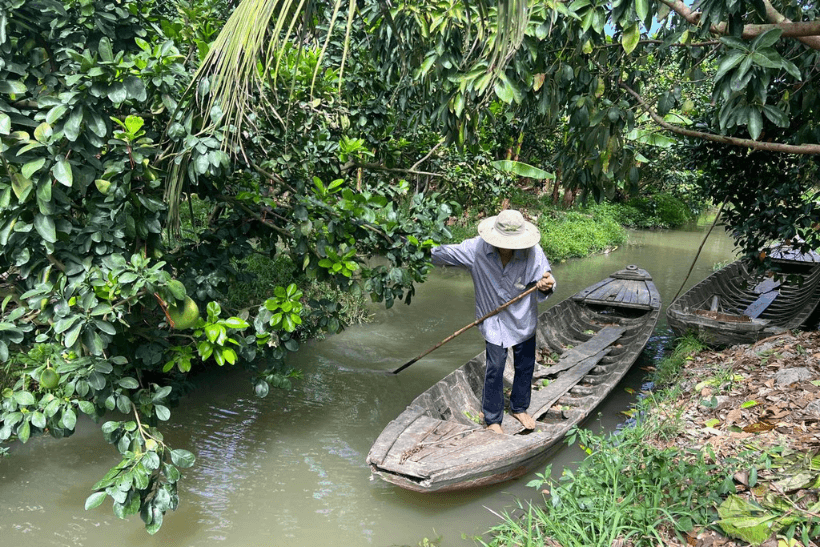
Farmer in a pomelo farm in the Mekong Delta. Photo by Ingrid Korving
Vietnam’s agriculture posts steady growth in the first 8 months
Vietnam’s agriculture sector is on track for a strong performance in 2025, with export turnover in the first eight months estimated at US$45.37 billion, up 12 per cent year-on-year. The trade surplus reached $13.07 billion, marking a 10 per cent increase. While some seafood products face challenges in the US market, exports of fruit, vegetables and other key items remain stable. The United States, China and Japan continued to be the top three destinations. Agriculture will remain strategic for sustainable growth, with 2025 set to meet all targets and prepare for 2026–30, while the ministry focuses on expanding markets, boosting exports and improving support policies.
Source: Việt Nam’s agriculture posts steady 8-month growth despite some export hurdles
Vietnam spends US$2.6 billion on livestock product imports in seven months
Higher local costs and demand have made Vietnamese meat less competitive, boosting imports. Vietnam’s import value of livestock products reached US$2.55 billion in the first seven months of this year, up nearly 23% from the same period in 2024, according to the Ministry of Agriculture and Environment. Of the total, milk and dairy products contributed US$860 million, while meat and by-products accounted for more than US$1 billion. The top five pork-exporting countries to Vietnam were Russia, Brazil, Spain, Canada, and Poland.
Domestic production costs are high due to dependence on imported raw materials and a small production scale, while the domestic market is increasingly open, making it easy for foreign goods to reach Vietnamese consumers.
Source: Việt Nam spent nearly $2.6 billion on imported livestock products
Vietnamese coffee exports breaking records in 2025
Vietnam’s coffee industry is experiencing an unprecedented boom in 2025, with export revenues in just the first seven months already surpassing all previous records. The sector is now on track to hit a historic milestone of $8 billion, reaffirming Vietnam’s position as a global coffee powerhouse.
The surge has been driven primarily by soaring global coffee prices, as climate change and the El Niño phenomenon have slashed production in many countries. Domestic enterprises have invested heavily in deep processing, applied traceability technologies, and capitalized on free trade agreements such as the EVFTA and CPTPP. Europe remains Vietnam’s largest market, accounting for roughly $3.6 billion. Meanwhile, the U.S. has imposed retaliatory tariffs of up to 50% on Brazilian goods, offering Vietnam significant price advantages in this crucial market.
Source: Vietnam’s coffee exports in 2025: Breaking records, targeting $8 billion
Fifteen low-emission farming zones proposed for next decade.
The Ministry of Agriculture and Environment has proposed establishing 15 low-emission farming zones by 2035, with targets to reduce methane by 30% and overall greenhouse gases by at least 10% compared to 2020 levels.
The adoption of techniques such as alternate wetting and drying, optimized fertilizer management, and the use of bio-based inputs is expected to reduce input costs by 5-15%. The first focuses on five key crops, namely rice, cassava, coffee, banana, and sugarcane. The second takes a broader approach, expanding to the entire crop production sector during the 2025-2035 period, with technical support from international partners.
Source: Fifteen low-emission farming zones proposed for next decade - The Saigon Times

Beeld: LAN
Contact information
Do you have any questions for the Agriculture Department at the Netherlands Embassy in Vietnam? If so, please send an email to HAN-LVVN@minbuza.nl. For the latest updates, news, funding opportunities and more, follow our LinkedIn: Netherlands Agricultural Network in Vietnam.