
Stay updated on the latest agricultural news in Japan, that we publish every month.
by Yuki Sano
Food price hikes in Japan
Rising packaging costs and naphtha shortages linked to Middle East conflict are prompting Japanese food companies and retailers to redesign packaging, reduce plastic use, and adopt monochrome labels. These cost-saving measures aim to limit price hikes and shrinkflation while maintaining affordability amid persistent inflation and supply disruptions.
Source: Major Japan food retailers look to cut plastic use as costs jump & The shrinking, monochrome future of Japan's war-ravaged food industry, Japan's Don Quijote to launch black-and-white label in ink shortage gambit
Rising U.S. beef prices, driven by prolonged drought and shrinking cattle herds, are straining Japan’s beef supply chain. Imports of short plate — a key ingredient for beef bowls and yakiniku — have surged about 40% in price, prompting restaurants to secure supplies early while facing mounting pressure to raise menu prices.
Source: Japan beef bowl purveyors scramble for meat as US prices climb
Japan’s current farming technology in Japan
Japan’s farmed salmon industry is expanding rapidly, with 2026 production expected to reach a record high as demand grows at home and across Asia. Rising import costs, technological advances, and Japan’s reputation for high-quality seafood are driving investment, positioning domestic salmon as a competitive export and import substitute.
Source: Japan's farmed salmon taps into growing appetite at home and abroad
FOOMA JAPAN 2026, one of the world’s largest food processing exhibitions, will feature a record 1,025 exhibitors and 7,000 products. Focusing on automation, robotics, and digital transformation, the event highlights Japanese food processing technologies that improve productivity, standardize quality, and support the global expansion of Japanese cuisine.
Source: FOOMA JAPAN 2026, the world’s leading food processing expo
This news is worth sharing because FOOMA JAPAN 2026 creates opportunities for Dutch agribusiness to export and showcase its advanced food and farming technologies in Japan and other Asian markets.
NTT, Kubota, and NTT DOCOMO successfully demonstrated communication technologies enabling remote operation of robotic farm machinery in mountainous areas. By combining mobile and satellite networks with adaptive video transmission, the system maintained stable communications, advancing autonomous farming and supporting the future deployment of data-driven, sustainable agriculture.
Japanese fishery company Yamada Suisan will begin the world's first trial sales of fully farmed kabayaki eel on May 29. After overcoming production cost challenges, the company achieved large-scale glass eel production, marking a significant step toward sustainable eel aquaculture and reducing reliance on wild stocks.
Source: Completely Farmed Eels to Be Sold in Japan for 1st Time Ever
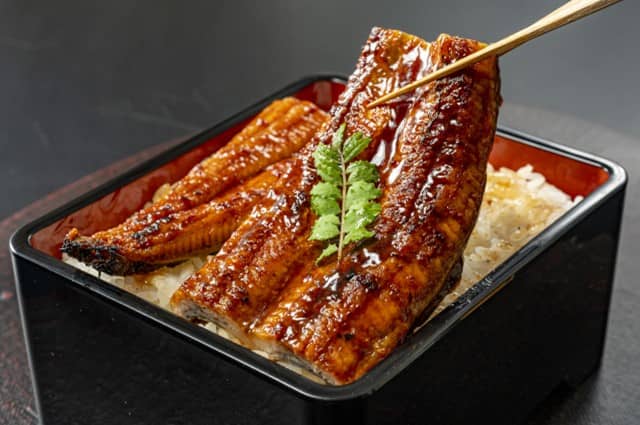
Photo: Kabayaki