
From the 28th of September until the 2nd of October the Ministry of LVVN and RVO organized a trade mission to Brazil focused on the nexus of biodiversity, agriculture, water and climate. Sixteen Dutch companies, a certification body, a knowledge institution and a civil society organization visited the states of São Paulo and Pará to explore opportunities for cooperation with Brazilian partners.
Beeld: LAN-BSA
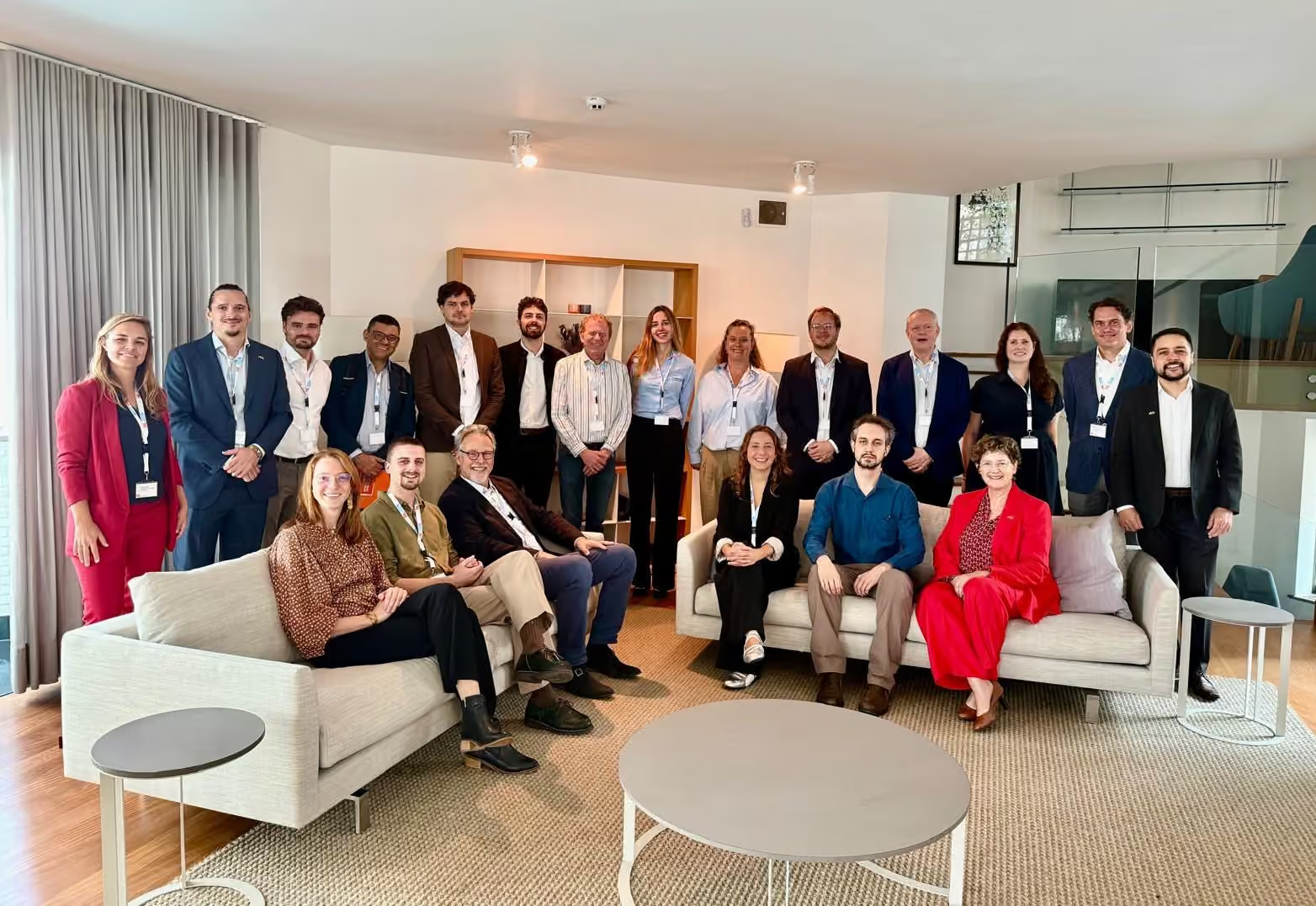
Mission launch at the Residence of the Consul-General of the Netherlands
Context
With the Biodiversity COP in Colombia in 2024 and the Climate COP in Brazil, the Dutch business community has gained a good insight into the importance of more sustainable supply chains and nature-inclusive solutions within the agricultural sector in South America. The conservation, restoration and sustainable use of biodiversity are crucial to achieving a resilient and sustainable agricultural system that underpins the global food supply. This trade mission builds on the growing momentum for such approaches on the continent.
The program offered intensive discussions, field visits, seminars and networking around one central question: how can we accelerate the transition to more sustainable agriculture that supports global food security, while at the same time protecting water resources and conserving, restoring and sustainably using biodiversity? To address this and to familiarize participants with the local challenges, stakeholders and opportunities in a country as large and diverse as Brazil, the mission focused on two regions that offer distinct yet complementary perspectives on sustainable development, biodiversity and agricultural innovation.
In the first part of the mission, we visited the city and state of São Paulo, Brazil’s most densely populated and economically developed region. During the second half, we travelled to the state of Pará, host of COP 30 in November 2025, where the delegation experienced a very different context in terms of economic development at the mouth of the Amazon River. In both locations, the program combined institutional meetings, company and field visits, as well as networking and matchmaking opportunities.
Nexus approach
To achieve global food security while conserving, restoring and sustainably using biodiversity, major agricultural producers in Brazil are expected, over time, to transition from land expansion models to more climate resilient, biology based farming practices that restore soil and water systems.
The nexus approach is guided by four principles:
- Adopting a landscape-based approach and fostering regional cooperation;
- Making future-proof choices;
- Placing water and soil at the centre of spatial planning; and
- Building on existing knowledge, policies and frameworks.
Based on these principles, we explored opportunities for cooperation on the following themes:
- Remote sensing and monitoring regarding the decrease of deforestation and forest degradation
- Agroforestry & Reforestation
- Landscape based approach: Redevelopment of degraded pasture lands
- Water Management
- Financing Nature Positive
- Nature Based Solutions
By emphasizing the interdependence within the nexus, we can bring partners to Brazil who contribute ideas and propose long-term solutions that create lasting impact – an area in which Dutch companies and knowledge institutions have strong expertise. In this mission, we focused in particular on the needs and challenges related to agriculture and natural ecosystems in Brazil.
Beeld: LAN-BSA
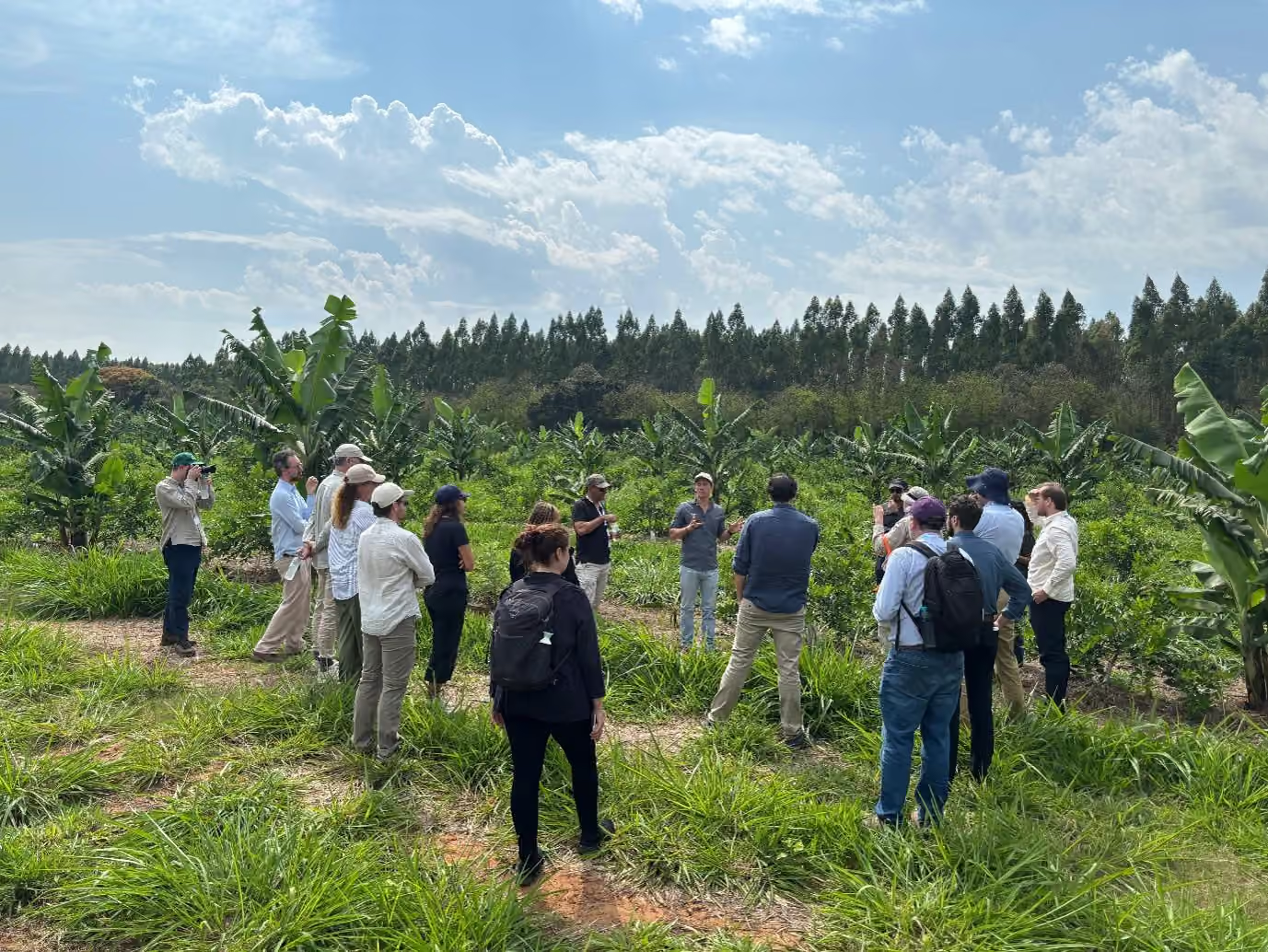
Visiting the Heineken/Rizoma agroforestry project in São Paolo
Challenges and opportunities in SP
Climate change is making many areas drier. In Brazil, only around 20 per cent of agricultural land is irrigated; the rest depends on rainfall and (underground) rivers. This has a major impact on Brazilian agriculture and, in São Paulo in particular, on export potential and food security in import-dependent countries such as the Netherlands.
In São Paulo city, the delegation met with SEMIL, the state department responsible, among other things, for environmental policy, to discuss their strategies and challenges. MAPBiomas and Embrapa Digital & Environment (Brazil’s leading agricultural research organization) presented agricultural developments and trends, and showed the downward trend in deforestation in the Amazon and the Cerrado, Brazil’s two largest biomes. The day concluded with a visit to Rabobank’s Latin America regional headquarters, where Rabobank outlined agricultural trends in Brazil, its sustainable finance portfolio and where it sees opportunities in the country.
A field-visit day in the state of São Paulo highlighted several key challenges and opportunities:
- The state is facing a creeping water crisis. The main drinking water system is chronically low, agriculture and the city compete for the same water, and the burden is unevenly distributed. Rivers are also heavily polluted. The Heineken–Rizoma project in Itú illustrates, on a small scale, how restoring degraded grassland and sugarcane fields can help to recharge groundwater.
- A similar water crisis in the PCJ basins (Piracicaba, Capivari and Jundiaí) is forcing local authorities and water managers to adopt innovative approaches. While traditional water management focuses on infrastructure, the Payment for Environmental Services (PES) scheme run by the municipality of Piracicaba, in close cooperation with the PCJ Committees, shows how economic incentives for farmers can structurally support the protection and restoration of critical water sources.
- Historical deforestation of the Atlantic Forest (Mata Atlântica) has had major consequences for biodiversity and water security in São Paulo state. Public authorities rely mainly on regulation and subsidies, but the NGO Fundação SOS Mata Atlântica demonstrates how restoration can be directly advanced in practice. From its base in Itú, the foundation not only restores its own land but also supplies native trees free of charge to local farmers, helping to drive long-term reforestation in the region.
- At the PwC Agtech Innovation Hub in Piracicaba, the delegation saw advanced agricultural and water management innovations. The hub connects start-ups, agribusinesses, investors, and knowledge institutions around precision agriculture and data-driven sustainability. For Dutch organizations, this ecosystem offers concrete opportunities to:
- Test and adapt technologies (e.g., remote sensing, irrigation solutions, decision-support tools) to Brazilian conditions.
- Co-develop digital tools for farm management, water allocation, and biodiversity monitoring.
- Build partnerships with Brazilian start-ups and cooperatives to jointly address challenges around soil health, water scarcity, and sustainable intensification.
- Explore new business models and service concepts (such as advisory services, data platforms, or performance-based financing) that support nature-positive agricultural production.
Beeld: LAN-BSA
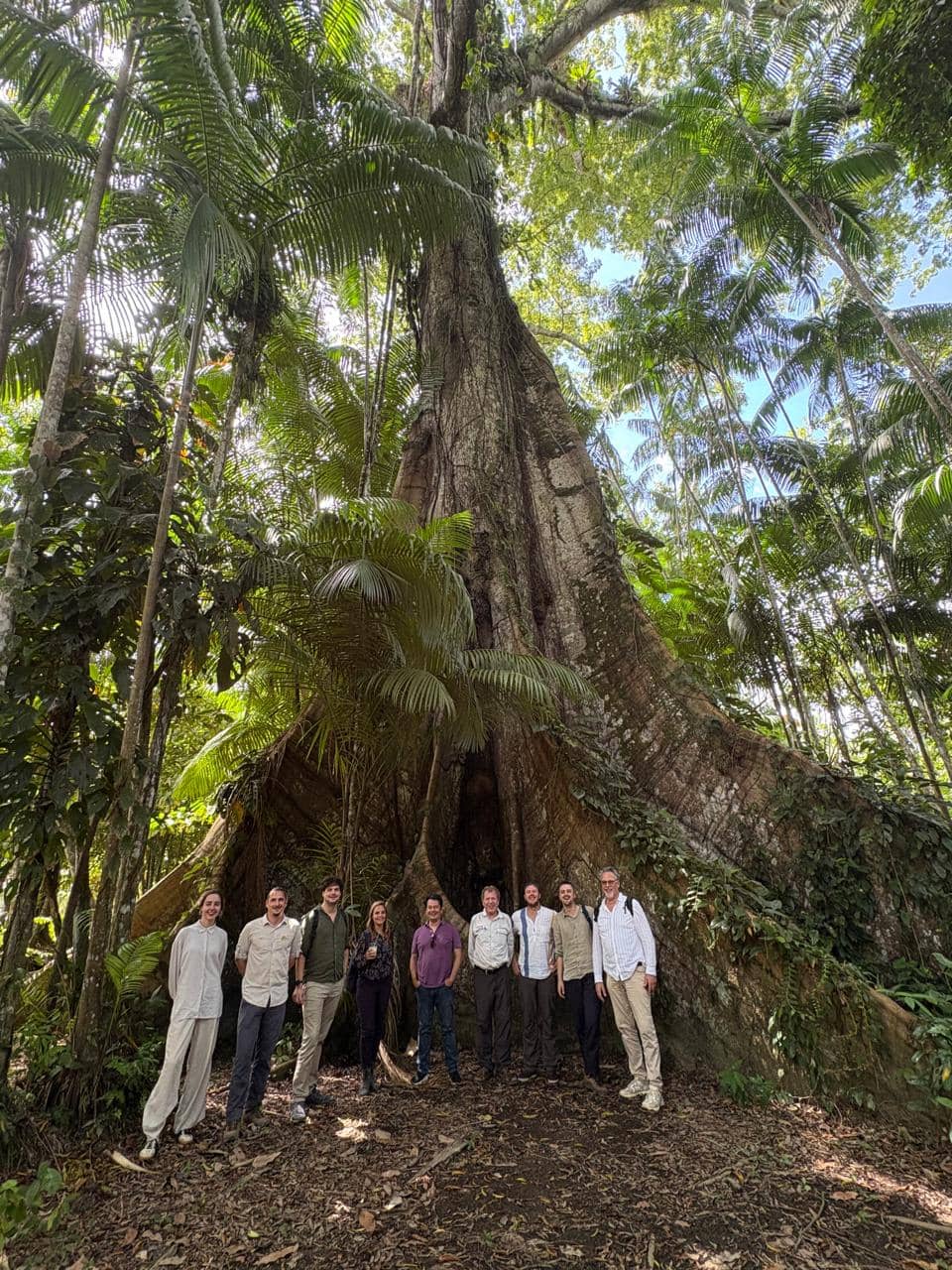
Part of the delegation under a kapok tree in Pará
Challenges and opportunities in Pará
Pará is the most deforested state in the Brazilian Amazon. In addition, there are millions of hectares of degraded land, which federal and state authorities aim to bring into production for agriculture and livestock in order to reduce further pressure on primary forests. Agroforestry is increasingly being promoted as a more nature-inclusive production system in the state. This became visible during our visit to the surrounding islands of Belem where we saw the prodcution of Acai, rubber, andiroba and cocoa.
Pará is Brazil’s largest cocoa-producing state, where cocoa has traditionally been cultivated in agroforestry systems, often combined with other local crops such as Brazil nuts and açaí. A key challenge is to scale up the production of this sustainable cocoa, given that Brazil is currently a net cocoa importer. We expect that, within the next five years, this region will offer growing opportunities for sourcing sustainable cocoa.
Agroforestry systems are particularly attractive to smallholders (5–10 ha) and cooperatives because crop diversification increases resilience to climate change. The main bottlenecks are access to nature-positive finance and to information and extension services, so that more farmers can make the shift to sustainable agriculture. This creates concrete entry points for Dutch organizations.
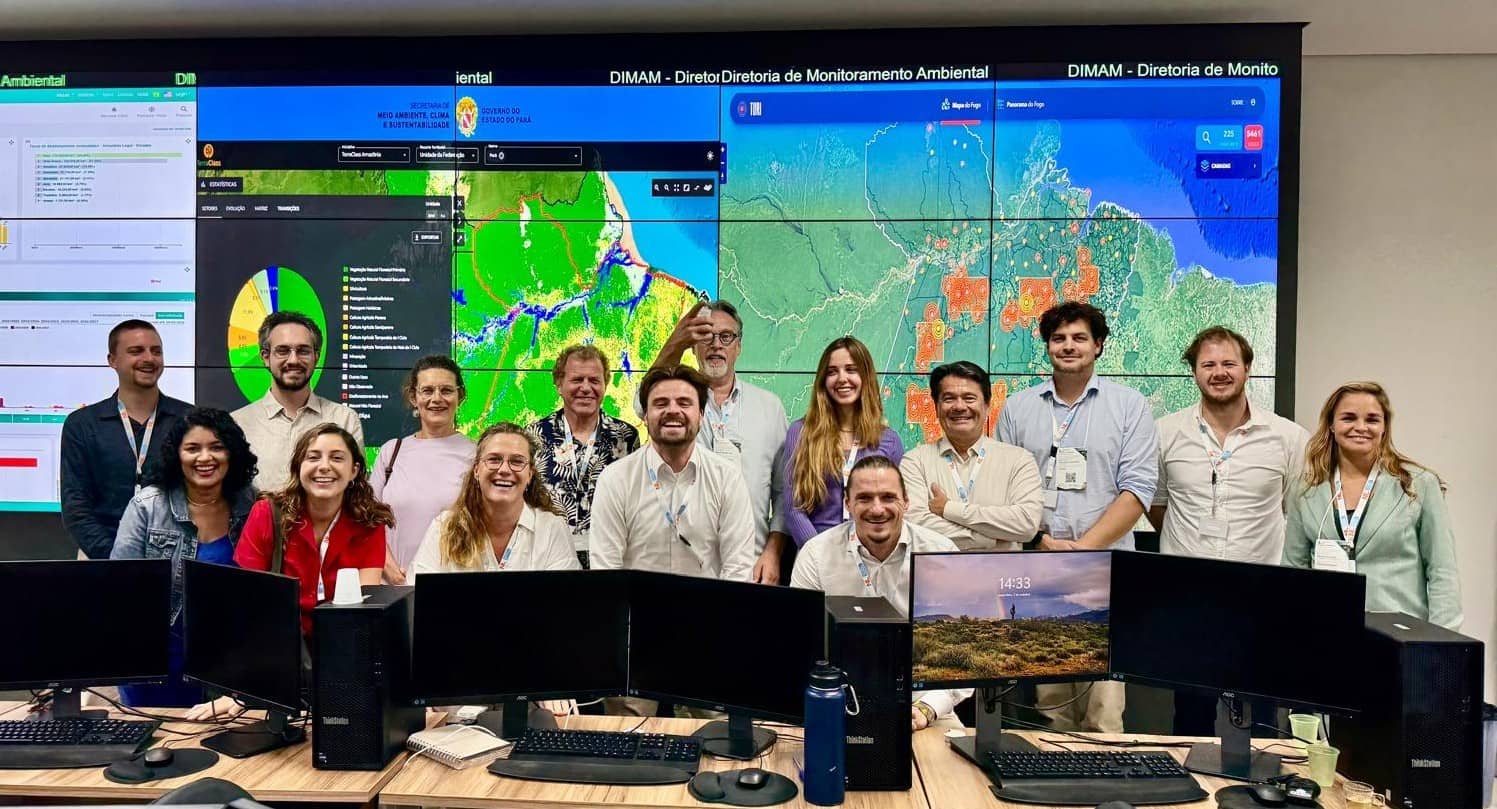
At the same time, there is demand for agricultural equipment and expertise (e.g. irrigation solutions, measuring equipment, remote sensing) to further develop these production systems. There are also significant opportunities in remote sensing for deforestation monitoring, which we observed at DIMAM, an area in which several Dutch organizations offer innovative technologies.
Beeld: LAN-BSA
Visit to DIMAM (organization which monitors the Amazon)
Conclusions and follow up
Placing biodiversity at the centre of a trade mission was relatively new, and participants clearly recognized its added value. The diversity within the delegation was another major strength: many connections were made and follow-up plans were discussed, including potential collaborations with Brazilian partners on water management, agroforestry and remote sensing.
With this trade mission, our aim was to promote the Dutch ‘nexus’ approach in Brazil, a market with significant potential due to its scale and the impacts of climate change. At the same time, as previous missions have shown, the Netherlands can also learn a great deal from Brazil’s experience in addressing challenges that we likewise face at home, such as achieving a sustainable balance between agriculture and nature.
Contact us
If you’re interested in these developments please reach out to us via bra-lvvn@minbuza.nl for follow up opportunities.