
In central Chile, the Maipo watershed is one of the most strategic socio-ecological landscapes of the country. Stretching from the high Andes to the Pacific Ocean, the basin sustains a significant share of Chile’s population and economic activity, while hosting globally important biodiversity, glaciers, wetlands, rivers and Mediterranean ecosystems found in few other places on Earth. Central Chile is as well an important agricultural region, source of fruits, wine and seeds for international markets, including Europe and the Netherlands.
Yet the Maipo basin is under increasing pressure: climate change, prolonged droughts, biodiversity loss, land degradation, urban expansion and competing demands for water and land are progressively undermining the ecological systems upon which communities and the economy depend. The impacts are also uneven: communities and local governments across the basin differ significantly in infrastructure, resources and their capacity to respond.
In 2026, a new initiative began taking shape in the Maipo watershed. Inspired by the 4 Returns framework for landscape regeneration developed by the Netherlands-based organization Commonland, The Ministry of Agriculture, Fisheries, Food Security and Nature (LVVN) and the Embassy of the Kingdom of the Netherlands in Chile joined forces with local partner Fundación Santuario del Maipo, supported by the Presencing Institute, to explore how long-term regeneration process could be built from the landscape itself. Bringing together international experience in landscape regeneration, systemic leadership and social weaving with strong territorial knowledge and local networks, this alliance is working to build a shared vision for the future of the Maipo watershed.
Beeld: © LAN Cono Sur
A critical landscape for Chile
The scale of the Maipo watershed helps explain why its future matters far beyond the river itself. Covering around 1.5 million hectares, the basin extends for more than 250 kilometres from its glacial headwaters in the Andes to the Pacific coast. More than eight million people live within the wider landscape, including the inhabitants of Santiago, Chile’s capital city, while the basin supports agriculture, industry, cities and rural communities. It is also exceptionally rich in biodiversity, containing around a quarter of Chile’s plant diversity and almost half of its vertebrate species.
These systems are deeply interconnected. What happens in the mountains affects water availability downstream; the condition of soils, forests and wetlands influences how water moves through the landscape; and the resilience of these ecosystems ultimately affects communities, agriculture and economic activity across the basin.
Beeld: © LAN Cono Sur
When a landscape begins to work together
The Maipo Basin does not lack knowledge, initiatives or people committed to its future. Across the territory, public institutions, communities, universities, civil society organizations and businesses are addressing different parts of the challenge. But much of this work remains fragmented — across sectors, places and priorities — limiting its ability to generate change at the scale of the landscape. What is needed now is to connect what already exists, build a shared direction and turn individual efforts into systemic change across the Maipo.
No single organization, municipality, company or community can regenerate a basin stretching from the Andes to the sea. Nor can water security, biodiversity, productive activities and human well-being be addressed separately. The opportunity lies in bringing these dimensions — and the people working on them — together. This is the idea behind building an alliance for the regeneration of the Maipo basin, bringing together people and organizations from across the watershed to shape a shared vision for its long-term regeneration.
With seed funding from LVVN’s Biodiversity Fund, the first phase of the Maipo alliance has focused on what we call “preparing the soil”: understanding the landscape and the initiatives already shaping it, weaving relationships among its actors, and beginning to build the shared understanding and trust needed for long-term regeneration.
This has taken different forms: from individual meetings, participatory workshops, field activities and multi-stakeholder gatherings, the process has connected public institutions, communities, academia, civil society and businesses. Together, these conversations are helping to map existing efforts and knowledge, identify gaps and opportunities for collaboration, and build a more integrated understanding of the landscape.
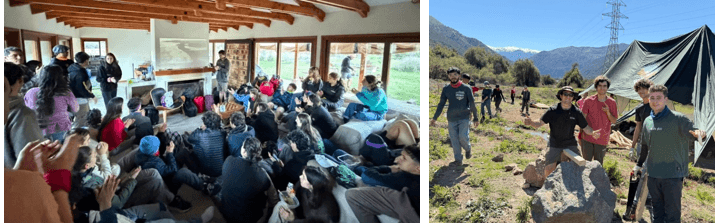
Beeld: © Santuario del Maipo
A particularly revealing moment came during Expo Agua 2026, where the initiative created a space for a different kind of interaction among companies and other water actors that do not normally relate in this way. The discussion went beyond technical solutions. Participants spoke openly about some of the barriers that make collaboration difficult, including lack of trust, existing rivalries and legal concerns. At the same time, they identified areas where working at basin scale could make a difference: stronger governance, shared information, joint resources for collaborative projects and a more coordinated dialogue with public policy.
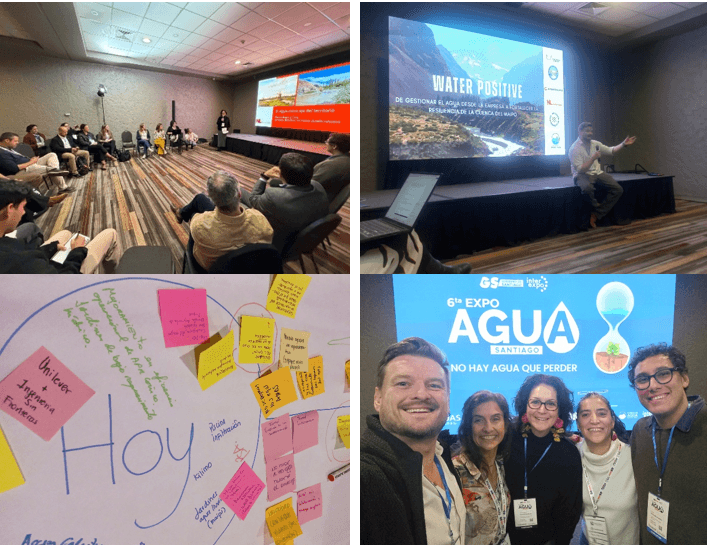
Beeld: © Santuario del Maipo
The process is also beginning to move from many individual perspectives towards a collective narrative for the Maipo. Voces del Maipo, currently under development, is an audiovisual piece that will bring together voices from across the territory around a simple progression: understanding the watershed, recognizing its losses, imagining the returns that regeneration could create, inviting actors to collaborate and build a common sense of belonging to the Maipo Watershed.
The long-term ambition
Restoring a landscape at the scale of the Maipo is not a short-term task. Landscape regeneration can span a generation, moving progressively from addressing degradation and rebuilding ecological and social capacity towards systems that can sustain regeneration over time.
Commonland’s 4 Returns framework provides a compass for that journey. It starts by looking at a landscape through four interconnected forms of loss: the loss of purpose and inspiration, social capital, natural capital and financial capital. In the Maipo, these losses can be seen in the weakening connection between people and the watershed, fragmented relationships and limited trust among actors, the degradation of biodiversity, soils and water systems, and growing pressures on livelihoods and economic activities. Regeneration means gradually turning these losses into returns: rebuilding a shared sense of purpose and connection with the landscape; strengthening social capital and collaboration; restoring natural capital; and creating resilient economic opportunities that can sustain people and the watershed over the long term.
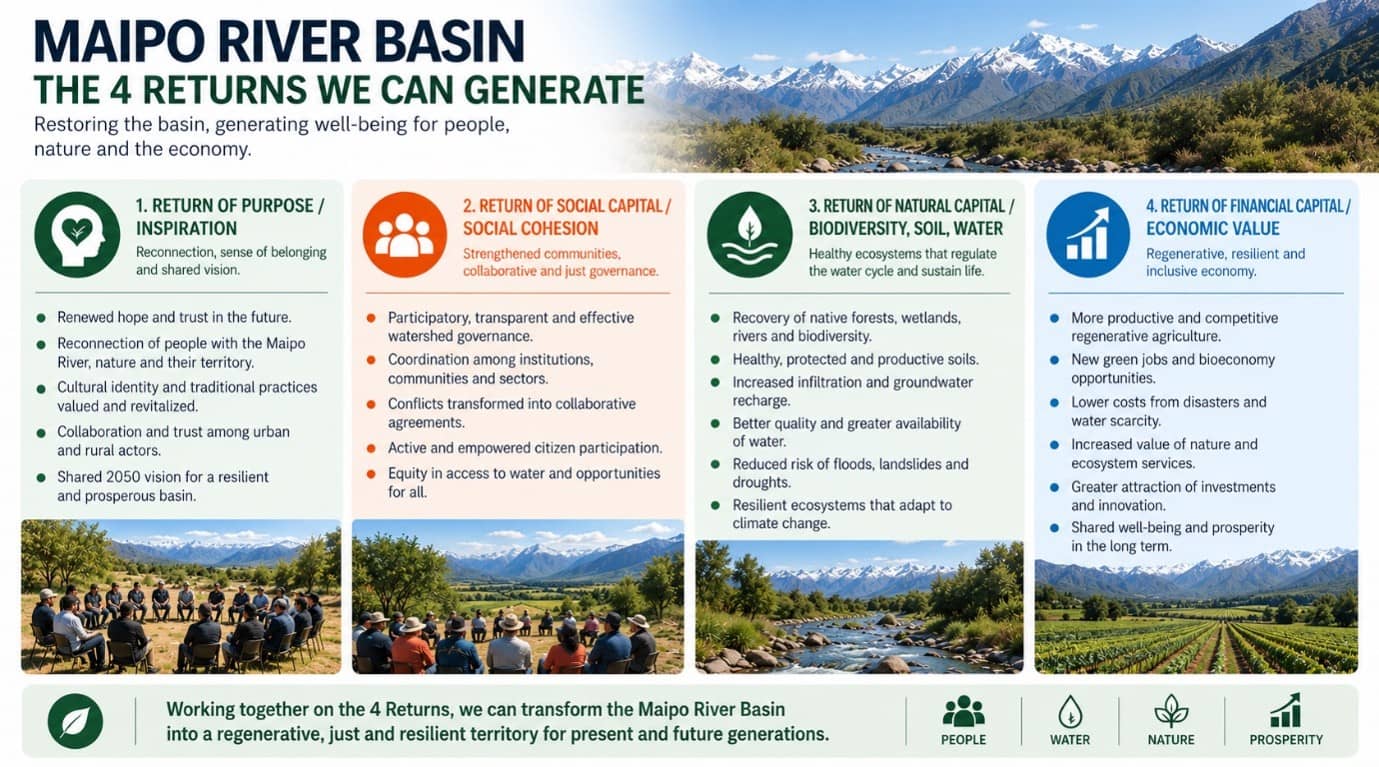
Beeld: © Santuario del Maipo (generated with IA)
The next step is therefore to turn the relationships, knowledge and momentum built during this first phase to co-create a shared vision for the Maipo, a long-term plan and stronger cross-sector commitment. From there, the alliance can begin to translate that vision into action: identifying priority areas and opportunities for restoration, developing and testing regenerative initiatives through locally rooted conservation and restoration pilots— such as the work already underway at Santuario del Maipo — and progressively scaling what works across the watershed. This will also require exploring the long-term financing and partnerships needed to sustain regeneration beyond individual projects.
In practice, this could mean very different interventions in different parts of the basin: restoring ecosystems that help regulate water, improving the condition of soils and productive landscapes, protecting areas of high ecological value, or developing regenerative economic activities that create value while strengthening the landscape. The intention is not to prescribe one model for the entire Maipo, but to identify where different actions can reinforce one another and generate multiple returns at landscape scale.
The scale of the ambition means that no single organization can deliver it. Communities, landowners, public institutions, businesses, universities, civil society and international partners will all have different roles to play. The task ahead is therefore not only to implement restoration projects, but to build the ecological, social and financial conditions that allow regeneration to continue and grow across the landscape.
Why does this matter for the Netherlands
A more resilient Maipo can contribute simultaneously to water security, healthier ecosystems and more sustainable agricultural production, while strengthening the capacity of the territory to respond to climate change and other long-term pressures.
For the Netherlands, the relevance of the Maipo goes beyond biodiversity conservation. The initiative connects closely with several priorities of LAN Cono Sur and LVVN, including the Water–Food–Biodiversity Nexus programme, our work on sustainable production, nature conservation and landscape restoration, and the development of long-term partnerships. Strengthening the resilience of productive landscapes such as the Maipo also contributes to food security and to the long-term sustainability of international agricultural supply chains, and as such connect Maipo with European and Dutch consumers.
But the exchange of knowledge does not need to go in only one direction. The Netherlands itself faced significant water scarcity during the exceptionally dry summer of 2026, highlighting that adapting to less predictable water availability is an increasingly shared challenge. Chile has been dealing with prolonged drought and water scarcity for many years, and the experience accumulated in landscapes such as the Maipo can also offer valuable lessons for the Netherlands. The Maipo can therefore become a space for mutual learning — connecting Dutch expertise with Chilean experience and locally rooted knowledge, while exploring how landscapes can become more resilient in a changing climate.
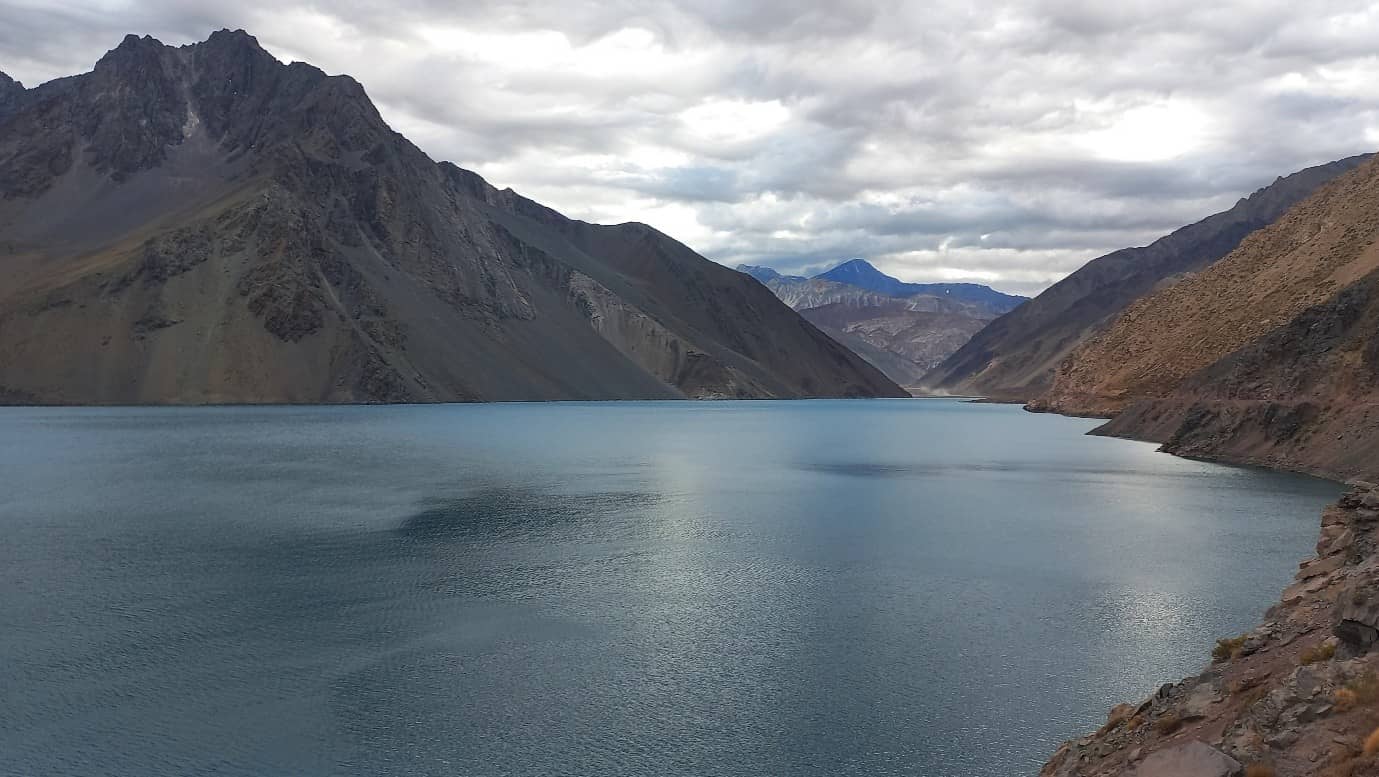
Beeld: © Lan Cono Sur
More information
Landscape regeneration is a collective journey. If you would like to follow the Maipo Alliance, share experiences or explore opportunities to connect, please contact the Netherlands Agricultural Network in Chile at lvvn-stg@minbuza.nl. You can also visit the country page of Chile to learn more about the work of the LVVN Office