
Egypt's agricultural sector sits at the heart of the country's economy, contributing 14.4% of GDP and providing 28% of national employment. Yet it is a sector under severe structural strain: the average farm holding has shrunk to just 2.2 feddans, over 85% of Egypt's scarce freshwater goes to agriculture, and fewer than 10% of properties are formally registered, leaving some US$84 billion in agricultural land unable to serve as collateral for credit. Against this backdrop, a new scoping study commissioned by the Netherlands Enterprise Agency (RVO) and carried out by the Netherlands-African Business Council (NABC) sets out to answer a deceptively simple question: can Dutch development aid to Egyptian smallholders evolve into lasting Dutch-Egyptian trade?
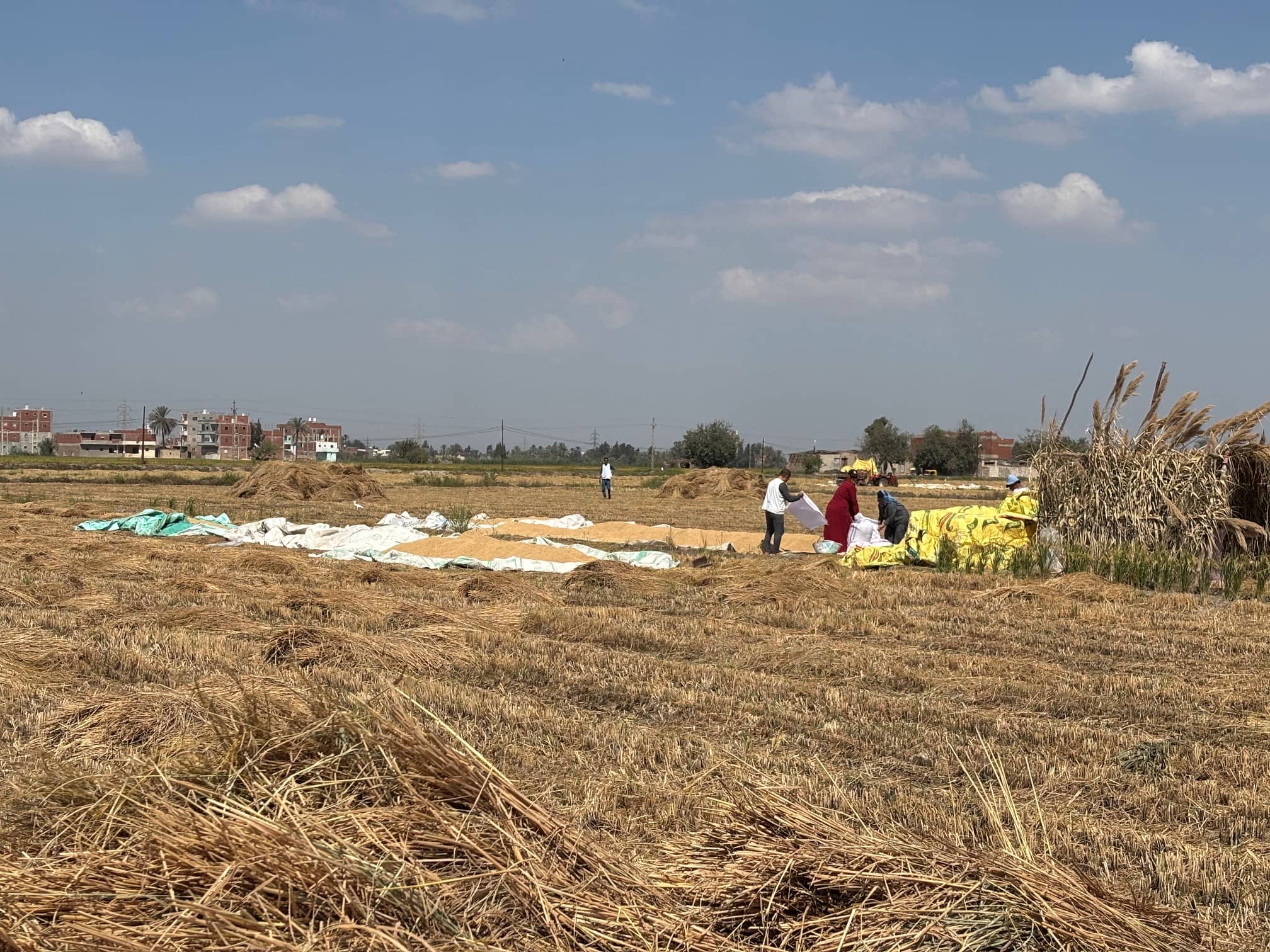
Harvest in Sharqeya area
A programme built on numerous lessons
The study centers on the LAND-at-Scale (LAS) programme, a Dutch-funded land governance initiative that has evolved over more than five years. It began under the World Food Programme (WFP) as "Strengthening Climate Resilience and Food Security" (2020-2025), reaching over 184,000 people directly across 60 villages in Assiut, Sohag, Qena, Luxor and Aswan. That phase pioneered the Land Use Consolidation (LUC) model, in which groups of 10-20 smallholders pool fragmented plots to farm collectively, achieving yield increases of 20-50% and unlocking access to machinery and irrigation upgrades that would be unworkable on individual plots of under a feddan.
The current phase, led by GIZ under its wider Agricultural Innovation Project, has shifted the model further: rather than fully subsidized inputs, farmers now contribute at least 20% of costs themselves, a deliberate move to build ownership and break the dependency cycle that can come with traditional aid. Farmer Organizations are being professionalized into Business Development Services (BDS) units, tasked with the finance, marketing and quality-control functions needed to bridge the long-standing mistrust between smallholder producers and private buyers.
Where does the Netherlands fit in?
The Netherlands has been a consistent partner in Egyptian agriculture, funding dozens of projects in recent years spanning irrigation, protected horticulture, saline agriculture, digital tools and entrepreneurship support. But most of this funding falls under development aid, where the beneficiaries (smallholder farmers and government-linked institutions) rarely have the capacity to become paying customers of Dutch companies once a project ends. The scoping study set out to test whether that pattern could be broken: could the LAS programme's momentum be converted into genuine, self-sustaining commercial linkages between Dutch and Egyptian businesses?
To explore this, NABC held in-depth interviews with RVO, WFP and GIZ, then organized matchmaking meetings between Dutch companies and GIZ as the current implementer of LAS. Four Dutch organisations took part:
- Skilled, an e-learning provider, looked at delivering technical training — though the conversation shifted from smallholders themselves, most of whom face significant digital and literacy barriers, towards educated local graduates who could act as knowledge brokers.
- FutureWater, a global research and consultancy organization, presented "Croptimal", a satellite-based irrigation advisory tool that sends daily water recommendations via WhatsApp: a promising fit for Egypt's water-scarce, largely flood-irrigated farmland, albeit best suited to farms that have already converted to drip irrigation.
- East-West Seed, a global supplier of climate-resilient tropical vegetable seed, explored routes into the Egyptian market through digital input platforms rather than direct sales, given that Dutch seed remains too costly for most smallholders.
- Farmer Link (ExoLink), a traceability platform, discussed how its farm-to-exporter data tools could help Egyptian onions, garlic, peppers and medicinal and aromatic plants (MAPs) meet strict EU food-safety and Maximum Residue Level requirements.
"The current entry point to collaboration with Dutch companies lies in the knowledge-sharing aspect: improving land registration and monitoring and developing a stable contract-farming method which avoids farmer and buyer mistrust due to market prices."
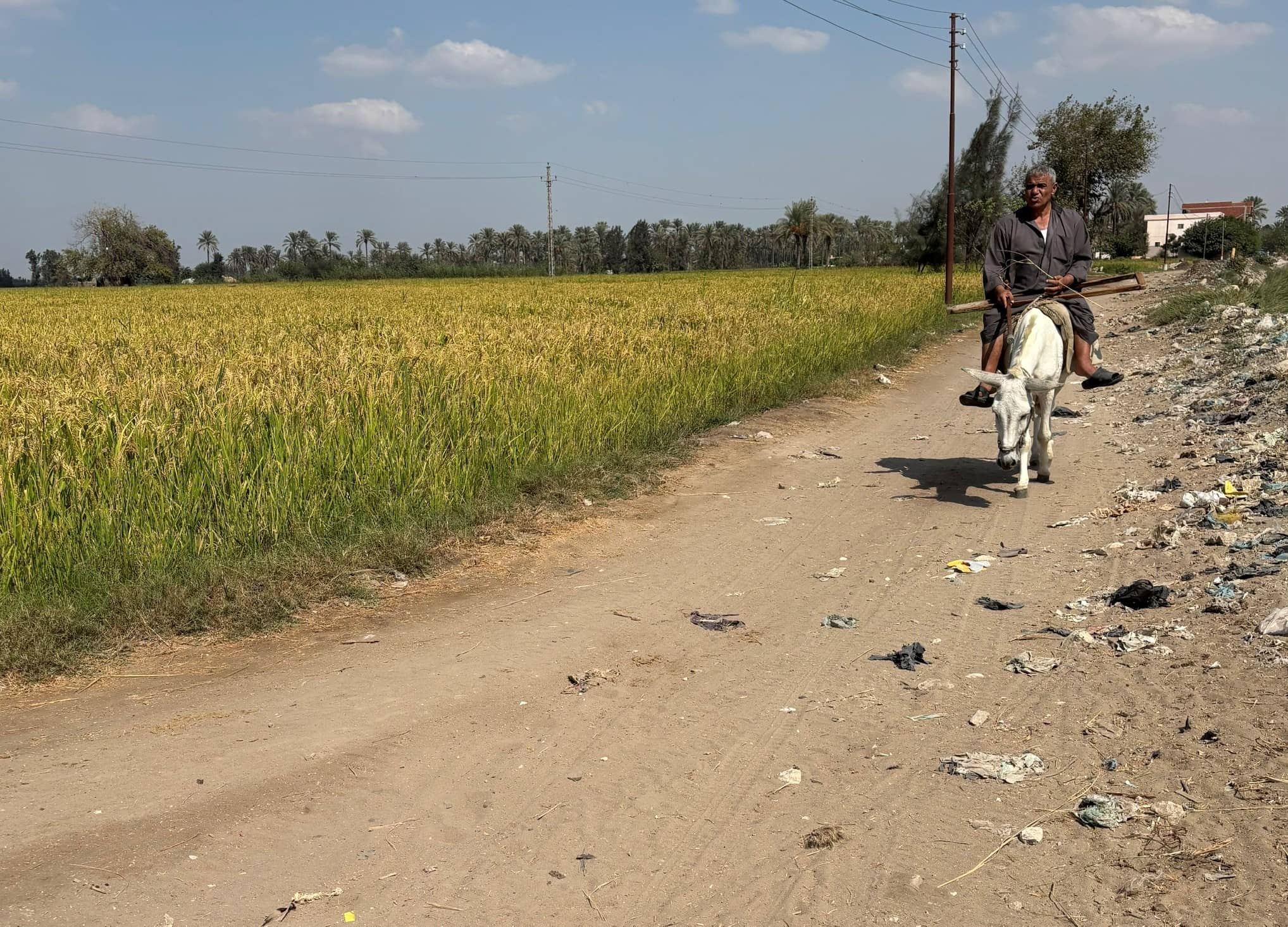
Small holder farmer in Delta region
The degree of export-readiness for smallholders
Perhaps the study's most important conclusion is that Egyptian smallholder farmer groups are not currently in a position to export directly to the Netherlands or other European markets. Land fragmentation makes it difficult to guarantee consistent volumes; quality and traceability systems are largely absent; and the very cooperative structures meant to represent farmers are, in practice, often little more than fertilizer-distribution arms of local government, ill-equipped to negotiate contracts or manage compliance. This is compounded by practical barriers to engagement itself. Only around 10% of smallholders in Upper Egypt can meaningfully use digital platforms, and 62% of female farmers in the region are reported to be illiterate. Even finding four literate, capable individuals to manage the digital and financial affairs of a fifteen-farmer consolidation group proved difficult in practice. As a result, the original ambition of matchmaking Dutch companies directly with 60 Egyptian farmer cooperatives had to be revised; instead, GIZ was used as a trusted intermediary to broker introductions.
The real opportunity: professionalizing the middle of the value chain.
Rather than positioning smallholders as future exporters, the study argues that the more realistic and durable opportunity lies in strengthening the intermediary layer of the value chain: the emerging BDS units and Community Development Associations that sit between farmers and buyers. If these bodies can be professionalized to manage contract farming, crop consolidation, quality control and traceability, they could become the aggregators that give private-sector buyers the reliable, compliant volumes they need, while opening the door for Dutch firms to sell technology and services (such as irrigation advisory tools, traceability platforms, training curricula, or organic-certification support) rather than physical inputs that remain unaffordable for most smallholders.
This "technology-as-a-service" model, the study suggests, offers a genuine win-win: it supports Dutch policy interests in trade promotion, regional stability and migration management, while helping Egypt modernize its agricultural sector and raise smallholder incomes, estimated at 20-30% under the current programme.
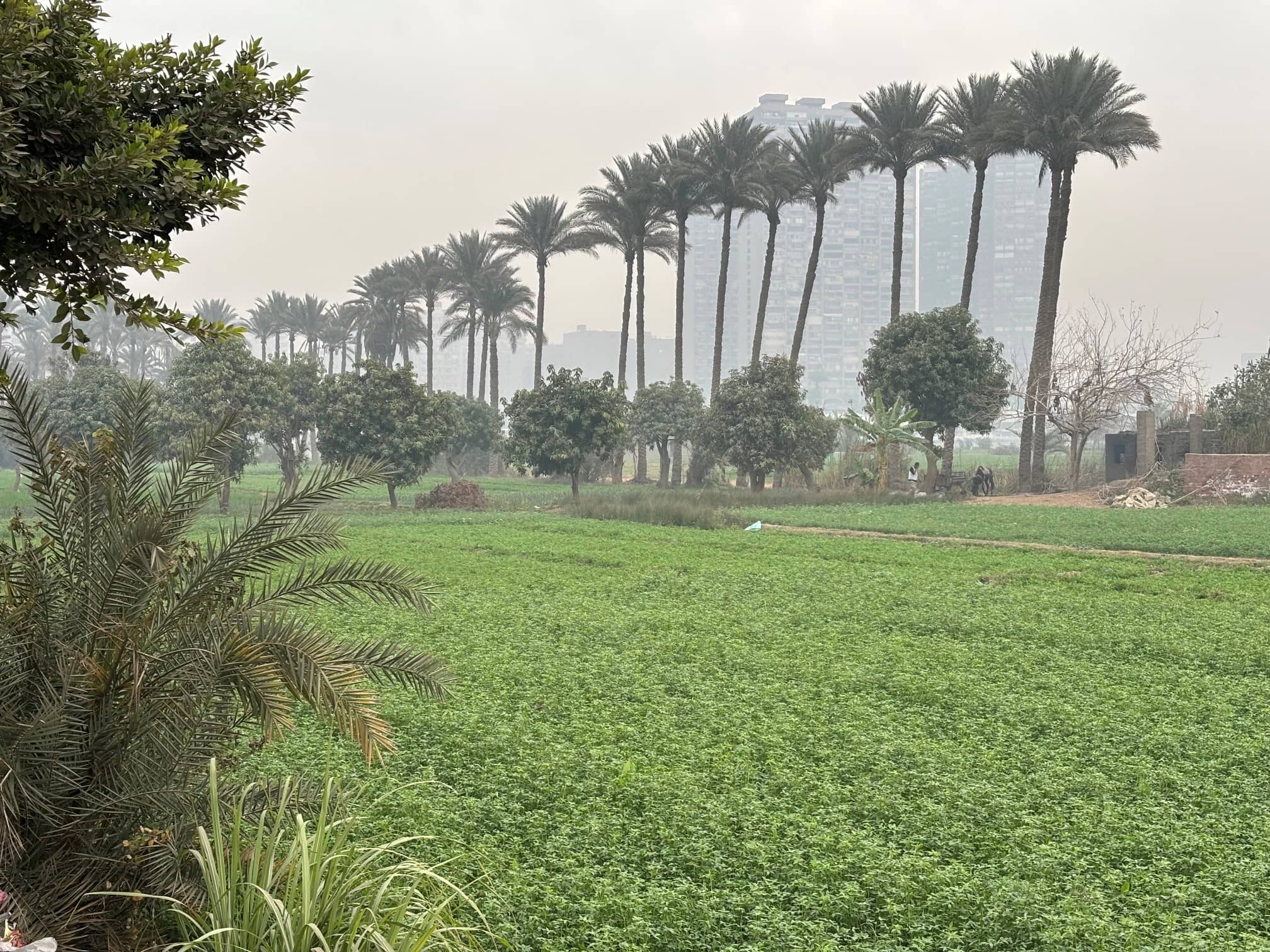
Small scale agriculture on an island in Cairo
What comes next?
The study identifies three persistent gaps that any follow-up work will need to address: a scale and readiness gap, driven by extreme land fragmentation; an institutional gap, given that Farmer Organizations remain informal and cannot yet operate as full business entities; and a data and traceability gap, without which Egyptian produce cannot credibly meet EU market standards. Several of the matchmaking conversations that began during this study are set to continue as the LAS programme itself progresses.
More information
For more on the LAND-at-Scale programme: LAND-at-scale: For just and fair land governance | RVO
More details are avaialbe in the full "Scoping Study on Trade Partners for Egyptian SMEs" (NABC, May 2026)