
The EU-Mercosur trade agreement took 25 years to negotiate. Here is what changed on 1 May 2026, where the opportunities lie, and what needs to happen next.
Beeld: © LAN Cono Sur
There is a particular kind of business opportunity that requires historical patience and commercial urgency simultaneously. The EU-Mercosur agreement is one of them. Twenty-five years of negotiation culminated in a signing ceremony in Asunción on 17 January 2026. The interim Trade Agreement - the part that actually reduces tariffs, opens markets and creates enforceable rules - began applying provisionally on 1 May 2026.
For Dutch companies considering Argentina, the significance of that date goes beyond the tariff schedule. Argentina has one of the more demanding business environments in the world: a history of currency crises, policy reversals, capital controls and abrupt changes in the rules of trade. Any serious assessment of the Argentine market has to account for that history. What the EU-Mercosur agreement adds, and what tends to get underweighted in purely commercial analyses, is a structural anchor.
International trade agreements do not just reduce tariffs. They create legal commitments that outlast individual governments. This matters enormously for investment decisions with five- or ten-year payback horizons. It is one of the reasons that foreign direct investment tends to follow trade agreements, not just coincide with them. The current Argentine government's pro-market orientation creates an entry window. But the agreement means that the commercial architecture built in this window is less vulnerable to the policy volatility that has historically defined Argentine business risk.
The window now open for Dutch agri-food companies, investors and technology firms is real, near-term and finite. It will not stay open indefinitely. Other member states are each larger economies with well-resourced trade promotion agencies and established commercial relationships in Argentina. The question is not whether this opportunity exists, it does, but whether Dutch actors move with the speed that a first-mover advantage requires.
This article is about the practical answer to that question: what changed, where Argentine agriculture is heading, where the opportunity is and what to do about it.
What actually changed on 1 May 2026
Stripping away the Brussels terminology: the interim Trade Agreement (iTA) is a tariff-reduction schedule, a market access agreement and a rules framework. The iTA is in force now.
For Dutch companies exporting to Argentina, tariffs of up to 55% on seeds, machinery and processed foods begin falling progressively from day one. For Dutch dairy producers, quota-based access to Argentine and Brazilian markets opens around year three. For Argentine exporters selling to Europe, export taxes on wheat, maize, sunflower and other grains must reach zero by year three of the agreement. Soybean export taxes (currently around 24%) are capped at 18% by year five and 14% by year ten. These are not just tariff adjustments. They reshape the economics of the Argentina-Netherlands agricultural relationship.
Beeld: © AI generated, LAN Cono Sur
One provision deserves special attention because it runs simultaneously with the iTA and affects all importers: the EU Deforestation Regulation, or EUDR. Entering into force in late 2026, it requires that soy, beef, wood, cocoa, coffee and several other products demonstrate deforestation-free origin at farm level. There are no exceptions: preferential tariff flows under the iTA do not exempt products from EUDR compliance. Any Argentine exporter unable to document farm-level origin by late 2026 faces genuine disruption to its EU flows, regardless of the new tariff schedule. For Dutch importers of Argentine soy and beef, this is not a future matter, it requires action now. And importantly, the EUDR — including in the context of a future EU‑Mercosur trade agreement — is designed to ensure that trade supports the regulation’s main goal: stopping deforestation.
Key provision: The iTA also provides improved access for Dutch companies to Argentine public procurement processes, and strengthens investment protection frameworks. Combined with lower tariffs, this significantly reduces the risk profile for Dutch companies considering market entry or expanded investment in Argentina.
Where Argentine agriculture is heading — and why it matters for Dutch companies & investment
Understanding the opportunity, where to invest and what to sell into Argentina requires understanding not just the country's current position, but where its agricultural system is moving. Four structural trends are underway (documented in Argentine agricultural policy frameworks and INTA research agendas) that create specific demand for Dutch technology, knowledge and capital.
Crop diversification beyond the traditional export basket
Rapeseed and canola grew by 127% in 2025 from a near-zero base a decade ago - the clearest signal yet of a diversification trend already in motion. Specialty pulses, quinoa and chia are expanding in northwestern provinces for high-value ingredient markets. Blueberries and premium soft fruits are growing in Patagonia. Argentina also remains the world's leading exporter of lemon juice and blanched peanuts, and its wine sector, led by Malbec, is consolidating its position in EU premium retail. The Argentine government actively promotes export diversification to reduce commodity price dependency, and the iTA provides a new commercial framework to support that shift.
For Dutch companies, this means the relevant market is broader than soy and maize. Seed variety development for heat- and drought-tolerant vegetable and specialty crops, cold chain and post-harvest technology for premium perishables, and ingredient sourcing for Dutch food manufacturers seeking novel plant-based inputs are all growth categories.
Value-addition at origin: processing moving upstream
Argentina currently exports mostly raw and semi-processed commodities. The processing margin - for soy crushing, peanut blanching, sunflower refining, fruit packing - accrues downstream in Rotterdam, Hamburg and Antwerp. The EU-Mercosur agreement creates a new incentive structure: as export taxes fall on processed products alongside raw ones, the economics of processing in Argentina improve. Argentine government industrial policy, including free trade zones and tax incentives for agri-processing investment, points in the same direction.
This transition is a five-to ten year process, not an immediate market shift. But early positioning matters more than immediate sales. Dutch companies that establish joint ventures in Argentine food processing today are better placed to capture the value that comes from upstream integration as the policy environment matures.
Irrigation expansion and precision water management
Argentina currently irrigates approximately 2.3 million hectares - a small fraction of its agricultural potential given the vast arid and semi-arid zones in the Andean foothills, Patagonia and the northwestern provinces. Government investment plans target significant expansion of irrigated area for fruit, wine grapes, vegetables and quinoa: crops with high value per hectare where irrigation efficiency directly determines profitability. Argentine public institutions are actively seeking international technical partnerships for this expansion.
Dutch expertise in drip and sprinkler irrigation systems, precision water management and salinity management is directly applicable. The WUR & VU partnership in saline agriculture research at Rivadavia in Buenos Aires Province provides an existing proof of concept that can be leveraged commercially. The Blue Deal, the Dutch government's international water cooperation programme, provides an institutional framework for bilateral engagement at the public sector level, a useful entry point for private sector companies that follow.
Digital agriculture and precision farming adoption
Argentina already operates at a high technological baseline: near-universal no-till adoption, rapidly growing drone and remote sensing use, and strong soil science research through both private and public associations & institutes.
The gap is in the next layer: farm management software at scale, precision variable-rate input application, real-time soil health monitoring and data integration across large farm operations. Argentine farm sizes, many exceeding 10,000 hectares, create demand for precision agriculture at a scale that simply does not exist in the Netherlands.
The iTA's machinery and equipment tariff reductions improve the economics of Dutch technology imports from year one, removing a significant cost barrier that previously made Dutch precision equipment less competitive against US and Israeli alternatives. The existing institutional research partnerships are the natural pipeline for Dutch technology startups seeking their first Argentine pilot agreements.
Five concrete entry points for Dutch companies
The following categories represent the strongest near-term opportunities for Dutch companies in the Argentine agri-food market. Each is assessed on market readiness, Dutch competitive advantage, and the specific effects of the iTA on entry economics.
01- Seeds and plant genetics. Several Dutch seed companies already have Argentine operations, which is a structural advantage rather than a starting point. The iTA tariff reductions improve the economics of seed imports from year one. Argentine demand for heat- and drought-tolerant vegetable varieties will grow with climate change and as the country's horticulture sector undergoes a quality upgrade driven by modern retail chain expansion.
One constraint requires acknowledgement: Argentina is not yet a member of UPOV 1991, meaning IP protection for new plant varieties remains weaker than EU standards. This is a bilateral policy advocacy issue - one that LVVN is working in the government-to-government agenda - rather than a commercial blocker, but it does reduce the return on breeding investment and should be factored into market entry calculations.
02 - Precision irrigation and water management. The irrigation expansion plans in Mendoza, Neuquén, Rio Negro, San Juan and the northwest are documented, government-funded and actively seeking technology partners. Dutch drip irrigation systems, water efficiency monitoring and salinity management tools are directly applicable. Just as the need for integrated water management solutions. Some of the ongoing projects of the LAN Office provides an institutional entry point to both public & private sector, acting as a bridging mechanism that private sector companies can use to establish credibility and local relationships before pursuing commercial contracts independently.
03 - AgTech, precision farming and digital agriculture. Argentina's large farm operations create demand for precision agriculture at a scale that does not exist in the Netherlands. Soil sensing networks, variable-rate application systems, drone-based crop monitoring and integrated farm management platforms all have addressable markets. Amongst others, the WUR-INTA research partnership is the institutional bridge for Dutch companies seeking pilot agreements that can lead to commercial partnerships.
04 - Food processing technology and cold chain. The value-addition trend creates growing demand for Dutch food processing equipment: oilseed crushing and fractionation technology, drying and packaging systems, and cold chain infrastructure for premium fruit and fisheries. Joint ventures with Argentine companies are more viable than pure equipment exports because they qualify for local content preferences in public procurement and are more resilient to currency volatility. This is a medium-term opportunity, three to five years to meaningful commercial scale, but early positioning is essential.
05 - Dairy genetics, technology and market access. The iTA opens opportunities in the dairy sector.Having an Argentine footprint would be an asset for positioning ahead of the quota opening. Dutch dairy genetics and herd management technology have a strong market among Argentine dairy farmers modernizing their operations to meet quality export standards.
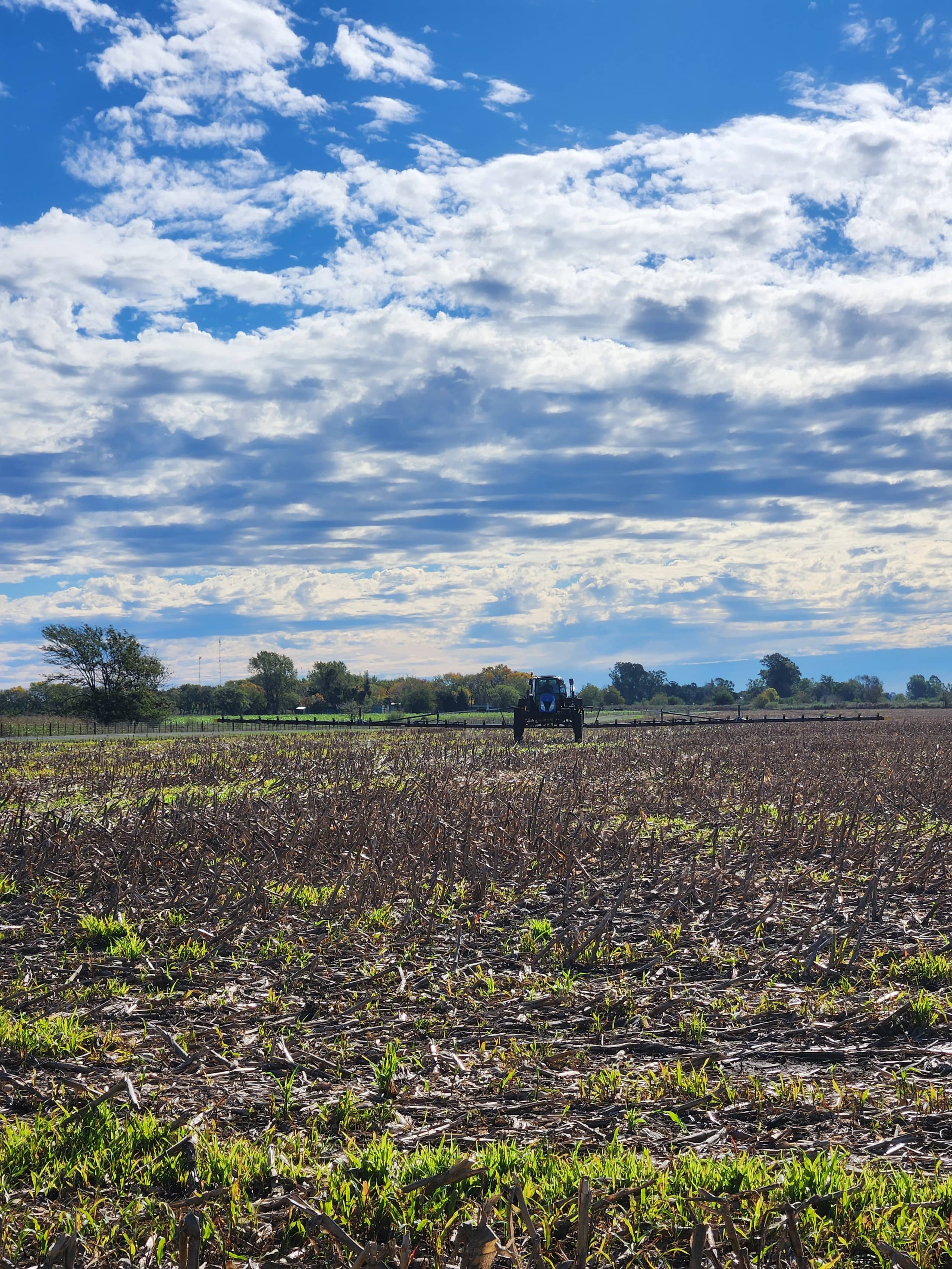
Beeld: © LAN Cono Sur
A note on honest expectations
Argentina is not an easy market. Its macroeconomic history is well known: currency crises, sovereign defaults, policy reversals and regulatory complexity are all part of the commercial environment. The EU-Mercosur agreement does not erase that history. It creates a new framework of rules and incentives, which will help to reduce economic volatility and creates more stability, not least because a country cannot simply withdraw from the agreement or ignore its provisions. But still, Dutch companies should approach with clear eyes and realistic planning horizons.
The ADSB/FMO guarantee instrument recommendation above exists precisely because country risk cannot simply be wished away by a trade agreement. Any Dutch company entering the Argentine market should build currency exposure management, local partnership strategy and regulatory navigation into its business model from day one.
The honest expectation is this: for companies willing to invest time in building local relationships and institutional knowledge, Argentina under the current policy environment (record agricultural output, a new trade architecture, and a government that is actively seeking European investment and technology and opportunities to increase sustainable production) offers better conditions than it has in years.
Dutch companies that understand the market and move with institutional backing have a structural advantage over competitors from larger EU economies. The question is whether that advantage is used deliberately, or left to expire.
The structural complementarity between Dutch agricultural expertise and Argentine productive capacity is real and durable. The Netherlands processes, refines and distributes what Argentina grows. Argentina needs the technology, seeds and knowledge to produce more, better, and with less environmental impact. The EU-Mercosur agreement provides the commercial architecture for that relationship to deepen. What happens next depends on the choices made in the 18 months ahead — and on whether Dutch institutions and companies treat this as a window to close, or merely as a development to observe.
More information
Would you like to know more about the work done by the LVVN Office in Argentina? You can visit the country page of Argentina. You can also send an email to the LAN team in Buenos Aires: bue-lvvn@minbuza.nl.