
A Dutch-Kurdish pilot project in the Bazian Valley near Sulaymaniyah, in the Kurdistan Region of Iraq, is reshaping tomatoes and cucumbers production and packaging. The project “Improved Competitiveness of Vegetable Value Chains Sulaymaniyah Governorate” is reducing post-harvest losses, and with them the water, land and inputs that go into every vegetable that is wasted, through strengthening cooperation between growers, packers, traders and buyers. Recent laboratory testing in Iraq and the Netherlands has demonstrated that the produce meets international food safety standards. The project has now launched a new brand, Bazian Valley Fresh, to bring that quality to market.
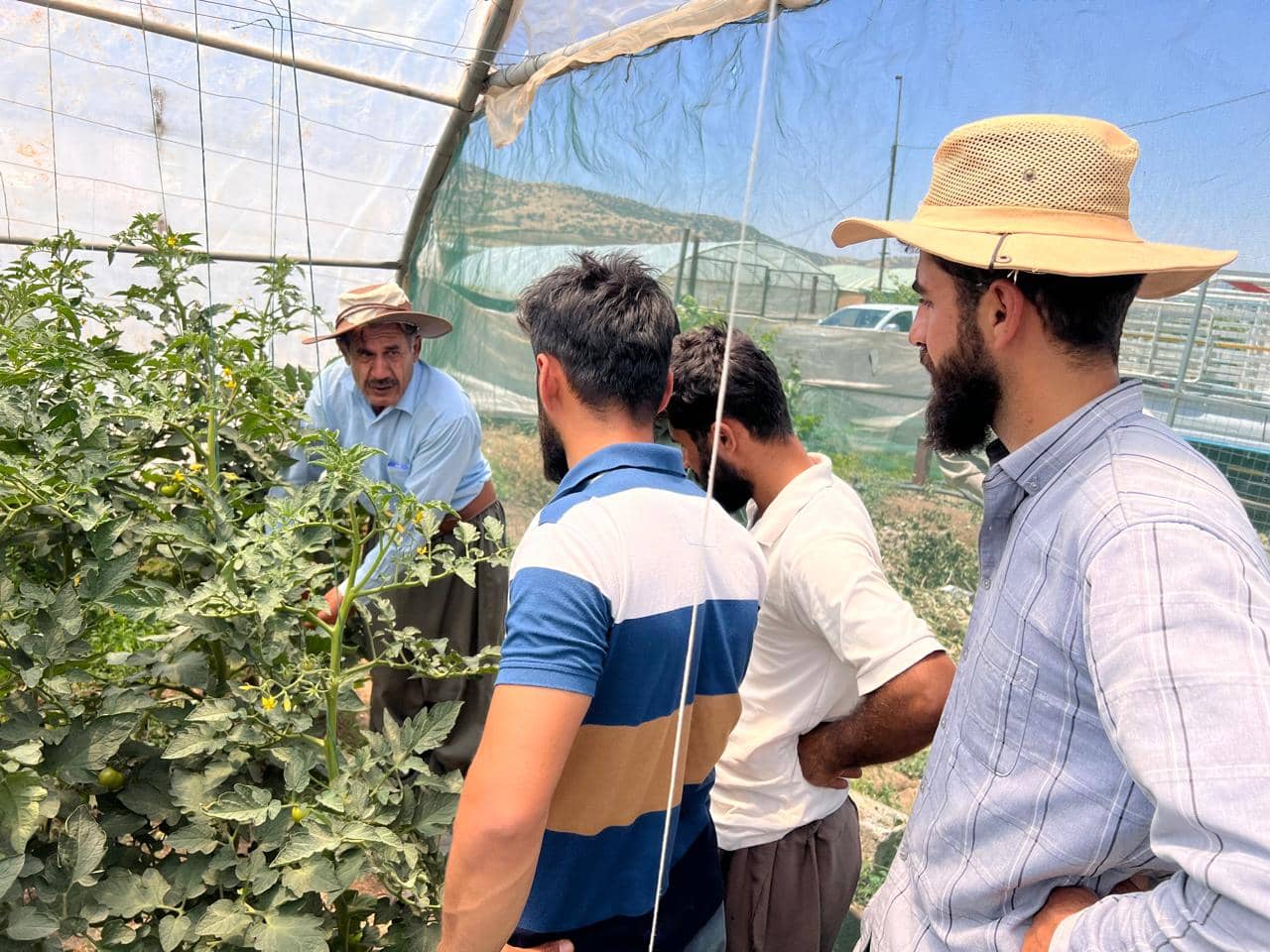
The project - initiated by the Netherlands Agricultural Network (LAN) team in Iraq and funded by the Netherlands Enterprise Agency (RVO) - is implemented by HollandDoor Cooperative and Green Solutions, a local company from Iraq. It builds on a 2024 study of the tomato and cucumber value chains in Sulaymaniyah Governorate which identified weak cooperation among value chain partners, inconsistent adherence to market criteria and limited uptake of innovation as the main barriers to growth.
Project partners on site: farmers, engineers and government officials in front of a tunnel greenhouse in Bazian
Less waste, less water
A lot of fresh produce never reaches the consumer fit to sell, simply because it's poorly graded, packed or handled along the way. Every kilo lost on the way represents water, fertilizer, energy and labor that went into growing it. That's the reasoning behind the project's focus on post-harvest handling.
Pilot farmers in the Bazian Valley have received training and coaching in grading, sorting and packing, and now work with a purpose-built packing facility near their farms. The traditional packaging that used to cause high losses during transportations has been replaced.
By improving and professionalizing the supply chain — from field to grading facility to trader to retailer or hotel. Less waste on the way to market also means the water and other inputs used to grow the crop aren't lost after the fact, which matters in a region where water is scarce.
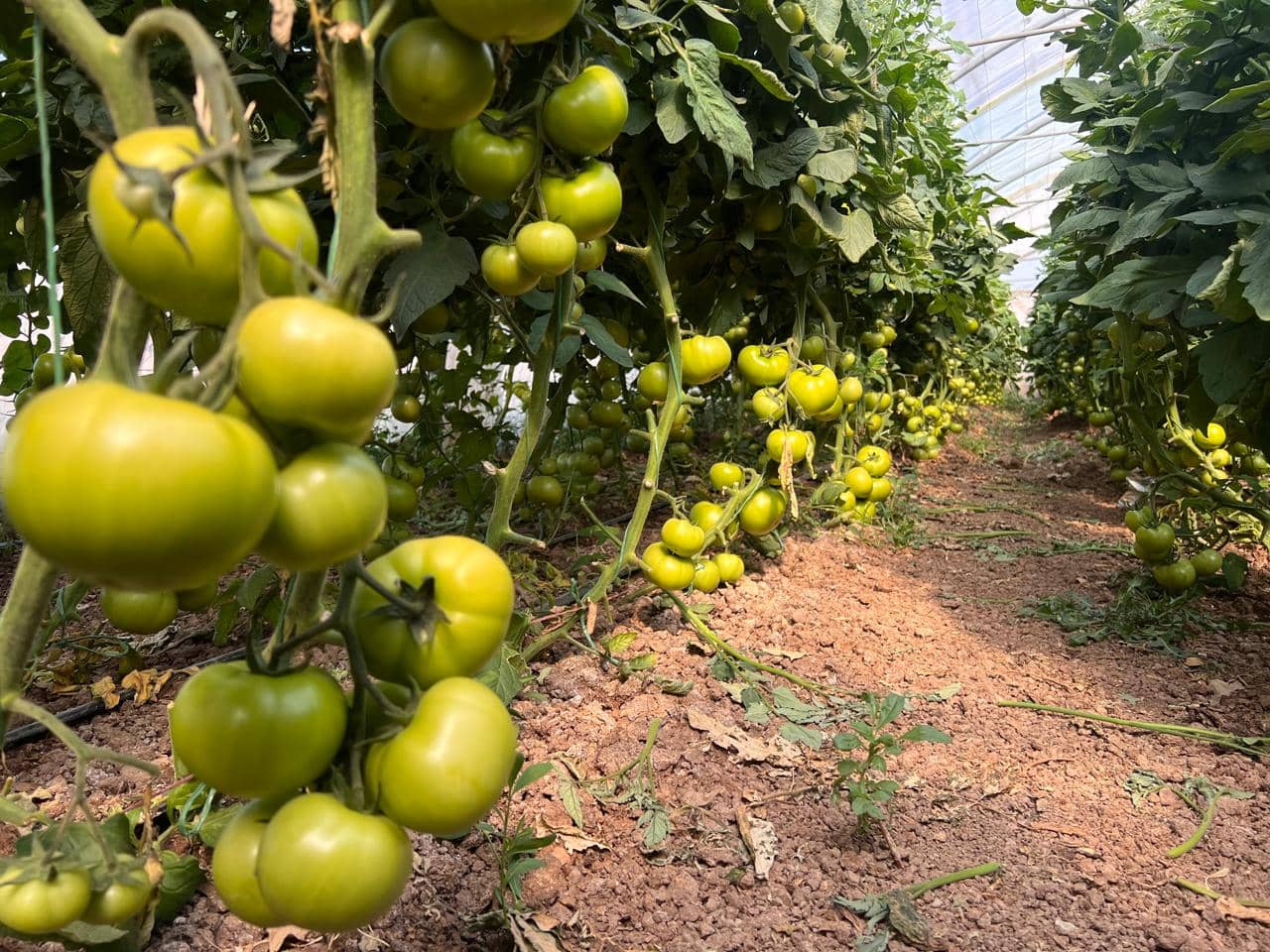
Tomatoes from the pilot greenhouses — part of the project 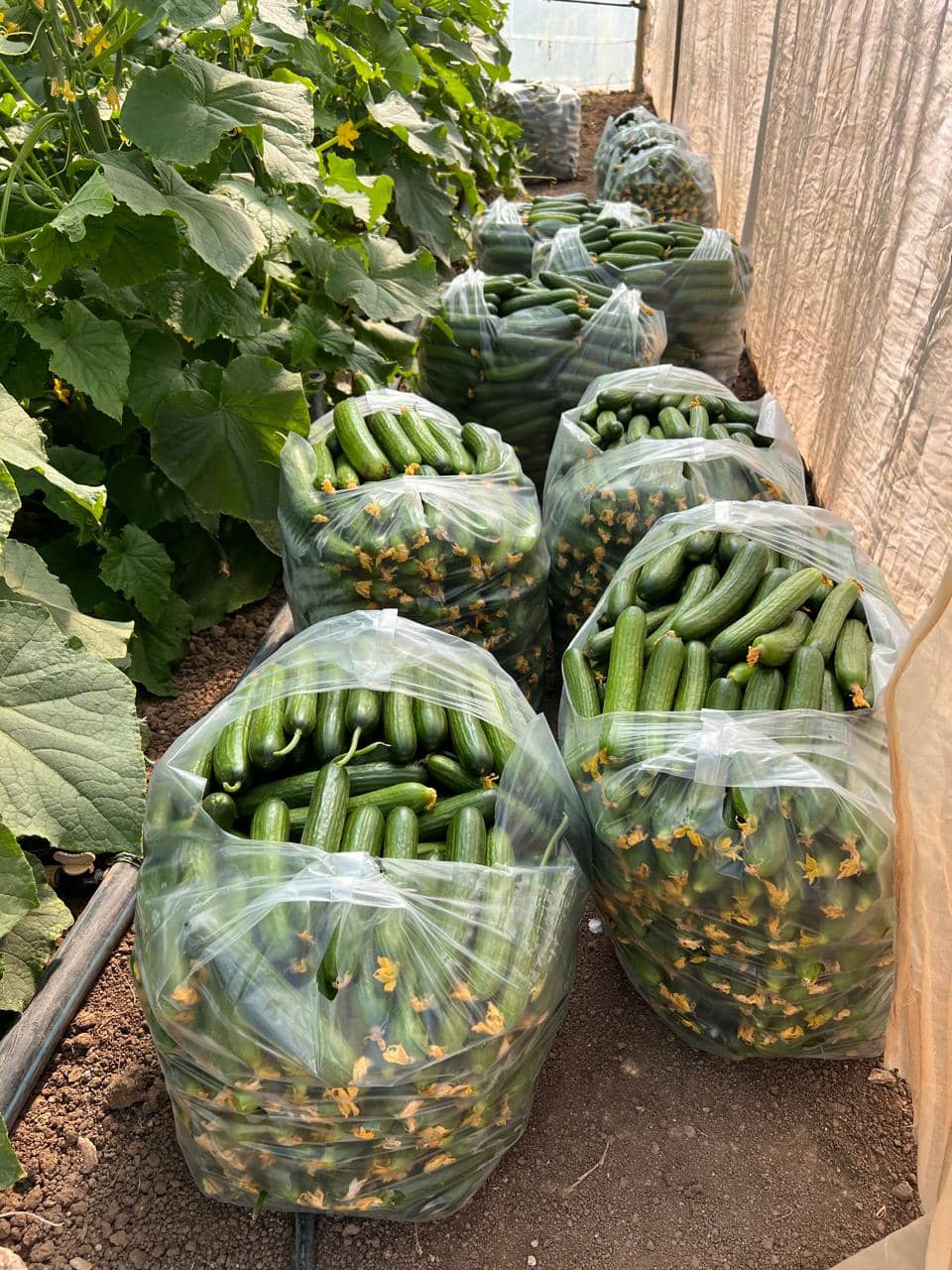
The old way: 30 kg of cucumbers packed into plastic bags and transported in the country's summer heat — a practice the project aims to replace
Positive test results, confirmed locally and in the Netherlands
Food safety is one of the most important components of the project's market proposition — especially for buyers like supermarkets, hotels and restaurants, who currently rely heavily on tomatoes and cucumbers imported from abroad.
Captured during the launch: the announcement of Bazian Valley Fresh
To double-check the results done by a local company, samples from the pilot harvest were also sent to Normec Groen Agro Control, an accredited laboratory in the Netherlands, for independent residue analysis. The outcome was reassuring: across five samples of pilot tomatoes and cucumbers, pesticide residues were either not detected at all, or found at only a small fraction of the EU Maximum Residue Limit. In other words, the crop management practices introduced through the project are already producing vegetables that meet EU food safety standards.
The pilot shows what's possible when many stakeholders work closely together with a genuinely market-oriented approach: the Bazian region isn't just capable of meeting international food safety standards, it can also become a driver of broader socio-economic development. New market opportunities are opening up for local growers, farmers stand to earn more, and the packing and grading work is already creating jobs — including for women.
More information
For more information about the Bazian region or production and packaging in Iraq, you can send an e-mail to the Netherlands Agricultural Network team at the Dutch Consulate-General in Erbil: erb-lvvn@minbuza.nl.