
As Polish cities face growing climate challenges, biodiversity-based urban solutions are moving from long-term policy ambitions to concrete investment projects. Green roofs and other nature-based solutions are becoming essential tools for improving urban resilience while enhancing biodiversity and the quality of life for residents. This transition is creating new opportunities for companies with expertise in sustainable urban development. In this article, we explore the key market drivers, the evolving policy landscape, and the opportunities available for Dutch businesses looking to enter Poland's growing market for biodiversity and climate adaptation solutions.
Beeld: © Photo by Pok Rie / Pexels
Key market drivers
The development of biodiversity-based urban solutions in Poland is driven by several interconnected factors:
- Increasing climate pressure on cities – Polish municipalities are facing growing challenges related to heatwaves, droughts, extreme rainfall and urban overheating.
- Municipal climate adaptation strategies becoming investment frameworks – cities are increasingly moving from climate diagnostics towards concrete adaptation plans and infrastructure projects.
- Availability of European and national funding mechanisms – programs supporting climate adaptation, environmental protection and blue-green infrastructure create opportunities for municipalities to implement new solutions.
- Growing demand for resilient urban spaces – local governments are looking for solutions that combine environmental benefits with improved quality of life for residents.
- Need for specialized expertise – the Polish market is developing, creating opportunities for companies with experience in designing and implementing nature-based solutions.
Climate adaptation is becoming a priority for Polish cities
Polish cities are increasingly integrating biodiversity-based solutions into climate adaptation strategies. Green roofs, urban greenery, sustainable rainwater management and other nature-based solutions are becoming part of municipal investment plans aimed at improving resilience to heatwaves, droughts and extreme rainfall.
Growing urban pressure is encouraging local governments to invest in solutions that improve water retention, reduce the urban heat island effect and create more resilient public spaces. This direction is aligned with EU climate objectives and national environmental policies supporting blue-green infrastructure.
For international companies, this creates opportunities to contribute expertise in climate adaptation, urban greening and nature-based solutions as Polish cities move from strategic planning towards implementation.
These developments are also creating new opportunities for the wider green sector, including horticulture, landscape design and plant-based solutions for urban environments.
From climate strategies to urban implementation: examples of leading Polish cities
Several Polish cities are already translating climate strategies into concrete urban actions, creating potential entry points for providers of biodiversity-based and green infrastructure solutions.
Warsaw has adopted a Green City & Climate Action Plan, setting measurable climate objectives towards 2050. The strategy focuses on areas where the city has direct influence, including energy efficiency, urban planning, public transport and green infrastructure. For companies operating in biodiversity and climate adaptation, Warsaw represents an example of a municipality where climate goals are increasingly linked with urban investment priorities.
Wrocław is preparing a Municipal Climate Adaptation Plan (MPA) addressing key climate risks, including heatwaves, droughts, floods and extreme rainfall. The planned measures include expanding urban green infrastructure, improving rainwater management and modernizing infrastructure to increase climate resilience.
Katowice demonstrates how environmental measures can become part of a broader urban sustainability strategy. The city has implemented a Low-Emission Economy Plan and invested in sustainable transport, environmental education and green infrastructure. More than 40% of Katowice's area is covered by forests, supported by parks and public green spaces.
Together, these examples show that Polish cities are increasingly moving towards integrated climate adaptation approaches, combining biodiversity, water management and improved urban quality of life.
Beeld: © Photo by Nerea Martí Sesarino / Unsplash
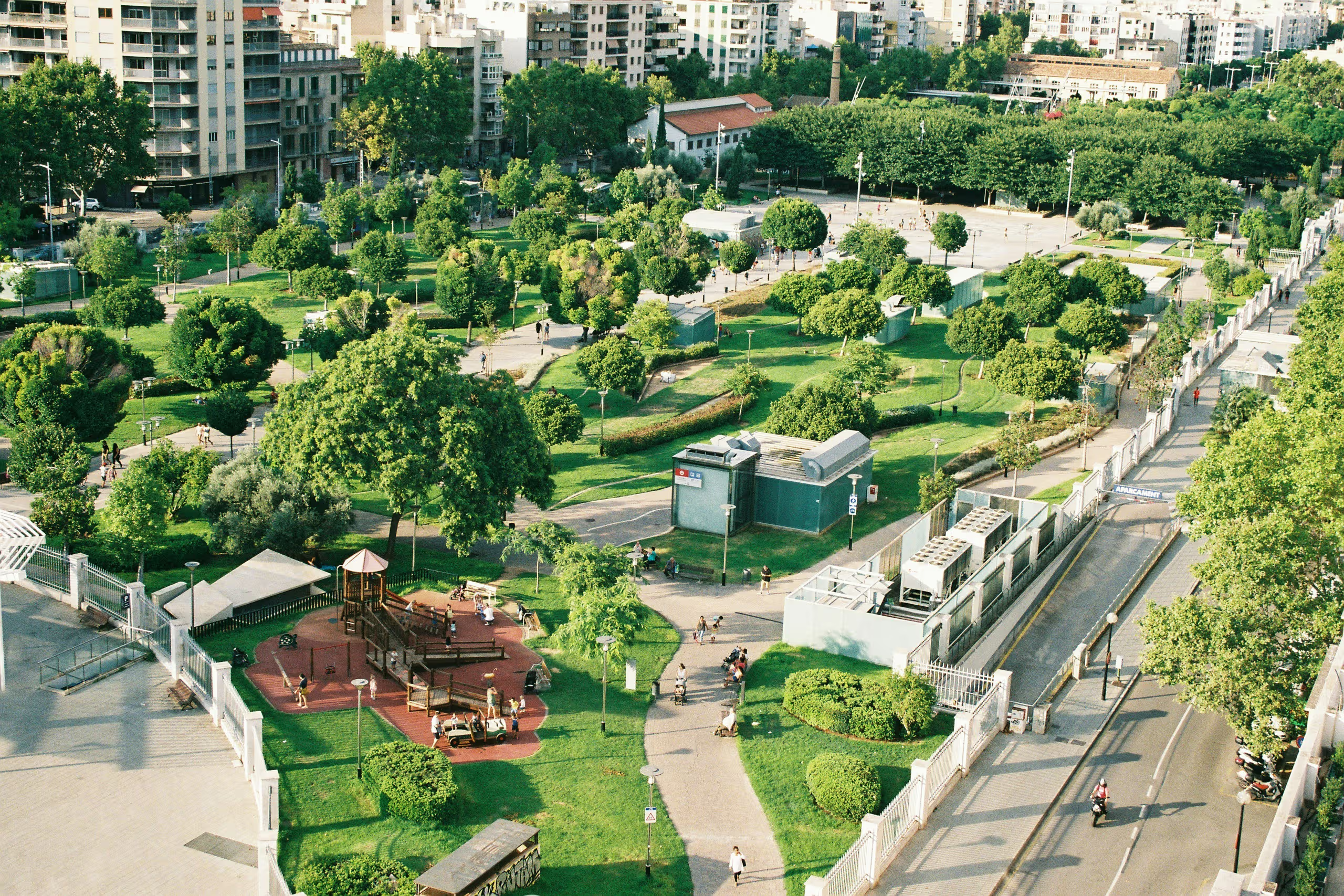
Green City
Market development: an emerging sector supported by municipal demand
The increasing number of municipal climate adaptation strategies indicates growing demand for integrated urban greening solutions.
Green roofs represent one element of a broader approach combining:
- biodiversity enhancement;
- rainwater retention;
- energy efficiency;
- climate-resilient urban development.
The green roof sector in Poland has been developing for more than a decade, supported by specialised industry organisations such as the Polish Association of Green Roofs, established in 2009. However, compared with Western European markets, the sector remains less mature, with limited publicly available data on total installed capacity.
This market structure creates opportunities for companies bringing not only products but also knowledge, design expertise and experience in implementing nature-based solutions.
Beeld: © Photo by Tom Fisk / Pexels
Funding and implementation environment
The implementation of biodiversity-based urban solutions in Poland is increasingly supported by European, national and regional funding mechanisms focused on climate adaptation, environmental protection and sustainable infrastructure.
Key programmes, including the European Funds for Infrastructure, Climate and Environment (FEnIKS 2021–2027), support projects related to climate resilience, environmental protection and blue-green infrastructure.
For international companies, understanding the public investment cycle is essential. Municipalities typically first develop climate strategies and funding applications before selecting specific technical solutions and implementation partners.
How Dutch companies can enter the Polish market
For Dutch companies, cooperation with Polish local governments appears to be one of the most promising market entry routes.
Municipalities are responsible for:
- developing climate adaptation strategies;
- preparing urban investment plans;
- implementing projects supported by EU and national funding mechanisms.
Dutch companies can contribute expertise in:
- green roof design and installation;
- biodiversity-oriented landscaping;
- rainwater retention and urban water management;
- climate-resilient urban planning;
- horticultural technologies and maintenance of urban green infrastructure.
Potential cooperation models include:
- participation in municipal pilot projects demonstrating the benefits of green roofs and biodiversity solutions;
- cooperation with Polish architects, landscape designers and construction companies;
- providing technical expertise during preparation of climate adaptation strategies;
- involvement in projects financed through EU, national and regional environmental programs.
As Polish municipalities move from strategic planning towards implementation, cooperation with experienced international partners is likely to become increasingly relevant.
Companies with proven experience in combining biodiversity enhancement, water management and sustainable urban development may find opportunities in a market that is still developing its standards and supply chains.
Useful sources for market research
Industry organisation
- Polish Association of Green Roofs – information about the Polish green roof sector, members, training and cooperation opportunities:
Polish Association of Green Roofs
Climate adaptation and blue-green infrastructure
- Ministry of Climate and Environment – information on urban retention and blue-green infrastructure:
Blue-green infrastructure and urban retention
EU funding
- FEnIKS 2021–2027 – programme documentation and funding priorities:
Fundusze Europejskie na Infrastrukturę, Klimat, Środowisko (FEnIKS)
Municipal climate strategies
- Warsaw climate policy documents and Green City initiatives should be reviewed as examples of municipal investment planning.
- Similar adaptation strategies are being developed by other major Polish cities, including Wrocław and Katowice.
Additional research areas for market entry
- municipal procurement databases;
- local climate adaptation plans (MPA);
- regional EU funding programmes;
- cooperation with Polish landscape architects, developers and construction companies.
More information
The Netherlands Agricultural Network team at the Dutch Embassy stands ready to help any Dutch company interested in doing business with Poland.
For more information about this topic, please contact: war-lvvn@minbuza.nl