
The Brazilian Intensive Horticultural sector offers major opportunities through its large domestic market, favorable weather and demand for technological innovation. It still faces structural challenges such as limited productivity, supply chain inefficiencies and a shortage of skilled labor, but the recently signed free-trade agreement between the Mercosur and the European Union opens new horizons for the export of agricultural products and the import of high-tech equipment and inputs.
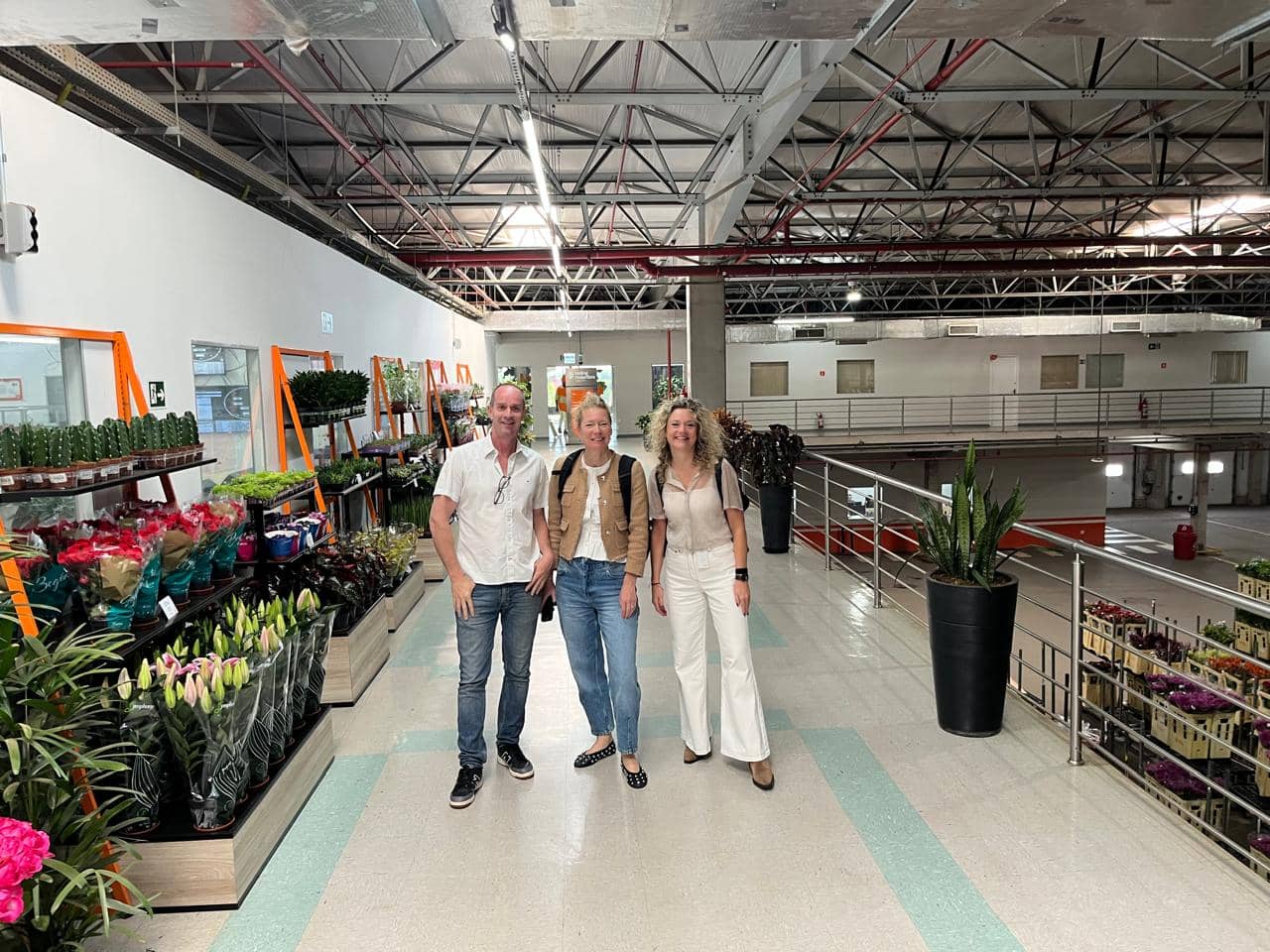
The flower auction in the Brazilian town of Holambra (SP)
A sector with scale, diversity and untapped potential
Brazilian horticulture is large in absolute terms. The country cultivates huge areas of fruits, vegetables and ornamentals, supplying a domestic market of over 210 million consumers. Production is geographically widespread and highly diverse, ranging from tropical fruits in the Northeast to temperate vegetables in the South and Southeast.
Despite the scale, the sector is still characterized by relatively low productivity compared to leading horticultural countries. Much of the production is carried out in open fields, with limited use of advanced technologies such as protected cultivation, climate and nutrition control, precision irrigation and data-driven management.
The sector has been dealing with heavy setbacks like the COVID period and subsequent global geopolitical disruptions, affecting input prices -- particularly fertilizers and energy. At the same time, the recent EU–Mercosur trade agreement can facilitate an increased trade and technology exchange, potentially accelerating modernization.
In this context, Brazil presents a paradox: strong natural advantages and market demand, but a clear technological gap that still needs to be bridged.
To identify the opportunities and challenges in the Brazilian horticultural sector, The LAN Office Brazil has commissioned a study and organized an Orange Dialogue on this subject. This article presents the findings of the study and the Orange Dialogue.
World Horti Center CEO Puck van Holsteijn and Agricultural Counselor Inge Hortmeier during the Orange Dialogue last year
Structural challenges: logistics, knowledge and organization
One major issue is inefficiency in the supply chain. A large share of horticultural products passes through complex distribution systems involving intermediaries and wholesale markets (“CEASA’s”), often without refrigeration, resulting in high transaction costs and post-harvest losses. Direct sales to supermarkets remain limited to a relatively small share of producers.
Post-harvest losses themselves are a critical bottleneck. The lack of an integrated cold chain, inadequate packaging and long logistics routes significantly reduce product quality and value.
Another key constraint is human capital. Stakeholders repeatedly emphasized the shortage of trained technical personnel and skilled labor, particularly in areas such as greenhouse management, fertigation, climate control and data-driven production.
The sector is also highly heterogeneous. It includes both highly professionalized producers and smallholders with limited access to technology, finance and markets. This diversity requires tailored solutions rather than one-size-fits-all approaches.
A shared vision: innovation, training and collaboration
There are, however, also highlights:
Technological innovation
There is an urgent need for the application of modern technologies, particularly in protected cultivation, because productivity and the extent of losses are far below the standards of more developed markets. Key areas include climate control systems (heating, cooling, CO₂ management), artificial lighting, sensors, robotics and AI applications. These technologies are essential not only for productivity, but also for climate resilience.
Post-harvest and logistics improvements
Improving cold chains, packaging and storage infrastructure are priorities. Reducing losses and increasing product quality would immediately enhance profitability and market access.
Education and training
Perhaps the most pressing priority is the need for structured training programs. This includes vocational training for workers, technical education for students and continuous professional development for producers and companies.
The World Horti Center model: inspiration for Brazil
World Horti Center (WHC), is the Dutch innovation hub that brings together companies, education and research in one integrated ecosystem. With already successful subsidiaries in China and South Korea, and thanks to local partnerships, WHC could be a suitable model for Brazil, after adaptation to the local horticultural level and local needs.
A preliminary study identified Holambra as a natural location for such an initiative, given its strong horticultural cluster and historical ties with The Netherlands.
For this reason the LAN Office Brazil decided to host an Orange Dialogue, where Brazilian and Dutch stakeholders can converse in all openness the feasibility of a World Horti Center in Brazil.
The idea received overwhelming support: all participants in this Orange Dialogue indicated they were willing to contribute to the establishment of a WHC in Brazil. Holambra is not only the ornamentals capital of Brazil, but also increasingly brings together all kinds of horticultural trade fairs, companies, sector associations and industries in one central location. Moreover, it is strategically located in the most advanced logistics, research and business area of Brazil.
It became clear that the proposed Brazilian WHC would not simply replicate the Dutch model but adapt it to local realities. Key functions identified by stakeholders include
1) A technological showcase for companies and producers;
2) A training center for farmers, students and professionals;
3) An incubator for start-ups in horticulture;
4) A platform for knowledge exchange, both physical and digital (essential give the size of the country). In addition, the center could serve as a hub for applied research and innovation, connecting regional initiatives across Brazil.
FLTR: Jorge Pozzobon, CEO of the flower auction in Holambra; Lenny Dijkshoorn, WHC Director International Affairs; and WHC CEO Puck van Holsteijn.
From vision to implementation
For Dutch companies and knowledge institutions, the developments in Brazil’s horticulture sector offer multiple entry points. There is strong demand for:
- Greenhouse technologies and climate systems.
- Seeds, substrates and biological inputs.
- Post-harvest solutions and cold chain logistics.
- Digital tools and precision agriculture technologies.
- Training and education programs.
Beyond individual technologies, there is also a clear need for integrated solutions - combining hardware, software and knowledge/education.
Perhaps even more importantly, Brazil offers opportunities for long-term partnerships. The scale of the market, combined with its diversity, allows for piloting and scaling of innovations across different regions and production systems.
The feasibility study and the discussions during the Orange Dialogue suggest a phased approach. A first step for Dutch companies and organizations will be a webinar on the opportunities this sector provides. A next step could be a mission to the region. Holambra appears to be particularly interesting because of its proximity to research institutions, training organizations and funding mechanisms.
A sector ready for the next step
The Orange Dialogue in Holambra and the study demonstrate that Brazil’s horticulture sector is at a turning point. The challenges are well understood, but so are the opportunities.
What stands out is the strong alignment amongst stakeholders: there is a shared recognition that the sector needs to move towards higher levels of technology, better organization and stronger human capital.
The establishment of a World Horti Center in Brazil could act as a catalyst for this transition - bringing together the key elements of innovation, training and collaboration in one ecosystem.
For the Netherlands, this represents not only an opportunity for business, but also for strategic cooperation. By combining Dutch expertise with Brazilian scale and diversity, both countries can contribute to more sustainable, resilient and productive horticulture systems.
Or, as the spirit of the Orange Dialogue suggests: solving global challenges together.
Read the Report Brazilian Horticulture for insights into the sector’s key trends, developments, and opportunities.
For more information:
Through the link below, access the report prepared by the LAN team, in partnership with Andrés da Silva, a consultant specialized in horticulture with extensive knowledge of the Brazilian and international sectors: Brazil Horticulture Update 2026.