
The Netherlands is Colombia's main European gateway for Hass avocado exports, and coffee remains one of the country's most iconic and strategically important agricultural products. Against this backdrop, Agricultural Counselor Léontine Crisson and Didi Gieling Policy Officer Climate and trade, recently travelled to Antioquia for a series of meetings with sector organisations, regional government, and academic institutions. The visit was part of the Sustainable Agrifood Systems combitrack, a bilateral programme that works to connect Dutch companies with Colombian partners to advance more sustainable and competitive agrifood chains around avocado and coffee.
Beeld: © LAN BOG / LAN BOG
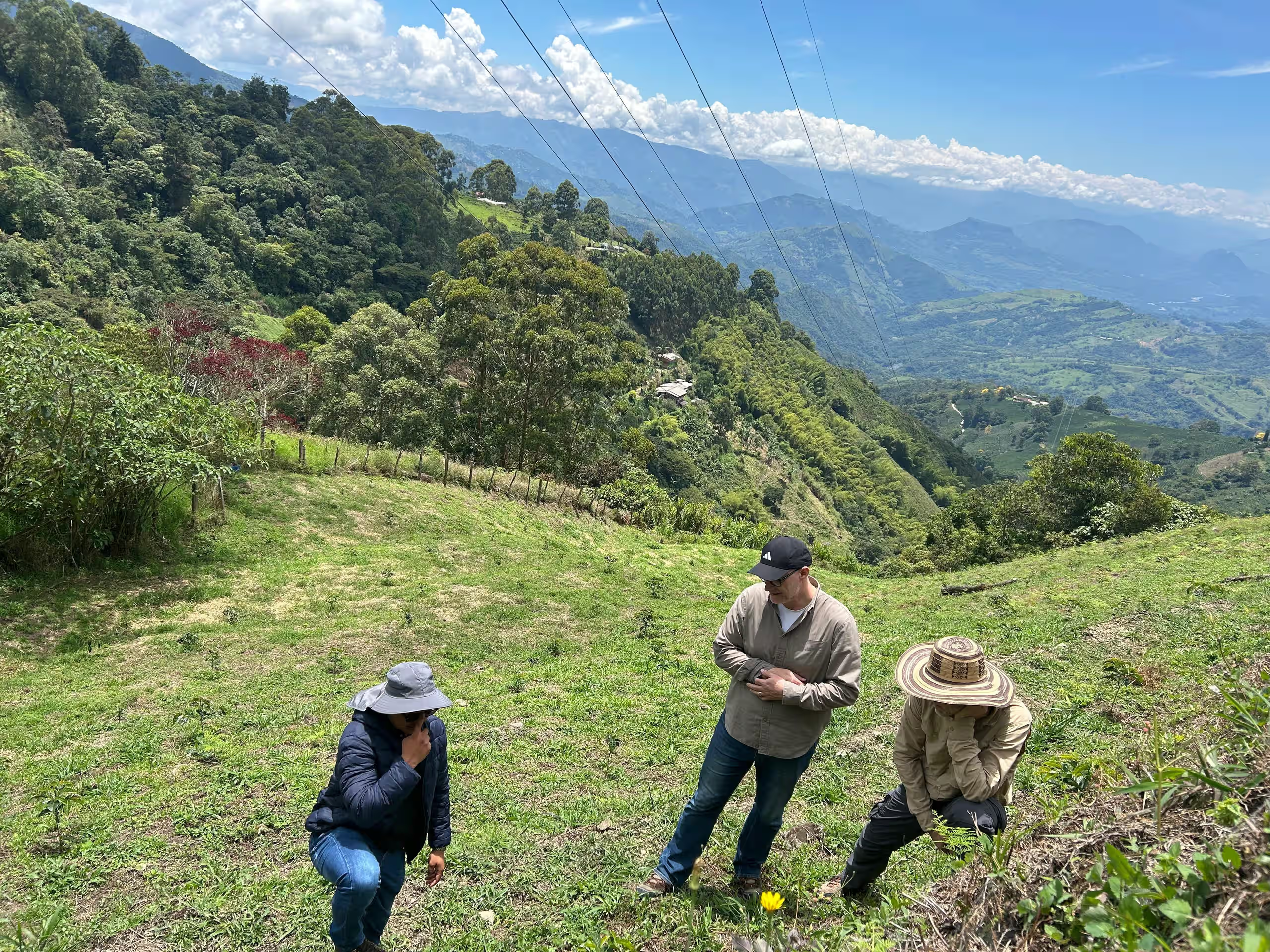
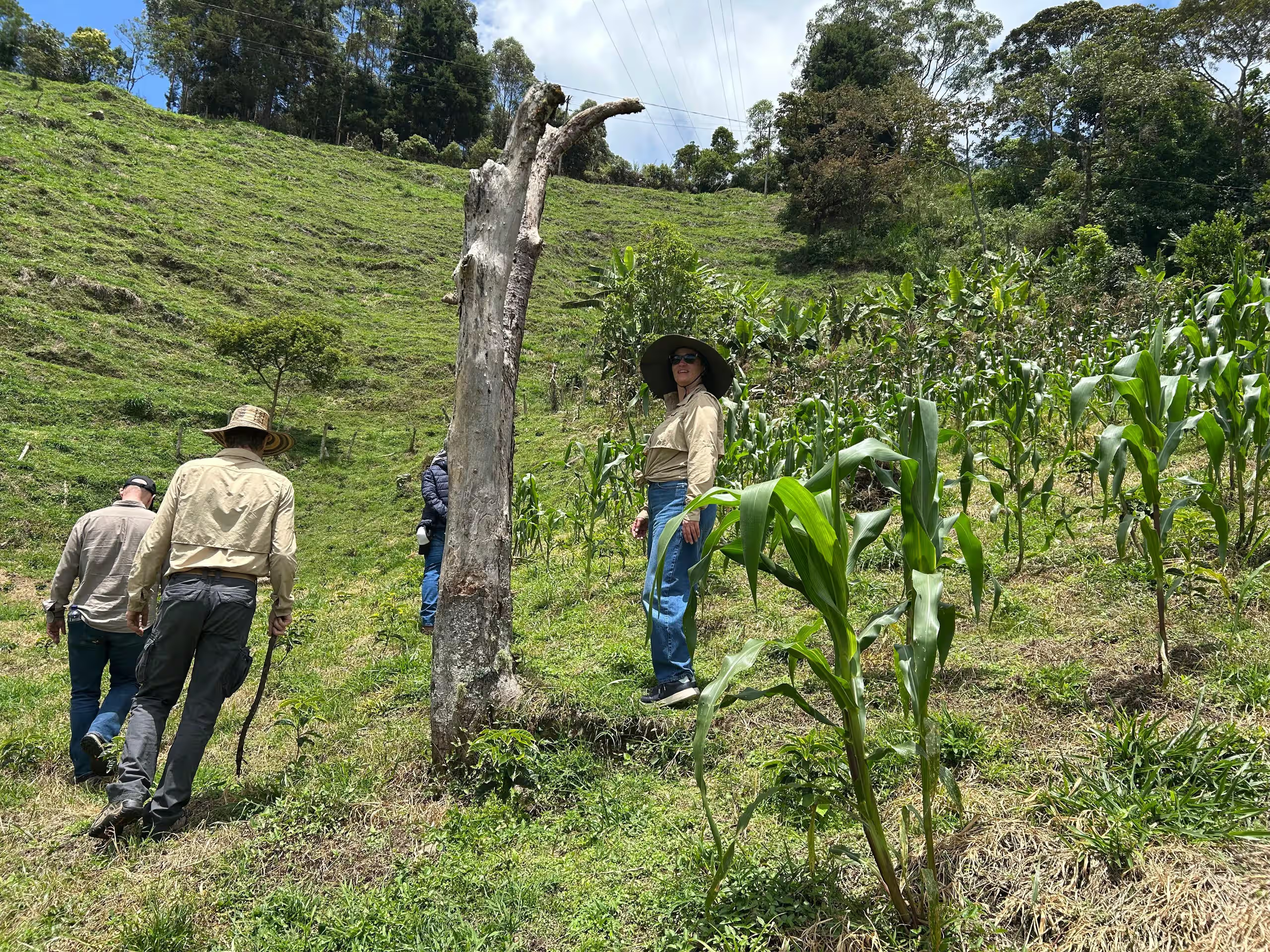
Coffee demo farm
Avocado: mapping the water footprint with CorpoHass
One of the key meetings took place at CorpoHass, the association representing producers, exporters, and processors of Hass avocados in Colombia. The discussion centred on the activities of CENIHASS, the sector's research centre, which focuses on improving quality and productivity across the value chain. A particular area of interest was the ongoing work to map the sector's water footprint, an increasingly relevant metric for market access and sustainability reporting in European markets.
Colombia holds a notable natural advantage in this regard. Unlike many avocado-producing regions, the country's climatic conditions mean that additional irrigation is generally not required. This positions Colombian Hass avocado favourably in terms of water efficiency, offering a meaningful differentiator as sustainability requirements in the Dutch and European market continue to tighten.
Beeld: © LAN BOG / LAN BOG
Corpohass / Cenihass
Regional government: priorities aligned with the combitrack
The LAN team also held a meeting with representatives of the Gobernación de Antioquia, the regional government responsible for one of Colombia's most agriculturally dynamic departments. The conversation focused on the province's economic development priorities, revealing strong alignment with the objectives of the combitrack. This convergence between regional policy and bilateral programme goals creates a conducive environment for public-private collaboration and lays the groundwork for more structured cooperation in the coming period.
University of Antioquia: strengthening the knowledge partnership
At the Faculty of Agricultural Sciences of the University of Antioquia, the team met with the dean to build on the existing academic relationship and explore new opportunities for joint initiatives. Academic partnerships of this kind play a vital role in the combitrack's approach: connecting Dutch knowledge and expertise with Colombian research capacity helps ensure that innovation in the sector is grounded in local realities and scalable to the needs of smallholder producers.
Beeld: © LAN BOG / LAN BOG
LAN Team, Didi Gieling, Universidad de Antioquia
Coffee and regenerative agriculture: the demofarm in Fredonia
Among the highlights of the visit was a trip to the demonstration farm of The Coffee Quest, located in the rural municipality of Fredonia. Thanks to the combitrack, a dedicated training space is being developed on the farm to equip coffee producers with practical skills in regenerative agriculture. This demofarm model, combining knowledge transfer with hands-on field experience, illustrates how the bilateral programme translates strategic goals into concrete impact at farm level.
More information
The visit to Antioquia reflects the growing momentum of the Sustainable Agrifood Systems combitrack and reinforces the strength of Dutch-Colombian collaboration in building agrifood systems that are both economically resilient and ecologically sustainable.
For more information about the Sustainable Agrifood Systems combitrack or collaboration opportunities, please contact the LAN team in Colombia bog-lvvn@minbuza.nl