
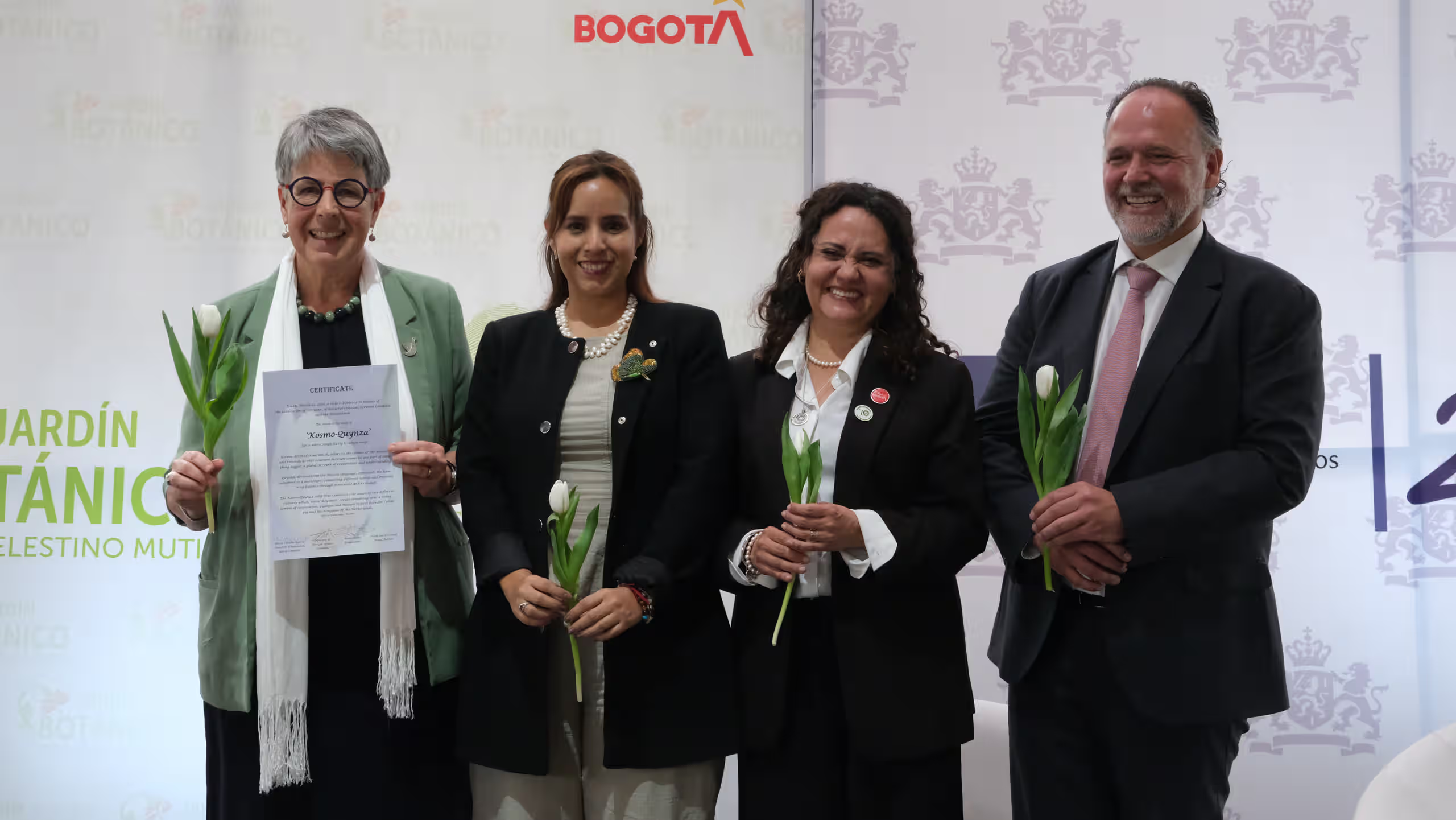
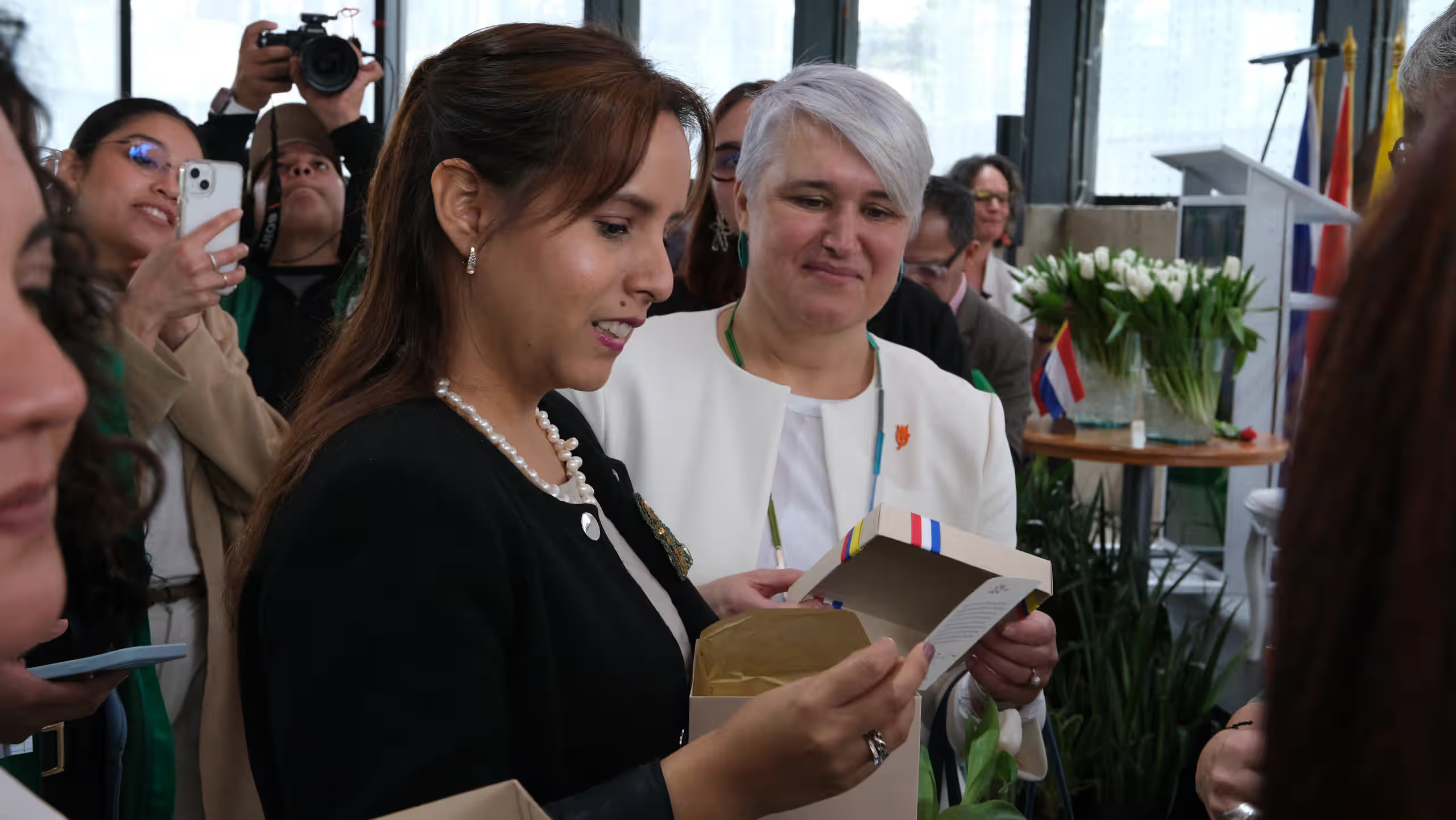
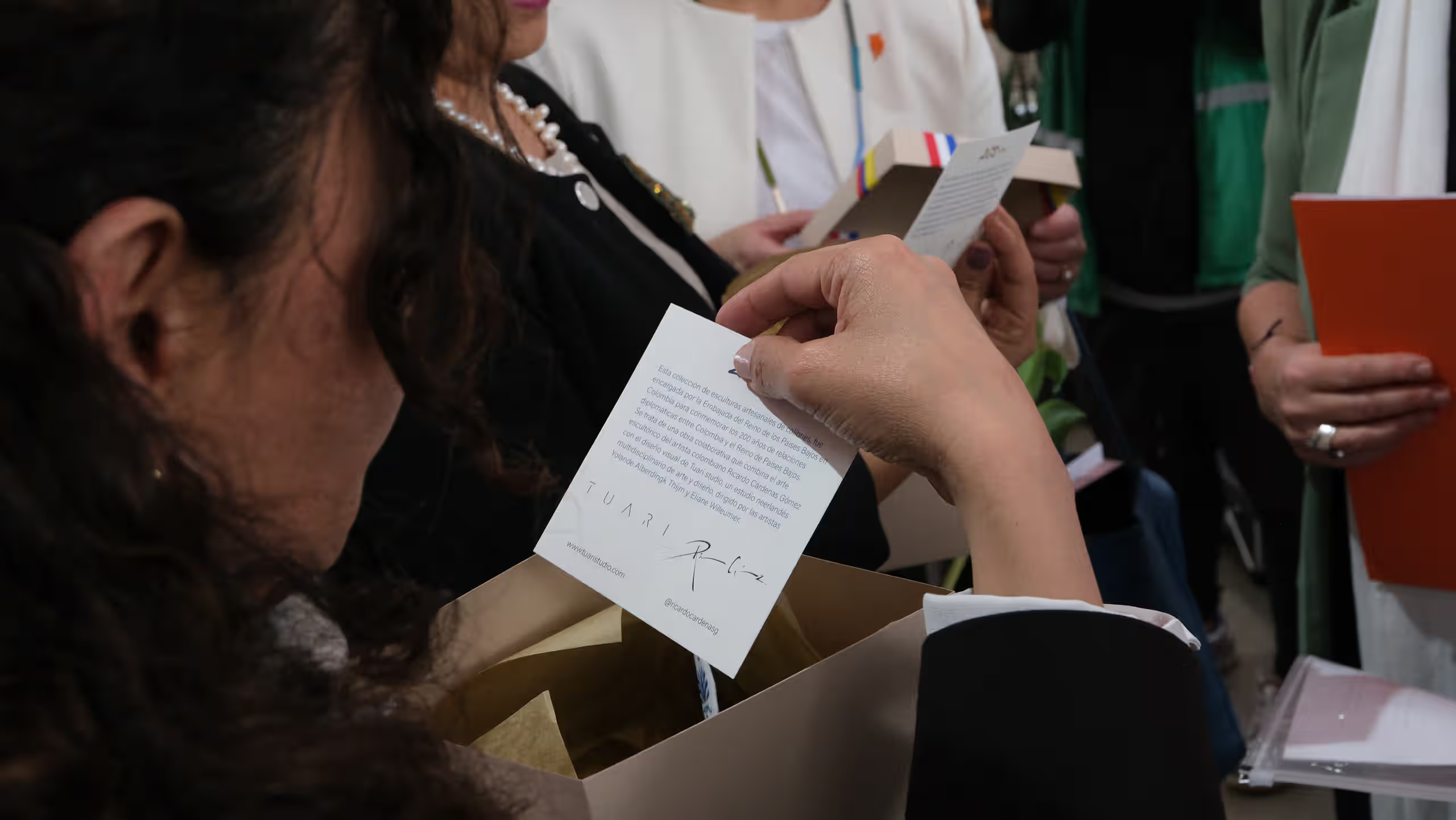
On 19 March 2026, a new tulip variety named Kosmo Quynza was officially baptized at the Jardín Botánico de Bogotá in Bogotá. The ceremony took place in the Biodiversario of the botanical garden and formed part of the celebrations marking 200 years of diplomatic relations between Colombia and The Kingdom of the Netherlands.
Beeld: © @camilovargasfotografo83
Tulip baptism
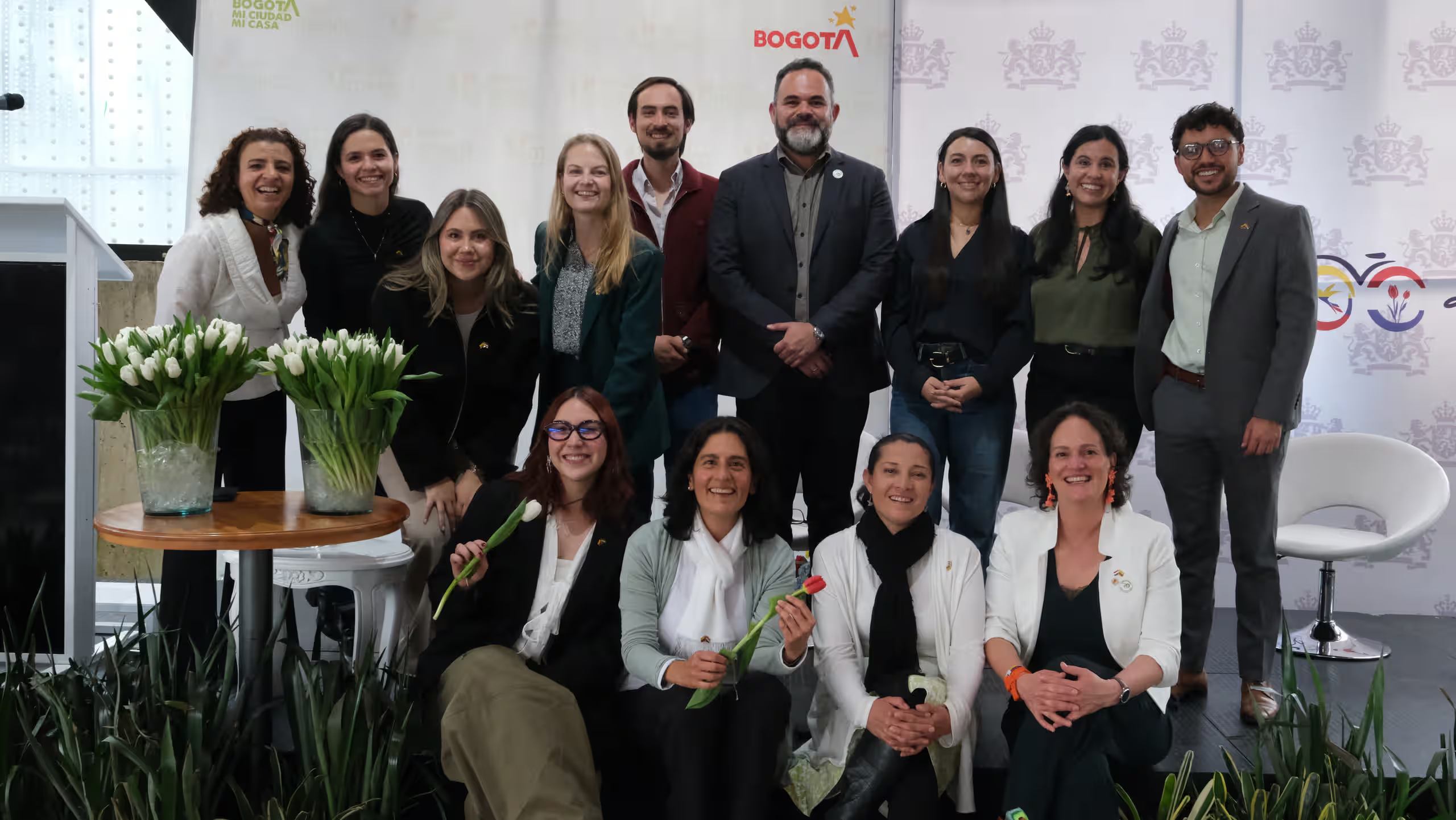
Event bringing together partners across sectors
The event brought together partners from the agricultural sector, government, academia and business, as well as stakeholders who collaborate closely with the Embassy of the Kingdom of the Netherlands and the Dutch agricultural network in Colombia. Representatives from sectors such as avocado, coffee, flowers, land use and forestry were present, reflecting the broad range of activities and projects developed together with local partners. Ambassadors and representatives from other European Union embassies also attended, highlighting the importance of international cooperation in strengthening sustainable development.
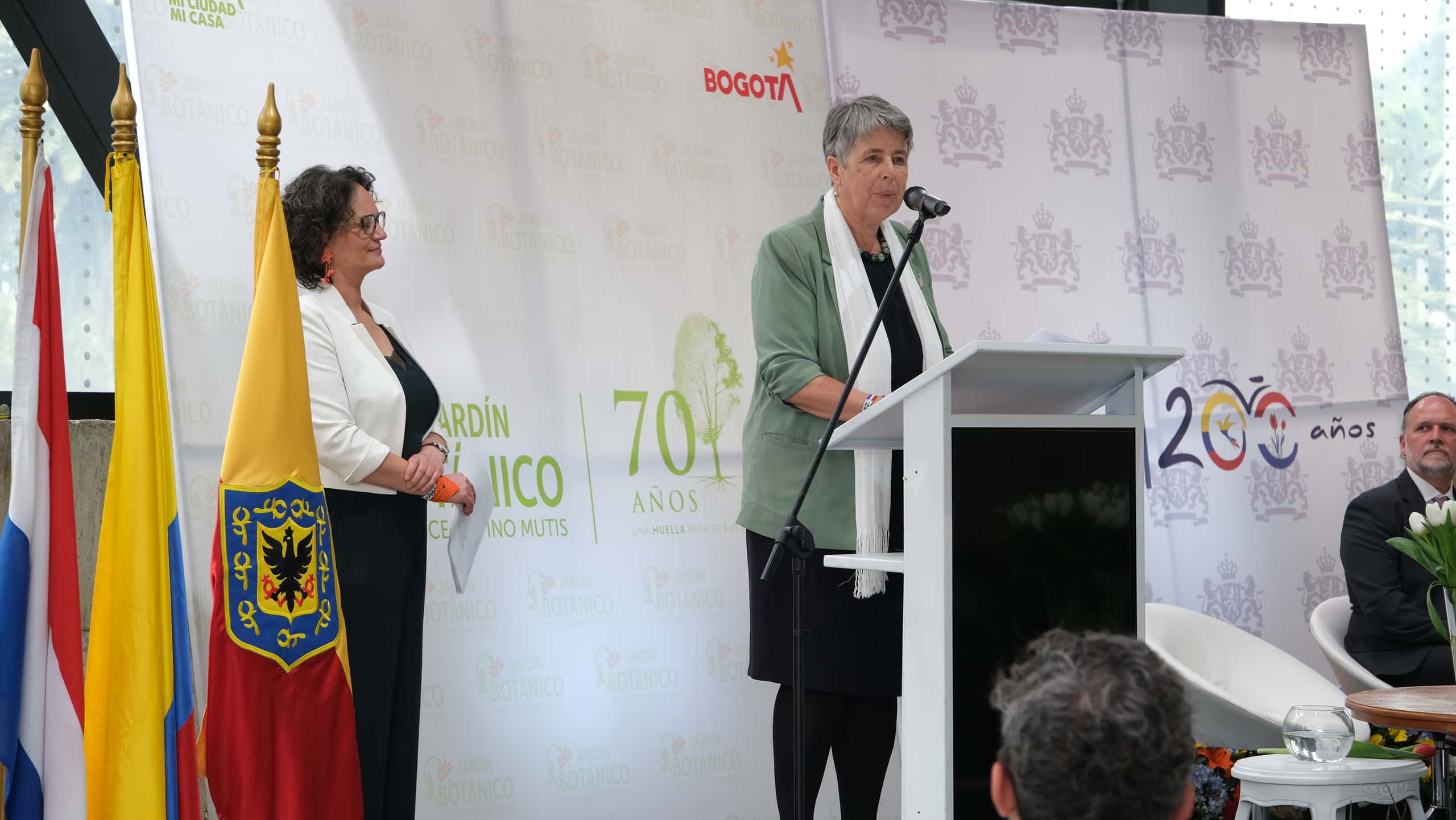
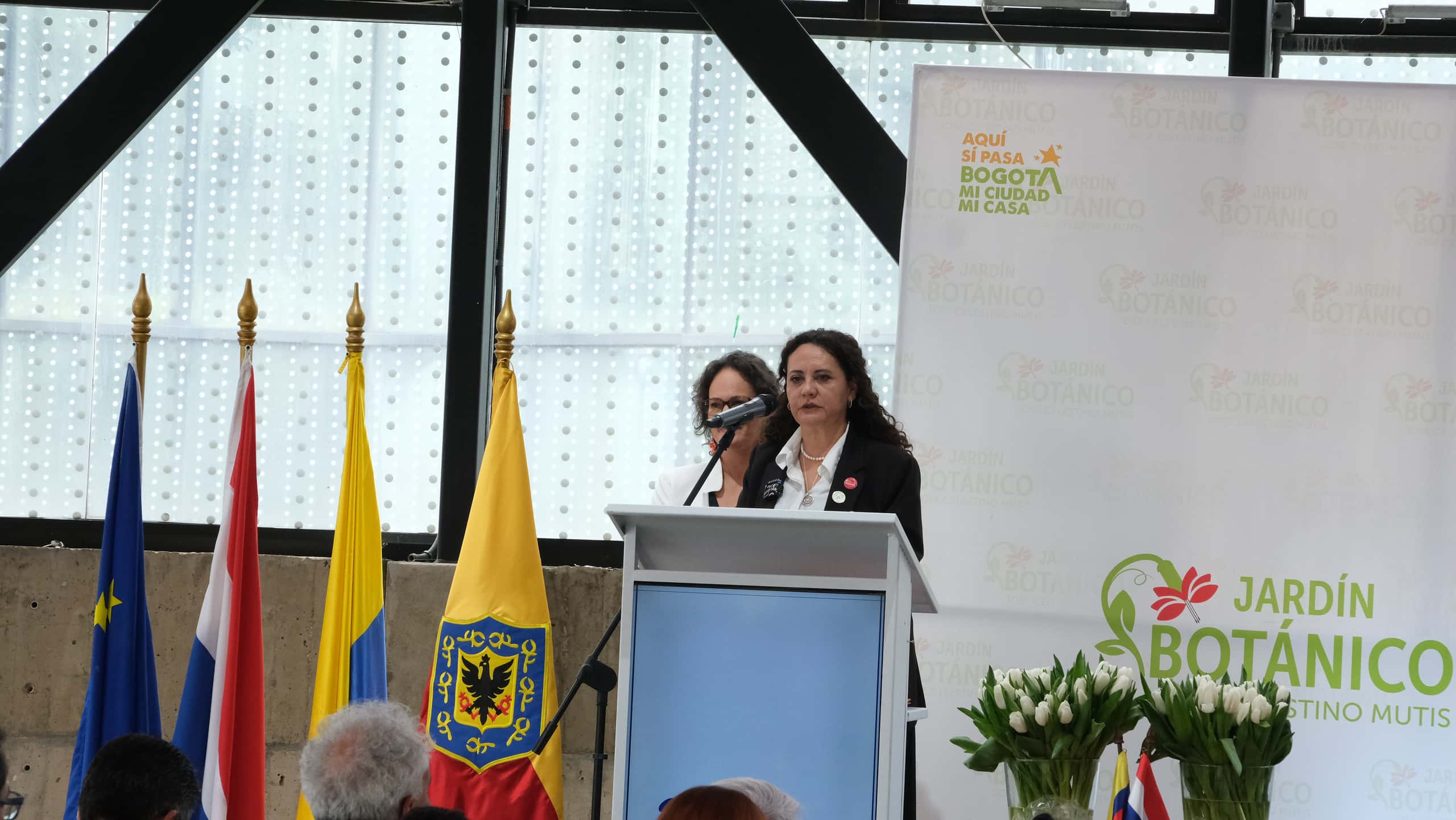
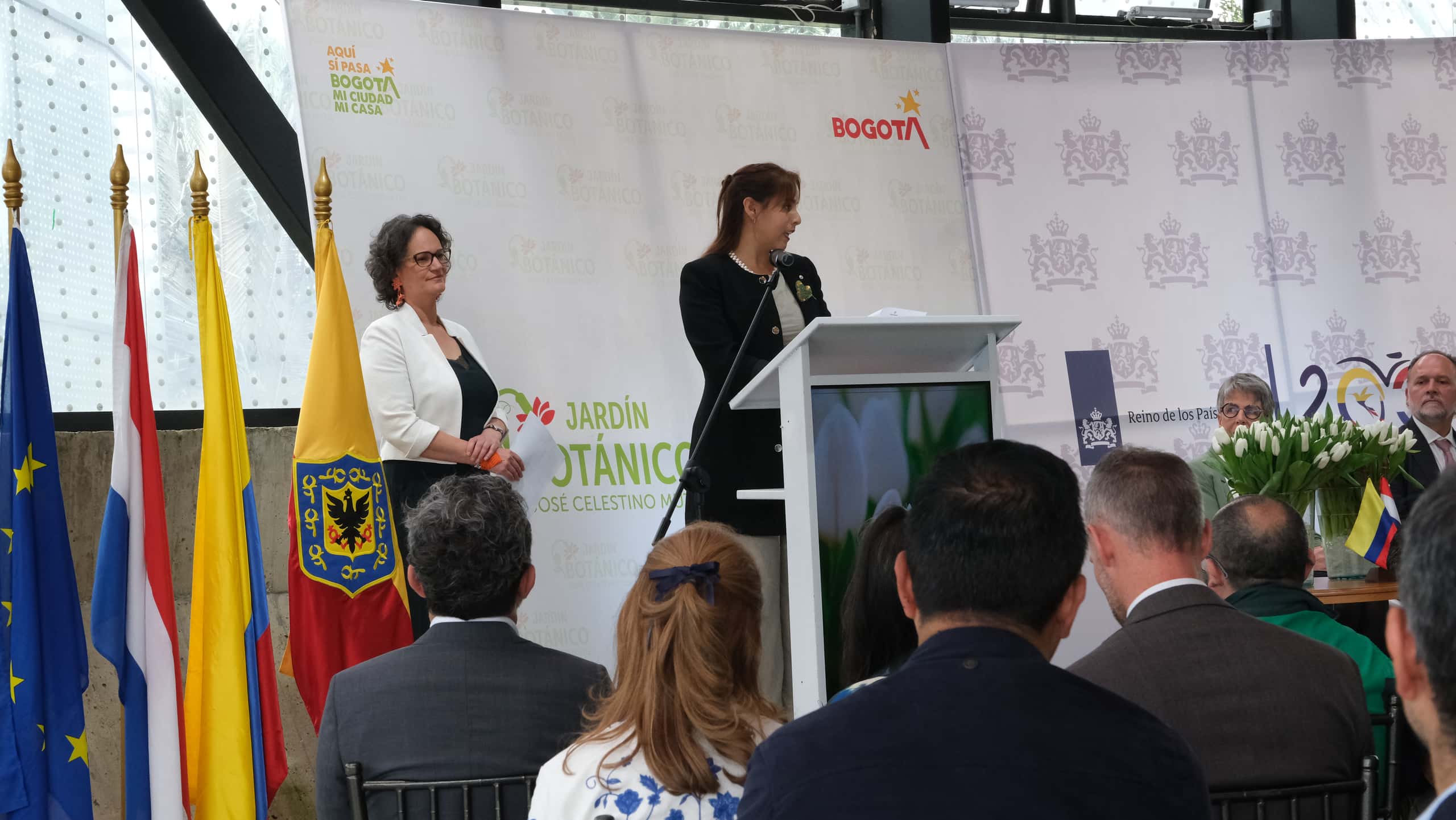
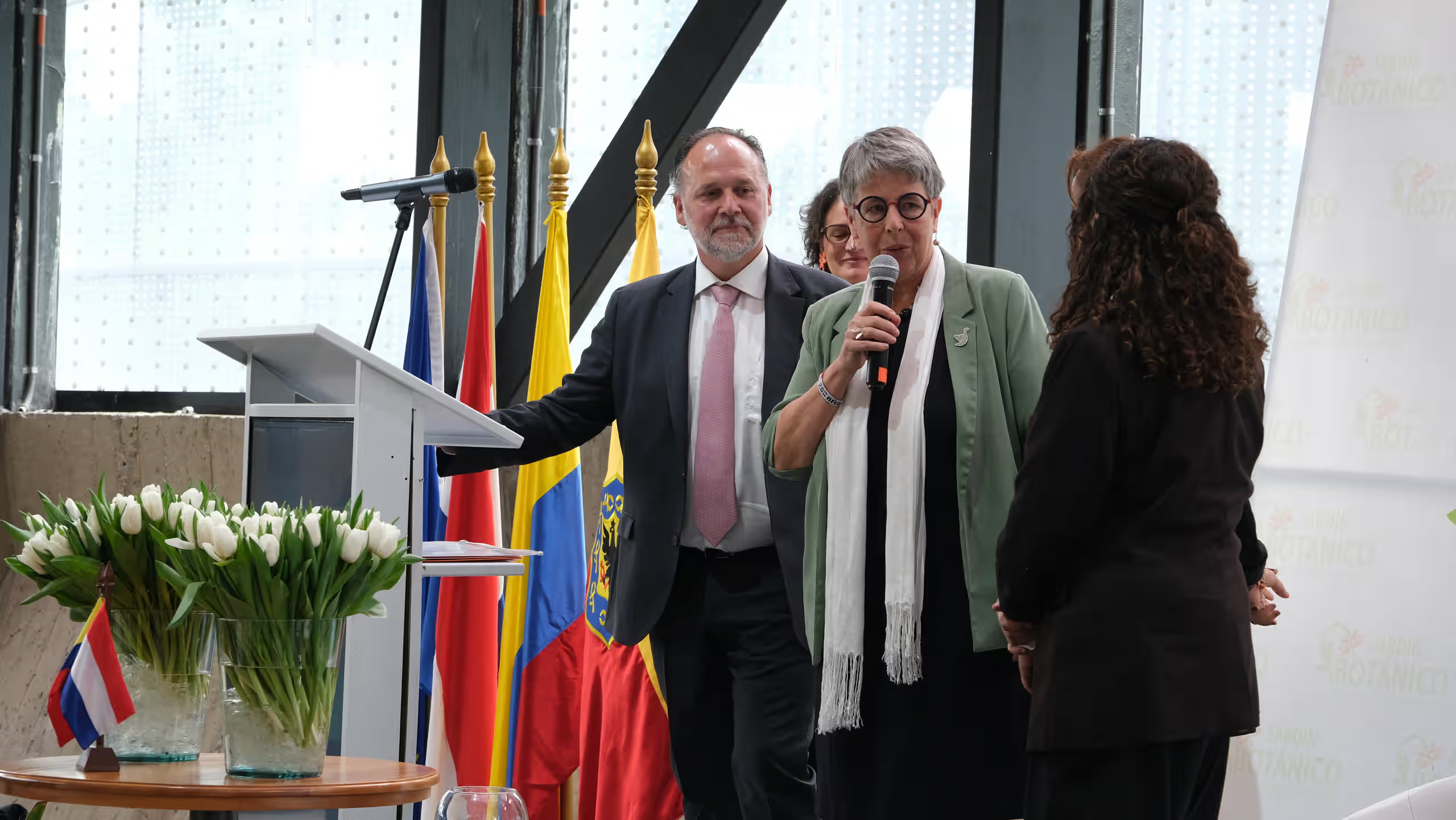
The tulip was baptized by Reina Buijs, Ambassador of the Kingdom of the Netherlands to Colombia, together with María Claudia García Dávila, Director of the Jardín Botánico de Bogotá, and Paula Andrea Cerón Arboleda, Vice Minister of Migratory Affairs, Consular Affairs and International Protection at the Ministry of Foreign Affairs of Colombia. The ceremony was moderated by Léontine Crisson, Agricultural Counsellor.
The initiative was made possible with the support of Royal Anthos, the Dutch trade association for flower bulb and nursery stock exporters. Martín Yepes, delegate in representation of Royal Anthos and CEO of Floria Express, also participated in the ceremony.
Following the opening remarks, the official baptism of the tulip Kosmo Quynza took place.
Symbol of cooperation in floriculture
The tulip baptism marked a symbolic moment within the broader bicentennial celebrations. In the Netherlands, naming a tulip is a tradition often used to commemorate important milestones, partnerships or cultural connections.
The tulip itself is one of the most emblematic symbols of the Netherlands. As Ambassador Reina Buijs noted during the ceremony, the flower represents “the ability to flourish under diverse conditions, patient care and innovation.” She added that the relationship between the Netherlands and Colombia has similarly evolved and strengthened over two centuries, finding common ground in areas such as peacebuilding, human rights, sustainable economic development and climate change adaptation.
The flower sector has long been one of the strongest links between the Netherlands and Colombia. Colombia is the second largest flower exporter in the world, supplying international markets with around 1,500 varieties from more than 50 species. The Netherlands, in turn, plays a key role as a global hub for floriculture trade and distribution, accounting for roughly half of global flower exports.
Many Colombian flowers reach international markets through the Netherlands, highlighting the complementary nature of both countries in the global floriculture value chain.
Beeld: © @camilovargasfotografo83
Léontine Crisson - Agricultural Counsellor
Tulips in Colombia
Tulips were introduced to the Colombian market around 2011 through cooperation between partners from both countries.
“Since then, the flower has gradually gained a place among Colombian consumers and has become one of the most appreciated flowers in the market, after the rose,” said Martín Yepes, CEO of Floria Express.
Meaning of the name
The name Kosmo Quynza reflects the cultural meeting between the Netherlands and Colombia.
“Kosmo,” derived from the Dutch word Kosmos, refers to the cosmos or universe. It evokes the idea that relationships between countries are part of something larger, a global network of cooperation, exchange and connection.
“Quynza,” rooted in the language of the Muisca, an indigenous culture from the Colombian Andes, refers to the hummingbird. In many indigenous traditions, the hummingbird symbolizes movement, fertility and connection, often seen as a messenger capable of linking different worlds.
According to these traditions, the hummingbird brings color into the world through its movement, connecting distant places and transforming what it touches, a metaphor that resonates with the exchange of knowledge, culture and innovation between Colombia and the Netherlands.
The tulip itself is white, a color chosen to symbolize harmony, collaboration, clarity and openness to new possibilities, values that have characterized the bilateral relationship over the past two centuries.
A flower with a long history
Although strongly associated with the Netherlands today, the tulip originally comes from Central Asia. The flower arrived in Europe through botanists and diplomats during the 16th century and began to be cultivated in the Netherlands shortly afterwards.
During the Dutch Golden Age in the 17th century, tulips gained extraordinary popularity. Rare bulbs even reached prices comparable to a house in Amsterdam, a phenomenon that became known as Tulip Mania.
Looking ahead
The baptism of Tulip Kosmo Quynza represented a symbolic act linking history, culture and cooperation. As Colombia and the Netherlands celebrate 200 years of diplomatic relations, the flower stands as a living symbol of a partnership that continues to evolve, particularly in areas such as agriculture, peace, sustainability and trade.
Beeld: © @camilovargasfotografo83
200 years