
Vietnam has over 260,000 hectares of citrus orchards, representing more than 20% of the country’s total fruit cultivation area. About 50% of the citrus production area is based in the Mekong Delta. Most farms are smallholder‑owned family operations, averaging one hectare and supporting households of four people. This means that more than one million people depend on citrus farming for their livelihoods.
Beeld: © The Fruit Republic
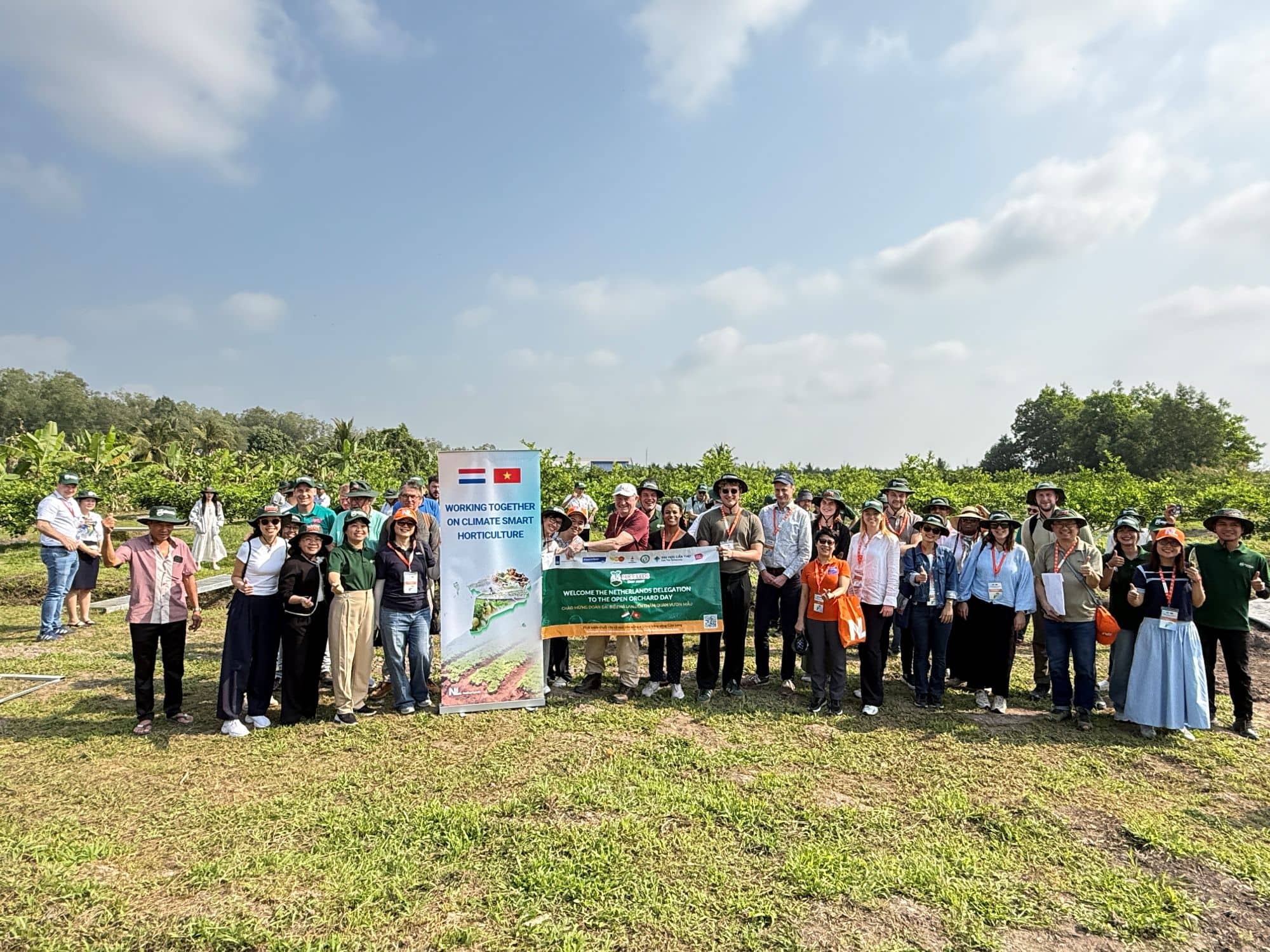
Salinity innovation mission from the Netherlands to Vietnam visiting SUCCEEDS training farm in 2026
Besides its importance for farmers, citrus is also crucial for the health of Vietnam’s 100 million consumers. Every year, citrus farmers supply the domestic market with about 3.5 million tons of oranges, pomelo, mandarins and limes - fruits full of essential vitamins, antioxidants, and fiber for fruit-loving Vietnamese consumers.
Smallholders face growing challenges
Most smallholder citrus farmers are based in the Mekong Delta and Southeastern Vietnam. They face increasing challenges, including:
• Increasing disease pressure such as Citrus Greening Disease and Phytophthora.
• Climate change impacts such as salinization of the Mekong Delta because of rising sea levels and land subsidence.
• Volatile dry and wet seasons, with longer and much hotter dry seasons, and much heavier downpours in the rainy season, leading to orchard flooding
• Lack of access to high-quality, disease-free seedlings and fact-based soil and nutrient management advice.
Due to these challenges, citrus orchards in the Mekong Delta have a very short economic lifespan. Orange farmers cut their trees after just a few years, while lime trees last seven years before being cut and replanted; and pomelo takes even longer to bear fruit. Since trees need two to four years to produce, farmers face negative cash flow early on, followed by only a few profitable years before yields decline and the costly replanting cycle begins again.
Developing a successful sustainable citrus value chain
Despite these challenges, significant opportunities exist for citrus farmers. The Dutch-Vietnamese fruit company The Fruit Republic (TFR) has successfully developed domestic and international markets for Vietnamese citrus. Since its founding in Can Tho in 2012, TFR has become Vietnam’s leading fruit company and the world’s only year-round exporter of pomelo and lime certified by GLOBALG.A.P., LEAF, GRASP, ETI, and BRC. TFR operates advanced packing and fresh-cut facility in Can Tho, as well as distribution centers in Hanoi, Ho Chi Minh City and Rotterdam (the Netherlands). Through contract farming, extension support services, and quality assurance systems, TFR has built a value chain that enables smallholders to supply premium Southern Vietnamese citrus to millions of consumers in Asia, Europe, North America, the Middle East and Oceania.
Transforming the citrus sector
With the goal of transforming the citrus sector in the Mekong Delta and Southeastern Vietnam, The Fruit Republic and five partners launched the SUCCEEDs project (Sustainable Citrus Chain Empowering and Developing Smallholders in the Mekong Delta). The initiative aims to improve profitability and sustainability for 150,000 smallholder farmers who depend on citrus production.
Formed by the companies Kloosterboer and The Fruit Republic in partnership with Rabo Foundation, Can Tho University, and the Department of Agriculture and Environment of Tay Ninh Province, this public-private collaboration is funded by the partners and the Dutch Ministry of Foreign Affairs’ Sustainable Development Goals Program (SDGP), managed by the Netherlands Enterprise Agency (RVO). SUCCEEDs strengthens the citrus value chain by supporting 500 farmers toward GLOBALG.A.P. certification, improving nurseries to provide 20,000 farmers with high-quality, disease-free seedlings, promoting better farm management, access to finance, certification support, and stronger market connections to boost productivity, resilience and sustainability across the value chain.
The project directly supports citrus smallholders through:
• Improved Farm Management: Intensive training programs at the three SUCCEEDs Citrus Training Farms for farmers and extension staff.
• Certified value chain: Training and support to meet GLOBALG.A.P., GRASP, and LEAF standards.
• Nutrient Management: Tailored fertilizer advice to boost yield, profitability, and sustainability.
• Access to Finance: Enabling investments for GLOBALG.A.P. farm infrastructure, adoption of improved farming practices and farm technologies.
• Seedling Supply: High-quality seedlings from professional nurseries, trained at the SUCCEEDs Nursery and supported by the access to finance program.
• Market development: National consumer awareness campaign about the importance and health benefits of sustainably farmed citrus.
Beeld: © The Fruit Republic
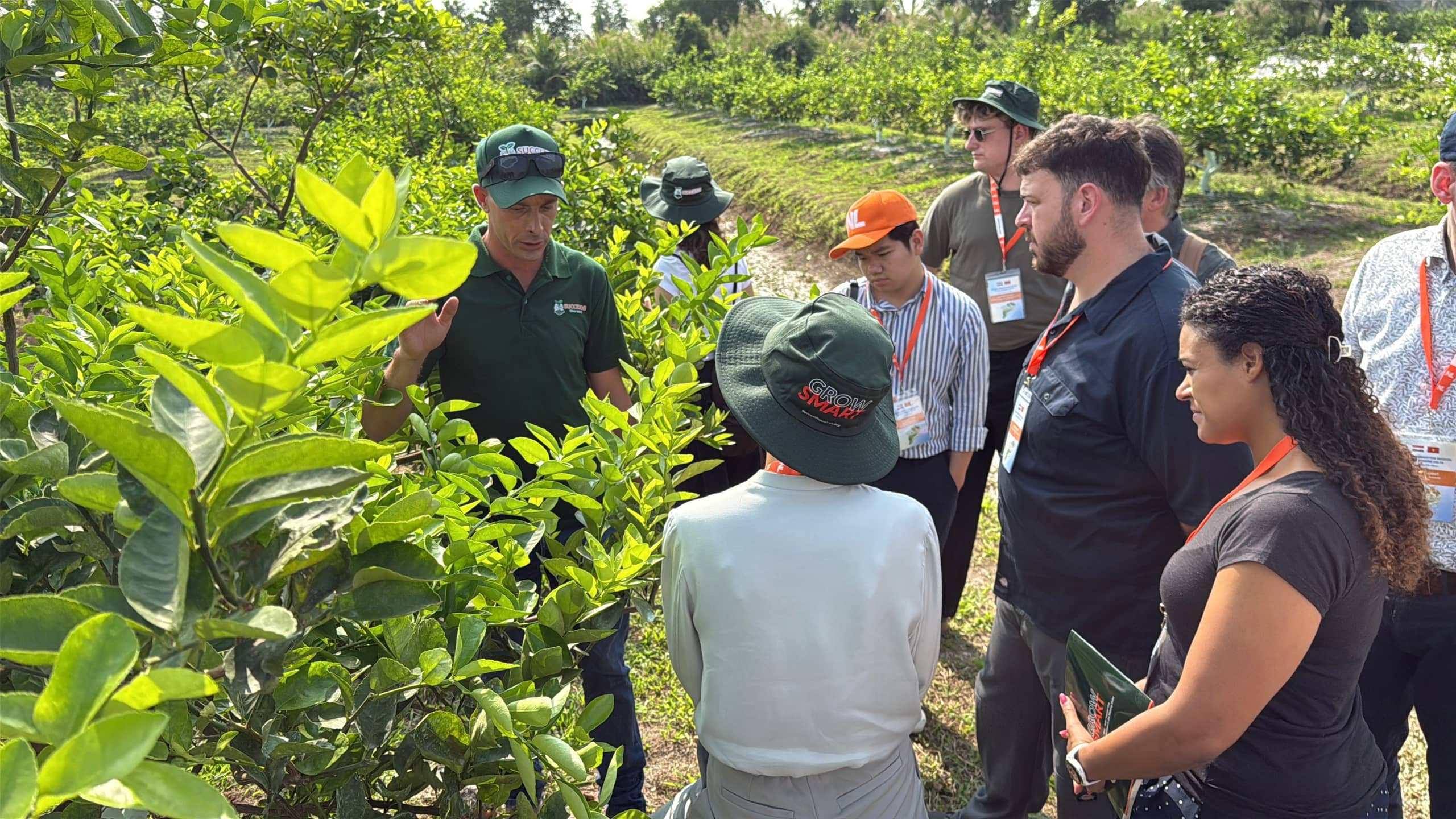
Farm tour at SUCCEEDS project's training farm in Tay Ninh
Dutch Innovation Mission on Salinity Visits SUCCEEDS Citrus Training Farm
On Monday, 19 January 2026, the SUCCEEDS citrus training farm in Tay Ninh Province welcomed the Dutch Innovation Mission on Salinity, including included 23 Dutch companies, knowledge institutes, and public organizations, led by Céline van Maaren from the Dutch Ministry of Agriculture, Fisheries, Food Security and Nature, and Ms. Raïssa Marteaux, Consul General of the Netherlands in Ho Chi Minh City, to showcase how climate smart agricultural practices can help address salinity intrusion and promote more efficient water use.
Beeld: © The Fruit Republic
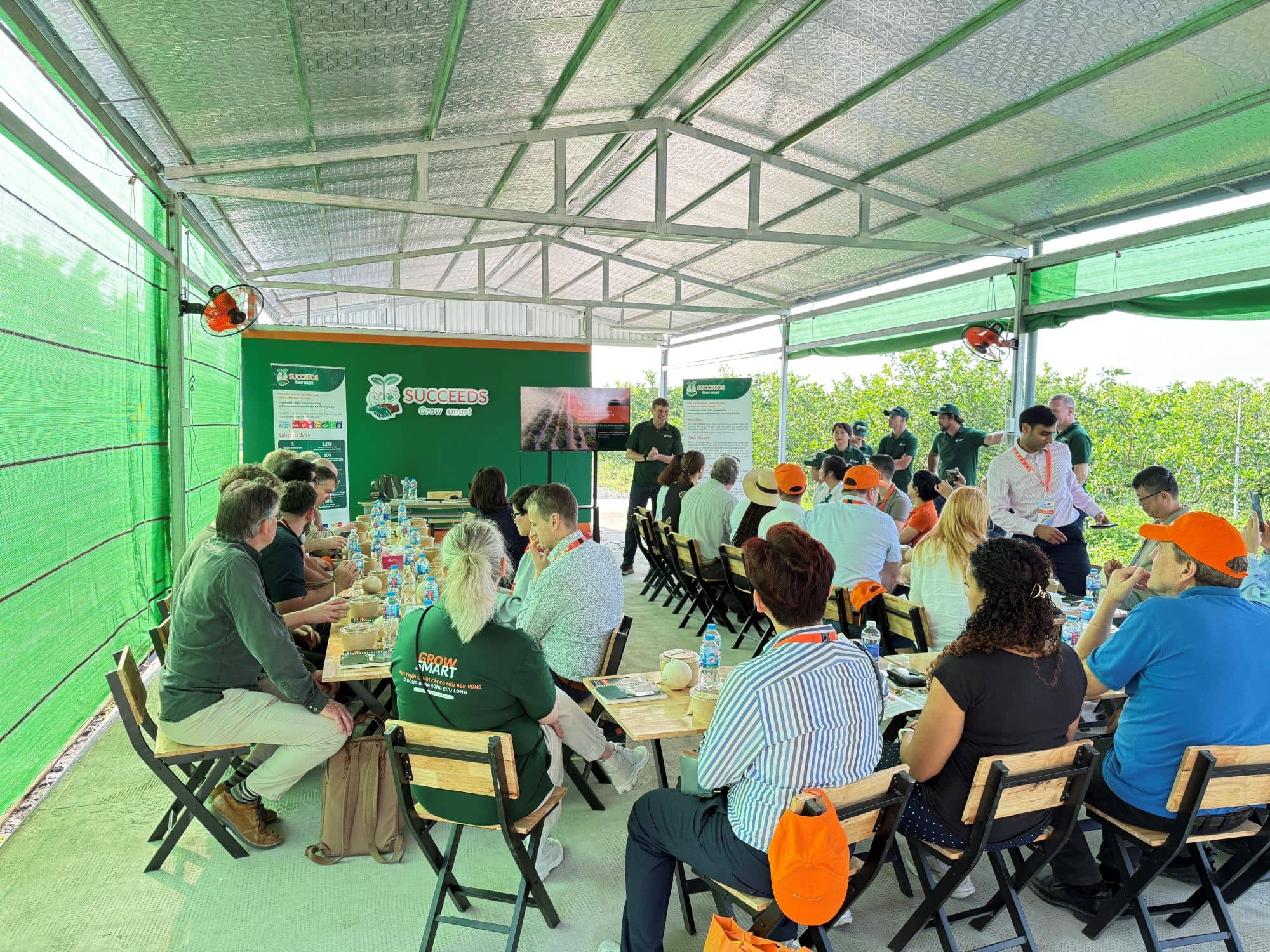
Presentation for the Dutch delegation
Showcasing climate-smart fruit production
The visit began with a presentation by Mr. Siebe van Wijk, Managing Director of The Fruit Republic, who provided an overview of the Vietnamese fruit sector and the objectives of the SUCCEEDS project. Participants then divided into smaller groups for a guided tour of the training farm, led by the SUCCEEDS project team.
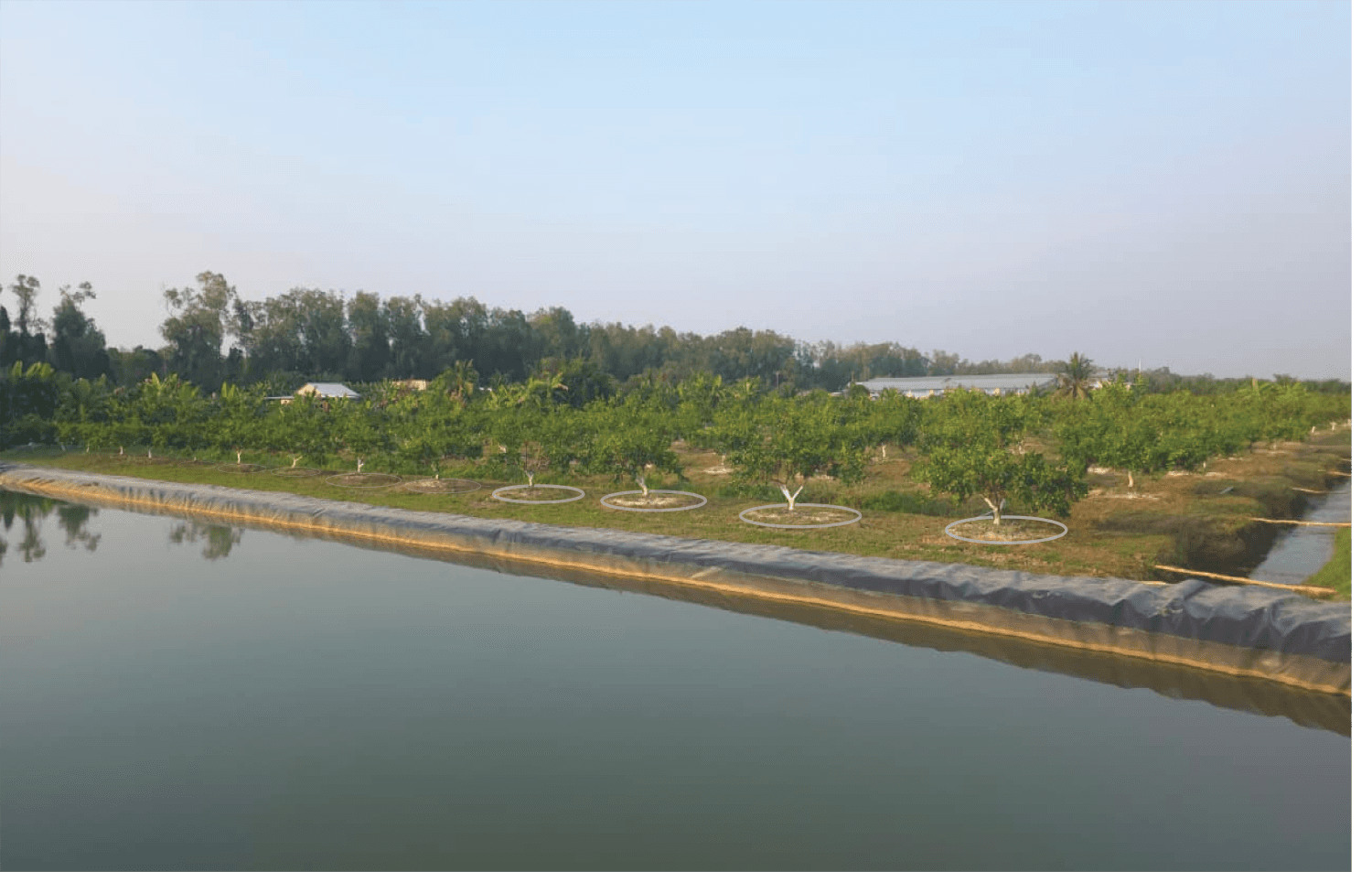
One of the major issues affecting the Mekong Delta is land subsidence, largely caused by unsustainable groundwater extraction for agriculture. At the SUCCEEDS training farm, the Innovation Mission observed a practical solution to eliminate groundwater use. Rainwater is harvested and stored in an on-farm reservoir, and irrigation during the dry season is supplied via drip irrigation, preventing the need for groundwater mining.
Beeld: © The Fruit Republic
Water reservoir reserved in SUCEEDS training system
One of the major issues affecting the Mekong Delta is land subsidence, largely caused by unsustainable groundwater extraction for agriculture. At the SUCCEEDS training farm, the Innovation Mission observed a practical solution to eliminate groundwater use. Rainwater is harvested and stored in an on‑farm reservoir, and irrigation during the dry season is supplied via drip irrigation, preventing the need for groundwater mining.
For farmers, adopting such systems requires weighing costs and benefits. Investments include, allocating land for a water reservoir, constructing the reservoir, installing drip irrigation and fertigation systems and purchasing a pump. However, the benefits are significant. Reliable freshwater supply during the dry season helps to prevent saltwater damage that shortens the economic life of citrus trees, avoid failed flowering in March–April, typically caused by drought stress, and improve yields and fruit quality. Over the coming seasons, the SUCCEEDS training farms will demonstrate that higher yields and longer productive lifespans outweigh the initial costs.
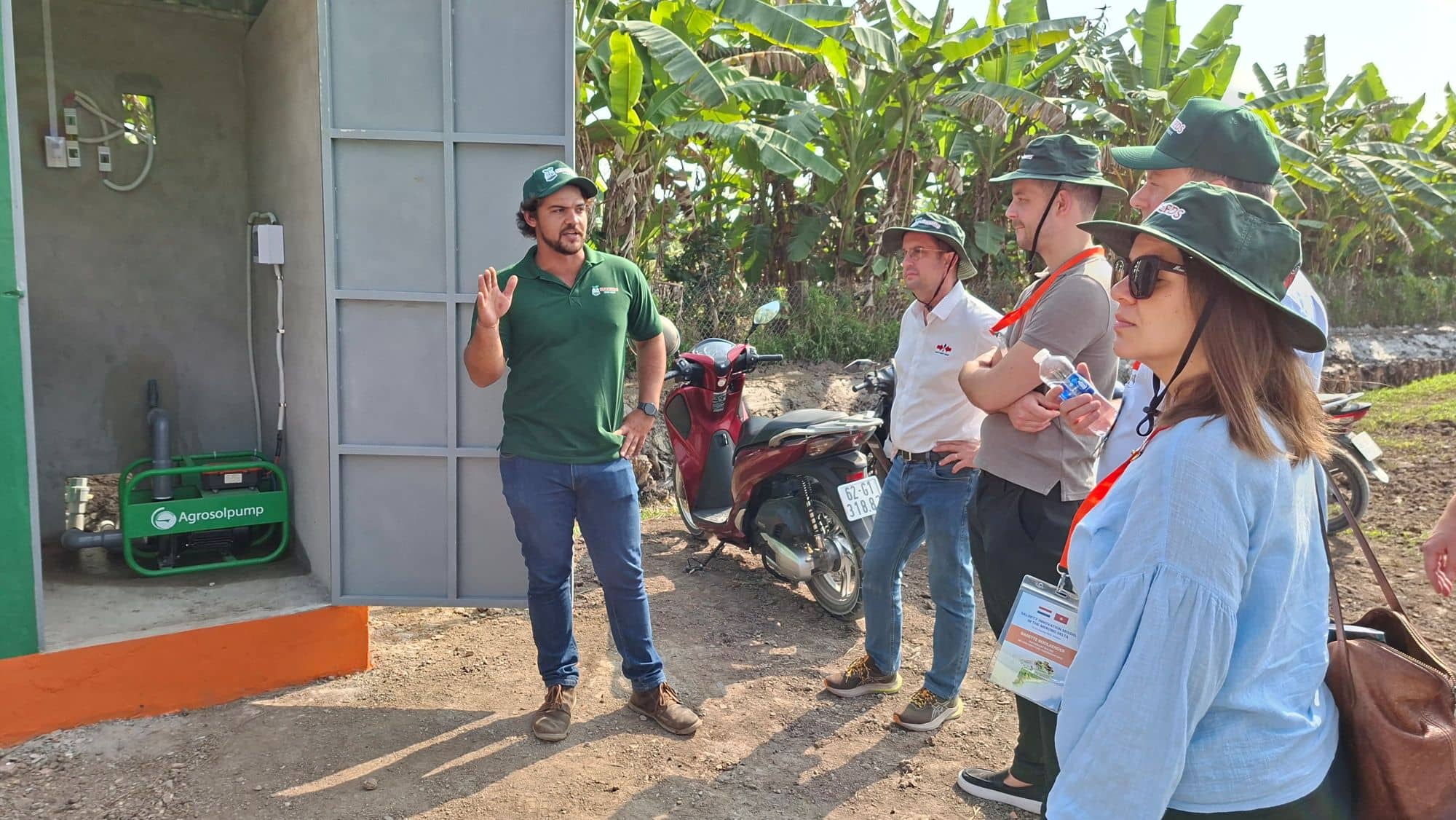
TFR showing a solar-powered drainage pump at the training farm in the Mekong Delta 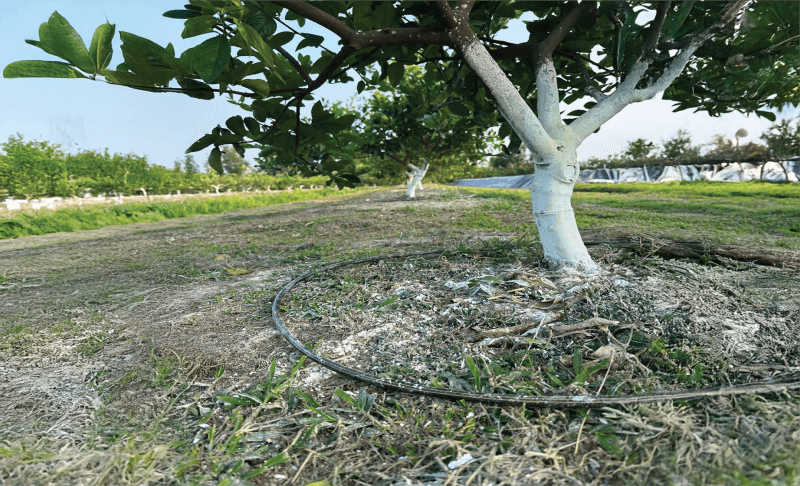
Drip irrigation system at SUCCEEDS
Participants also explored several other climate smart innovations implemented on the farm. Such as solar-powered irrigation and drainage pumps. During the dry season, these pumps supply water from the reservoir to the orchard, while during the rainy season, the same system helps drain excess water - reducing flood stress.
The project team demonstrated new techniques for branch bending of young citrus trees and improved pruning practices. These approaches shape trees into a pyramid canopy, resulting in more evenly distributed fruit clusters, better light penetration. This results in higher yields and a larger share of premium-grade fruit.
Beeld: © The Fruit Republic
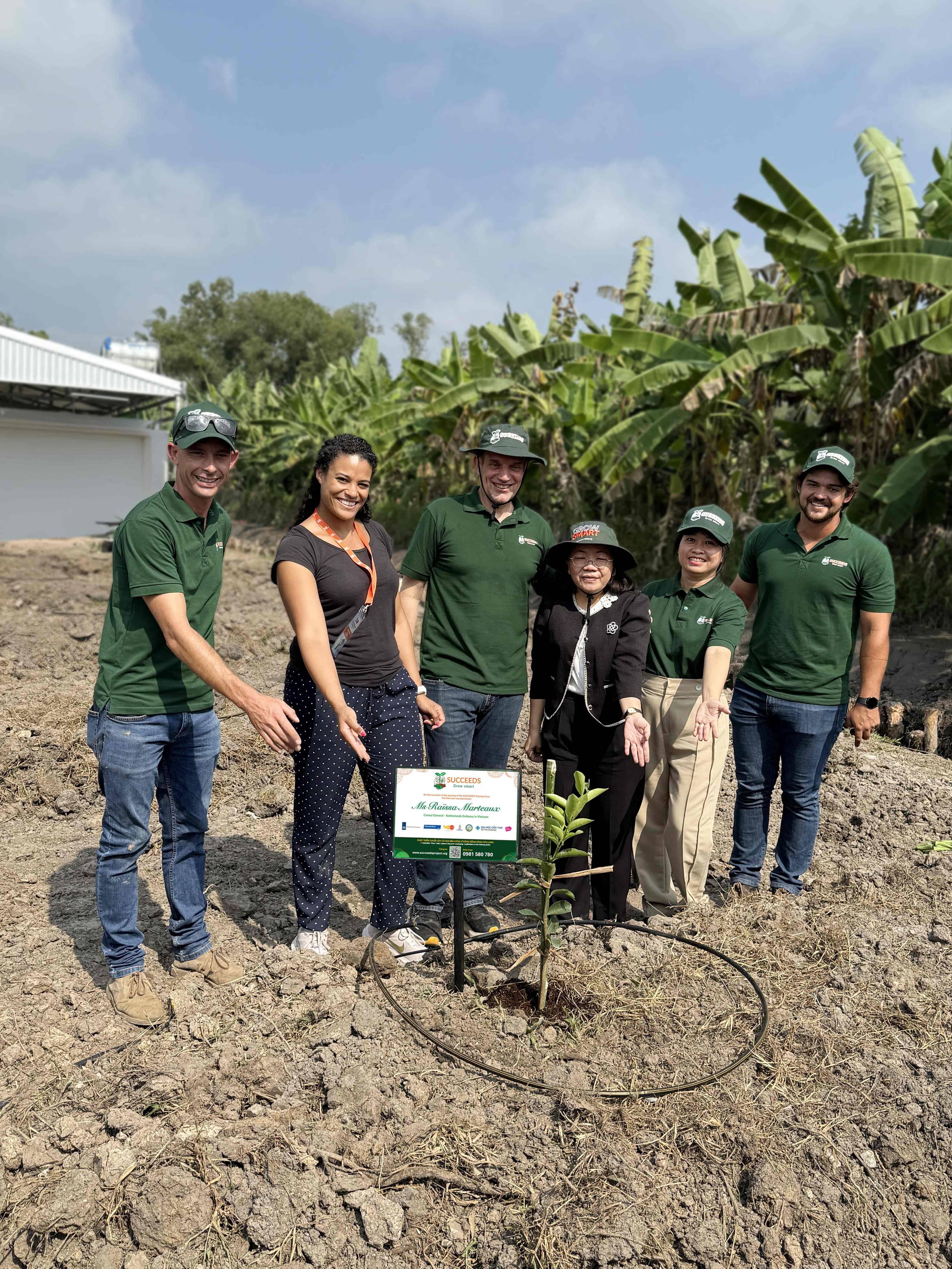
Consul General of the Netherlands in Ho Chi Minh City and Vice Director of Tay Ninh Department of Agriculture and Environment planting trees during SUCCEEDS farm visit
Planting citrus trees
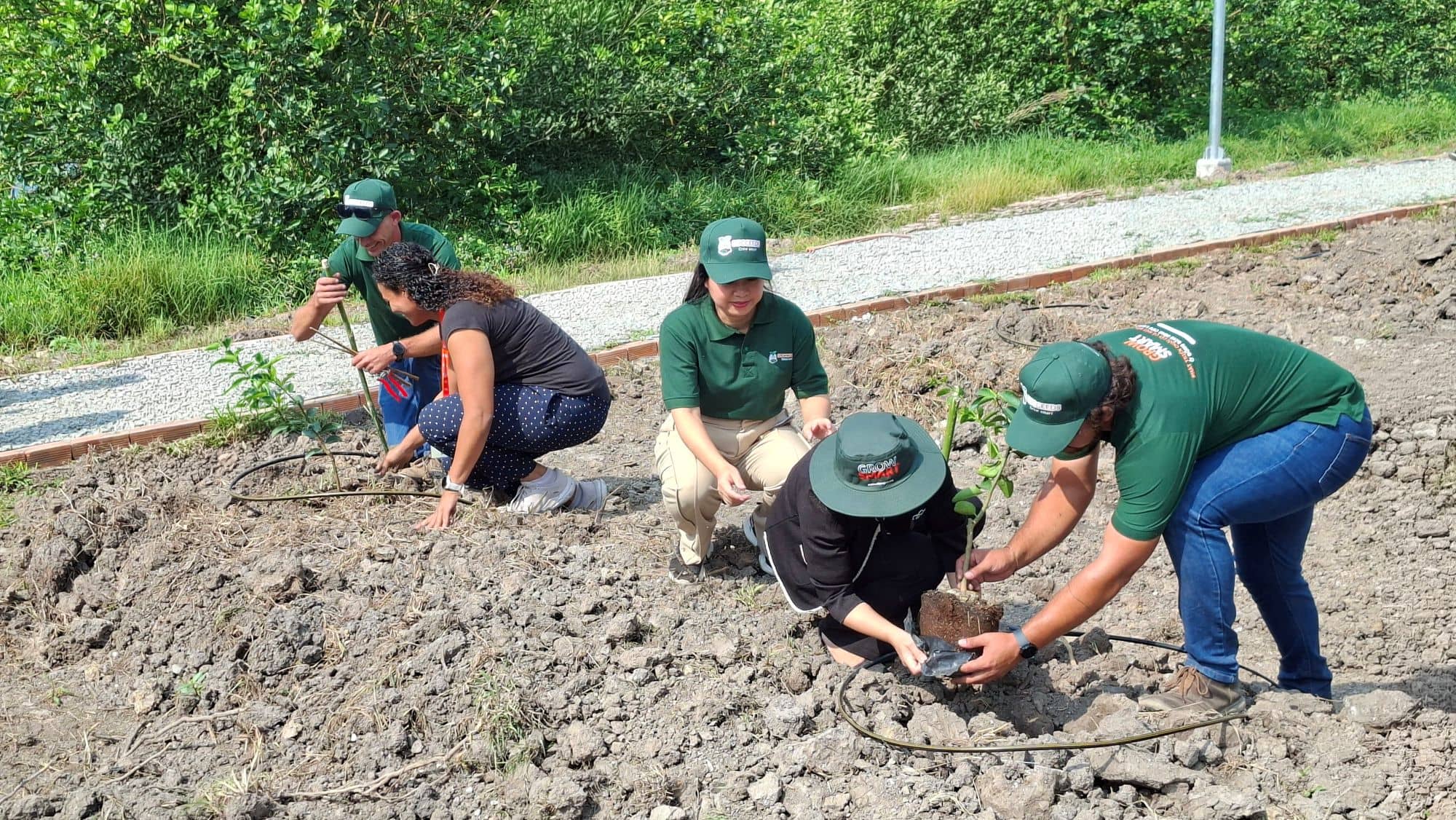
During the visit, Ms. Raïssa Marteaux and Ms. Đinh Thị Phương Khanh, Vice Director of the Department of Agriculture and the Environment (DAE), received hands on training on how to plant a citrus seedling. They then applied this training immediately, when they planted new citrus trees on the SUCCEEDS training farm.
During the project introduction, the participants learned that improved and high-quality citrus seedlings are being produced in the new SUCCEEDS citrus seedling nursery. This first professional citrus seedling nursery in the Mekong Delta, will produce about 100,000 seedlings per year. In addition, the SUCCEEDS project will support 10 local nurseries to professionalize and upgrade their nursery practices so that in total 8 million improved citrus seedlings will become available to the citrus farmers.
Beeld: © The Fruit Republic
Strengthening resilience in a changing climate
The visit offered an opportunity for lively exchange between the SUCCEEDS team and the Innovation Mission participants. It also highlighted the broader impact of the project: strengthening citrus production systems not only improves farm profitability, but also enhances water-use efficiency and climate resilience in a region increasingly affected by salinity intrusion and weather extremes.