
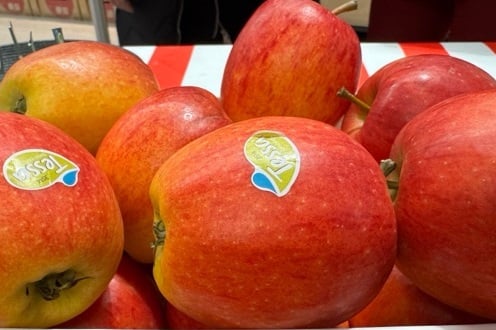
In time for the Chinese Spring Festival and the start of the Year of the Horse, Dutch farmers’ cooperative FruitMasters has introduced the Tessa apple to China. Its vibrant red colour symbolises good fortune and joy in China, making it a perfect gift for the upcoming festivities.
For the first time, Dutch apples have gained access to the Chinese market. This milestone highlights the importance of food in Chinese culture, the quality of Dutch produce and China’s position as the Netherlands’ most important agrifood market outside Europe. It is expected that Chinese demand for high quality and special fruit species will increase in the coming years.
The introduction of the Tessa apple is a direct result of the Apple Protocol, signed between the Netherlands and China in 2025, which grants market access for Dutch apples to China. Together with the Pear Protocol, Dutch exporters can offer a broader assortment of high-quality hard fruit to Chinese consumers.
The market access process explained
When Dutch agricultural producers want to export a product to China, the process begins in the Netherlands. A Dutch agrifood association contacts the Ministry of Agriculture to explore opportunities and requirements for entering the Chinese market. From there, the Ministry’s Chief Phytosanitary Officer and the Dutch Food and Consumer Product Safety Authority (NVWA) work closely with the Netherlands Agricultural Network in China. Together, they engage with their Chinese counterparts to formally request market access.
The Dutch side submits a detailed self-evaluation and market survey for the specific product. Chinese authorities then conduct a risk assessment, often asking for additional technical information and sometimes organising on-site inspections. This careful evaluation ensures that products meet China’s safety and plant health standards.
If the assessment is satisfactory, both sides negotiate an import protocol outlining the agreed conditions for trade. Once finalised, the protocol is formally signed by the Chinese and Dutch Vice Ministers. Next, both countries confirm the required health certificate. Finally, individual Dutch companies can register to obtain approval before they can start exporting. Market access is a lengthy process for companies seeking the necessary authorisations and permissions. This is why strong cooperation and long-term relationships between both countries are key to making this process successful.
Finding common ground between the Netherlands and China
China and the Netherlands are both among the world’s largest food producers. Opening domestic markets is sensitive due to its potential economic consequences. This explains the careful and diligent nature of the process.
Vice Minister Marten van den Berg of the Dutch Ministry of Agriculture and Vice Minister Zhang Baofeng of Chinese Customs signed the Apple Protocol in May 2025
In addition to economic sensitivities, particularly in agriculture and food, phytosanitary considerations also play an important role. Regulations increasingly require strengthened traceability and enhanced quarantine supervision in line with China’s evolving regulatory framework for agricultural imports. Not only Chinese and Dutch national legislations must be taken into account, European Union and World Trade Organisation regulations also play a role.
The Netherlands Agriculture Network in China supports the negotiation of market access protocols, and assists Dutch companies in registering specific products for approval. Over the years the Netherlands Agriculture Network has established valuable business relationships with potential Chinese logistic, distribution, and sales partners in first and second tier cities across the country. The Network is pleased to share these relationships with Dutch agrifood companies.
More information
For more information about access to the Chinese market, please contact the Netherlands Agriculture Network in China at pek-lvvn@minbuza.nl