
Ethiopia is home to one of Africa’s largest and most diverse livestock populations, contributing substantially to national GDP and serving as a key livelihood source for millions of households. As domestic demand for livestock products continues to rise, the sector holds significant potential for economic growth, value addition, job creation, and nutrition. However, challenges persist: from low on-farm productivity and fragmented value chains to insufficient infrastructure, limited cold chain logistics, and constrained access to finance.
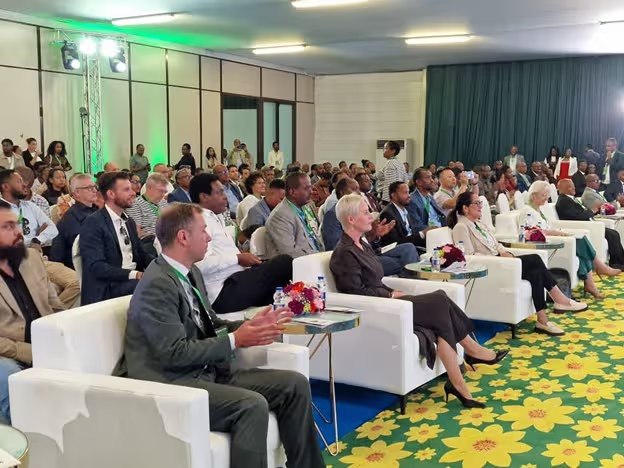
The Netherlands has a long-standing commitment to supporting Ethiopia’s agri-food and livestock development, recognising the sector’s strategic importance for food security and economic resilience. Reflecting this commitment, the Embassy of the Kingdom of the Netherlands is participating for the fourth consecutive time in the annual African Livestock Exhibition and Congress (ALEC), using the platform to promote Dutch livestock solutions and deepen bilateral cooperation.
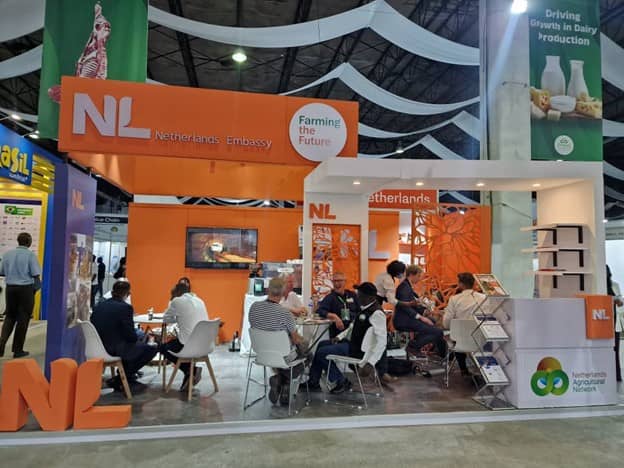
The Netherlands Pavillion at ALEC
The African Livestock Exhibition and Congress (ALEC) stands as Ethiopia’s largest and most influential livestock exhibition, convening producers, processors, technology providers, policymakers, knowledge institutions, investors, and development partners. The event is organized by Prana Events in collaboration with Expo Team and serves as a central meeting point for companies to showcase innovative technologies, engage directly with sector leaders, and better understand market dynamics and emerging opportunities.
Through the Netherlands Pavillion at ALEC, the Embassy of the Kingdom of the Netherlands promoted Dutch technologies, products, and services that can contribute to addressing local needs in Ethiopia's livestock sector. Under the banner of ‘Farming the Future', the Embassy's agriculture team supported over 15 Dutch companies and organisations to showcase their innovative solutions – ranging from specialised animal feed premixes and dairy and meat processing equipment to cold chain facilities and biodigesters.
The Netherlands Pavilion was positioned next to the SNV pavilion, where SNV brought together partners working under the Dutch-supported BRIDGE+ program. The BRIDGE+ program, implemented by SNV, Agriterra, and Wageningen University, aims to build an inclusive dairy sector that delivers accessible, affordable, and nutritious dairy products across Ethiopia. Many Dutch dairy companies are already collaborating with BRIDGE+ to introduce practical business solutions—ranging from capacity building to dairy technologies and facilitating market linkages—which together help strengthen overall dairy sector outcomes.
In partnership with TRAIDE Foundation, an organization dedicated to solving development challenges through private-sector partnerships, the Embassy organised matchmaking sessions for Dutch companies. By connecting Dutch businesses with Ethiopian buyers, distributors, and other potential partners, the matchmaking organized by TRAIDE and the Embassy. helped lay the groundwork for long-term collaborations that can address sector bottlenecks and encourage additional trade and investment.
Access to finance symposium
Access to finance remains a critical constraint across Ethiopia’s livestock value chains. Livestock SMEs and farmers often face limited working capital, stringent collateral requirements, and emerging yet underdeveloped digital lending systems. These barriers restrict their ability to invest in knowledge, improved equipment, quality inputs, and modern technologies. Consequently, Dutch companies supplying these technologies also experience reduced sales uptake.
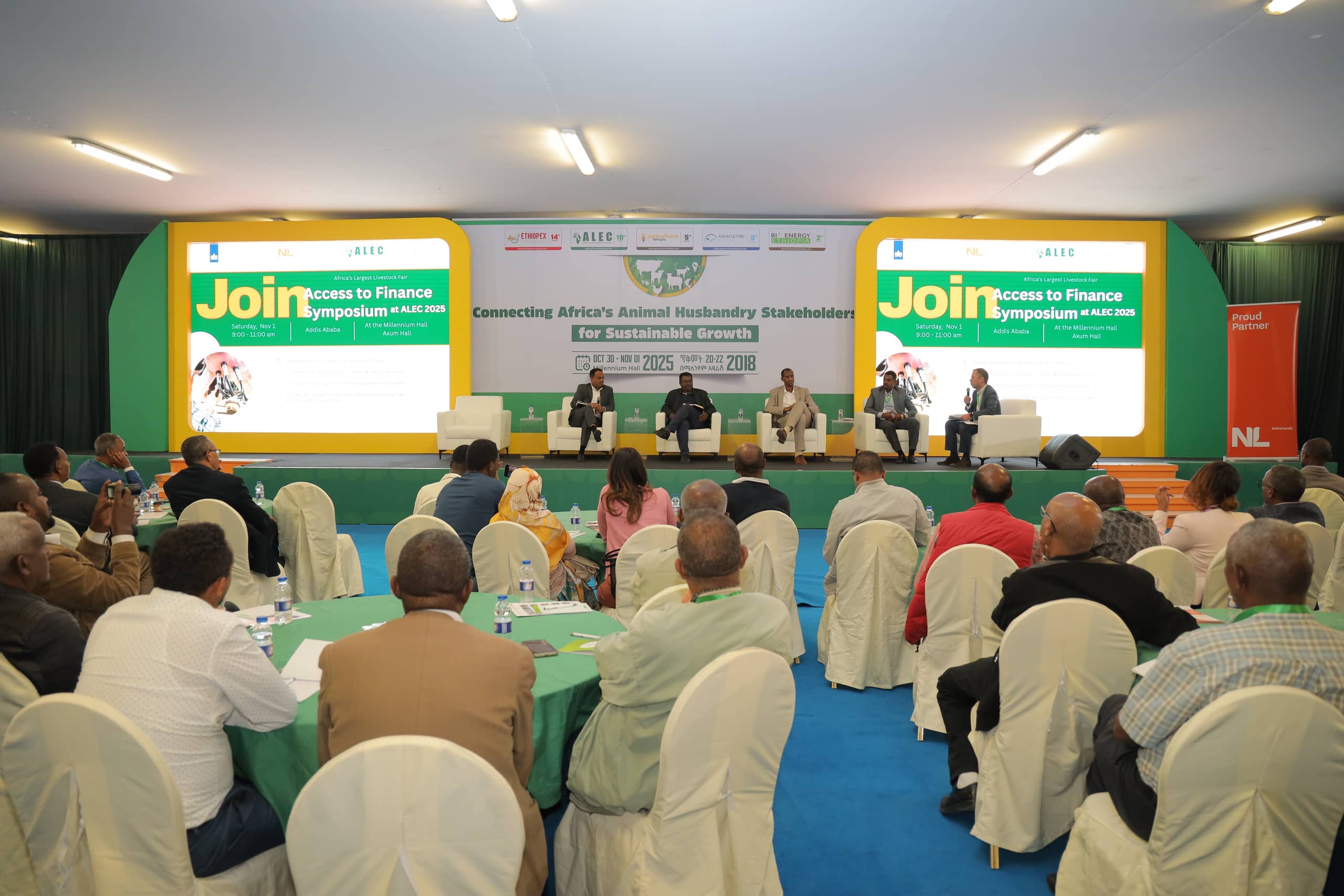
To highlight this challenge and discuss possible solutions, the Embassy's Agriculture team together with TRAIDE and Prana Events organised the Access to Finance Symposium. The session brought together banks, insurers, central bank, policymakers, and agribusinesses to discuss common barriers and explore practical solutions. The National Bank of Ethiopia presented progress of the overall financial sector reforms, and its National Agri-Finance Roadmap which aims to unlock significant additional financing for farmers and agribusinesses. Other initiatives highlighted include digital credit-scoring and lending innovations for smallholder farmers, and systems that enable the use of movable assets, such as cows, as collateral.
Poultry Summit
The Poultry Summit discussed opportunities to advance Ethiopia’s growing poultry industry, which is increasingly important for nutrition, income generation, and rural livelihoods. Participants discussed market trends, production bottlenecks, and the potential for technological solutions and expertise to support sector modernisation.
One of the focus areas was on tailored feed solutions for dual-purpose breeds, which dominate Ethiopia’s rural and semi-commercial systems. Presenters included experts from De Heus (Alema Koudijs) and Trouw Nutrition who emphasised the importance of feed quality, along with genetics, proper housing, animal health services, and improved farm management, in increasing egg production and enhancing farm profitability.
Feed Forum
Feed and fodder shortages remain one of the constraints to livestock productivity in Ethiopia. Most livestock rely on crop residues and natural grazing, resulting in large gaps in feed quality and availability – particularly during dry seasons.
The Feed Forum brought together public and private actors to discuss ongoing initiatives aimed at expanding Ethiopia’s feed and fodder production capacity. Special attention was given to opportunities in pastoral and agro-pastoral areas, which supply most of the livestock entering domestic and export markets.
Participants shared best practices in improving feed processing, distribution models, and commercial forage production systems. The session highlighted both the opportunities and challenges in scaling these solutions.
Building Dutch-Ethiopian Partnerships
Dutch participation in ALEC 2025 reinforced the Netherlands’ strong reputation as a long-term and reliable partner in Ethiopia’s livestock transformation. The Dutch Pavilion attracted substantial attention, with participating companies praising the high-quality of visitors and B2B leads. Several Dutch companies have already initiated follow-up meetings with potential partners, with promising future collaborations.
Across dairy, poultry, feed, cold chain, and renewable energy, the presence of Dutch expertise demonstrated clear opportunities for technology transfer, capacity building, and commercial partnerships. The event also highlighted the need for continued engagement – particularly in facilitating finance access, strengthening value chains, and supporting local adoption of innovative solutions.
Looking ahead, the Embassy – in collaboration with partners such as TRAIDE and SNV – aims to deepen private-sector involvement, encourage greater uptake of Dutch technologies, and catalyse partnerships that can drive investment and competitiveness in Ethiopia’s livestock sector.