
Fueled by growing domestic and international demand, Vietnam's livestock and aquaculture sectors are set for continued growth. However, the growth comes at a high cost: a heavy reliance on imported feed materials, which make up 80% of the country’s commercial feed production. This dependence exposes the sector to the risks of volatile global prices and supply chain disruptions, rising call for greater flexibility in sourcing and more balanced use of feed ingredients.
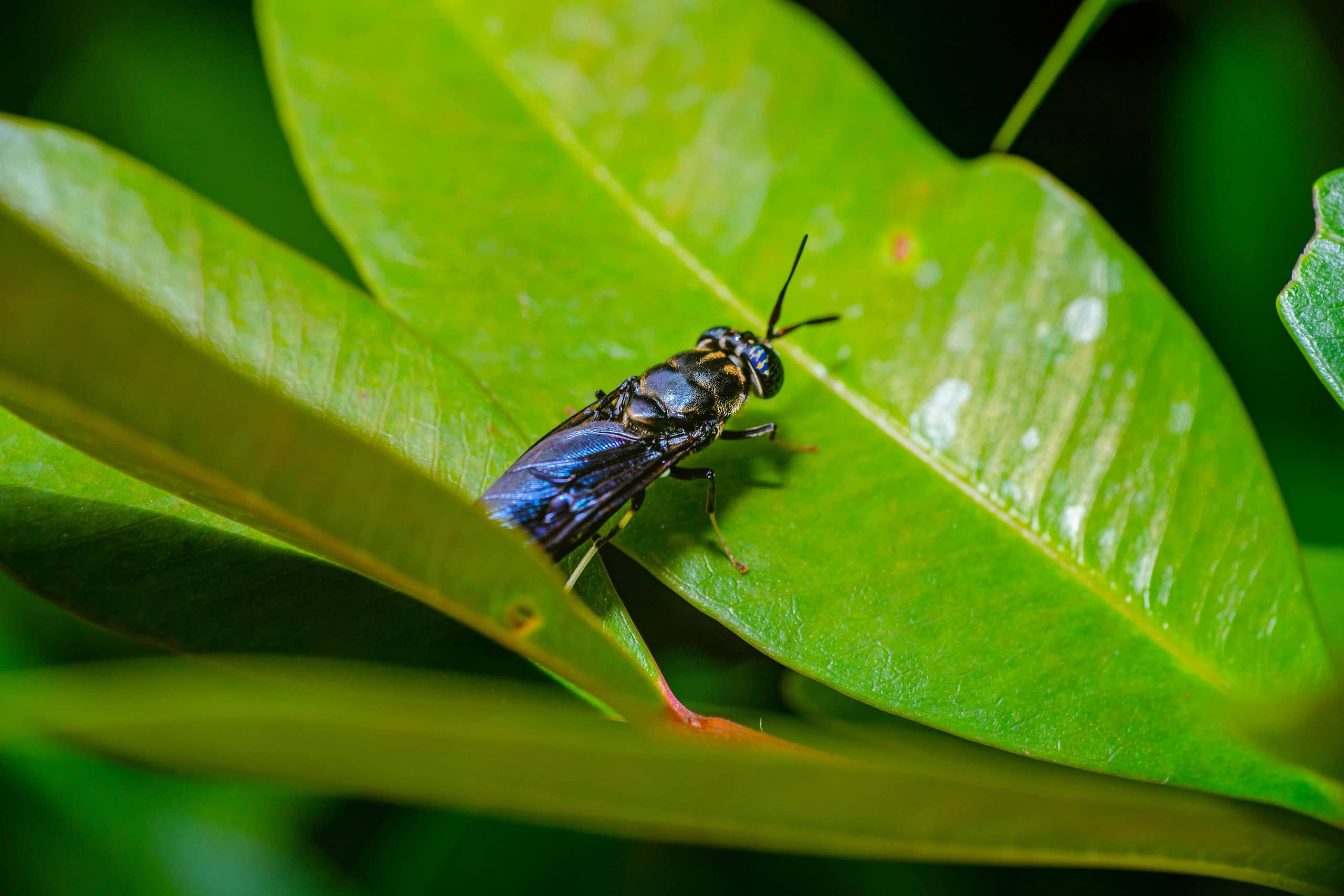
Beeld: Pexels
Black Solider Fly. Source: Pexels
In response, the Black Soldier Fly (BSF) has emerged as a promising, sustainable alternative. By efficiently converting organic waste into high-quality protein and fat, BSF offers significant nutritional and environmental benefits. A study, commissioned by the agricultural department of Netherlands Embassy in Vietnam, provides insights into the BSF supply chain dynamics, including its production practices and demand as a sustainable alternative for feed, and explores market opportunities for various stakeholders.
BSF production practices in Vietnam
In Vietnam, insect-based feed has a long history, with small-scale farmers using earthworms and other larvae for poultry and fish since the 1990s. BSF was first introduced around 2015, quickly becoming a popular, low-cost solution for smallholder farmers to manage organic waste and supplement poultry's diet.
Since then, the sector has gradually expanded, developing into models of traditional smallholder systems and modern commercial facilities. These models have differences in their approaches to breeding, farming, and production of BSF and its products. Today, these two models coexist, working together to advance sustainable feed production and promote rural economic inclusion across Vietnam.
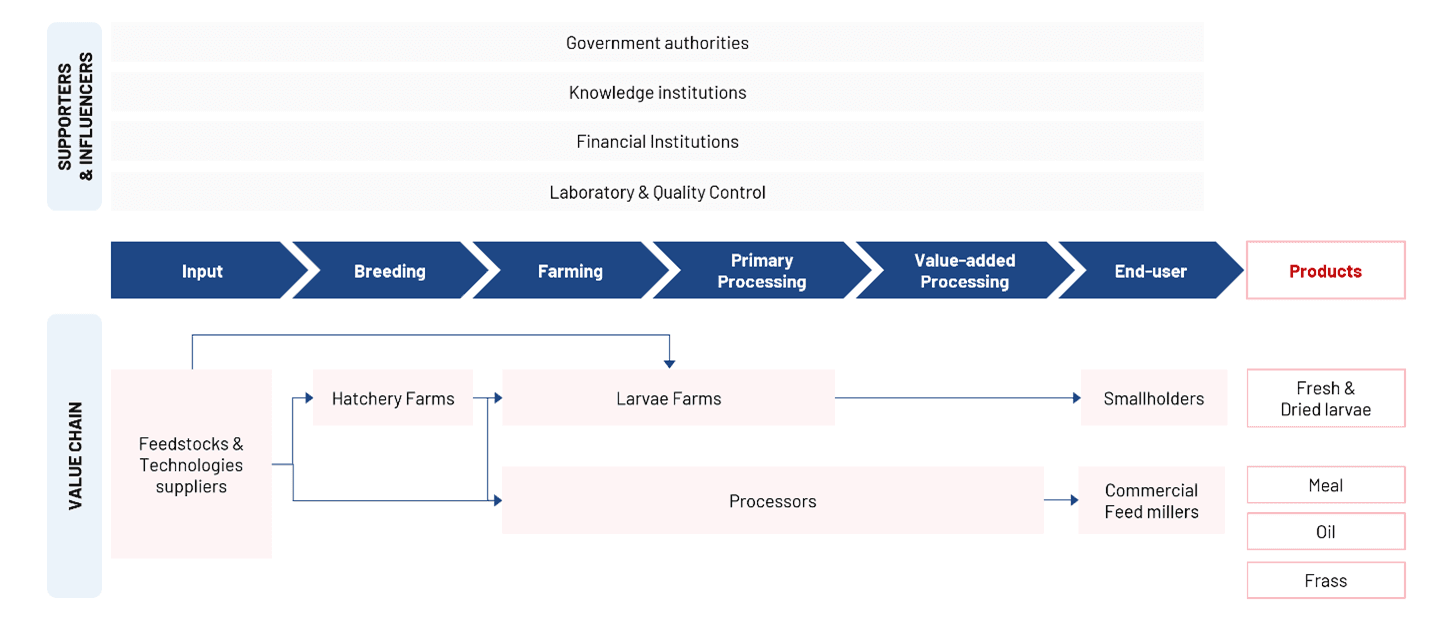
Graph: Vietnam’s BSF sector stakeholder mapping and products
With BSF now officially a permitted animal for rearing in Vietnam as of 2022, the sector's potential is clear and its practices are becoming more established. However, to transition from small-scale to industrial production, the sector must scale up and address the demands for greater expertise and technology adoption, stable supply of certified feedstock, and capital investments.
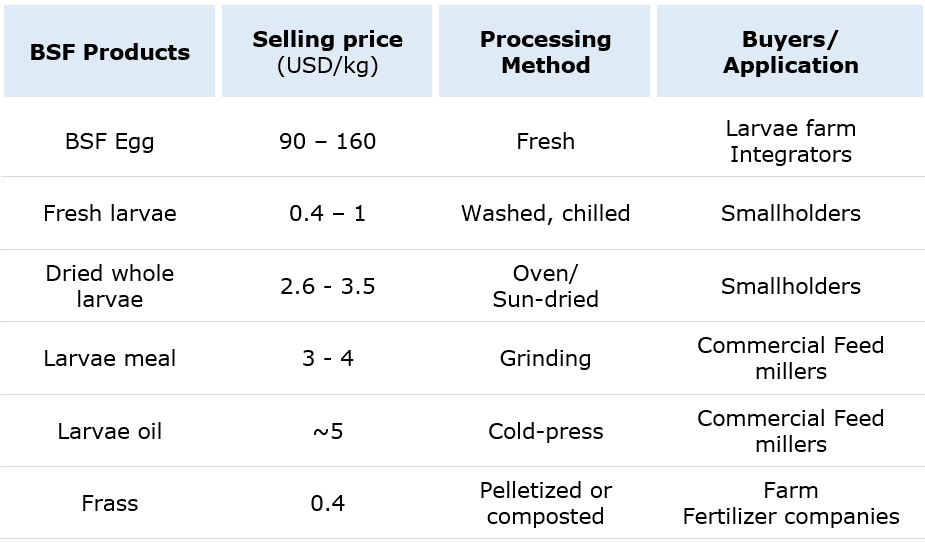
Table: BSF products (Price collected as of July 2025)
Demand for BSF as a sustainable alternative for feed
In less than a decade of development in Vietnam, BSF and its derivatives have gained popularity thanks to their wide application across local smallholder farms and large-scale feed millers. BSF meal also yields high potential for exports, aligning with broader global trends toward sustainability.
Building on the traditional practice of using insects in feed, local smallholder farmers hold a positive view of BSF products, using them as both a substitute for commercial feed and an additional ingredient in home-mixed feeds. The proven nutritional value of BSF is now driving demand among these small-scale farms, supporting animal health and growth.
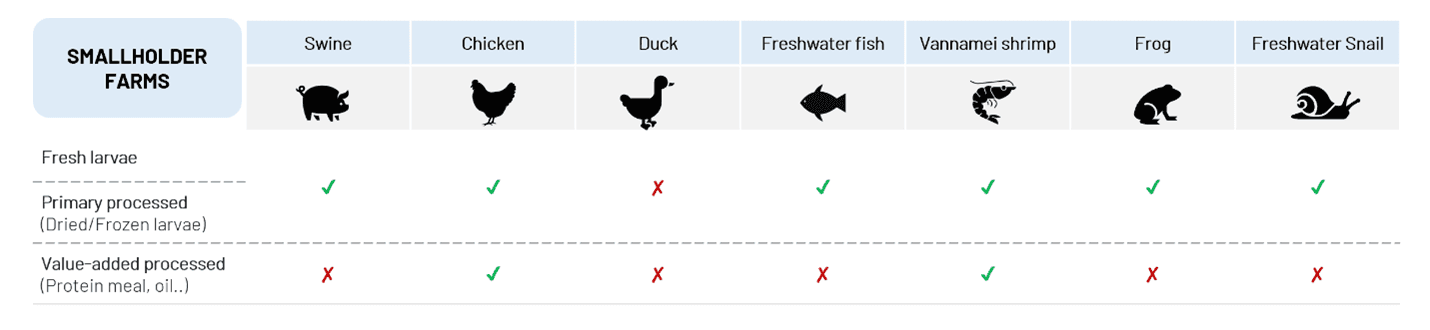
Graph: Common BSF using practices among smallholder farms
Feed millers are increasingly looking for low-emission, environmentally friendly raw materials. In this context, BSF larvae and their derivatives have emerged as a promising, sustainable alternative to high-impact ingredients like fishmeal. Yet, while being open to new solutions, the feed millers remain hesitant to fully adopt BSF due to concerns about its nutritional consistency, supply reliability, and respective substitute cost.
While from the current perspective that BSF meal is not yet economically competitive with fishmeal, feed companies have continued to implement studies and trials for partial replacement. Some already started integrating BSF meal and oil into their commercial feed lines, proving confidence in BSF’s scalability and its alignment with corporate sustainability commitments.
Market opportunities
Driven by the shift toward sustainable feed alternatives, BSF is gaining traction as a viable solution. Supported by circular economy initiatives and growing demand from both domestic and international markets, Vietnam’s BSF sector offers opportunities for various stakeholders across the supply chain, notably:
- Production: demands for high-quality breeding stock and genetics; automated rearing system and equipment; circular business model integration; bioconversion optimizing consulting; turn-key farming solutions; quality control and nutrient analysis; and training and knowledge transfer.
- End-user: realization of BSF’s full potential in soil amendment; pharmaceuticals, agri-tech, and cosmetics ingredients; biodiesel production; and pet food ingredients.
The identified opportunities shall serve as a foundation for informed decision-making and strategic planning, ensuring that the efforts align with the local context alongside with potential avenues for international collaborations.
Please download the full report below.
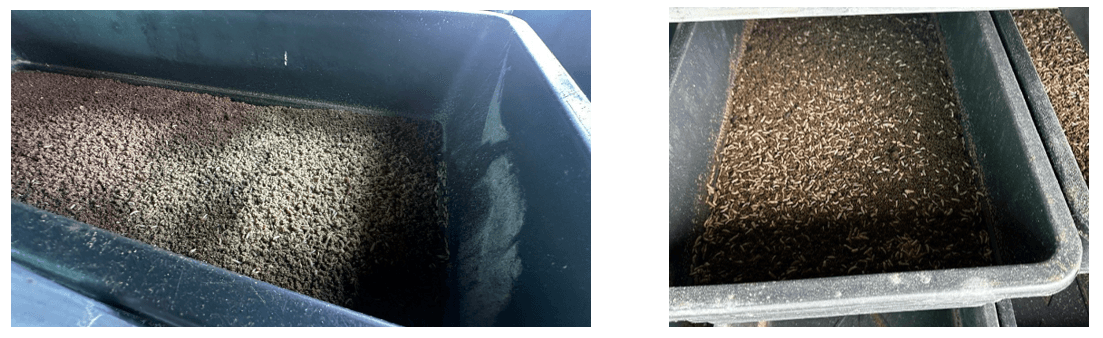
Photo: BSF larvae farming
Contact information
Do you have any questions for the Agriculture Department at the Netherlands Embassy in Vietnam? If so, please send an email to HAN-LVVN@minbuza.nl. For the latest updates, news, funding opportunities and more, follow our LinkedIn: Netherlands Agricultural Network in Vietnam.
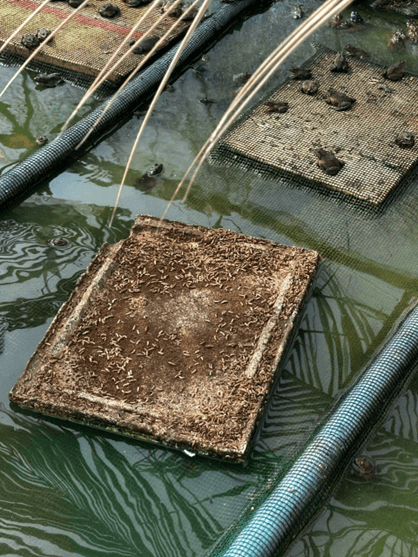
Download the full report
Study on Black Soldier Fly Opportunity in Vietnam - 2025 | Rapport | Agroberichten Buitenland