
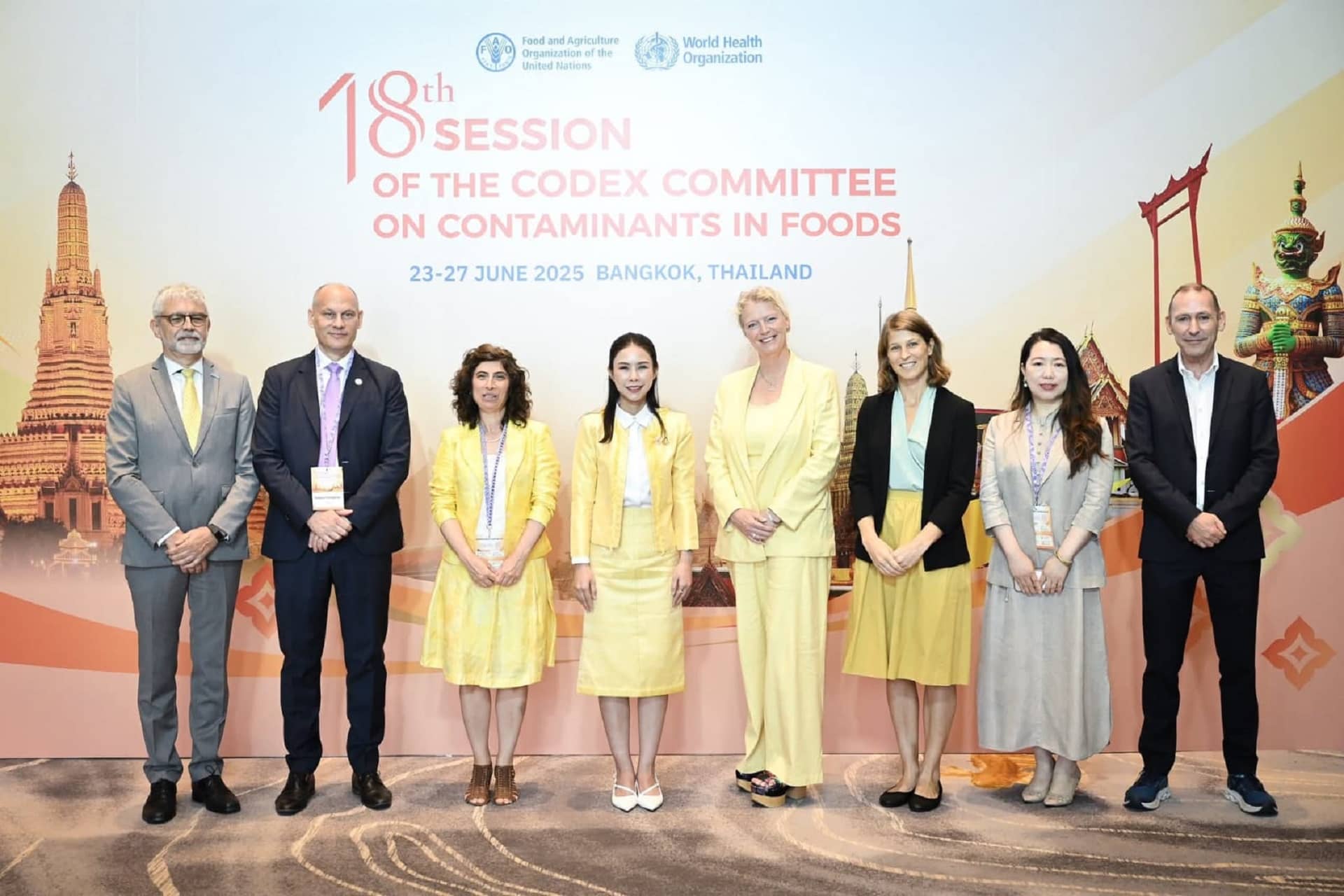
The Netherlands proudly worked together with Thailand to host the 18th Session of the Codex Committee on Contaminants in Foods (CCCF) during 23–27 June in Bangkok under the auspices of the FAO and WHO. This annual conference brought together delegates from over 200 Codex member countries, international organizations, and observers to discuss and set global food safety standards aimed at protecting consumer health and ensuring fair food trade.
Beeld: © National Bureau of Agricultural Commodity and Food Standards, Thailand
The conference focused on the scientific assessment and regulatory management of food contaminants, including mycotoxins, heavy metals, and chemical residues, which pose persistent challenges to food safety worldwide.
A Shared Commitment to Food Safety
In her opening address, Miriam Otto, the Deputy Ambassador of the Netherlands to Thailand, emphasized a simple but powerful message from the WHO: If food isn’t safe, it isn’t food. She highlighted the urgent need for international cooperation as food systems become increasingly globalized. Contaminants can enter the food chain at multiple stages, from agricultural production and processing to packaging, distribution, and even household preparation, making comprehensive and harmonized standards more essential than ever.
The Deputy Ambassador also praised Thailand’s leadership, particularly its Food and Drug Administration (Thai FDA), for its regulatory framework and enforcement of food hygiene standards, especially in sectors like seafood exports. Thailand’s proactive stance in aligning with international safety standards makes it a key partner in advancing Codex objectives.
Beeld: © National Bureau of Agricultural Commodity and Food Standards, Thailand
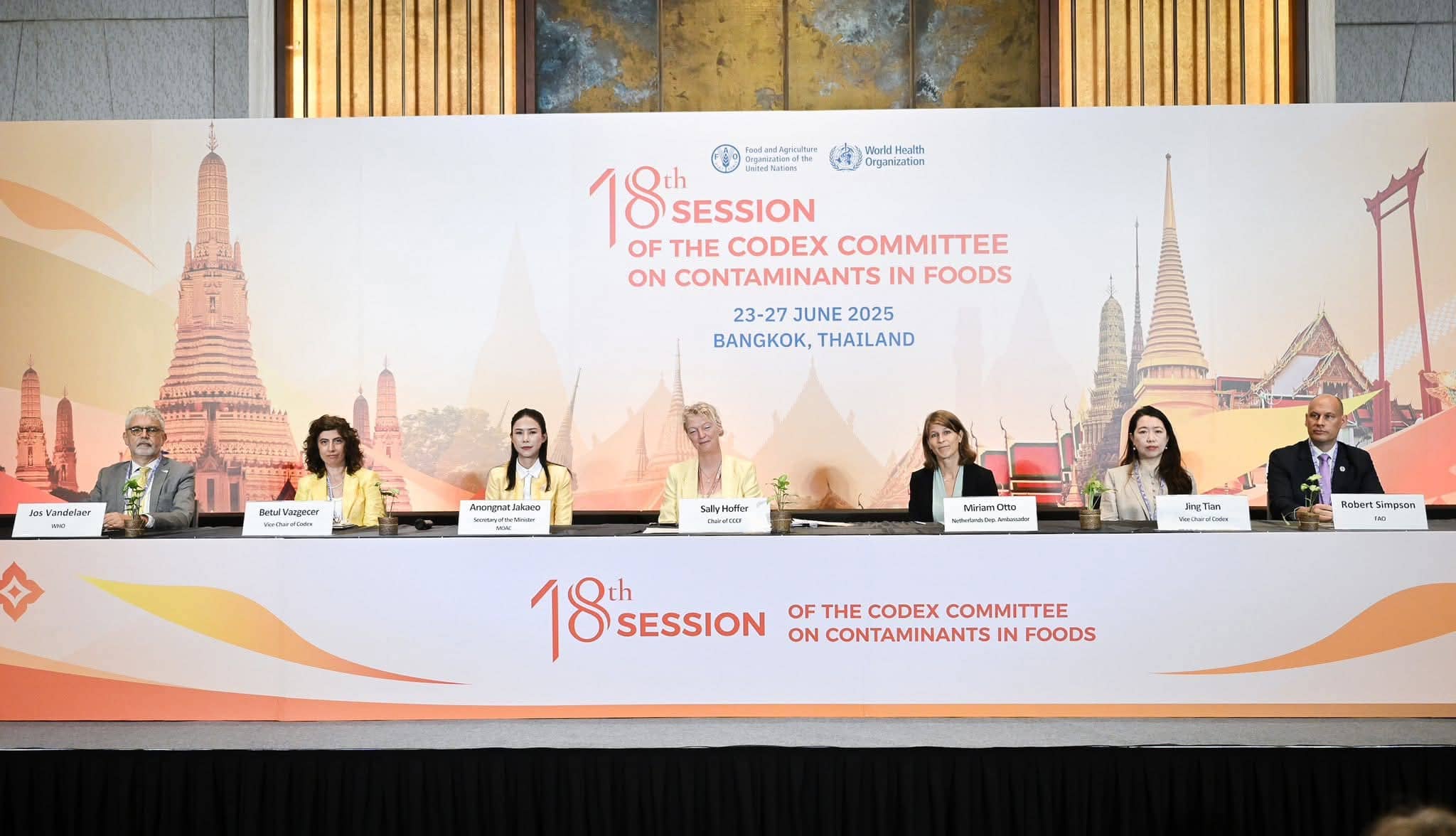
In the middle Dr. Sally Hoffer from the Netherlands, chair of the CCCF meeting and Miriam Otto, the Deputy Ambassador of the Netherlands to Thailand.
"If food isn’t safe, it isn’t food."
Driving Global Standards Forward
Over the five-day session, CCCF18 delegates reviewed and discussed several proposals to update or establish new maximum residue levels (MRLs) for contaminants in food and feed, along with codes of practice. These discussions aim not only to protect public health but also to facilitate fair trade and reduce technical barriers in international trade.
Beeld: © National Bureau of Agricultural Commodity and Food Standards, Thailand.
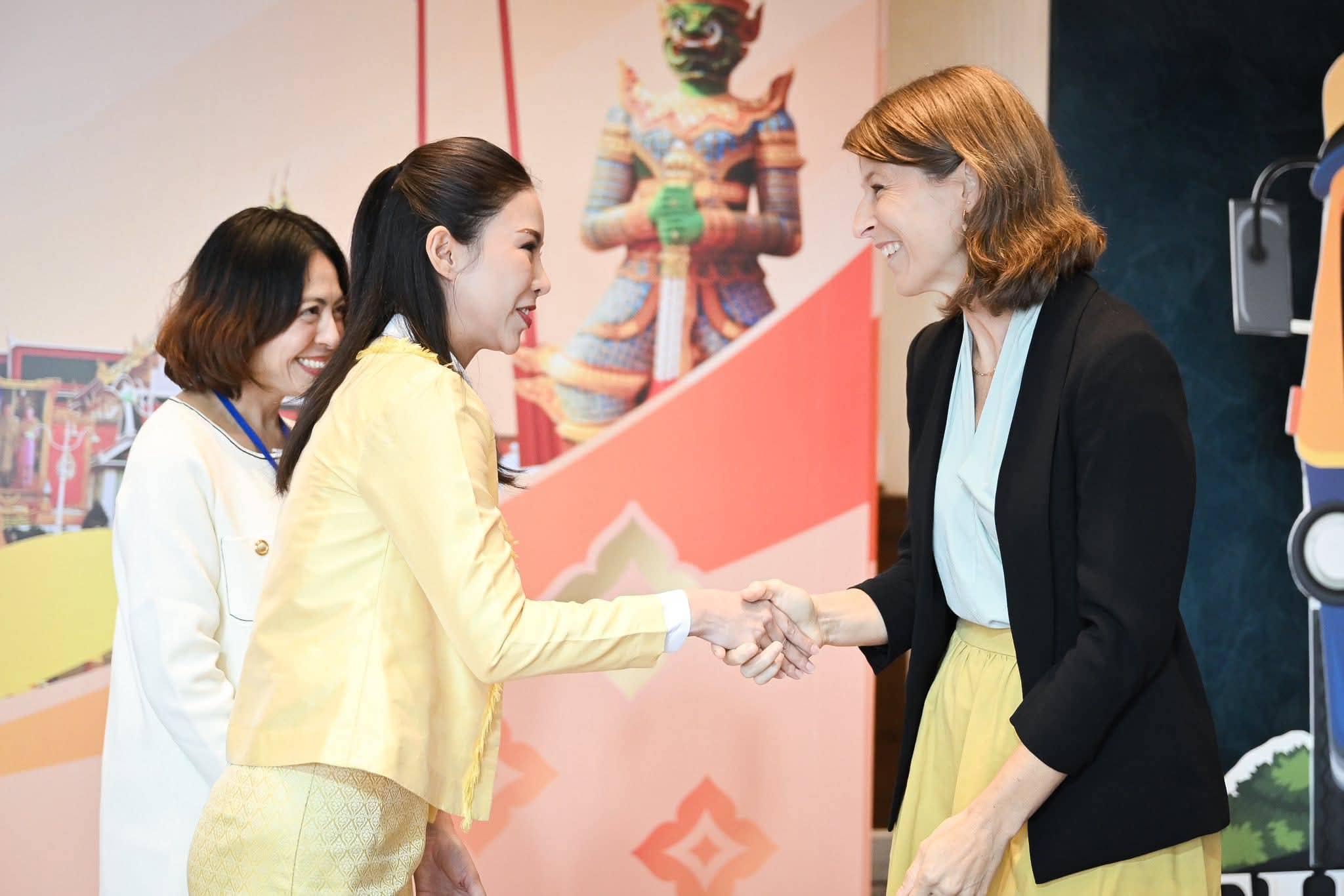
Ms. Anongnat Jakaeo, Secretary of the Minister of Thai Ministry of Agriculture and Cooperatives Greets Miriam Otto.
The Embassy of the Netherlands extends its sincere appreciation to the Thai Ministry of Public Health, FAO, WHO, and all delegates and experts who contributed to this essential meeting. We also thank the Codex Secretariat (Rome), the Codex Contact Point (under the supervision of Marie-Ange Delen and Louke Koopmans), and the Chair (Sally Hoffer) for their dedication and professionalism.
By strengthening food safety standards and fostering global collaboration, the Netherlands and Thailand remain committed to ensuring a safer and more resilient global food system.
More Information
Looking to explore business opportunities in Thailand’s agriculture and food sectors? You can visit the Thailand country page at the website Agroberichtenbuitenland.nl of the Dutch Ministry of Agriculture, Fisheries, Food Security and Nature. For direct support or inquiries, you are welcome to contact the Agricultural team at the Embassy of the Netherlands in Bangkok via email: ban-lvvn@minbuza.nl